Scott B. MacDonald – författare
Visar alla böcker från författaren Scott B. MacDonald. Handla med fri frakt och snabb leverans.
18 produkter
18 produkter
Inbunden, Engelska, 1991
841 kr
Skickas inom 10-15 vardagar
Growing global interdependence made the 1970s and 1980s a volatile period in the sugar trade at a time when Caribbean countries, while not the major world producers of sugar, were economically dependent on their sugar exports. Since then, government farm supports and quotas on imported sugar in the United States, overproduction in developing countries, and the emergence of a highly protected European Community sugar industry have all served to make the sugar trade a highly political global issue. This study focuses on the evolution of the U.S.--Caribbean Basin sugar trade in the 1980s and its impact on political relations between the countries involved. According to the authors, the sugar trade was not driven by laws of supply and demand, but by various political agendas. Economic protectionism, government subsidies for inefficient elements of the sugar industry, as well as corruption and mismanagement have contributed to the Byzantine politics of the sugar trade. Now the United States needs to determine how lifting quotas and terminating subsides will affect this complex relationship. By providing an in-depth look at the development of current policies in the sugar trade, this book offers the necessary background for making informed policy decisions.After examining the U.S. sugar policy from 1974 to 1989, the book provides a broader Latin American perspective of U.S. and European Community sugar policies. It also offers subregional and country analyses covering the Commonwealth Caribbean, Central America, Cuba, the Dominican Republic, Haiti, and Panama. Despite the difficulty of competing against the United States and Europe, Caribbean and Central American countries are likely to continue to depend on sugar cane. Climactic and ecological factors make agricultural diversification extremely difficult. Some Caribbean and Central American producers have considered making ethanol automobile fuel from sugar, but here too they face protectionist pressure from U.S. producers of corn. Given current political realignments, the authors predict that the influence of the United States and the Soviet Union will diminish in the 1990s. The European Community, on the other hand, is likely to have greater influence on the inter-American sugar trade. Students of Latin American politics and international relationships, as well as those involved in the sugar industry or the policies affecting it, will find this book a valuable resource for future decisions.
Häftad, Engelska, 1989
574 kr
Skickas inom 10-15 vardagar
The Latin Amnerican drug trade has become one of the major problems confronting the United States in the late twentieth century. The key dynamic of that trade is cocaine, which is primarily produced in the Andean nations of Bolivia, Colombia, and Peru. The cocaine trade's influence, however, has spread outwards into other Andean states--Chile, Ecuador, and Venezuela. Moreover, countries on the Andean periphery, such as Panama, have become enmeshed in the trade as transit points and money-lanudering centers. This book examines the cocaine trade in the Andean states and Panana with a special emphasis given to the relationship between cocaine and power.MacDonald examines the linkages between the political and economic power of those in the cocaine trade, the narcotraficantes, and the governments in the region. Important parts of this issue are the drug-insurgency nexus and the significance of the debt crisis. Although the book concentrates on the structure of the cocaine industry in the Andean states and Panama, the final chapters offer policy options on how to contend with the problem.
Inbunden, Engelska, 1991
817 kr
Skickas inom 10-15 vardagar
This book examines the interrelationship between the external debt problem and the consolidation of democracy in Latin America in the 1990s. It considers the interplay of actors, including creditor governments, international financial institutions, debtor countries, commercial banks, and multinational corporations, and environment in the new decade, focusing on whether or not Latin America's political regimes can strengthen and democratize their respective economies while continuing to guarantee the country's democratic politics.The foreign debt problem casts an especially long shadow on the Latin American democracies. While important in its own right, understanding the Latin American experience is also essential in light of changes in Eastern Europe. Despite many obvious cultural differences and historical experiences, there are many parellels between the two regions--democratization at a time of economic crisis and of heavy external debt. This important new book underscores the lessons of the Latin American experience, making it essential reading for anyone concerned with the global economy.
Inbunden, Engelska, 1992
885 kr
Skickas inom 10-15 vardagar
This international handbook is the first to analyze the status of drug control efforts around the world in so comprehensive a manner with up-to-date information. A series of experts provide a systematic overview of this major world problem in the 1980s and the 1990s, point to 10 major trends in current developments and to 3 probable shocks in the immediate future, and assess targets and networks for combatting the drug trade in the next decade. This handbook is a convenient reference for academicians, professionals, policymakers, and all who are concerned with this scourge on modern-day society.This valuable survey of the major consumers and suppliers of drugs and of national and international responses and enforcement measures opens with an introduction that gives an overview of efforts to control the international drug problem. Money laundering and asset forfeiture problems and policies are described in some detail. Country and regional studies follow with analyses about the history and structure of the industry/trade, governmental and societal responses, international controls and networks. The work of the United Nations and regional organizations is summarized as well. Appendixes offer comparative data about drug consumption, production, and trade and about international legislature's legal efforts to control the drug trade. Bibliographies at the ends of chapters and an essay at the end of the book offer suggestions for further research. A full index makes the reference an accessible one for researchers with different needs and perspectives.
Inbunden, Engelska, 2011
574 kr
Skickas inom 10-15 vardagar
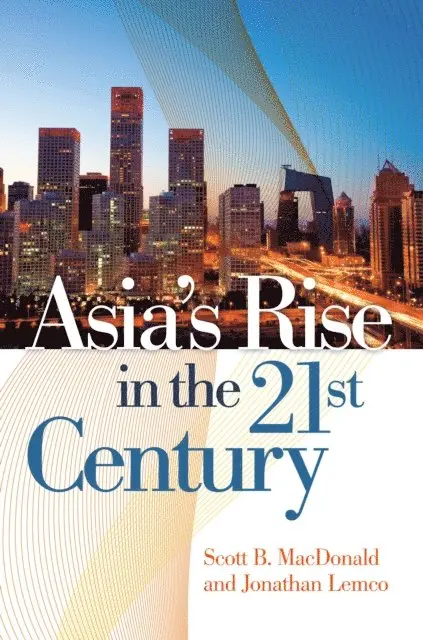
This expert analysis looks at what the increasing economic and political prominence of China and other Asian nations means to the West and the rest of the world.Asia's Rise in the 21st Century is a wake-up call to the West, offering a sophisticated assessment of a group of nations that are becoming essential markets for U.S. trade, industry, and finance, even as they increasingly represent fierce competition for global markets. The work traces changes that launched the region down the path to potential economic and political ascendancy, and it looks at various factors, from politics to economics to demographics that affect Asia now and will continue to do so in the future.China's prominence is explored in the context of how it complements and competes with the rest of Asia, especially Japan and India, and how it interacts with other major emerging-market countries, such as Brazil, Russia, and Turkey. The book also looks at the challenge China's ascendancy poses to the assertion that a successful capitalist system must be accompanied by political democracy. Finally, the authors suggest ways in which Asia's rise can be accommodated in the West and elsewhere and offer thoughts on where Asia, and especially China, will be in 2030.
Inbunden, Engelska, 2001
2 197 kr
Skickas inom 10-15 vardagar
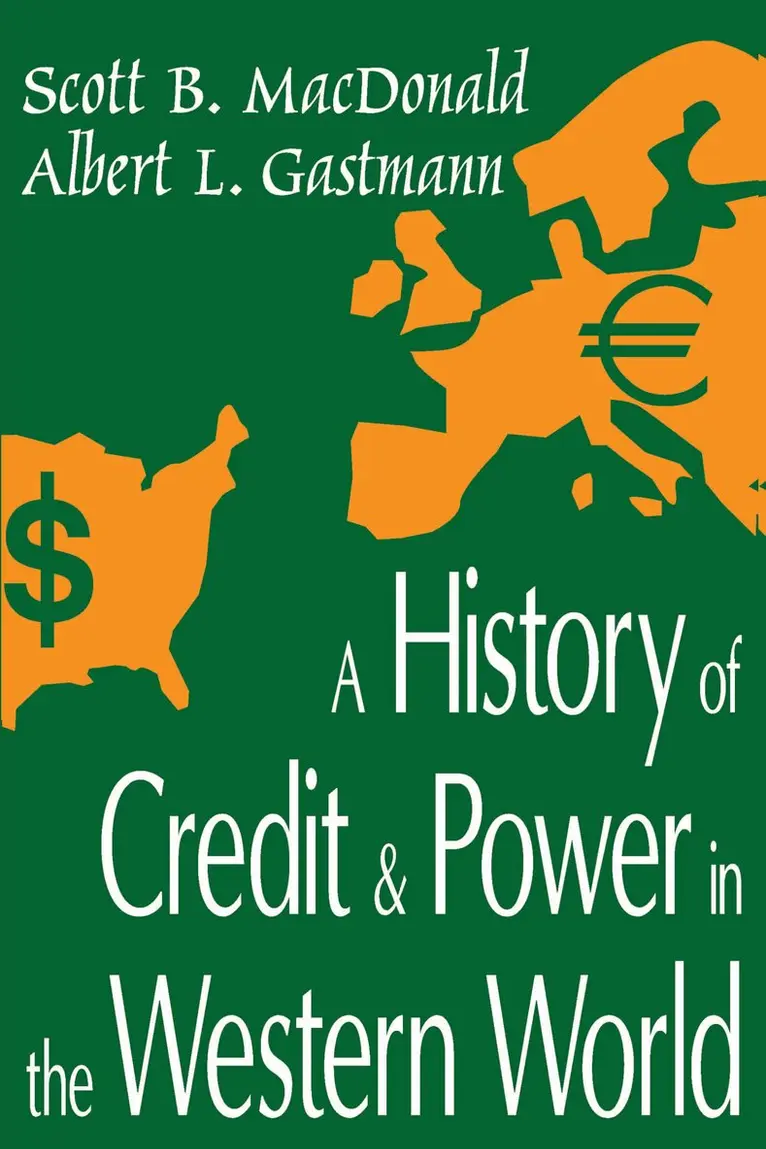
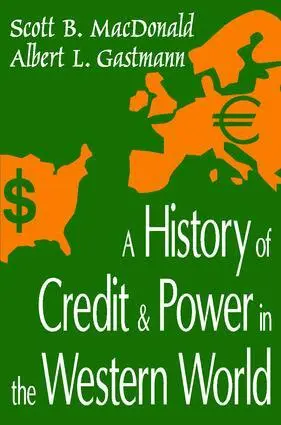
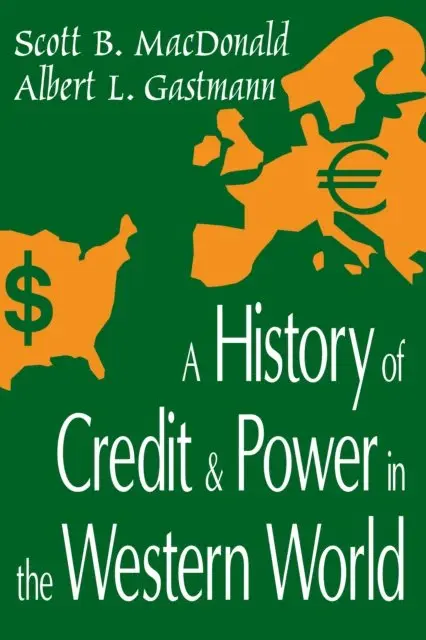
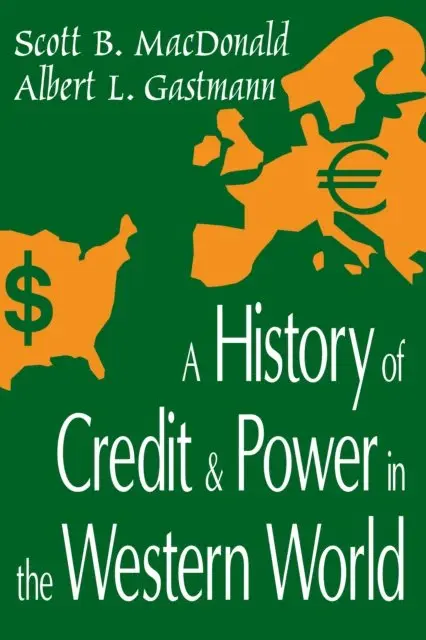
The end of the Cold War put the planet on a new track, abruptly replacing the familiar world of bipolarity, red phones, and intercontinental ballistic missiles with the strange new world of the Internet, e-commerce, and Palm Pilots. The "New World Order" was defined by a U.S.-led war against Iraq, bloody ethnic strife in Bosnia and Rwanda, and religious turmoil in Central Asia. This evolving global system, however, overlooked the powerful role of credit, which functions as a critical building block for developing greater national and individual wealth. This volume examines the evolution of credit in the Western world and its relationship to power. Spanning several centuries of human endeavor. it focuses on Western Europe and the United States and also considers how the Western system became the global credit system. Six major themes run throughout: (1) the direct relationship between credit and power; (2) different kinds of political power promote different kinds of economic behavior; (3) various societal and cultural groups were often more successful in mingling credit and political power; (4) the Western credit system evolved in tandem with the development of the nation-state; (5) historically, there has been a pattern of financial crises; (6) credit spread from being the privilege of the wealthy and powerful to being available to vast numbers. MacDonald and Gastmann have broken history into five periods, ranging from early pre-modern, defining the earliest references to banking and credit as exemplified by the Code of Hammurabi, circa 1726 BC, through the Roman Empire with its creation of money and growing use of credit in trade, the barbarian invasions of the 11th century which led to a breakdown in credit networks in the West, through the establishment of the Italian city-states, to the modern period which incorporates the rise of credit in the Low Countries in the 1500s and extends through the rise of London and New York as the major international credit hubs. The final period is the global one which began in the early 1990s, reflecting the linkages of almost all points of the map, and the deepening democratization of credit in North America, Europe, and parts of Asia. This highly accessible and well-written volume will engage historians and economists alike.
Häftad, Engelska, 1998
699 kr
Skickas inom 10-15 vardagar
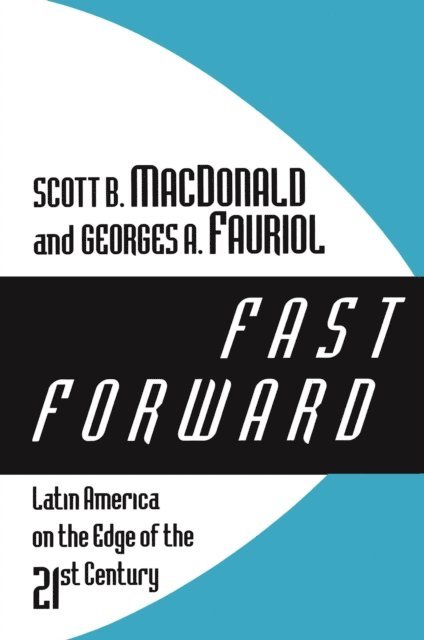
Latin America is developing rapidly. As the authors see the region, a small group of countries has found a fast-forward button. In these countries change is exciting, occurring at such a rapid pace that a major breakthrough hi economic growth appears within grasp. After an almost decade-long period of recession and stagnation, many Latin American economies now have elected governments. With a few exceptions, most have also improved their socioeconomic conditions beyond meeting basic human needs. Yet few North Americans or Europeans are aware of these advances. How does Latin America fit into the changing world in the 1990s, and why should someone living in the United States, Europe, or developed parts of the Pacific Basin care?Fast Forward shows that Latin America's economic renaissance clearly has implications for a post-Cold War world order. Latin America is starting to make important contributions, particularly in the areas of international diplomacy, economics, and culture. Collectively, Latin Americans now demonstrate a coherent collective will about where they wish to take themselves. This does not mean that U.S. influence in the Americas will soon disappear, but that new challenges in the international system will force greater equity in Western Hemisphere relationships.While Latin America in the 1990s offers much to be excited about, the authors caution that there are dangers in being too enthusiastic. The always-present potential for top-down authoritarian approaches must temper enthusiasm about a better Latin American future. Despite this, the authors see a well-defined departure from past economic modes occurring and the potential for a higher level of development for some countries. This book is for economists, sociologists, and political scientists interested in economic and political development, and researchers interested in Latin America in particular.
Häftad, Engelska, 2004
743 kr
Skickas inom 10-15 vardagar
The end of the Cold War put the planet on a new track, abruptly replacing the familiar world of bipolarity, red phones, and intercontinental ballistic missiles with the strange new world of the Internet, e-commerce, and Palm Pilots. The "New World Order" was defined by a U.S.-led war against Iraq, bloody ethnic strife in Bosnia and Rwanda, and religious turmoil in Central Asia. This evolving global system, however, overlooked the powerful role of credit, which functions as a critical building block for developing greater national and individual wealth. This volume examines the evolution of credit in the Western world and its relationship to power. Spanning several centuries of human endeavor. it focuses on Western Europe and the United States and also considers how the Western system became the global credit system. Six major themes run throughout: (1) the direct relationship between credit and power; (2) different kinds of political power promote different kinds of economic behavior; (3) various societal and cultural groups were often more successful in mingling credit and political power; (4) the Western credit system evolved in tandem with the development of the nation-state; (5) historically, there has been a pattern of financial crises; (6) credit spread from being the privilege of the wealthy and powerful to being available to vast numbers. MacDonald and Gastmann have broken history into five periods, ranging from early pre-modern, defining the earliest references to banking and credit as exemplified by the Code of Hammurabi, circa 1726 BC, through the Roman Empire with its creation of money and growing use of credit in trade, the barbarian invasions of the 11th century which led to a breakdown in credit networks in the West, through the establishment of the Italian city-states, to the modern period which incorporates the rise of credit in the Low Countries in the 1500s and extends through the rise of London and New York as the major international credit hubs. The final period is the global one which began in the early 1990s, reflecting the linkages of almost all points of the map, and the deepening democratization of credit in North America, Europe, and parts of Asia. This highly accessible and well-written volume will engage historians and economists alike.
Häftad, Engelska, 2020
405 kr
Skickas inom 10-15 vardagar
With the fall of its centuries-old empire in 1974-1975, Portugal embarked on a transitional period that reconciled a long tradition of acting out national interests overseas with the need to integrate itself into Western Europe. The result has been a deemphasis on various Atlantic and colonial linkages and the forging of a new and highly successful European identity within the framework of the European Community. In European Destiny, Atlantic Transformations Scott B. MacDonald offers a comprehensive analysis of Portugal's foreign policy and its highly successful venture in economic and political transformation.Although Portugal is firm in its committment to a European destiny, it has not turned its back on relations with the United States and its former colonies hi Africa and Asia. MacDonald traces the evolution of U.S.-Portuguese cooperation along economic, cultural, and military lines and shows how NATO has played a pivotal role in the process. This was most recently underscored when the U.S. made extensive use of the Azores during the Gulf War against Iraq. Likewise, in its ties with the Lusophone countries formerly under its control - Cape Verde, Guinea-Bissau, S - o Tom" and Princip" - Portugal has sought to improve political relations and act as a peacemaker in regional conflicts such as those in East Timor, Angola, and Mozambique.The scope of MacDonald's work takes in issues posed to Portugal by new foreign policy concerns that range from the breakup of the Soviet Union to the rise of Islamic fundamentalism in North Africa and the Middle East. He points out that in a world of rapidly shifting political and economic alignments, Portugal provides a representative model of a relatively small nation that has undergone succesful economic reform while deepening its committment to its new democratic system. As such, the Portuguese model is instructive for newly emerging democracies of Eastern Europe and Latin America. European Destiny, Atlantic Transformations is an important addition to the literature on post-Cold War politics. It will be read by historians, economists, and foreign policy specialists.
Häftad, Engelska, 2017
699 kr
Skickas inom 10-15 vardagar
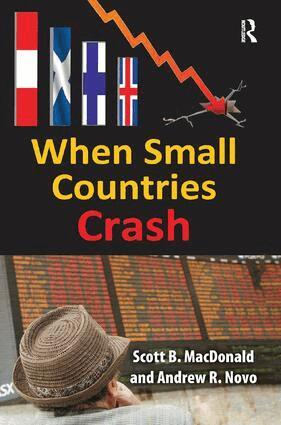
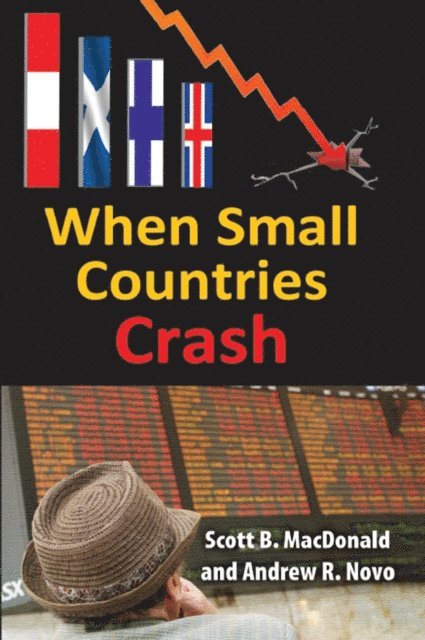
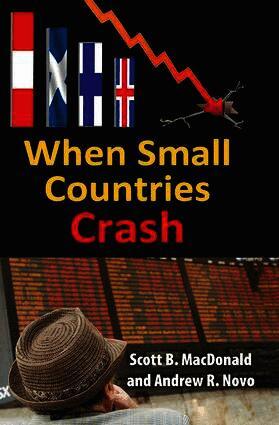
The public is fascinated with financial crashes. Historians portray the roar of an angry mob toppling presidents or prime ministers and destroying the property of those who are regarded as malefactors. And certainly, financial crisis is often a factor in political change. It is often overlooked, but nonetheless significant that one of the major causes for the French Revolution was the poor state of finances, with the nation coming to bankruptcy.Large systemic financial crises create history. Various actors, big and small, become caught in the drama, contributing to it in their own special way. When Small Countries Crash seeks to capture some of the drama of financial collapses and their impact on small countries, which the authors define as populations under 10 million, generally 5-6 million. MacDonald and Novo have selected countries that have had a financial crisis in the national economy; that included key actors; and where access to reliable data is available.As the authors demonstrate, the story of small countries suffering the costs of financial missteps is long and painful. They argue that smaller economies tend to be more vulnerable to economic shocks, many of which are externally generated. Small economies confront particular challenges in terms of economies of scale, diversification, and depth of expertise and workforce. The chapters in this absorbing book focus on Iceland, Latvia, Ireland, the Caribbean, Scotland, Finland, and Albania. This in-depth study is unique in its close look at financial disasters in countries that have, until now, been overlooked.
Inbunden, Engelska, 2017
2 197 kr
Skickas inom 10-15 vardagar
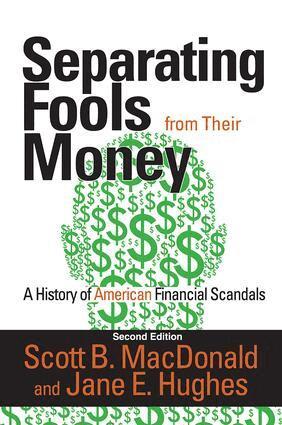
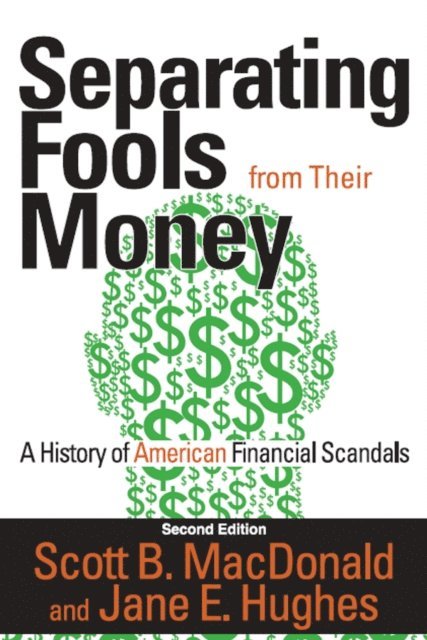
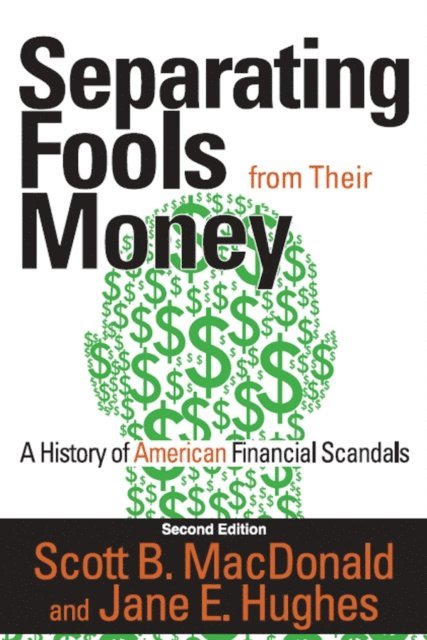
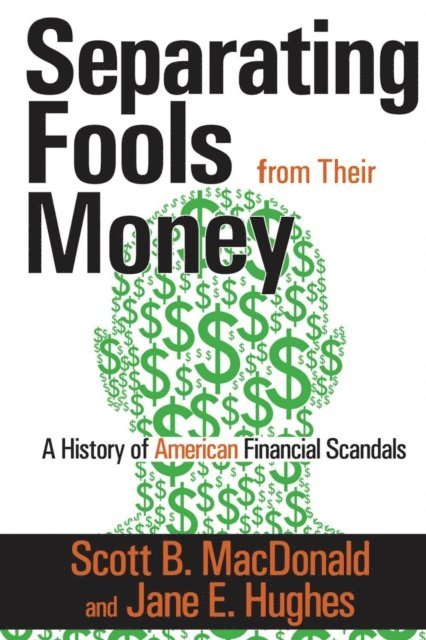
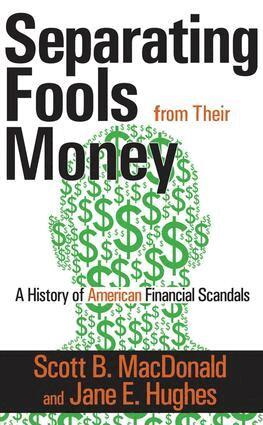
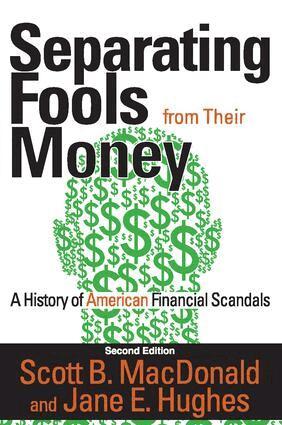
What do Michael Milken and Martha Stewart have in common? What was the most outrageous party thrown by a financial baron of the twentieth century? Which US war hero president became party to, and victim of, an unabashed con man known as the Napoleon of Wall Street?These questions and more are discussed in Separating Fools from Their Money. The authors trace the history of financial scandals beginning with young republic days through the Enron/WorldCom debacle of modern times. Informative and entertaining, this book reveals human nature in all of its dubious shades of grey. It also exposes themes common to all financial scandals, which remain astonishingly unchanged over time greed, hubris, media connections, self-interested politicians, and booms-gone-bust, to name a few.This second edition features a new preface and introduction, plus three new chapters, which address the financial panic of 2008, post-panic scandals, and the "princes of Ponzi." This book's accessible writing will interest the casual business reader as well as the seasoned investor.
Häftad, Engelska, 2009
487 kr
Skickas inom 10-15 vardagar
What do Michael Milken and Martha Stewart have in common? (Answer: Both became public scapegoats for an outrageous era of greed and excess.) What was the most outrageous party thrown by a financial baron of the twentieth century? (Answer: Tough call, but either Michael Milken's Predators Ball in 1985, or Dennis Kozlowski's Sardinian birthday bash in 2001, with its vodka-spouting sculpture.) Which U.S. war hero president became party to, and victim of, an unabashed con man known as the Napoleon of Wall Street? (Answer: Ulysses S. Grant, but it's a long story.)These questions and more are discussed in Scott MacDonald and Jane Hughes' Separating Fools from Their Money. The authors trace the history of financial scandals from the early days of the young republic through the Enron/WorldCom debacle of modern times. A host of colorful characters inhabit the pages of this history, revealing human nature in all of its dubious shades of gray. At the same time, the book exposes themes common to all financial scandals, which remain astonishingly unchanged over more than two centuries--greed, hubris, media connections, self-interested politicians, and booms-gone-bust, to name a few.Informative and entertaining, Separating Fools should engage the interest of investors and casual business readers, as well as economists interested in supplemental reading for their students.A new introduction focuses on trends since publication of the original, with a postscript on the financial panic of 2008.
Inbunden, Engelska, 2011
2 197 kr
Skickas inom 10-15 vardagar
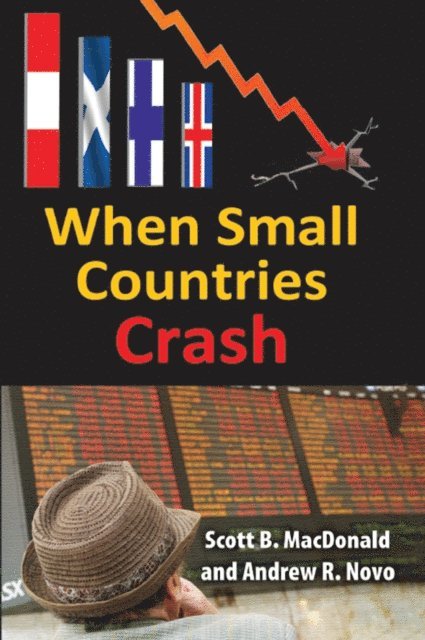
The public is fascinated with financial crashes. Historians portray the roar of an angry mob toppling presidents or prime ministers and destroying the property of those who are regarded as malefactors. And certainly, financial crisis is often a factor in political change. It is often overlooked, but nonetheless significant that one of the major causes for the French Revolution was the poor state of finances, with the nation coming to bankruptcy.Large systemic financial crises create history. Various actors, big and small, become caught in the drama, contributing to it in their own special way. When Small Countries Crash seeks to capture some of the drama of financial collapses and their impact on small countries, which the authors define as populations under 10 million, generally 5-6 million. MacDonald and Novo have selected countries that have had a financial crisis in the national economy; that included key actors; and where access to reliable data is available.As the authors demonstrate, the story of small countries suffering the costs of financial missteps is long and painful. They argue that smaller economies tend to be more vulnerable to economic shocks, many of which are externally generated. Small economies confront particular challenges in terms of economies of scale, diversification, and depth of expertise and workforce. The chapters in this absorbing book focus on Iceland, Latvia, Ireland, the Caribbean, Scotland, Finland, and Albania. This in-depth study is unique in its close look at financial disasters in countries that have, until now, been overlooked.
Häftad, Engelska, 2015
679 kr
Skickas inom 10-15 vardagar
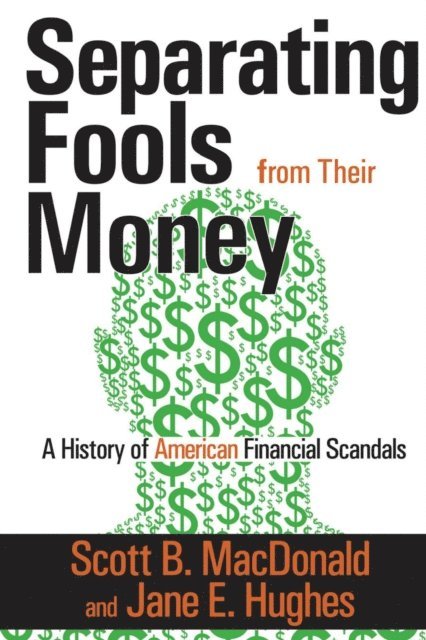
What do Michael Milken and Martha Stewart have in common? What was the most outrageous party thrown by a financial baron of the twentieth century? Which US war hero president became party to, and victim of, an unabashed con man known as the Napoleon of Wall Street?These questions and more are discussed in Separating Fools from Their Money. The authors trace the history of financial scandals beginning with young republic days through the Enron/WorldCom debacle of modern times. Informative and entertaining, this book reveals human nature in all of its dubious shades of grey. It also exposes themes common to all financial scandals, which remain astonishingly unchanged over time—greed, hubris, media connections, self-interested politicians, and booms-gone-bust, to name a few.This second edition features a new preface and introduction, plus three new chapters, which address the financial panic of 2008, post-panic scandals, and the "princes of Ponzi." This book's accessible writing will interest the casual business reader as well as the seasoned investor.
Inbunden, Engelska, 2015
702 kr
Skickas inom 10-15 vardagar
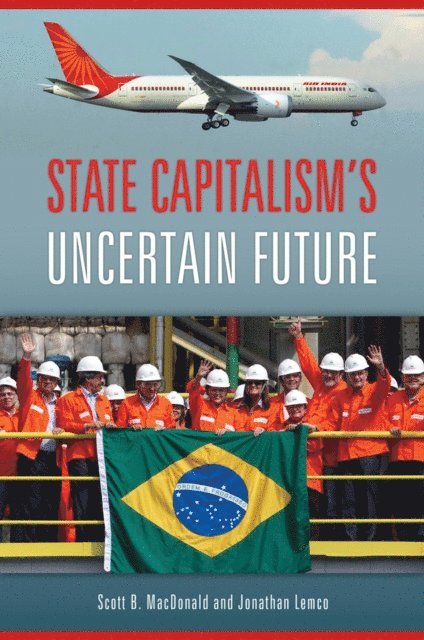
A provocative and timely look at the current state of global economics, particularly how the state-owned companies of Russia, China, Latin America, and other emerging markets are influencing how people work, how they consume, and how they prosper.The global economy is changing: experts are noting slow growth in the advanced economies, greater volatility in international markets, and the emergence of state-owned companies in the competitive marketplace. This forward-looking reference explores the role that state capitalism plays within the political structures of countries throughout the world. The text begins with an introduction to state capitalism, moves into an in-depth examination of several countries and regions, and concludes with a discussion on the future of state capitalism in the next decade. Coauthors Scott B. MacDonald and Jonathan Lemco examine the challenges that state-owned companies face in the global economy, including a weak legal and commercial infrastructure, a conflict of interest between politics and business, and massive corruption in local and regional governments. A close review of the perils of state capitalism based on meritocracy devolving into crony capitalism invites debate on the longevity of this economic system versus a free market economy.
Inbunden, Engelska, 1997
1 632 kr
Skickas inom 10-15 vardagar
Latin America is developing rapidly. As the authors see the region, a small group of countries has found a fast-forward button. In these countries change is exciting, occurring at such a rapid pace that a major breakthrough hi economic growth appears within grasp. After an almost decade-long period of recession and stagnation, many Latin American economies now have elected governments. With a few exceptions, most have also improved their socioeconomic conditions beyond meeting basic human needs. Yet few North Americans or Europeans are aware of these advances. How does Latin America fit into the changing world in the 1990s, and why should someone living in the United States, Europe, or developed parts of the Pacific Basin care?Fast Forward shows that Latin America's economic renaissance clearly has implications for a post-Cold War world order. Latin America is starting to make important contributions, particularly in the areas of international diplomacy, economics, and culture. Collectively, Latin Americans now demonstrate a coherent collective will about where they wish to take themselves. This does not mean that U.S. influence in the Americas will soon disappear, but that new challenges in the international system will force greater equity in Western Hemisphere relationships.While Latin America in the 1990s offers much to be excited about, the authors caution that there are dangers in being too enthusiastic. The always-present potential for top-down authoritarian approaches must temper enthusiasm about a better Latin American future. Despite this, the authors see a well-defined departure from past economic modes occurring and the potential for a higher level of development for some countries. This book is for economists, sociologists, and political scientists interested in economic and political development, and researchers interested in Latin America in particular.
Inbunden, Engelska, 2022
1 070 kr
Skickas inom 10-15 vardagar
This book examines the slide into a new Cold War in the Caribbean. The primary argument is that the Caribbean’s geopolitics have shifted from a period of relative great power disinterest in the aftermath of the Cold War to a gradual movement into a new Cold War in which a global rivalry between the U.S. and China is acted out regionally.
Häftad, Engelska, 2023
751 kr
Skickas inom 10-15 vardagar
This book examines the slide into a new Cold War in the Caribbean. The primary argument is that the Caribbean’s geopolitics have shifted from a period of relative great power disinterest in the aftermath of the Cold War to a gradual movement into a new Cold War in which a global rivalry between the U.S. and China is acted out regionally.