Against a broader backdrop of globalization and worldwide moves toward political democracy, The New Politics of Inequality in Latin America examines the unfolding relationships among social change, equity, and the democratic representation of the poor in Latin America. Recent Latin American governments have turned away from redistributive policies; at the same time, popular political and social organizations have been generally weakened, inequality has increased, and the gap between rich and poor has grown. Hanging in the balance is the consolidation and the quality of new or would-be democracies; this volume suggests that governments must find not just short-term programmes to alleviate poverty, but long-term means to ensure the effective integration of the poor into political life. The New Politics of Inequality in Latin America bridges the intellectual chasm between, on the one hand, studies of grassroots politics, and on the other, explorations of elite politics and formal institution-building. It will be of interest to students and scholars of contemporary Latin American politics and society and, more generally, in the vicissitudes of democracy and citizenship in the late twentieth-century global system.
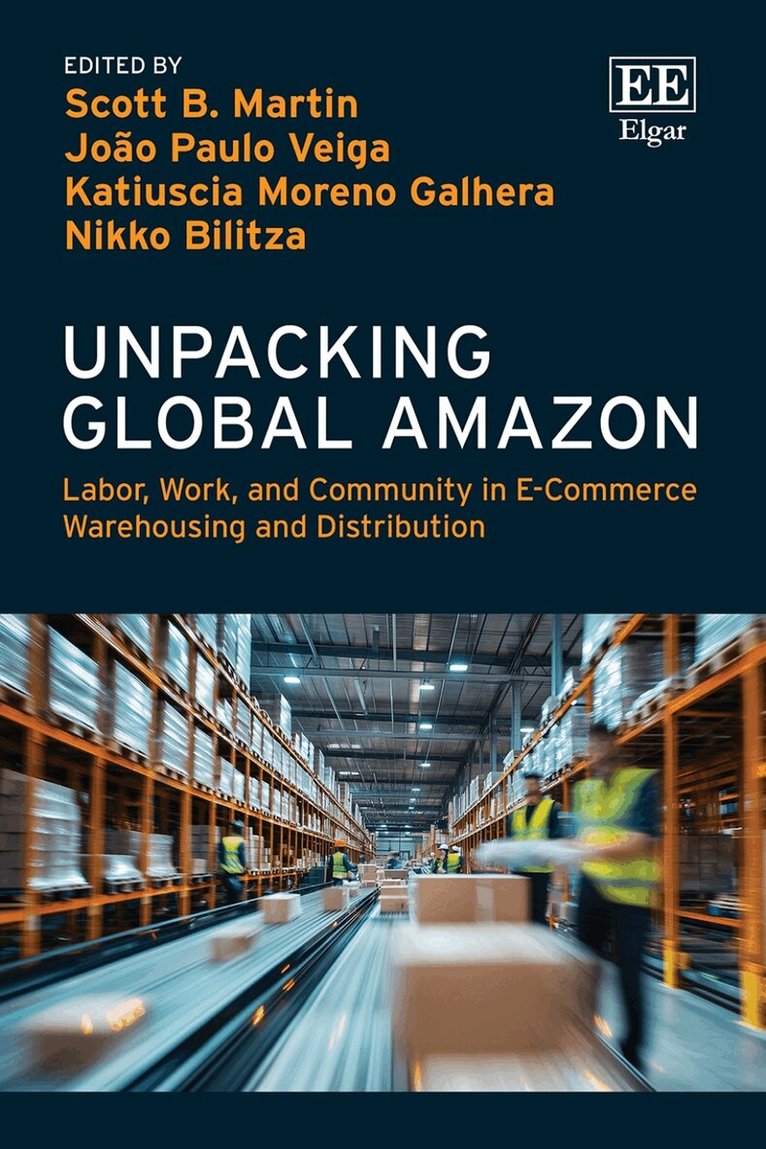
Positioning Amazon as a key actor reshaping business and labor paradigms in the digitized global economy, this book examines its relationship with labor markets and institutions worldwide. Tracing the company’s expansion over three-plus decades and controversies, particularly since the COVID-19 pandemic, based on fresh fieldwork, expert contributors demonstrate how Amazon shapes, and is re-shaped by, its various locations through regulation, conflict, and competition.Leading scholars examine the complex interplay of Amazon’s encounters with markets, institutions, and actors in national and subnational settings. They analyze the consequences of fast-paced, low-skilled labor mandates against the backdrop of fierce resistance from union and civil society campaigners and local competitors. Chapters contribute to key debates, evaluating Amazon’s history of anti-union behavior and increasingly algorithmically driven management. Drawing on empirical research, the book assesses union and community efforts and regulatory initiatives that seek to contest and contain the social impacts of a warehousing and delivery system built on speed, worker exploitation, and refashioning economic geographies around immediate one-click consumerism.An essential resource for understanding the global infrastructure of increasingly digitized multinational tech corporations, this book is an invaluable resource for scholars and students of business management, economics, political economy, human rights, and labour policy. E-commerce and NGO professionals, as well as policymakers, will similarly benefit from its timely and practical discussion of advocacy approaches and policy controversies.
Positioning Amazon as a key actor reshaping business and labor paradigms in the digitized global economy, this book examines its relationship with labor markets and institutions worldwide. Tracing the company's expansion over three-plus decades and controversies, particularly since the COVID-19 pandemic, based on fresh fieldwork, expert contributors demonstrate how Amazon shapes, and is re-shaped by, its various locations through regulation, conflict, and competition.Leading scholars examine the complex interplay of Amazon's encounters with markets, institutions, and actors in national and subnational settings. They analyze the consequences of fast-paced, low-skilled labor mandates against the backdrop of fierce resistance from union and civil society campaigners and local competitors. Chapters contribute to key debates, evaluating Amazon's history of anti-union behavior and increasingly algorithmically driven management. Drawing on empirical research, the book assesses union and community efforts and regulatory initiatives that seek to contest and contain the social impacts of a warehousing and delivery system built on speed, worker exploitation, and refashioning economic geographies around immediate one-click consumerism.An essential resource for understanding the global infrastructure of increasingly digitized multinational tech corporations, this book is an invaluable resource for scholars and students of business management, economics, political economy, human rights, and labour policy. E-commerce and NGO professionals, as well as policymakers, will similarly benefit from its timely and practical discussion of advocacy approaches and policy controversies.
This book explores how and why the labor practices of the world’s largest employer, supermarket giant Walmart, were contested by unions and government regulators as it expanded to Latin America starting in the 1990s. With an in-depth case study of Brazil, and a comparative chapter examining Argentina, Chile, and Mexico, this book analyzes the problematic encounter between diffusion of home-office anti-labor practices and evolving national institutional contexts that are quite varied and in some cases enable considerable resistance by unions and/or regulators. Walmart’s “repressive familial” and “anti-union” model is found to generate costs and conflicts that contributed to its unprofitability and ultimate exit from Brazil in 2018. This experience, contrasted with country situations where Walmart’s overall competitive and labor and human resource practices “fit” better with national markets and institutions, underlines the brittle, problematic nature of diffusionist corporate models lacking adaptive capacity to significant cross-national variations across host countries.