Scott de Marchi – författare
Visar alla böcker från författaren Scott de Marchi. Handla med fri frakt och snabb leverans.
7 produkter
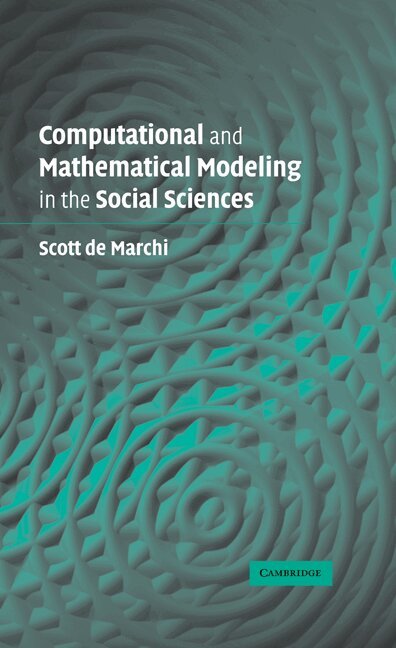
Computational and Mathematical Modeling in the Social Sciences
Häftad, 2005
693 kr
Lägg i varukorg
Mathematical models in the social sciences have become increasingly sophisticated and widespread in the last decade. This period has also seen many critiques, most lamenting the sacrifices incurred in pursuit of mathematical rigor. If, as critics argue, our ability to understand the world has not …
Computational and Mathematical Modeling in the Social Sciences
Inbunden, 2005
924 kr
Lägg i varukorg
Mathematical models in the social sciences have become increasingly sophisticated and widespread in the last decade. This period has also seen many critiques, most lamenting the sacrifices incurred in pursuit of mathematical rigor. If, as critics argue, our ability to understand the world has not …
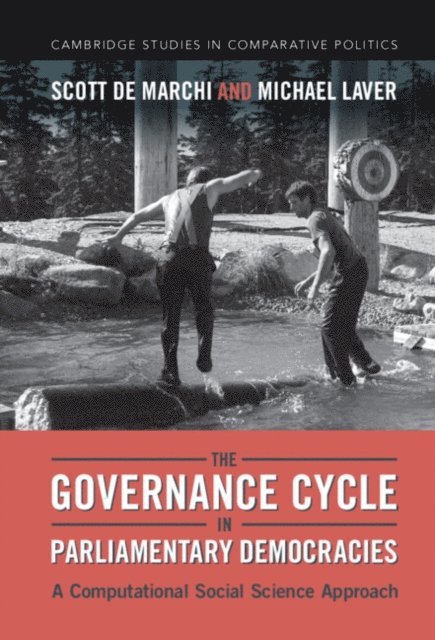
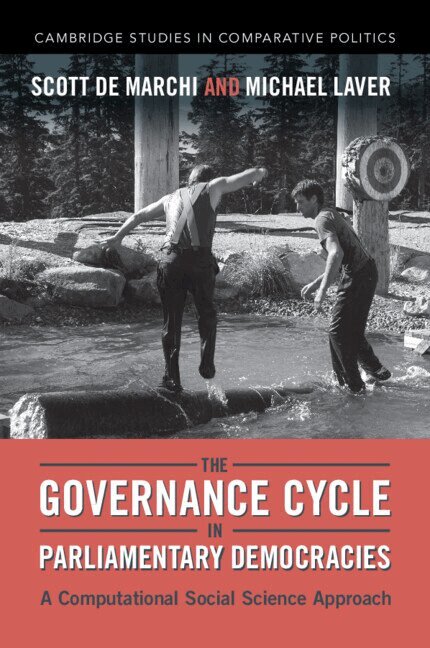
Governance Cycle in Parliamentary Democracies
A Computational Social Science Approach
Av Michael Laver, Scott de Marchi
E-bok, 2023
473 kr
Lägg i varukorg
Parliamentary democracy involves a never-ending cycle of elections, government formations, and the need for governments to survive in potentially hostile environments. These conditions require members of any government to make decisions on a large number of issues, some of which sharply divide …
Governance Cycle in Parliamentary Democracies
A Computational Social Science Approach
Av Michael Laver, Scott de Marchi
E-bok, 2023
473 kr
Lägg i varukorg
Parliamentary democracy involves a never-ending cycle of elections, government formations, and the need for governments to survive in potentially hostile environments. These conditions require members of any government to make decisions on a large number of issues, some of which sharply divide …
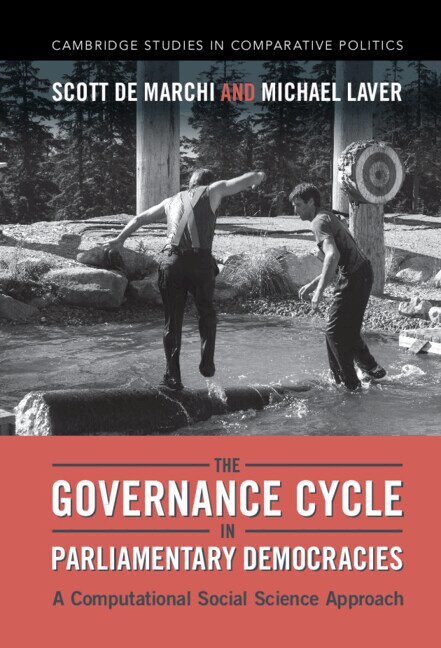
The Governance Cycle in Parliamentary Democracies
A Computational Social Science Approach
Av Scott de Marchi, Michael Laver
Inbunden, 2023
1482 kr
Lägg i varukorg
Parliamentary democracy involves a never-ending cycle of elections, government formations, and the need for governments to survive in potentially hostile environments. These conditions require members of any government to make decisions on a large number of issues, some of which sharply divide …
The Governance Cycle in Parliamentary Democracies
A Computational Social Science Approach
Av Scott de Marchi, Michael Laver
Häftad, 2023
487 kr
Lägg i varukorg
Parliamentary democracy involves a never-ending cycle of elections, government formations, and the need for governments to survive in potentially hostile environments. These conditions require members of any government to make decisions on a large number of issues, some of which sharply divide …
You Are What You Choose
The Habits of Mind That Really Determine How We Make Decisions
Av James T. Hamilton, Scott de Marchi
E-bok, 2009
81 kr
Lägg i varukorg
The hidden patterns behind the way we make decisions Several recent books, from Blink to Freakonomics to Predictably Irrational , have examined how people make choices. But none explain why different people have such different styles of decision making—and why those styles seem consistent across …