Scott L. Mingus – författare
Visar alla böcker från författaren . Handla med fri frakt och snabb leverans.
6 produkter
6 produkter
E-bok
Engelska, 2022150 kr
Läs direkt efter köp
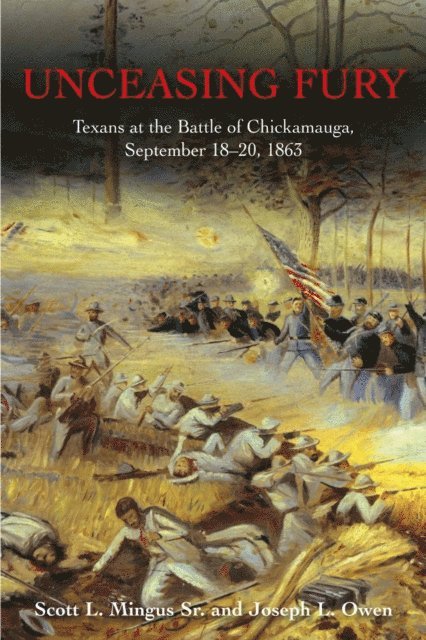
"Focuses on the extensive contributions to the pyrrhic Confederate victory at Chickamauga made by the brave Lone Star State soldiers." —Eric J. Wittenberg, award–winning author of Destined to Fail After Gettysburg, it was the Civil War''s largest battle, but until recently, little of consequence had been written about Chickamauga. You can count on one hand the number of authors who have tackled Chickamauga in any real depth, and most of their works cover the entire battle. Left unmined and mostly forgotten are the experiences of specific brigades, regiments, and state-affiliated troops. Scott Mingus and Joseph Owen''s Unceasing Fury: Texans at the Battle of Chickamauga, September 18–20, 1863 is the first full-length book to examine in detail the role of troops from the Lone Star State. Texas troops fought in almost every major sector of the sprawling Chickamauga battlefield, from the first attacks on September 18 on the bridges spanning the creek to the final attack on Snodgrass Hill on September 20. Fortunately, many of the survivors left vivid descriptions of battle action, the anguish of losing friends, the pain and loneliness of being so far away from home, and their often-colorful opinions of their generals. The authors of this richly detailed study based their work on hundreds of personal accounts, memoirs, postwar newspaper articles, diaries, and other primary sources. Their meticulous work provides the first exploration of the critical role Texas enlisted men and officers played in the three days of fighting near West Chickamauga Creek in September 1863. Unceasing Fury provides the Lone Star State soldiers with the recognition they have so long deserved.
E-bok
Engelska, 2022243 kr
Läs direkt efter köp
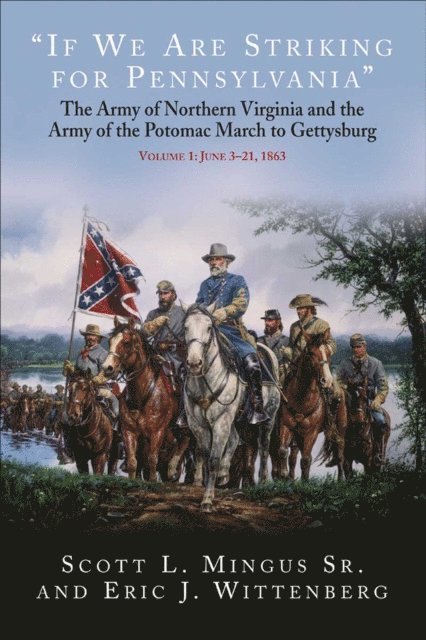
Scott L. Mingus Sr. and Eric J. Wittenberg, the authors of more than forty Civil War books, have once again teamed up to present a history of the opening moves of the Gettysburg Campaign in the two-volume study "If We Are Striking for Pennsylvania": The Army of Northern Virginia and the Army of the Potomac March to Gettysburg. This compelling study is one of the first to integrate the military, media, political, social, economic, and civilian perspectives with rank-and-file accounts from the soldiers of both armies as they inexorably march toward their destiny at Gettysburg. This first installment covers June 3–21, 1863, while the second, spanning June 22–30, completes the march and carries the armies to the eve of the fighting. Gen. Robert E. Lee began moving part of his Army of Northern Virginia from the Old Dominion toward Pennsylvania on June 3, 1863. Lee believed his army needed to win a major victory on Northern soil if the South was to have a chance at winning the war. Transferring the fighting out of war-torn Virginia would allow the state time to heal while he supplied his army from untapped farms and stores in Maryland and the Keystone State. Lee had also convinced Pres. Jefferson Davis that his offensive would interfere with the Union effort to take Vicksburg in Mississippi. The bold movement would trigger extensive cavalry fighting and a major battle at Winchester before culminating in the bloody three-day battle at Gettysburg. As the Virginia army moved north, the Army of the Potomac responded by protecting the vital roads to Washington, D.C., in case Lee turned to threaten the capital. Opposing presidents Abraham Lincoln and Jefferson Davis, meanwhile, kept a close watch on the latest and often conflicting military intelligence gathered in the field. Throughout northern Virginia, central Maryland, and south-central Pennsylvania, meanwhile, civilians and soldiers alike struggled with the reality of a mobile campaign and the massive logistical needs of the armies. Thousands left written accounts of the passage of the long martial columns. Mingus and Wittenberg mined hundreds of primary accounts, newspapers, and other sources to produce this powerful and gripping account. As readers will quickly learn, much of it is glossed over in other studies of the campaign, which cannot be fully understood without a firm appreciation of what the armies (and civilians) did on their way to the small crossroads town in Pennsylvania.
E-bok
PDF, Engelska, 2023149 kr
Läs direkt efter köp
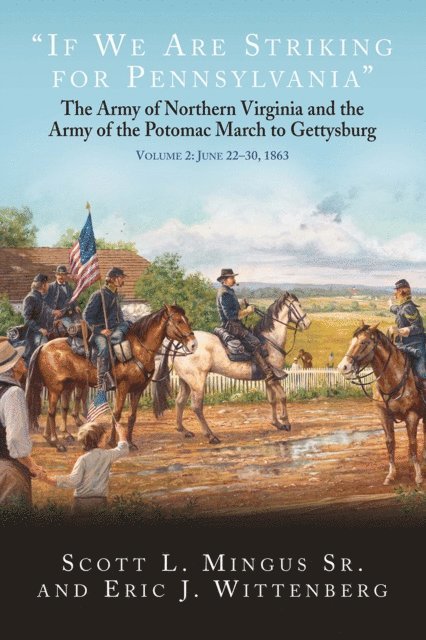
The second half of the two-volume history of the Union''s and Confederacy''s opening moves of the American Civil War''s Gettysburg Campaign.This compelling study is the first to fully integrate the military, political, social, economic, and civilian perspectives with rank-and-file accounts from the soldiers of both armies during the inexorably march north toward their mutual destinies at Gettysburg.This current volume (June twenty-two–thirty) completes the march to Gettysburg and details the actions and whereabouts of each component of the armies up to the eve of the fighting. The large-scale maneuvering in late June prompted General Hooker to move his Army of the Potomac north after his opponent and eventually above the Potomac, where he is removed from command and replaced by V Corps commander George G. Meade. Jeb Stuart begins his controversial and consequential ride that strips away the eyes and ears of the Virginia army. Throughout northern Virginia, central Maryland, and south-central Pennsylvania, civilians, politicians, and soldiers alike struggle with the reality of a mobile campaign and the massive logistical needs of the armies.Mingus and Wittenberg mined hundreds of primary accounts, newspapers, and other sources to describe the passage of the long martial columns, the thunderous galloping of hooves, and the looting, fighting, suffering, and dying. It is simply impossible to fully grasp and understand the campaign without a firm appreciation of what the armies and the civilians did during the days leading up to the fateful meeting at the small crossroads town in Adams County, Pennsylvania. This powerful and gripping saga is a ground-breaking study.
Häftad, Engelska, 2027
297 kr
Kommande
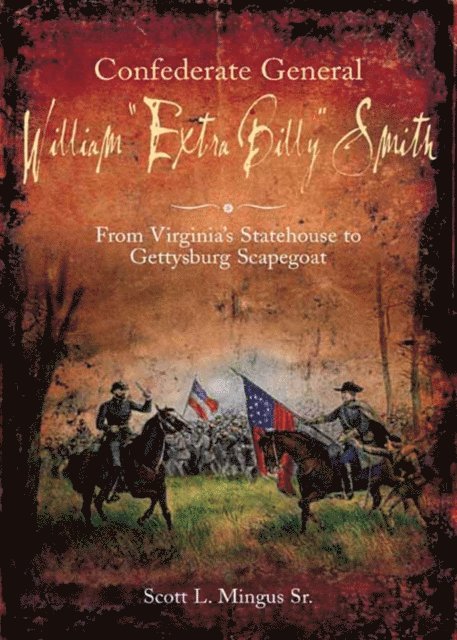
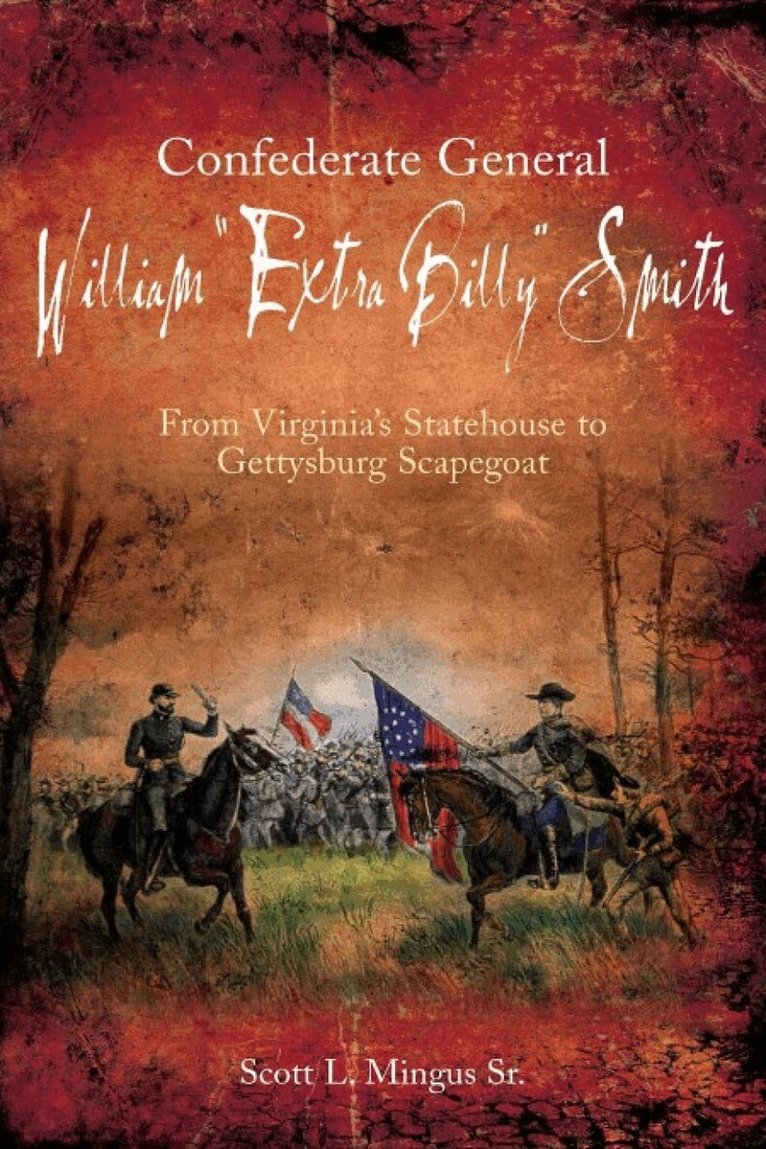
William “Extra Billy” Smith, the oldest and one of the most controversial Confederate generals on the field at Gettysburg, was also one of the most colorful and charismatic characters of the Civil War and the antebellum Old South. Despite a life full of drama, politics, and adventure, very few books have been written on Smith since a biased loosely written compilation in the late 19th century by his brother-in-law. Scott L. Mingus Sr. has ably filled this historical void with Confederate General William “Extra Billy” Smith: From Virginia’s Statehouse to Gettysburg Scapegoat, now in paperback.Known nationally as “Extra Billy” because of his prewar penchant for finding loopholes in government postal contracts to gain extra money for his stagecoach lines, Smith served as Virginia’s governor during both the War with Mexico and the Civil War, served five terms in the U.S. Congress, and was one of Virginia’s leading spokesmen for slavery and States’ Rights. Extra Billy’s extra-long speeches and wry sense of humor were legendary among his peers. A lawyer during the heady Gold Rush days, Smith made a fortune in California and, like his income earned from stagecoaches, quickly lost it.Despite his advanced age Smith took the field and fought well at First Manassas, was wounded at Seven Pines and again at Sharpsburg, and marched with Lee’s Army of Northern Virginia into Pennsylvania. There, on the first day at Gettysburg, Smith’s frantic messages about a possible Union flanking attack remain a matter of controversy to this day. Did his aging eyes see distant fence-lines that he interpreted as approaching enemy soldiers—mere phantoms of his imagination?—or did his prompt action stave off a looming Confederate disaster? What we do know is that his calls for support diverted limited Confederate manpower away from attacks against Cemetery Hill and Culp’s Hill that might have turned the tide of Southern fortunes in Pennsylvania.Mingus’s biography draws upon a wide array of newspapers, diaries, letters, and other firsthand accounts to paint a broad, deep, and colorful portrait of one of the South’s most interesting leaders and devoted sons. Complete with original maps and photos, Extra Billy Smith will satisfy anyone who loves politics, war, and a great story well told.
Häftad, Engelska, 2026
324 kr
Kommande
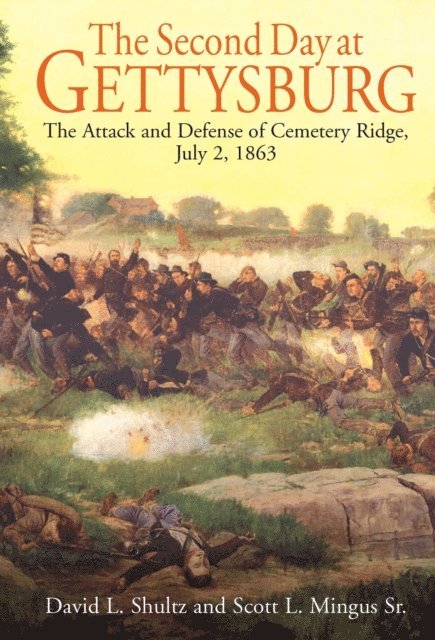
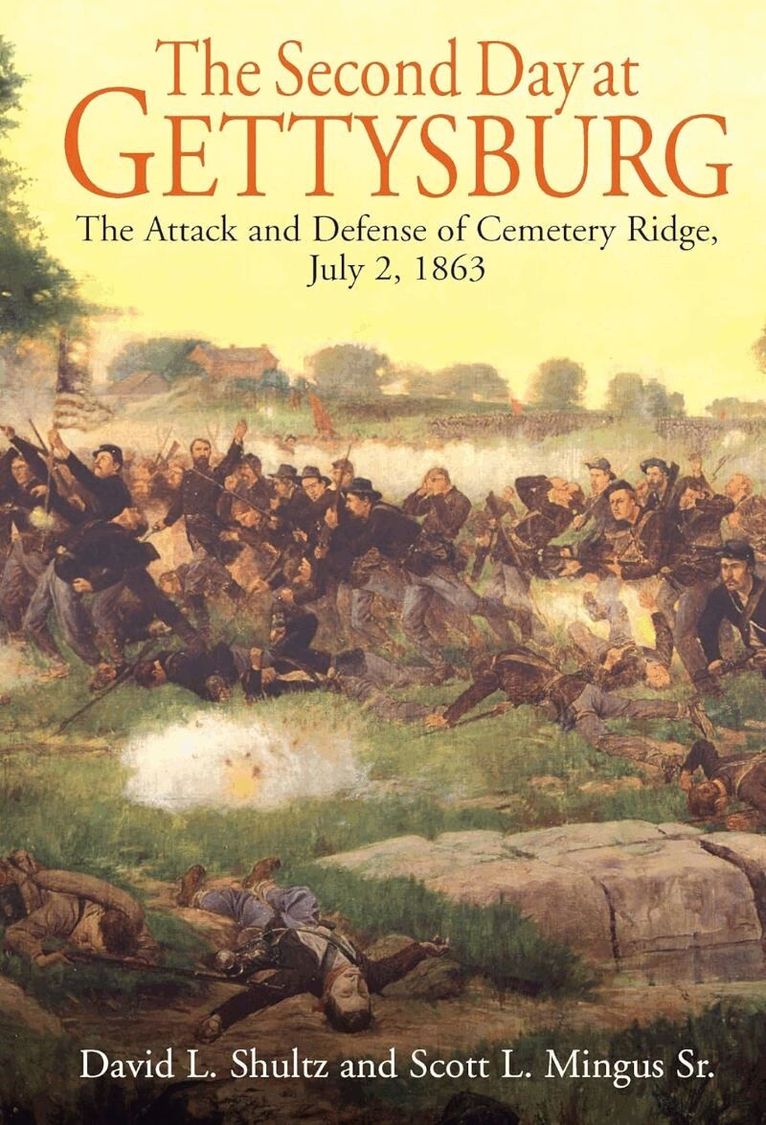
So much has been written about Gettysburg, goes the well-worn cliché, that there is nothing new left to write. Now in paperback, The Second Day at Gettysburg: The Attack and Defense of Cemetery Ridge, July 2, 1863, by David L. Shultz and Scott L. Mingus Sr. aptly demonstrates that there is indeed still much to learn about the war’s largest and bloodiest battle.Based upon a faulty early-morning reconnaissance, General Robert E. Lee decided to attack up the Emmitsburg Road in an effort to collapse the left flank of General George Meade’s Army of the Potomac and decisively defeat it. The effort got underway when General James Longstreet’s First Corps troops crushed General Sickles’ Peach Orchard salient and turned north and east to drive deeply into the Union rear. A third Confederate division under Richard Anderson, part of A. P. Hill’s Third Corps, joined in the attack, slamming one brigade after another into the overstretched Union line stitched northward along the Emmitsburg Road. The bloody fighting stair-stepped its way up Cemetery Ridge, tearing open a large gap in the center of the Federal line that threatened to split the Union army in two. The fate of the Battle of Gettysburg hung in the balance.Despite the importance of the position, surprisingly few Union troops were available to defend the yawning gap on the ridge. Major General Winfield S. Hancock’s Second Corps had been reduced to less than one division when his other two were sucked southward to reinforce the collapsing Third Corps front. Reprising Horatio at the Bridge, the gallant commander cobbled together a wide variety of infantry and artillery commands and threw them into the action, refusing to yield even one acre of ground. The long and intense fighting included hand-to-hand combat and the personal heroics of which legends are made.Veteran Gettysburg authors Shultz and Mingus merge their subject matter expertise and keen understanding of the complex undulating terrain and physical features to produce the most detailed study of this action ever written. In addition to demonstrating how the fighting on the far Union left directly affected the combat to come in the center of General Meade’s line, the authors also address some of the most commonly overlooked aspects of the fighting: what routes did some of the key units take to reach the front? What could the commanders actually see, and when could they see it? How did the fences, roads, farms, trees, ravines, creeks, and others obstacles directly affect tactical decisions, and ultimately the battle itself?Based upon extensive research and graced with dozens of photographs and detailed original maps, The Second Day at Gettysburg offers a balanced, compelling, and ultimately satisfying account of one of the most overlooked and yet important aspects of the defining battle of the American Civil War.
Häftad, Engelska, 2011
306 kr
Tillfälligt slut
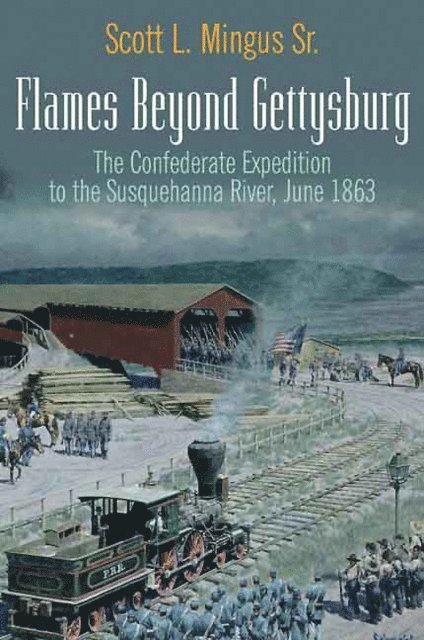
The Gettysburg Campaign has been examined in minute detail from nearly every aspect but one; the key role played by Richard Ewell’s Second Corps during the final days in June. Scott Mingus’s Flames Beyond Gettysburg: The Confederate Expedition to the Susquehanna River, June 1863 is the first in-depth study of these crucial summer days that not only shaped the course of the Gettysburg Campaign, but altered the course of our nation’s history.In two powerful columns, Ewell’s Corps swept toward the strategically important Susquehanna River and the Pennsylvania capital looming beyond. Fear coursed through the local populace while Washington and Harrisburg scrambled to meet the threat. One of Ewell’s columns included a veteran division under Jubal Early, whose objectives included the capture and ransom of towns and the destruction of railroad bridges and the Hanover Junction rail yard. Early’s most vital mission was the seizure of the Columbia Bridge, which spanned the Susquehanna River between Wrightsville and Columbia. To capture the longest covered bridge in the world would allow Early’s Division to cross into prosperous Lancaster County and move against the capital in Harrisburg from its relatively undefended rear. Along the way, one of Early’s brigades under John Gordon occupied Gettysburg and spilled the first blood there days before the bloodiest battle ever fought on American soil began on July 1.Flames Beyond Gettysburg vividly narrates both sides of Ewell’s drama-filled expedition, including key Southern decisions, the response of the Pennsylvania militiamen and civilians who opposed the Confederates, and the burning of the Columbia Bridge. Based upon extensive primary source material and featuring original maps by cartographer Steven Stanley, the fast-paced and gracefully written Flames Beyond Gettysburg is a welcomed and important addition to the Gettysburg literature.