Sejuti Das Gupta – författare
Visar alla böcker från författaren Sejuti Das Gupta. Handla med fri frakt och snabb leverans.
8 produkter
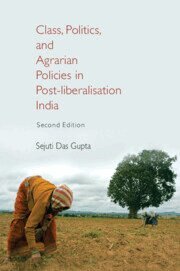
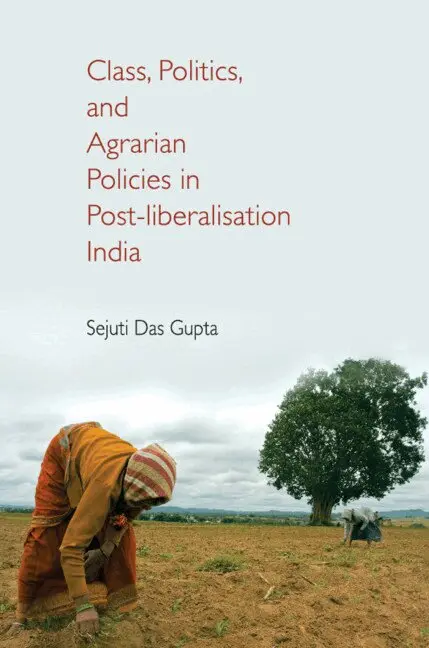
Class, Politics, and Agrarian Policies in Post-liberalisation India
Inbunden, 2024
1526 kr
Lägg i varukorg
Has there been a shift in agrarian policies in India since liberalisation? What has been the impact of these policies on new class formation and consolidation of existing ones? Did proprietary classes with close relations to the state influence the formulation of these policies? Do class–state …
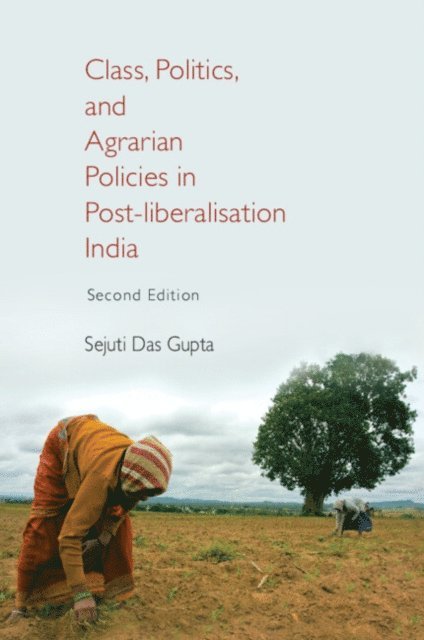
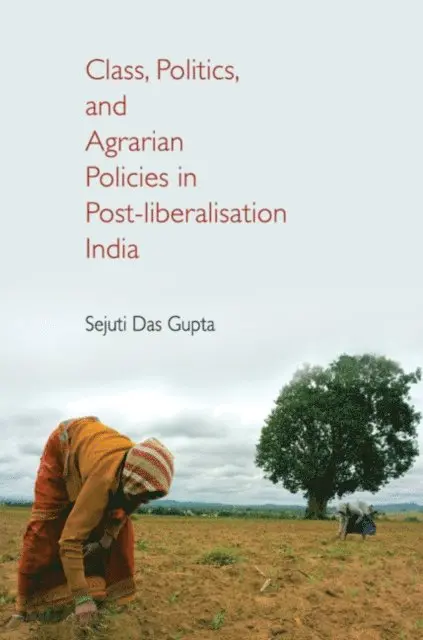
Class, Politics, and Agrarian Policies in Post-liberalisation India
E-bok, 2024
1511 kr
Lägg i varukorg
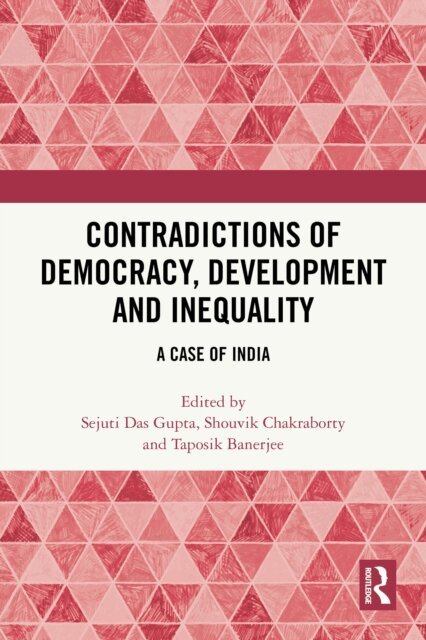
Contradictions of Democracy, Development and Inequality
A Case of India
Av Sejuti Das Gupta, Shouvik Chakraborty m. fl.
Inbunden, 2025
2516 kr
Lägg i varukorg
Identity politics has widened representation for the marginalised groups in democracies, while neoliberalism has deepened inequality. This volume finds answers to the paradox of widening representation and worsening inequality especially in India exploring the themes of development and identity in …
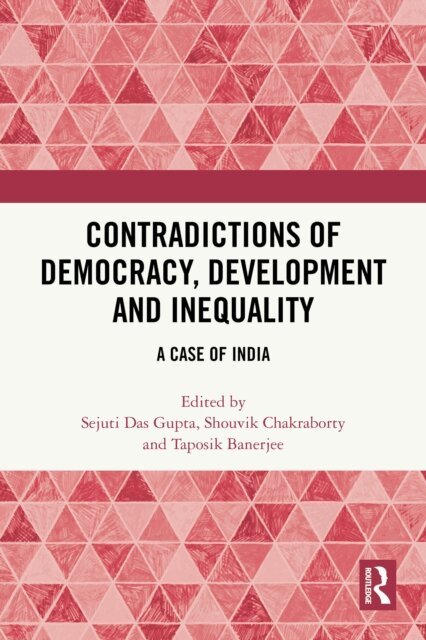
Contradictions of Democracy, Development and Inequality
A Case of India
Av Sejuti Das Gupta, Shouvik Chakraborty m. fl.
Häftad, 2026
707 kr
Lägg i varukorg
Identity politics has widened representation for the marginalised groups in democracies, while neoliberalism has deepened inequality. This volume finds answers to the paradox of widening representation and worsening inequality especially in India exploring the themes of development and identity in …
Contradictions of Democracy, Development and Inequality
A Case of India
Av Taposik Banerjee, Shouvik Chakraborty m. fl.
E-bok, 2025
813 kr
Lägg i varukorg
Identity politics has widened representation for the marginalised groups in democracies, while neoliberalism has deepened inequality. This volume finds answers to the paradox of widening representation and worsening inequality especially in India exploring the themes of development and identity in …
Contradictions of Democracy, Development and Inequality
A Case of India
Av Taposik Banerjee, Shouvik Chakraborty m. fl.
E-bok, 2025
813 kr
Lägg i varukorg
Identity politics has widened representation for the marginalised groups in democracies, while neoliberalism has deepened inequality. This volume finds answers to the paradox of widening representation and worsening inequality especially in India exploring the themes of development and identity in …
Class, Politics, and Agrarian Policies in Post-liberalisation India
Inbunden, 2019
1351 kr
Lägg i varukorg
The book visits the idea of New India, studying how the political economy of India has changed significantly in post-liberalisation India. The book challenges the notion that all farmers in India are in agrarian distress, showing that some classes of farmers have gained under policies; it helps …
Class, Politics, and Agrarian Policies in Post-liberalisation India
E-bok, 2019
1337 kr
Lägg i varukorg
The book visits the idea of New India, studying how the political economy of India has changed significantly in post-liberalisation India. The book challenges the notion that all farmers in India are in agrarian distress, showing that some classes of farmers have gained under policies; it helps …