Selina M. Stead – författare
Visar alla böcker från författaren Selina M. Stead. Handla med fri frakt och snabb leverans.
6 produkter
6 produkter
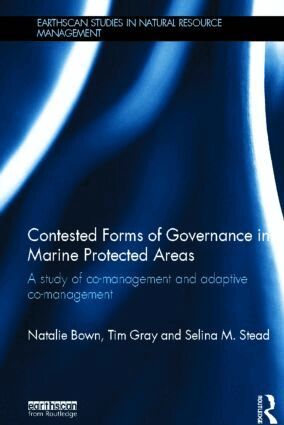
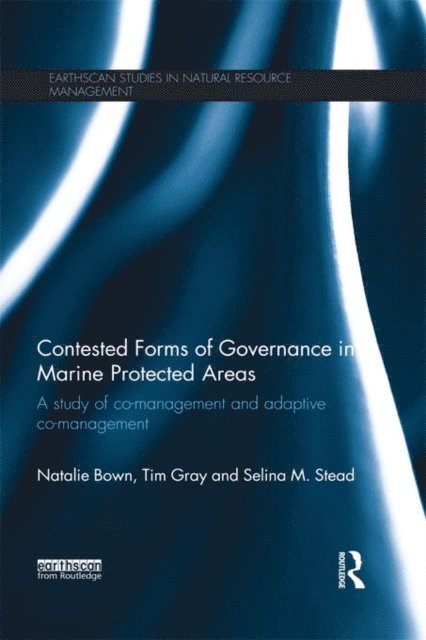
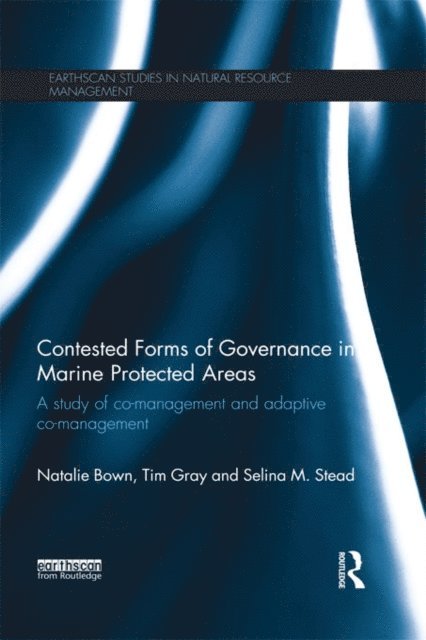
Contested Forms of Governance in Marine Protected Areas
A Study of Co-Management and Adaptive Co-Management
Inbunden, Engelska, 2012
2 113 kr
Skickas inom 10-15 vardagar
In this book, the authors examine the governance of marine protected areas (MPA), and in particular they compare two different forms of governance – co-management (CM) and adaptive co-management (ACM). CM is characterized by the decentralization of the decision-making process, incorporating the governed as well as the government. ACM is characterized by the dynamic process whereby co-management decision-making is made continuously responsive to the changing ecological and socio-economic circumstances of the MPA. The authors carry out a comprehensive critical analysis of CM and ACM before applying these concepts to the case study of the Cayos Cochinos Marine Protected Area off Honduras to assess two successive management cycles, 2004-9 and 2008-13. The area was designated as an MPA in 1993, a governmental decision which was met with resentment by local communities. CM was introduced in 2004 to involve these local stakeholders in the decision-making process, but achieved limited success. In an attempt to deal with these deficiencies, ACM was adopted in the second management plan in 2008, but whereas the position of the local communities improved, it tipped the scales too far away from conservation. A third management plan is currently being prepared that promises to strike a better balance between ecological and socio-economic objectives. A central theme of the book is to examine how far the CCMPA adhered to the principles of CM and ACM respectively in its first two management plans.
1 856 kr
Kommande
This important book examines seafood ethics, policy, and governance, with an integrated analysis of capture fisheries and aquaculture production methods, typically treated separately in previous works.Following an introductory chapter, innovative conceptual and methodological frameworks are presented by the book’s expert author team, together with a set of ethical and sustainability indicators for the evaluation of the impacts of seafood production, trade and consumption on global society and ecosystems. The book also contains international case studies and concludes with a discussion of the implications of the research findings on global food security and sustainability.Seafood Ethics, written by some of the world’s leaders in the subject, is a thorough review of the current situation, providing vitally-important information for all those involved in fisheries, aquaculture production and trade, those involved in governance and policy decisions and involved in the ethical issues surrounding these subjects. All libraries in universities and research establishments where fisheries, aquaculture, ethics environmental sciences, and economics are studied and taught should have copies of this very valuable publication.
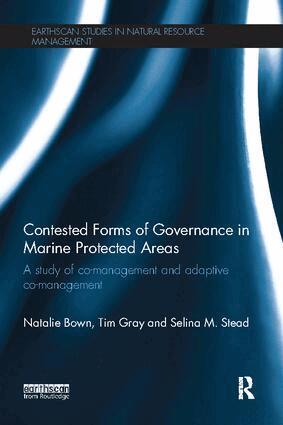
Contested Forms of Governance in Marine Protected Areas
A Study of Co-Management and Adaptive Co-Management
Häftad, Engelska, 2017
713 kr
Skickas inom 10-15 vardagar
In this book, the authors examine the governance of marine protected areas (MPA), and in particular they compare two different forms of governance – co-management (CM) and adaptive co-management (ACM). CM is characterized by the decentralization of the decision-making process, incorporating the governed as well as the government. ACM is characterized by the dynamic process whereby co-management decision-making is made continuously responsive to the changing ecological and socio-economic circumstances of the MPA. The authors carry out a comprehensive critical analysis of CM and ACM before applying these concepts to the case study of the Cayos Cochinos Marine Protected Area off Honduras to assess two successive management cycles, 2004-9 and 2008-13. The area was designated as an MPA in 1993, a governmental decision which was met with resentment by local communities. CM was introduced in 2004 to involve these local stakeholders in the decision-making process, but achieved limited success. In an attempt to deal with these deficiencies, ACM was adopted in the second management plan in 2008, but whereas the position of the local communities improved, it tipped the scales too far away from conservation. A third management plan is currently being prepared that promises to strike a better balance between ecological and socio-economic objectives. A central theme of the book is to examine how far the CCMPA adhered to the principles of CM and ACM respectively in its first two management plans.
5 281 kr
Skickas inom 10-15 vardagar
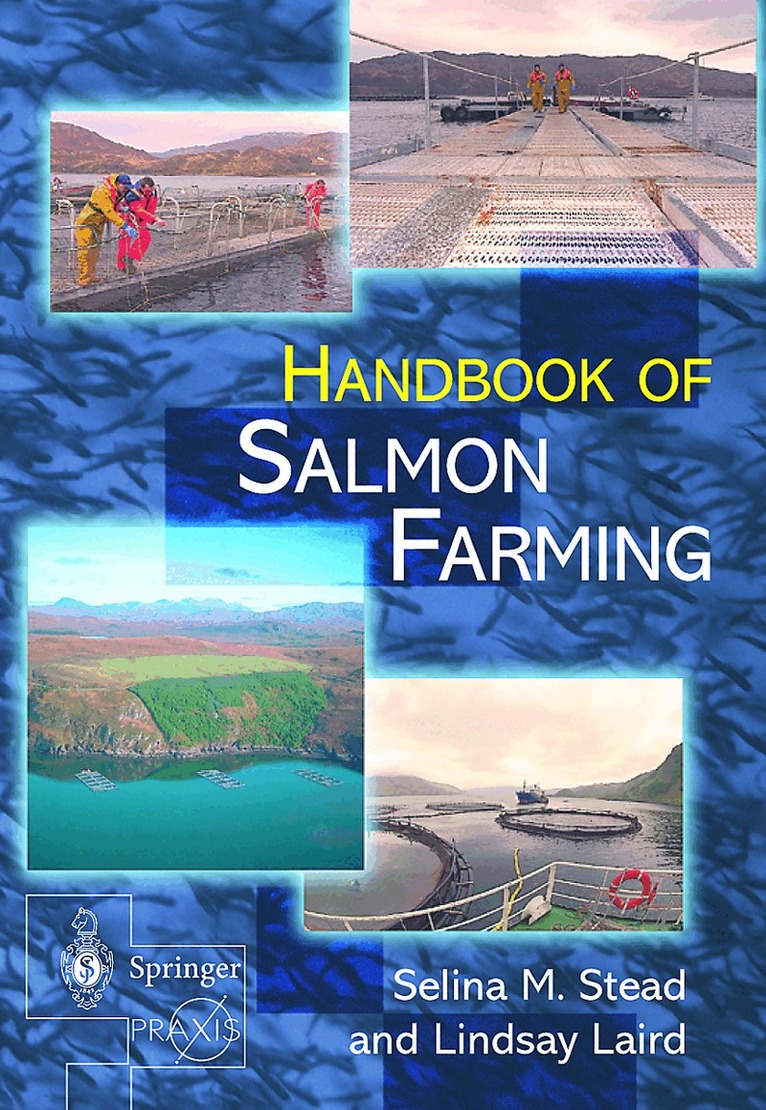
Over the past few years, there has been significant growth and development in the salmon farming industry. In order to be successful, practitioners not only need to know how the salmon lives and survives in the wild but, amongst other things have knowledge of disease, production processes, economics and marketing.The Handbook of Salmon Farming is a practical guide that covers everything the practitioner needs to know, and will also be of great use to academics and students of aquaculture and fish biology. The editors have invited contributions from experts in academia, the fish industry and government to provide an up-to-date and comprehensive handbook.
1 062 kr
Skickas inom 10-15 vardagar
This book is a contribution to our understanding of the worrying situation of small-scale fisheries (SSF) which face marginalisation in most coastal countries. The authors explain why SSF are so pressured; how there has been a powerful backlash against this marginalisation during the last 30 years; what are the main ideational currents supporting this backlash; and what is the enduring value of SSF that justifies that support. The authors discuss the major contemporary interpretations of SSF; the challenges facing SSF globally and in England; and SSF’s coping strategies in response to those challenges through the framework of resilience theory. In an innovative analysis, the authors show how there are three kinds of resilience: passive resilience (where fishers are resigned to their adverse fate), adaptive resilience (where fishers make the best use of the opportunities that are available to them), and transformative resilience (where fishers attempt to change the system that faces them). The authors draw on an extensive range of interview data to provide rich insights into the world of SSF, and they discuss a variety of proposals for improving their conditions. The book will appeal to the growing academic and public community that is following with increasing concern the debate about the future of SFF, and to the environmental movement which has committed itself to support SSF as a greener form of fishing than the large-scale industrial sector.
1 062 kr
Skickas inom 10-15 vardagar
This book is a contribution to our understanding of the worrying situation of small-scale fisheries (SSF) which face marginalisation in most coastal countries. The authors explain why SSF are so pressured; how there has been a powerful backlash against this marginalisation during the last 30 years; what are the main ideational currents supporting this backlash; and what is the enduring value of SSF that justifies that support. The authors discuss the major contemporary interpretations of SSF; the challenges facing SSF globally and in England; and SSF’s coping strategies in response to those challenges through the framework of resilience theory. In an innovative analysis, the authors show how there are three kinds of resilience: passive resilience (where fishers are resigned to their adverse fate), adaptive resilience (where fishers make the best use of the opportunities that are available to them), and transformative resilience (where fishers attempt to change the system that faces them). The authors draw on an extensive range of interview data to provide rich insights into the world of SSF, and they discuss a variety of proposals for improving their conditions. The book will appeal to the growing academic and public community that is following with increasing concern the debate about the future of SFF, and to the environmental movement which has committed itself to support SSF as a greener form of fishing than the large-scale industrial sector.