Sepehr Abrishami – författare
1 360 kr
Skickas inom 10-15 vardagar
791 kr
Skickas inom 10-15 vardagar
2 429 kr
Skickas inom 10-15 vardagar
819 kr
Läs direkt efter köp
This book is the essential guide to the pedagogical and industry-inspired considerations that must shape how BIM is taught and learned. It will help academics and professional educators to develop programmes that meet the competences required by professional bodies and prepare both graduates and existing practitioners to advance the industry towards higher efficiency and quality.
To date, systematic efforts to integrate pedagogical considerations into the way BIM is learned and taught remain non-existent. This book lays the foundation for forming a benchmark around which such an effort is made. It offers principles, best practices, and expected outcomes necessary to BIM curriculum and teaching development for construction-related programs across universities and professional training programmes. The aim of the book is to:
Highlight BIM skill requirements, threshold concepts, and dimensions for practice;
Showcase and introduce tried-and-tested practices and lessons learned in developing BIM-related curricula from leading educators;
Recognise and introduce the baseline requirements for BIM education from a pedagogical perspective;
Explore the challenges, as well as remedial solutions, pertaining to BIM education at tertiary education;
Form a comprehensive point of reference, covering the essential concepts of BIM, for students;
Promote and integrate pedagogical consideration into BIM education.
This book is essential reading for anyone involved in BIM education, digital construction, architecture, and engineering, and for professionals looking for guidance on what the industry expects when it comes to BIM competency.
819 kr
Läs direkt efter köp
This book is the essential guide to the pedagogical and industry-inspired considerations that must shape how BIM is taught and learned. It will help academics and professional educators to develop programmes that meet the competences required by professional bodies and prepare both graduates and existing practitioners to advance the industry towards higher efficiency and quality.
To date, systematic efforts to integrate pedagogical considerations into the way BIM is learned and taught remain non-existent. This book lays the foundation for forming a benchmark around which such an effort is made. It offers principles, best practices, and expected outcomes necessary to BIM curriculum and teaching development for construction-related programs across universities and professional training programmes. The aim of the book is to:
Highlight BIM skill requirements, threshold concepts, and dimensions for practice;
Showcase and introduce tried-and-tested practices and lessons learned in developing BIM-related curricula from leading educators;
Recognise and introduce the baseline requirements for BIM education from a pedagogical perspective;
Explore the challenges, as well as remedial solutions, pertaining to BIM education at tertiary education;
Form a comprehensive point of reference, covering the essential concepts of BIM, for students;
Promote and integrate pedagogical consideration into BIM education.
This book is essential reading for anyone involved in BIM education, digital construction, architecture, and engineering, and for professionals looking for guidance on what the industry expects when it comes to BIM competency.
919 kr
Läs direkt efter köp
This book provides in-depth results and case studies in innovation from actual work undertaken in collaboration with industry partners in Architecture, Engineering, and Construction (AEC). Scientific advances and innovative technologies in the sector are key to shaping the changes emerging as a result of Industry 4.0. Mainstream Building Information Management (BIM) is seen as a vehicle for addressing issues such as industry fragmentation, value-driven solutions, decision-making, client engagement, and design/process flow; however, advanced simulation, computer vision, Internet of Things (IoT), blockchain, machine learning, deep learning, and linked data all provide immense opportunities for dealing with these challenges and can provide evidenced-based innovative solutions not seen before. These technologies are perceived as the “true” enablers of future practice, but only recently has the AEC sector recognised terms such as “golden key” and “golden thread” as part of BIM processes and workflows.
This book builds on the success of a number of initiatives and projects by the authors, which include seminal findings from the literature, research and development, and practice-based solutions produced for industry. It presents these findings through real projects and case studies developed by the authors and reports on how these technologies made a real-world impact.
The chapters and cases in the book are developed around these overarching themes:
• BIM and AEC Design and Optimisation: Application of Artificial Intelligence in Design • BIM and XR as Advanced Visualisation and Simulation Tools • Design Informatics and Advancements in BIM Authoring • Green Building Assessment: Emerging Design Support Tools • Computer Vision and Image Processing for Expediting Project Management and Operations • Blockchain, Big Data, and IoT for Facilitated Project Management • BIM Strategies and Leveraged Solutions
This book is a timely and relevant synthesis of a number of cogent subjects underpinning the paradigm shift needed for the AEC industry and is essential reading for all involved in the sector. It is particularly suited for use in Masters-level programs in Architecture, Engineering, and Construction.
919 kr
Läs direkt efter köp
This book provides in-depth results and case studies in innovation from actual work undertaken in collaboration with industry partners in Architecture, Engineering, and Construction (AEC). Scientific advances and innovative technologies in the sector are key to shaping the changes emerging as a result of Industry 4.0. Mainstream Building Information Management (BIM) is seen as a vehicle for addressing issues such as industry fragmentation, value-driven solutions, decision-making, client engagement, and design/process flow; however, advanced simulation, computer vision, Internet of Things (IoT), blockchain, machine learning, deep learning, and linked data all provide immense opportunities for dealing with these challenges and can provide evidenced-based innovative solutions not seen before. These technologies are perceived as the “true” enablers of future practice, but only recently has the AEC sector recognised terms such as “golden key” and “golden thread” as part of BIM processes and workflows.
This book builds on the success of a number of initiatives and projects by the authors, which include seminal findings from the literature, research and development, and practice-based solutions produced for industry. It presents these findings through real projects and case studies developed by the authors and reports on how these technologies made a real-world impact.
The chapters and cases in the book are developed around these overarching themes:
• BIM and AEC Design and Optimisation: Application of Artificial Intelligence in Design • BIM and XR as Advanced Visualisation and Simulation Tools • Design Informatics and Advancements in BIM Authoring • Green Building Assessment: Emerging Design Support Tools • Computer Vision and Image Processing for Expediting Project Management and Operations • Blockchain, Big Data, and IoT for Facilitated Project Management • BIM Strategies and Leveraged Solutions
This book is a timely and relevant synthesis of a number of cogent subjects underpinning the paradigm shift needed for the AEC industry and is essential reading for all involved in the sector. It is particularly suited for use in Masters-level programs in Architecture, Engineering, and Construction.
701 kr
Skickas inom 10-15 vardagar
1 834 kr
Skickas inom 10-15 vardagar
2 283 kr
Läs direkt efter köp
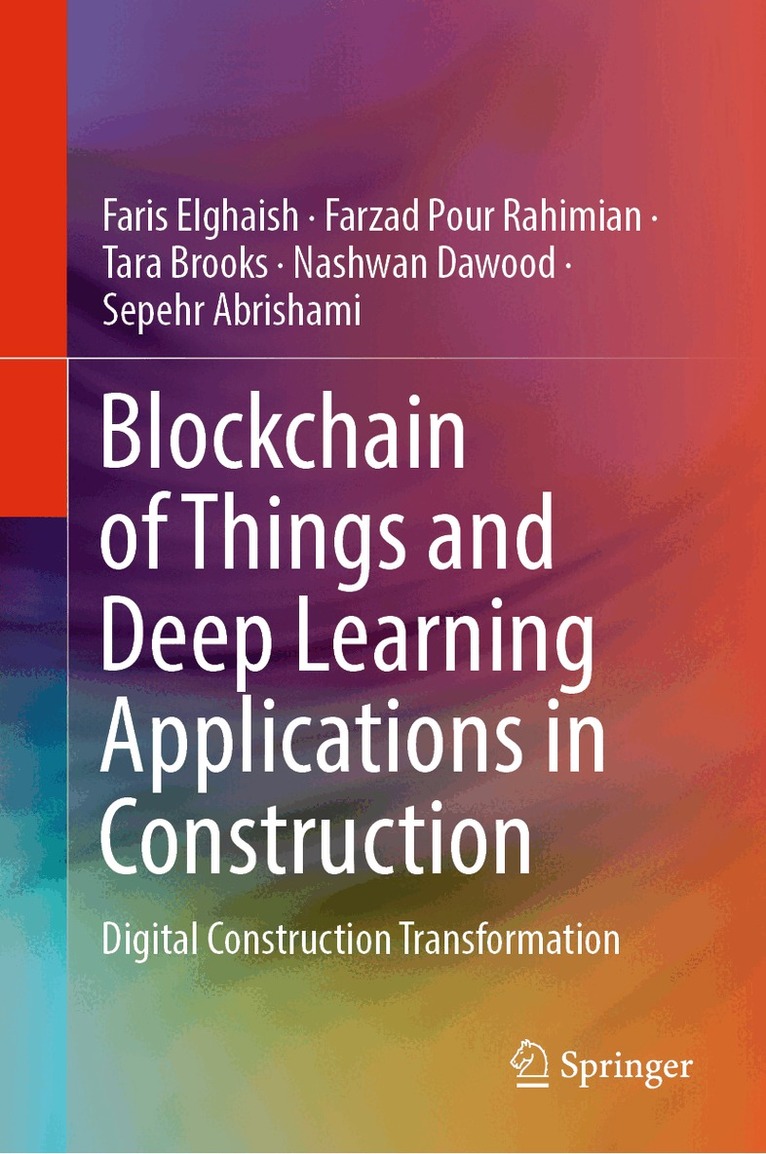
This book significantly contributes the digital transformation of construction. The book explores the capabilities of deep learning to provide smart solutions for the construction industry, particularly in areas of managing equipment, design optimization, energy optimization and detect cracks for buildings and highways. It provides conceptual solutions but also practical techniques. A new deep learning CNN-based highway cracks detection is demonstrated, and its usefulness is tested. The resulting deep learning CNN model will enable users to scan long distance of highway and detect types of cracks accurately in a very short time compared to traditional approaches.
The book explores the integration of IoT and blockchain to provide practical solutions to tackle existing challenges like the endemic fragmentation in supply chain, the need for monitoring construction projects remotely and tracking equipment on the site. The Blockchain of Things (BCoT) concept has been introduced toexploit the advantages of IoT and blockchain, and different applications were developed based on this integration in leading industries such as shared economy and health care. Workable potential use cases to exploit successful utilization of BCoT for the construction industry are explored in the book’s chapters.
This book will appeal to researchers in providing a comprehensive review of related literature on blockchain, the IoT and construction identify gaps and offer a springboard for future research. Construction practitioners, research and development institutes and policy makers will also benefit from its usefulness as a reference book and collection of case studies on the application of these new approaches in construction.
1 834 kr
Skickas inom 10-15 vardagar