Serge Guilbaut – författare
Visar alla böcker från författaren Serge Guilbaut. Handla med fri frakt och snabb leverans.
5 produkter
5 produkter
Häftad, Engelska, 1985
299 kr
Skickas inom 5-8 vardagar
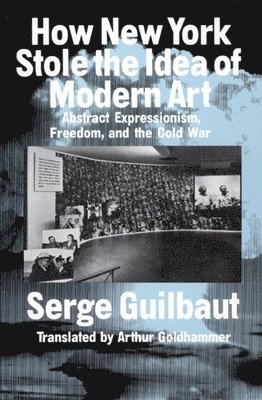
"A provocative interpretation of the political and cultural history of the early cold war years. . . . By insisting that art, even art of the avant-garde, is part of the general culture, not autonomous or above it, he forces us to think differently not only about art and art history but about society itself."—New York Times Book Review
Inbunden, Engelska, 2017
1 185 kr
Skickas inom 5-8 vardagar
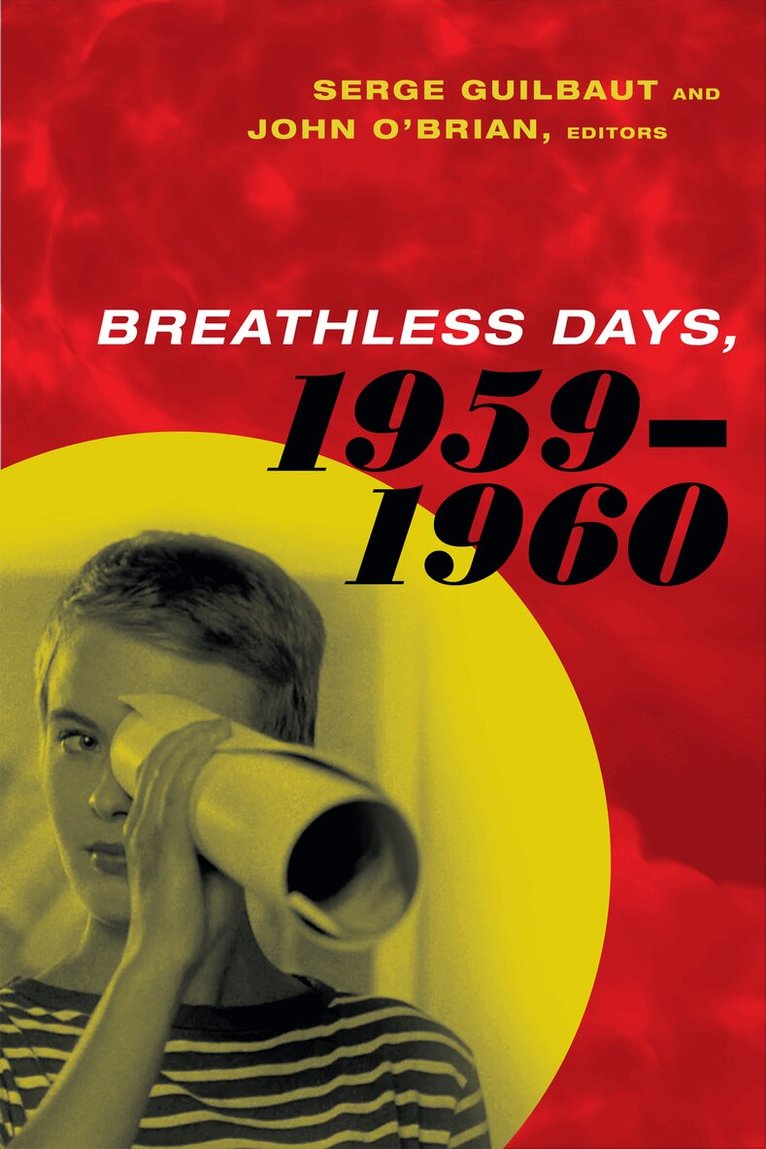
Taking 1959–1960 as a pivotal cultural and political moment, the contributors to Breathless Days reframe postwar Western art history, examining the aesthetic and ideological alliances and tensions in art throughout Western Europe and the Americas. The collection provides a heterogeneous account of the intersections of the fine art world with literature, jazz, film, and theater in New York, Paris, Milan, Brazil, and Cuba. This reveals the knotty and multilayered connections among these divergent artistic milieus. Whether discussing Duchamp’s With My Tongue in My Cheek, Brazilian abstraction, postrevolutionary Cuban art, Jean Tinguely’s self-destroying machines, or Burroughs’s Naked Lunch, the contributors show this brief period to be a key to the cultural and political development of Western Europe and the Americas during the Cold War.Contributors. Carla Benzan, Clint Burnham, Jill Carrick, Eric de Chassey, Mari Dumett, Serge Guilbaut, Luc Lang, Hadrien Laroche, Aleca Le Blanc, Richard Leeman, Tom McDonough, Regis Michel, John O'Brian, Kjetil Rodje, Ludovic TournÈs, Antonio Eligio (Tonel)
Häftad, Engelska, 2017
315 kr
Skickas inom 5-8 vardagar
Taking 1959–1960 as a pivotal cultural and political moment, the contributors to Breathless Days reframe postwar Western art history, examining the aesthetic and ideological alliances and tensions in art throughout Western Europe and the Americas. The collection provides a heterogeneous account of the intersections of the fine art world with literature, jazz, film, and theater in New York, Paris, Milan, Brazil, and Cuba. This reveals the knotty and multilayered connections among these divergent artistic milieus. Whether discussing Duchamp’s With My Tongue in My Cheek, Brazilian abstraction, postrevolutionary Cuban art, Jean Tinguely’s self-destroying machines, or Burroughs’s Naked Lunch, the contributors show this brief period to be a key to the cultural and political development of Western Europe and the Americas during the Cold War.Contributors. Carla Benzan, Clint Burnham, Jill Carrick, Eric de Chassey, Mari Dumett, Serge Guilbaut, Luc Lang, Hadrien Laroche, Aleca Le Blanc, Richard Leeman, Tom McDonough, Regis Michel, John O'Brian, Kjetil Rodje, Ludovic TournÈs, Antonio Eligio (Tonel)
E-bok
PDF, Engelska, 1996598 kr
Läs direkt efter köp
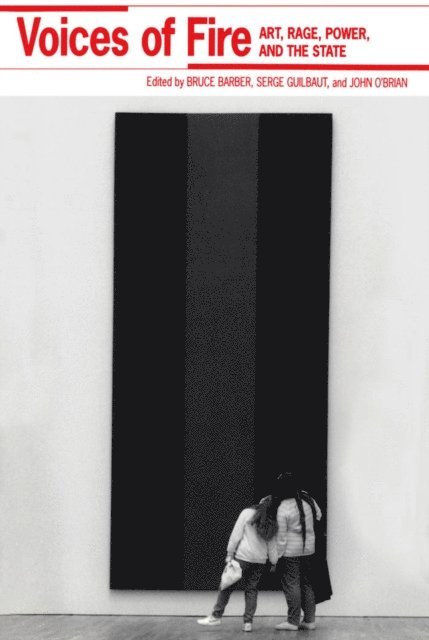
On 7 March 1990 the National Gallery of Canada issued a press release announcing its purchase of a large abstract painting by the American artist Barnett Newman for $1.8 million. Within 72 hours the gallery was under attack both for its selection of Voice of Fire and for the price tag attached to it. Objections came from across Canada and from all quarters.The Voice of Fire controversy was the most extensive and heated debate over visual art ever to have taken place in Canada. This anthology can be seen as a case-study, providing both a historical account of the outcome of the National Gallery's purchase of the painting and an understanding of why the gallery's actions provoked such strong opinions and feelings. In this volume the editors also address the peculiar and paradoxical character of abstract art in general and the problems it consistently poses for viewers. Newman's work is presented as the focus of these concerns.The attack on the gallery by the press, the general public, Canadian artists, and politicians is documented in the first section by a broad selection of cartoons satirizing the painting, press photographs, news releases, editorials, letters to the editor, and public exchanges. In the second section three essays offer contrasting accounts of the controversy and its significance. The first considers the social processes by which art becomes art, the second focuses on the role of the media in shaping public opinion about art, and the third compares the reception of Voice of Fire in two distinctive frameworks, first at Expo '67 in Montreal and then in Ottawa in 1990. In the final part four papers given at a symposium on Voice of Fire organized by the gallery in October 1990 (a combined effort at damage control and art criticism) are presented, as well as a transcription of the public dialogue between speakers and audience which followed.
Inbunden, Engelska, 2022
499 kr
Skickas inom 5-8 vardagar
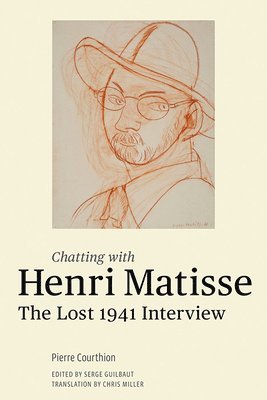
In 1941 the Swiss art critic Pierre Courthion interviewed Henri Matisse while the artist was in bed recovering from a serious operation. It was an extensive interview, seen at the time as a vital assessment of Matisse's career and set to be published by Albert Skira's then newly established Swiss press. After months of complicated discussions between Courthion and Matisse, and just weeks before the book was to come out-the artist even had approved the cover design-Matisse suddenly refused its publication. A typescript of the interview now resides in Courthion's papers at the Getty Research Institute.; This rich conversation, conducted during the Nazi occupation of France, is published for the first time in this volume, where it appears both in English translation and in the original French version. Matisse unravels memories of his youth and his life as a bohemian student in Gustave Moreau's atelier. He recounts his experience with collectors, including Alfred Barnes. He discusses fame, writers, musicians, politicians, and, most fascinatingly, his travels. Chatting with Henri Matisse, introduced by Serge Guilbaut, contains a preface by Claude Duthuit, Matisse's grandson, and essays by Yve-Alain Bois and Laurence Bertrand Dorleac. The book includes unpublished correspondence and other original documents related to Courthion's interview and abounds with details about avant-garde life, tactics, and artistic creativity in the first half of thetwentieth century.