Shadi Hamid – författare
Visar alla böcker från författaren Shadi Hamid. Handla med fri frakt och snabb leverans.
10 produkter
10 produkter
247 kr
Skickas inom 5-8 vardagar
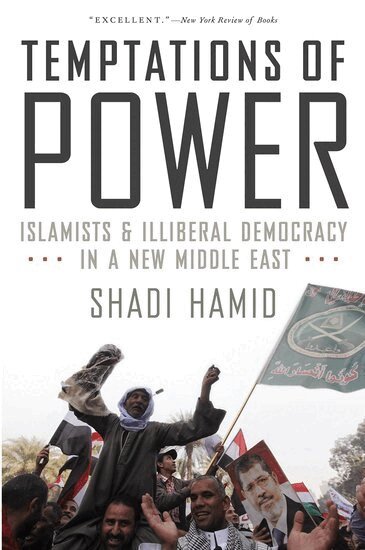
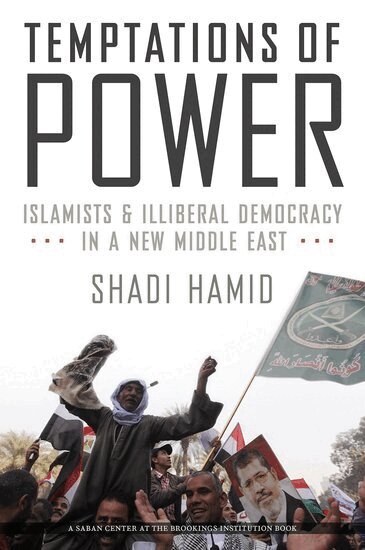
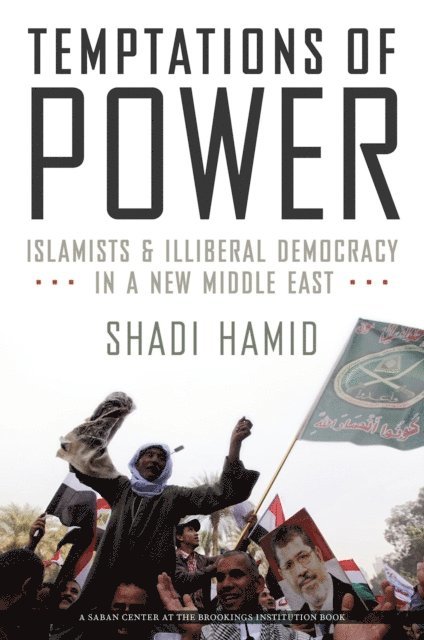
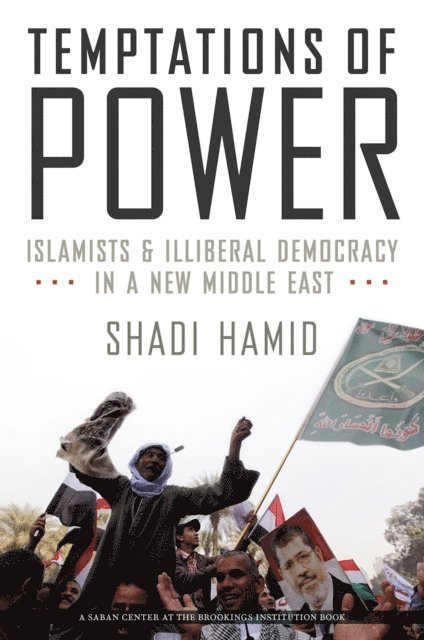
In 1989, Francis Fukuyama famously announced the "end of history." The Berlin Wall had fallen; liberal democracy had won out. But what of illiberal democracy--the idea that popular majorities, working through the democratic process, might reject gender equality, religious freedoms, and other norms that Western democracies take for granted? Nowhere have such considerations become more relevant than in the Middle East, where the uprisings of 2011 swept the Muslim Brotherhood and other Islamist groups to power. In Temptations of Power, Shadi Hamid draws on hundreds of interviews with leaders and activists from across the region to advance a new understanding of how Islamist movements change over time. He puts forward the bold thesis that repression "forced" Islamists to moderate their politics, work in coalitions, de-emphasize Islamic law, and set aside the dream of an Islamic state. Meanwhile, democratic openings in the 1980s--and again during the Arab Spring--pushed Islamists back toward their original conservatism. With the uprisings of 2011, Islamists found themselves in an enviable position, but one for which they were unprepared. Groups like the Brotherhood combine the features of both political parties and religious movements, leading to an inherent tension they have struggled to resolve. However pragmatic they may be, their ultimate goal remains the Islamization of society. When the electorate they represent is conservative as well, they can push their own form of illiberal democracy while insisting they are carrying out the popular will. This can lead to overreach and significant backlash. Yet, while the Egyptian coup and the subsequent crackdown were a devastating blow for the Islamist "project," obituaries of political Islam are premature.As long as the battle over the role of religion in public life continues, Islamist parties in countries as diverse as Egypt, Tunisia, and Jordan will remain an important force whether in the ranks of opposition or the halls of power. But what are the key factors driving their evolution? A timely and provocative reassessment, Hamid's account serves as an essential compass for those trying to understand where the region's varied Islamist groups have come from and where they might be headed.
1 531 kr
Skickas inom 5-8 vardagar
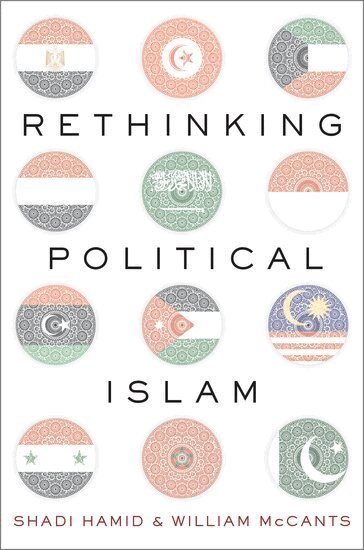
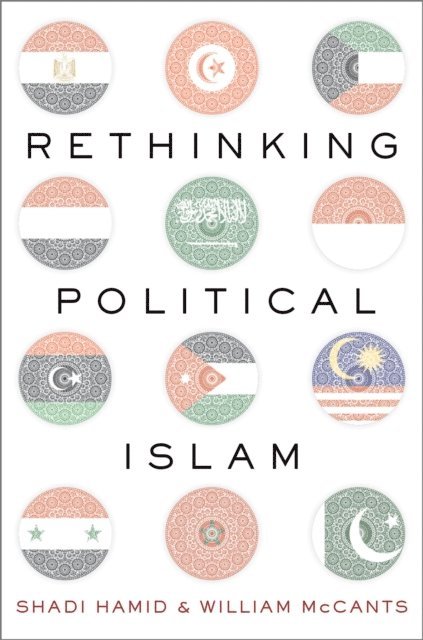
For years, scholars hypothesized about what Islamists might do if they ever obtained power. Now, academics and Islamists alike finally have answers. And they are confusing. In the Sunni hinterland between Syria and Iraq, ISIS established a government by brute force, implementing an extreme interpretation of Islamic law. On the opposite end of the spectrum, Tunisia's Ennahda Party governed in coalition with two secular parties, ratified a liberal constitution, and voluntarily stepped down from power. In Egypt, the Muslim Brotherhood lasted in power for a year, alienating most of the country's major political forces before being overthrown in a military coup. The twin shocks of the Egyptian coup and the rise of ISIS have challenged conventional wisdom on political Islam, forcing a rethinking of some of the basic assumptions of, and about, Islamist movements. However, while ISIS and other jihadist groups garner the most media attention, the vast majority of Islamists are of the mainstream variety, seeking gradual change and participating in parliamentary politics (when they're allowed to). In Rethinking Political Islam, two of the leading scholars on the topic, Shadi Hamid and William McCants, have gathered a group of leading specialists in the field to consider the phenomenon, and focus in particular on mainstream political Islamist groups. As Hamid and McCants argue, they not only represent the future of political Islam, but they also provide a fascinating window into a rapidly changing Middle East. It will be the first book to systematically assess the evolution of mainstream Islamist groups across 12 country cases-Egypt, Tunisia, Morocco, Syria, Yemen, Libya, Saudi Arabia, Kuwait, Jordan, and Pakistan, Malaysia, and Indonesia. In each of these cases, the contributors consider how Muslim Brotherhood and Brotherhood-inspired Islamist movements are grappling with fundamental questions, including those about: gradual versus revolutionary approaches to change; the use of tactical or situational violence; attitudes toward the nation-state; and how ideology and political variables interact. Unlike most other projects on political Islam, this book includes three of the most important country cases outside the Middle East-Indonesia, Malaysia, and Pakistan-allowing readers to consider a greater diversity of Islamist experiences. Because the book takes seriously the notion that the only way to understand Islamists is by spending time with them, all of the contributors have immersed themselves in the world of political Islam, offering rich accounts of what animates Islamist political behavior. Rethinking Political Islam offers a fine-grained and definitive overview of the changing world of political Islam in the post-Arab Uprising era.
346 kr
Skickas inom 5-8 vardagar
For years, scholars hypothesized about what Islamists might do if they ever obtained power. Now, academics and Islamists alike finally have answers. And they are confusing. In the Sunni hinterland between Syria and Iraq, ISIS established a government by brute force, implementing an extreme interpretation of Islamic law. On the opposite end of the spectrum, Tunisia's Ennahda Party governed in coalition with two secular parties, ratified a liberal constitution, and voluntarily stepped down from power. In Egypt, the Muslim Brotherhood lasted in power for a year, alienating most of the country's major political forces before being overthrown in a military coup. The twin shocks of the Egyptian coup and the rise of ISIS have challenged conventional wisdom on political Islam, forcing a rethinking of some of the basic assumptions of, and about, Islamist movements. However, while ISIS and other jihadist groups garner the most media attention, the vast majority of Islamists are of the mainstream variety, seeking gradual change and participating in parliamentary politics (when they're allowed to). In Rethinking Political Islam, two of the leading scholars on the topic, Shadi Hamid and William McCants, have gathered a group of leading specialists in the field to consider the phenomenon, and focus in particular on mainstream political Islamist groups. As Hamid and McCants argue, they not only represent the future of political Islam, but they also provide a fascinating window into a rapidly changing Middle East. It will be the first book to systematically assess the evolution of mainstream Islamist groups across 12 country cases-Egypt, Tunisia, Morocco, Syria, Yemen, Libya, Saudi Arabia, Kuwait, Jordan, and Pakistan, Malaysia, and Indonesia. In each of these cases, the contributors consider how Muslim Brotherhood and Brotherhood-inspired Islamist movements are grappling with fundamental questions, including those about: gradual versus revolutionary approaches to change; the use of tactical or situational violence; attitudes toward the nation-state; and how ideology and political variables interact. Unlike most other projects on political Islam, this book includes three of the most important country cases outside the Middle East-Indonesia, Malaysia, and Pakistan-allowing readers to consider a greater diversity of Islamist experiences. Because the book takes seriously the notion that the only way to understand Islamists is by spending time with them, all of the contributors have immersed themselves in the world of political Islam, offering rich accounts of what animates Islamist political behavior. Rethinking Political Islam offers a fine-grained and definitive overview of the changing world of political Islam in the post-Arab Uprising era.
The Problem of Democracy
America, the Middle East, and the Rise and Fall of an Idea
Inbunden, Engelska, 2023
353 kr
Skickas inom 5-8 vardagar
Shadi Hamid reimagines the ongoing debate on democracy's merits and proposes an ambitious agenda for reviving the lost art of democracy promotion in the world's most undemocratic regions.What happens when democracy produces "bad" outcomes? Is democracy good because of its outcomes or despite them? This "democratic dilemma" is one of the most persistent, vexing problems for America abroad, particularly in the Middle East--we want democracy in theory but not necessarily in practice. When Islamist parties rise to power through free elections, the United States has too often been ambivalent or opposed, preferring instead pliable dictators. With this legacy of democratic disrespect in mind, and drawing on new interviews with top American officials, Shadi Hamid explores universal questions of morality, power, and hypocrisy. Why has the United States failed so completely to live up to its own stated ideals in the Arab world? And is it possible for it to change? In The Problem of Democracy, Hamid offers an ambitious reimagining of this ongoing debate and argues for "democratic minimalism" as a path to resolving democratic dilemmas in the Middle East and beyond. In the seemingly eternal tension between democracy and liberalism, recognized by the ancient Greeks and the American founders alike, it may be time to prioritize one over the other, rather than acting as if the two are intertwined when increasingly they are not. At the end of the Cold War, the democratic idea was victorious, so much so that it took on more meaning than it could bear. Democracy became a means to other ends, whether it was liberalism, economic development, or cultural progress. What if, instead, democracy was reconceptualized as its own end? What if the people are right even when they're wrong? The problem of democracy is no longer just a Middle Eastern problem. The polarizing effects of identity, culture, and religion are now haunting the world's oldest democracies. At home, a growing number of Americans are realizing that respecting election results when the other side wins is easier said than done. To look then at the democratic dilemma abroad is to consider a deeper set of questions around why we believe democracy is good as well as whether we think it is good for other nations and cultures.
360 kr
Skickas inom 3-6 vardagar
In 1989, Francis Fukuyama famously declared that we had reached "the end of history," and that liberal democracy would be the reigning ideology from now on. But Fukuyama failed to reckon with the idea of illiberal democracy. What if majorities, working through the democratic process, decide they would rather not accept gender equality and other human rights norms that Western democracies take for granted? Nowhere have such considerations become more relevant than in the Middle East, where the Arab uprisings of 2011 swept the Muslim Brotherhood and other Islamist parties into power. Since then, one question has been on everyone's mind: what do Islamists really want?In Temptations of Power, noted Brookings scholar Shadi Hamid draws on hundreds of interviews with Islamist leaders and rank-and-file activists to offer an in-depth look at the past, present, and future of Islamist parties across the Arab world. The oldest and most influential of these groups, the Muslim Brotherhood, initially dismissed democracy as a foreign import, but eventually chose to participate in Egyptian and Jordanian party politics in the 1980s. These political openings proved short-lived. As repression intensified, though, Islamist parties did not -- as one may have expected -- turn to radicalism. Rather, they embraced the tenets of democratic life, putting aside their dreams of an Islamic state, striking alliances with secular parties, and reaching out to Western audiences for the first time.When the 2011 revolutions took place, Islamists found themselves in an enviable position, but one they were unprepared for. Up until then, the prospect of power had seemed too remote. But, now, freed from repression and with the political arena wide open, they found themselves with an unprecedented opportunity to put their ideas into practice across the region. Groups like the Brotherhood combine the features of political parties and religious movements. However pragmatic they may be, their ultimate goal remains the Islamization of society and the state. When the electorate they represent is conservative as well, they can push their own form of illiberal democracy while insisting they are carrying out the popular will. This can lead to overreach and, at times, significant backlash, as the tragic events in Egypt following the military takeover demonstrated. While the coup and the subsequent crackdown were a devastating blow for the Islamist "project," premature obituaries of political Islam, a running feature of commentary since the 1950s, usually turn out to be just that - premature. In countries as diverse as Tunisia, Libya, Syria, Egypt, and Yemen, Islamist groups will remain an important force whether in the ranks of opposition or the halls of power. Drawing from interviews with figures like ousted Egyptian president Mohammed Morsi, Hamid's account will serve as an essential compass for those trying to understand where the region's varied Islamist groups have come from, and where they might be headed.
100 kr
Skickas inom 5-8 vardagar
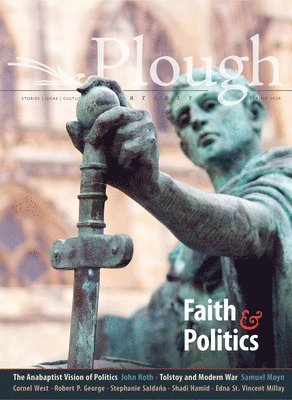
No matter who wins the next election, Caesar will remain Caesar, doing some good and some bad. But Christians report to a different king.This issue starts with a provocation. In his opening letter, editor Peter Mommsen suggests Christians are too excited about the wrong politics: “Questions of public justice should matter deeply to Christians. We dare not be indifferent about securing healthcare for all and ending interventionist wars; we must seek to reduce abortions and strengthen families. When an election comes, we should pray and then, perhaps, lend our support to a candidate we judge may, on balance, advance social righteousness. But if the early Christians and the Anabaptists are right, this isn’t the politics that matters most. And so, as a matter of faithfulness, we should question how much it deserves of our passion and time. Our allegiance belongs elsewhere.”In contrast to an election campaign, this politics may feel grittier and less glamorous. This issue of Plough Quarterly explores what this alternate vision of faithful Christian witness in the political sphere might look like.You’ll find articles on:What two leading political theorists of left and right agree onWhat persecution taught Anabaptists about politicsThe Bruderhof’s interactions with the stateTolstoy’s case against making war more humaneHow some Christians read Romans 13 under fascism
280 kr
Skickas inom 5-8 vardagar
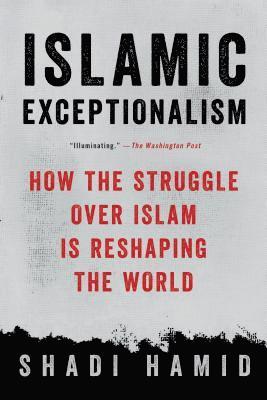
Hamid argues for a new understanding of how Islam and Islamism shape politics by examining different models of reckoning with the problem of religion and state, including the terrifying - and alarmingly successful - example of ISIS. With unprecedented access to Islamist activists and leaders across the region, Hamid offers a panoramic and ambitious interpretation of the region's descent into violence. Islamic Exceptionalism is a vital contribution to our understanding of Islam's past and present, and its out sized role in modern politics. We don't have to like it, but we have to understand it - because Islam, as a religion and as an idea, will continue to be a force that shapes not just the region, but the West as well in the decades to come.
Can Religion Save Democracy?
How More Faith--Not Less--Can Heal Our Public Life
Inbunden, Engelska, 2026
298 kr
Kommande
"Keep religion and politics separate!" For decades, scholars assumed that less religion would lead to a more peaceful and unified form of politics. And yet, as religious identity recedes from American public life, the opposite appears to be the case. Our post-religious politics are growing more polarized, anxious, and unstable each day. Could a return to ancient religious wisdom and community be the key to healing what secular politics can't fix? In Can Religion Save Democracy? two friends and colleagues--a Christian theologian and a Muslim political scientist--make a bold case: If American democracy is going to survive, it will require more religion, not less. Drawing on wisdom from their respective religious traditions, they explore · why secularism has only deepened our divides,· what ancient insights from Christianity and Islam can strengthen our common life,· how spiritual practices contribute something critical and irreplaceable to democracy, and· how citizens can navigate a new world of deep polarization and mistrust.This is not a call for theocracy or religious authoritarianism. It's a hopeful, clear-eyed vision showing how religious faith offers vital tools to renew the soul of democracy in a divided nation.
198 kr
Skickas
A provocative case for why a better world is only possible with American power by Washington Post columnist Shadi Hamid.From acclaimed author Shadi Hamid comes an urgent and deeply personal argument for why American dominance, despite its many flaws, remains the world’s best hope. Hamid traces his journey from opposing America’s role in the world to reluctantly embracing it—while grappling with how recent events, from Russia’s invasion of Ukraine to Israel’s devastating war in Gaza, have challenged his convictions. Drawing on his unique perspective as both an American and a Muslim who came of age in the shadow of the September 11 attacks, Hamid contends with the contradictions of American power: how a nation founded on moral purpose so often fails to live up to its ideals. Hamid confronts head-on America’s failures, from the war in Iraq to support for authoritarian regimes across the Middle East. Yet, he argues that in a world where power is a fact and someone must wield it, the alternative to American leadership isn’t a morally perfect superpower—it’s the brutal authoritarianism of countries like China and Russia. At once idealistic and pragmatic, this is a book about embracing our power as the only moral option in a world beset by tragedy. Because America is a democracy, it retains the potential to correct past mistakes and change for the better. That part is up to us. Bracing and timely, The Case for American Power is an ambitious work on what may be the most fundamental question facing America today: How should we think about the power we have—while we still have it?
233 kr
Kommande
A provocative case for why a better world is only possible with American power by Washington Post columnist Shadi Hamid.From acclaimed author Shadi Hamid comes an urgent and deeply personal argument for why American dominance, despite its many flaws, remains the world’s best hope. Hamid traces his journey from opposing America’s role in the world to reluctantly embracing it—while grappling with how recent events, from Russia’s invasion of Ukraine to Israel’s devastating war in Gaza, have challenged his convictions. Drawing on his unique perspective as both an American and a Muslim who came of age in the shadow of the September 11 attacks, Hamid contends with the contradictions of American power: how a nation founded on moral purpose so often fails to live up to its ideals. Hamid confronts head-on America’s failures, from the war in Iraq to support for authoritarian regimes across the Middle East. Yet, he argues that in a world where power is a fact and someone must wield it, the alternative to American leadership isn’t a morally perfect superpower—it’s the brutal authoritarianism of countries like China and Russia. At once idealistic and pragmatic, this is a book about embracing our power as the only moral option in a world beset by tragedy. Because America is a democracy, it retains the potential to correct past mistakes and change for the better. That part is up to us. Bracing and timely, The Case for American Power is an ambitious work on what may be the most fundamental question facing America today: how should we think about the power we have—while we still have it?