Shahid Naeem - Böcker
Visar alla böcker från författaren Shahid Naeem. Handla med fri frakt och snabb leverans.
5 produkter
5 produkter
1 113 kr
Skickas inom 5-8 vardagar
The relationship between biodiversity and ecosystem functioning has emerged as one of the most exciting and dynamic areas in contemporary ecology. Increasing domination of ecosystems by humans is steadily transforming them into depauperate systems. How will this loss of biodiversity affect the functioning and stability of natural and managed ecosystems? This volume provides the first comprehensive and balanced coverage of recent empirical and theoretical research on this question. It reviews the evidence, provides bases for the resolution of the debate that has divided scientists on these issues, and offers perspectives on how current knowledge can be extended to other ecosystems, other organisms and other spatial and temporal scales. It cuts across the traditional division between community ecology and ecosystem ecology, and announces a new ecological synthesis in which the dynamics of biological diversity and the biogeochemical functioning of the Earth system are merged.
Biodiversity, Ecosystem Functioning, and Human Wellbeing
An Ecological and Economic Perspective
Inbunden, Engelska, 2009
2 292 kr
Skickas inom 7-10 vardagar
How will biodiversity loss affect ecosystem functioning, ecosystem services, and human well-being?In an age of accelerating biodiversity loss, this timely and critical volume summarizes recent advances in biodiversity-ecosystem functioning research and explores the economics of biodiversity and ecosystem services. The book starts by summarizing the development of the basic science and provides a meta-analysis that quantitatively tests several biodiversity and ecosystem functioning hypotheses. It then describes the natural science foundations of biodiversity and ecosystem functioning research including: quantifying functional diversity, the development of the field into a predictive science, the effects of stability and complexity, methods to quantify mechanisms by which diversity affects functioning, the importance of trophic structure, microbial ecology, and spatial dynamics. Finally, the book takes research on biodiversity and ecosystem functioning further than it has ever gone into the human dimension, describing the most pressing environmental challenges that face humanity and the effects of diversity on: climate change mitigation, restoration of degraded habitats, managed ecosystems, pollination, disease, and biological invasions. However, what makes this volume truly unique are the chapters that consider the economic perspective. These include a synthesis of the economics of ecosystem services and biodiversity, and the options open to policy-makers to address the failure of markets to account for the loss of ecosystem services; an examination of the challenges of valuing ecosystem services and, hence, to understanding the human consequences of decisions that neglect these services; and an examination of the ways in which economists are currently incorporating biodiversity and ecosystem functioning research into decision models for the conservation and management of biodiversity. A final section describes new advances in ecoinformatics that will help transform this field into a globally predictive science, and summarizes the advancements and future directions of the field. The ultimate conclusion is that biodiversity is an essential element of any strategy for sustainable development.
Biodiversity, Ecosystem Functioning, and Human Wellbeing
An Ecological and Economic Perspective
Häftad, Engelska, 2009
739 kr
Skickas inom 7-10 vardagar
How will biodiversity loss affect ecosystem functioning, ecosystem services, and human well-being?In an age of accelerating biodiversity loss, this timely and critical volume summarizes recent advances in biodiversity-ecosystem functioning research and explores the economics of biodiversity and ecosystem services. The book starts by summarizing the development of the basic science and provides a meta-analysis that quantitatively tests several biodiversity and ecosystem functioning hypotheses. It then describes the natural science foundations of biodiversity and ecosystem functioning research including: quantifying functional diversity, the development of the field into a predictive science, the effects of stability and complexity, methods to quantify mechanisms by which diversity affects functioning, the importance of trophic structure, microbial ecology, and spatial dynamics. Finally, the book takes research on biodiversity and ecosystem functioning further than it has ever gone into the human dimension, describing the most pressing environmental challenges that face humanity and the effects of diversity on: climate change mitigation, restoration of degraded habitats, managed ecosystems, pollination, disease, and biological invasions. However, what makes this volume truly unique are the chapters that consider the economic perspective. These include a synthesis of the economics of ecosystem services and biodiversity, and the options open to policy-makers to address the failure of markets to account for the loss of ecosystem services; an examination of the challenges of valuing ecosystem services and, hence, to understanding the human consequences of decisions that neglect these services; and an examination of the ways in which economists are currently incorporating biodiversity and ecosystem functioning research into decision models for the conservation and management of biodiversity. A final section describes new advances in ecoinformatics that will help transform this field into a globally predictive science, and summarizes the advancements and future directions of the field. The ultimate conclusion is that biodiversity is an essential element of any strategy for sustainable development.
636 kr
Skickas inom 7-10 vardagar
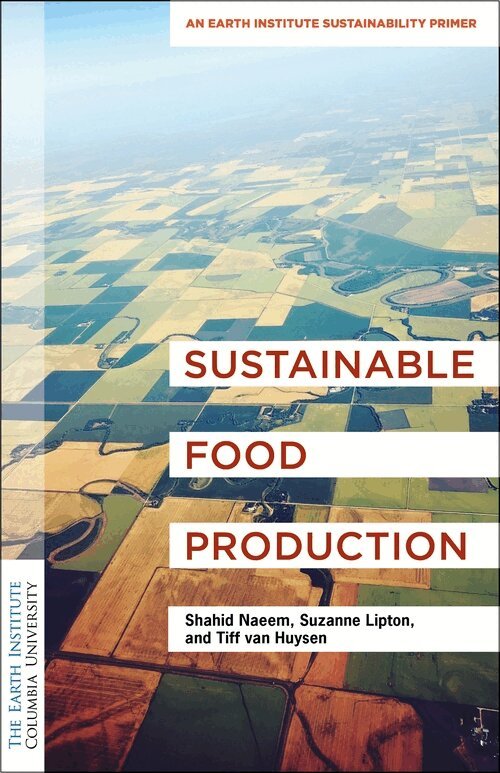
Industrial agriculture is responsible for widespread environmental degradation and undermines the pursuit of human well-being. With a projected global population of 10 billion by 2050, it is urgent for humanity to achieve a more sustainable approach to farming and food systems.This concise text offers an overview of the key issues in sustainable food production for all readers interested in the ecology and environmental impacts of agriculture. It details the ecological foundations of farming and food systems, showing how knowledge from the natural and social sciences can be used to create sustainable alternatives to the industrial production methods used today. Beginning with a discussion of the role of agriculture in human development, the primer examines how twentieth-century farming methods are environmentally and socially unsustainable, contributing to global change and perpetuating inequalities. The authors explain the principles of environmental sustainability and explore how these principles can be put into practice in agrifood systems. They emphasize the importance of human well-being and insist on the centrality of social and environmental equity and justice.Sustainable Food Production is a compelling guide to how we can improve our ability to feed each other today and preserve the ability of our planet to do so tomorrow. Appropriate for a range of courses in the natural and social sciences, it provides a comprehensive yet accessible framework for achieving agricultural sustainability in the Anthropocene.
164 kr
Skickas inom 7-10 vardagar
Industrial agriculture is responsible for widespread environmental degradation and undermines the pursuit of human well-being. With a projected global population of 10 billion by 2050, it is urgent for humanity to achieve a more sustainable approach to farming and food systems.This concise text offers an overview of the key issues in sustainable food production for all readers interested in the ecology and environmental impacts of agriculture. It details the ecological foundations of farming and food systems, showing how knowledge from the natural and social sciences can be used to create sustainable alternatives to the industrial production methods used today. Beginning with a discussion of the role of agriculture in human development, the primer examines how twentieth-century farming methods are environmentally and socially unsustainable, contributing to global change and perpetuating inequalities. The authors explain the principles of environmental sustainability and explore how these principles can be put into practice in agrifood systems. They emphasize the importance of human well-being and insist on the centrality of social and environmental equity and justice.Sustainable Food Production is a compelling guide to how we can improve our ability to feed each other today and preserve the ability of our planet to do so tomorrow. Appropriate for a range of courses in the natural and social sciences, it provides a comprehensive yet accessible framework for achieving agricultural sustainability in the Anthropocene.