Michel Loreau - Böcker
Visar alla böcker från författaren Michel Loreau. Handla med fri frakt och snabb leverans.
9 produkter
9 produkter
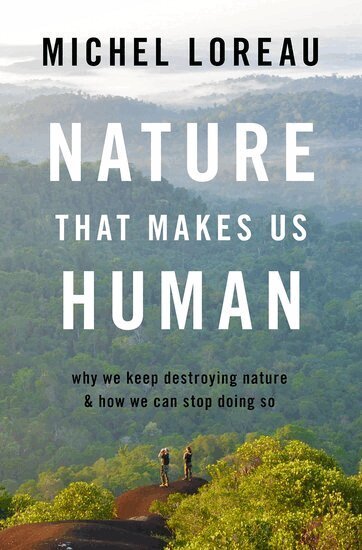
Nature That Makes Us Human
Why We Keep Destroying Nature and How We Can Stop Doing So
Inbunden, Engelska, 2023
340 kr
Skickas inom 5-8 vardagar
Climate change, biodiversity loss, pollution, resource depletion, new emerging diseases: scientists have raised awareness on the ecological and societal consequences of the unbridled development of human activities for a long time. Why do we keep destroying nature when science makes it clear that in doing so we risk our own destruction? How can we stop destroying our life-support system and reach some kind of harmony between humans and nature? This book seeks to answer these questions. It describes the inability of modern society to fundamentally modify its relationship with nature, instead engaging in collective fictions such as subject-object duality, matter-mind duality, the primacy of rationality, and the superiority of the human species over all other life. Subsequent chapters identify avenues which could allow human societies to break the current deadlock and forge a relationship with the natural world. This path is rooted in a simple observation: humans have a nature that defines them as a unique species beyond their cultural differences, and at the foundation of this nature we share a set of fundamental needs. The expression and satisfaction of these needs provide an opportunity to reconnect humans with nature in all its forms.Nature That Makes Us Human combines recent scientific discoveries in biology and psychology with deep philosophical inquiry--in addition to economic, political, and historical considerations--to understand what motivates us to keep destroying nature today and how we can engage in a new relationship with nature tomorrow. This book is for anyone interested in understanding and overcoming the current ecological crisis.
1 113 kr
Skickas inom 5-8 vardagar
The relationship between biodiversity and ecosystem functioning has emerged as one of the most exciting and dynamic areas in contemporary ecology. Increasing domination of ecosystems by humans is steadily transforming them into depauperate systems. How will this loss of biodiversity affect the functioning and stability of natural and managed ecosystems? This volume provides the first comprehensive and balanced coverage of recent empirical and theoretical research on this question. It reviews the evidence, provides bases for the resolution of the debate that has divided scientists on these issues, and offers perspectives on how current knowledge can be extended to other ecosystems, other organisms and other spatial and temporal scales. It cuts across the traditional division between community ecology and ecosystem ecology, and announces a new ecological synthesis in which the dynamics of biological diversity and the biogeochemical functioning of the Earth system are merged.
Biodiversity, Ecosystem Functioning, and Human Wellbeing
An Ecological and Economic Perspective
Inbunden, Engelska, 2009
2 292 kr
Skickas inom 7-10 vardagar
How will biodiversity loss affect ecosystem functioning, ecosystem services, and human well-being?In an age of accelerating biodiversity loss, this timely and critical volume summarizes recent advances in biodiversity-ecosystem functioning research and explores the economics of biodiversity and ecosystem services. The book starts by summarizing the development of the basic science and provides a meta-analysis that quantitatively tests several biodiversity and ecosystem functioning hypotheses. It then describes the natural science foundations of biodiversity and ecosystem functioning research including: quantifying functional diversity, the development of the field into a predictive science, the effects of stability and complexity, methods to quantify mechanisms by which diversity affects functioning, the importance of trophic structure, microbial ecology, and spatial dynamics. Finally, the book takes research on biodiversity and ecosystem functioning further than it has ever gone into the human dimension, describing the most pressing environmental challenges that face humanity and the effects of diversity on: climate change mitigation, restoration of degraded habitats, managed ecosystems, pollination, disease, and biological invasions. However, what makes this volume truly unique are the chapters that consider the economic perspective. These include a synthesis of the economics of ecosystem services and biodiversity, and the options open to policy-makers to address the failure of markets to account for the loss of ecosystem services; an examination of the challenges of valuing ecosystem services and, hence, to understanding the human consequences of decisions that neglect these services; and an examination of the ways in which economists are currently incorporating biodiversity and ecosystem functioning research into decision models for the conservation and management of biodiversity. A final section describes new advances in ecoinformatics that will help transform this field into a globally predictive science, and summarizes the advancements and future directions of the field. The ultimate conclusion is that biodiversity is an essential element of any strategy for sustainable development.
Biodiversity, Ecosystem Functioning, and Human Wellbeing
An Ecological and Economic Perspective
Häftad, Engelska, 2009
739 kr
Skickas inom 7-10 vardagar
How will biodiversity loss affect ecosystem functioning, ecosystem services, and human well-being?In an age of accelerating biodiversity loss, this timely and critical volume summarizes recent advances in biodiversity-ecosystem functioning research and explores the economics of biodiversity and ecosystem services. The book starts by summarizing the development of the basic science and provides a meta-analysis that quantitatively tests several biodiversity and ecosystem functioning hypotheses. It then describes the natural science foundations of biodiversity and ecosystem functioning research including: quantifying functional diversity, the development of the field into a predictive science, the effects of stability and complexity, methods to quantify mechanisms by which diversity affects functioning, the importance of trophic structure, microbial ecology, and spatial dynamics. Finally, the book takes research on biodiversity and ecosystem functioning further than it has ever gone into the human dimension, describing the most pressing environmental challenges that face humanity and the effects of diversity on: climate change mitigation, restoration of degraded habitats, managed ecosystems, pollination, disease, and biological invasions. However, what makes this volume truly unique are the chapters that consider the economic perspective. These include a synthesis of the economics of ecosystem services and biodiversity, and the options open to policy-makers to address the failure of markets to account for the loss of ecosystem services; an examination of the challenges of valuing ecosystem services and, hence, to understanding the human consequences of decisions that neglect these services; and an examination of the ways in which economists are currently incorporating biodiversity and ecosystem functioning research into decision models for the conservation and management of biodiversity. A final section describes new advances in ecoinformatics that will help transform this field into a globally predictive science, and summarizes the advancements and future directions of the field. The ultimate conclusion is that biodiversity is an essential element of any strategy for sustainable development.
From Populations to Ecosystems
Theoretical Foundations for a New Ecological Synthesis
Häftad, Engelska, 2010
581 kr
Skickas inom 7-10 vardagar
The major subdisciplines of ecology--population ecology, community ecology, ecosystem ecology, and evolutionary ecology--have diverged increasingly in recent decades. What is critically needed today is an integrated, real-world approach to ecology that reflects the interdependency of biodiversity and ecosystem functioning. From Populations to Ecosystems proposes an innovative theoretical synthesis that will enable us to advance our fundamental understanding of ecological systems and help us to respond to today's emerging global ecological crisis. Michel Loreau begins by explaining how the principles of population dynamics and ecosystem functioning can be merged. He then addresses key issues in the study of biodiversity and ecosystems, such as functional complementarity, food webs, stability and complexity, material cycling, and metacommunities. Loreau describes the most recent theoretical advances that link the properties of individual populations to the aggregate properties of communities, and the properties of functional groups or trophic levels to the functioning of whole ecosystems, placing special emphasis on the relationship between biodiversity and ecosystem functioning.Finally, he turns his attention to the controversial issue of the evolution of entire ecosystems and their properties, laying the theoretical foundations for a genuine evolutionary ecosystem ecology. From Populations to Ecosystems points the way to a much-needed synthesis in ecology, one that offers a fuller understanding of ecosystem processes in the natural world.
558 kr
Skickas inom 7-10 vardagar
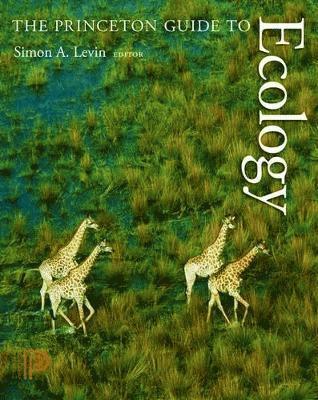
The Princeton Guide to Ecology is a concise, authoritative one-volume reference to the field's major subjects and key concepts. Edited by eminent ecologist Simon Levin, with contributions from an international team of leading ecologists, the book contains more than ninety clear, accurate, and up-to-date articles on the most important topics within seven major areas: autecology, population ecology, communities and ecosystems, landscapes and the biosphere, conservation biology, ecosystem services, and biosphere management. Complete with more than 200 illustrations (including sixteen pages in color), a glossary of key terms, a chronology of milestones in the field, suggestions for further reading on each topic, and an index, this is an essential volume for undergraduate and graduate students, research ecologists, scientists in related fields, policymakers, and anyone else with a serious interest in ecology.* Explains key topics in one concise and authoritative volume * Features more than ninety articles written by an international team of leading ecologists * Contains more than 200 illustrations, including sixteen pages in color * Includes glossary, chronology, suggestions for further reading, and index * Covers autecology, population ecology, communities and ecosystems, landscapes and the biosphere, conservation biology, ecosystem services, and biosphere management
1 724 kr
Skickas inom 7-10 vardagar
The idea that changes in biodiversity can impact how ecosystems function has, over the last quarter century, gone from being a controversial notion to an accepted part of science and policy. As the field matures, it is high time to review progress, explore the links between this new research area and fundamental ecological concepts, and look ahead to the implementation of this knowledge.This book is designed to both provide an up-to-date overview of research in the area and to serve as a useful textbook for those studying the relationship between biodiversity and the functioning, stability and services of ecosystems. The Ecological and Societal Consequences of Biodiversity Loss is aimed at a wide audience of upper undergraduate students, postgraduate students, and academic and research staff.
Les Consã(c)Quences Ã(c)Cologiques Et Sociã(c)Tales de la Perte de Biodiversitã(c)
Inbunden, Franska, 2024
2 692 kr
Skickas inom 5-8 vardagar
169 kr
Skickas inom 5-8 vardagar