Andy Hector - Böcker
Visar alla böcker från författaren Andy Hector. Handla med fri frakt och snabb leverans.
5 produkter
5 produkter
1 411 kr
Skickas inom 5-8 vardagar
Statistical methods are a key tool for all scientists working with data, but learning the basics continues to challenge successive generations of students. This accessible textbook provides an up-to-date introduction to the classical techniques and modern extensions of linear model analysis-one of the most useful approaches for investigating scientific data in the life and environmental sciences. While some of the foundational analyses (e.g. t tests, regression, ANOVA) are as useful now as ever, best practice moves on and there are many new general developments that offer great potential. The book emphasizes an estimation-based approach that takes account of recent criticisms of over-use of probability values and introduces the alternative approach that uses information criteria.This new edition includes the latest advances in R and related software and has been thoroughly “road-tested” over the last decade to create a proven textbook that teaches linear and generalized linear model analysis to students of ecology, evolution, and environmental studies (including worked analyses of data sets relevant to all three disciplines). While R is used throughout, the focus remains firmly on statistical analysis. The New Statistics with R is suitable for senior undergraduate and graduate students, professional researchers, and practitioners in the fields of ecology, evolution and environmental studies.
599 kr
Skickas inom 5-8 vardagar
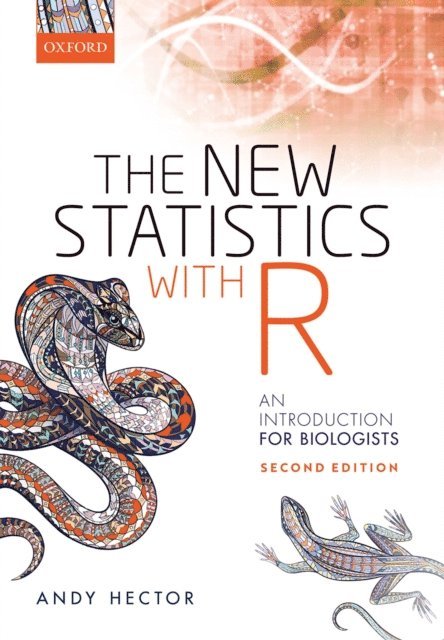
Statistical methods are a key tool for all scientists working with data, but learning the basics continues to challenge successive generations of students. This accessible textbook provides an up-to-date introduction to the classical techniques and modern extensions of linear model analysis-one of the most useful approaches for investigating scientific data in the life and environmental sciences. While some of the foundational analyses (e.g. t tests, regression, ANOVA) are as useful now as ever, best practice moves on and there are many new general developments that offer great potential. The book emphasizes an estimation-based approach that takes account of recent criticisms of over-use of probability values and introduces the alternative approach that uses information criteria.This new edition includes the latest advances in R and related software and has been thoroughly “road-tested” over the last decade to create a proven textbook that teaches linear and generalized linear model analysis to students of ecology, evolution, and environmental studies (including worked analyses of data sets relevant to all three disciplines). While R is used throughout, the focus remains firmly on statistical analysis. The New Statistics with R is suitable for senior undergraduate and graduate students, professional researchers, and practitioners in the fields of ecology, evolution and environmental studies.
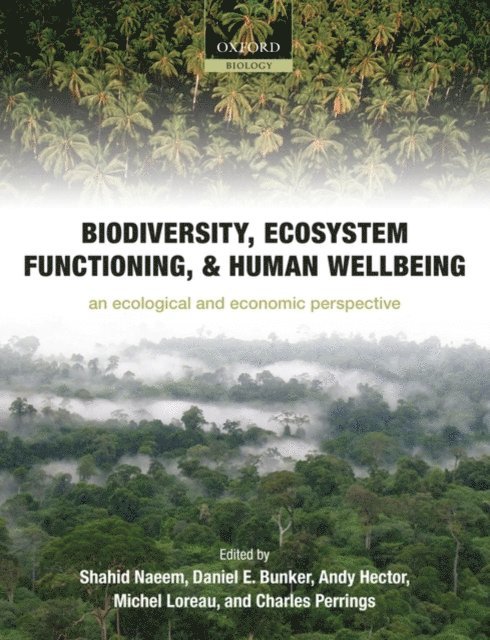
Biodiversity, Ecosystem Functioning, and Human Wellbeing
An Ecological and Economic Perspective
Inbunden, Engelska, 2009
2 292 kr
Skickas inom 7-10 vardagar
How will biodiversity loss affect ecosystem functioning, ecosystem services, and human well-being?In an age of accelerating biodiversity loss, this timely and critical volume summarizes recent advances in biodiversity-ecosystem functioning research and explores the economics of biodiversity and ecosystem services. The book starts by summarizing the development of the basic science and provides a meta-analysis that quantitatively tests several biodiversity and ecosystem functioning hypotheses. It then describes the natural science foundations of biodiversity and ecosystem functioning research including: quantifying functional diversity, the development of the field into a predictive science, the effects of stability and complexity, methods to quantify mechanisms by which diversity affects functioning, the importance of trophic structure, microbial ecology, and spatial dynamics. Finally, the book takes research on biodiversity and ecosystem functioning further than it has ever gone into the human dimension, describing the most pressing environmental challenges that face humanity and the effects of diversity on: climate change mitigation, restoration of degraded habitats, managed ecosystems, pollination, disease, and biological invasions. However, what makes this volume truly unique are the chapters that consider the economic perspective. These include a synthesis of the economics of ecosystem services and biodiversity, and the options open to policy-makers to address the failure of markets to account for the loss of ecosystem services; an examination of the challenges of valuing ecosystem services and, hence, to understanding the human consequences of decisions that neglect these services; and an examination of the ways in which economists are currently incorporating biodiversity and ecosystem functioning research into decision models for the conservation and management of biodiversity. A final section describes new advances in ecoinformatics that will help transform this field into a globally predictive science, and summarizes the advancements and future directions of the field. The ultimate conclusion is that biodiversity is an essential element of any strategy for sustainable development.
Biodiversity, Ecosystem Functioning, and Human Wellbeing
An Ecological and Economic Perspective
Häftad, Engelska, 2009
739 kr
Skickas inom 7-10 vardagar
How will biodiversity loss affect ecosystem functioning, ecosystem services, and human well-being?In an age of accelerating biodiversity loss, this timely and critical volume summarizes recent advances in biodiversity-ecosystem functioning research and explores the economics of biodiversity and ecosystem services. The book starts by summarizing the development of the basic science and provides a meta-analysis that quantitatively tests several biodiversity and ecosystem functioning hypotheses. It then describes the natural science foundations of biodiversity and ecosystem functioning research including: quantifying functional diversity, the development of the field into a predictive science, the effects of stability and complexity, methods to quantify mechanisms by which diversity affects functioning, the importance of trophic structure, microbial ecology, and spatial dynamics. Finally, the book takes research on biodiversity and ecosystem functioning further than it has ever gone into the human dimension, describing the most pressing environmental challenges that face humanity and the effects of diversity on: climate change mitigation, restoration of degraded habitats, managed ecosystems, pollination, disease, and biological invasions. However, what makes this volume truly unique are the chapters that consider the economic perspective. These include a synthesis of the economics of ecosystem services and biodiversity, and the options open to policy-makers to address the failure of markets to account for the loss of ecosystem services; an examination of the challenges of valuing ecosystem services and, hence, to understanding the human consequences of decisions that neglect these services; and an examination of the ways in which economists are currently incorporating biodiversity and ecosystem functioning research into decision models for the conservation and management of biodiversity. A final section describes new advances in ecoinformatics that will help transform this field into a globally predictive science, and summarizes the advancements and future directions of the field. The ultimate conclusion is that biodiversity is an essential element of any strategy for sustainable development.
1 734 kr
Skickas inom 7-10 vardagar
The idea that changes in biodiversity can impact how ecosystems function has, over the last quarter century, gone from being a controversial notion to an accepted part of science and policy. As the field matures, it is high time to review progress, explore the links between this new research area and fundamental ecological concepts, and look ahead to the implementation of this knowledge.This book is designed to both provide an up-to-date overview of research in the area and to serve as a useful textbook for those studying the relationship between biodiversity and the functioning, stability and services of ecosystems. The Ecological and Societal Consequences of Biodiversity Loss is aimed at a wide audience of upper undergraduate students, postgraduate students, and academic and research staff.