Stephen R. Carpenter - Böcker
Visar alla böcker från författaren Stephen R. Carpenter. Handla med fri frakt och snabb leverans.
4 produkter
4 produkter
1 758 kr
Skickas inom 7-10 vardagar
Fluctuations in fish populations in lakes can cascade through food webs to alter nutrient cycling, algal biomass and primary production. Trophic cascades may interact with nutrients and physical factors to explain most of the variance in lake ecosystem process rates. In this 1993 book, a multidisciplinary research team tests this idea by manipulating whole lakes experimentally, and coordinating this with palaeolimnological studies, simulation modelling, and small-scale enclosure experiments. Consequences of predator-prey interactions, behavioural responses of fishes, diel vertical migration of zooplankton, plankton community change, primary production, nutrient cycling and microbial processes are described. Palaeolimnological techniques enable the reconstruction of trophic interactions from past decades. Prospects for analysing the interaction of food web structure and nutrient input in lakes are explored.
613 kr
Skickas inom 7-10 vardagar
Fluctuations in fish populations in lakes can cascade through food webs to alter nutrient cycling, algal biomass and primary production. Trophic cascades may interact with nutrients and physical factors to explain most of the variance in lake ecosystem process rates. In this 1993 book, a multidisciplinary research team tests this idea by manipulating whole lakes experimentally, and coordinating this with palaeolimnological studies, simulation modelling, and small-scale enclosure experiments. Consequences of predator-prey interactions, behavioural responses of fishes, diel vertical migration of zooplankton, plankton community change, primary production, nutrient cycling and microbial processes are described. Palaeolimnological techniques enable the reconstruction of trophic interactions from past decades. Prospects for analysing the interaction of food web structure and nutrient input in lakes are explored.
558 kr
Skickas inom 7-10 vardagar
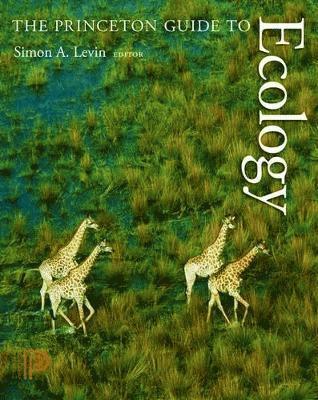
The Princeton Guide to Ecology is a concise, authoritative one-volume reference to the field's major subjects and key concepts. Edited by eminent ecologist Simon Levin, with contributions from an international team of leading ecologists, the book contains more than ninety clear, accurate, and up-to-date articles on the most important topics within seven major areas: autecology, population ecology, communities and ecosystems, landscapes and the biosphere, conservation biology, ecosystem services, and biosphere management. Complete with more than 200 illustrations (including sixteen pages in color), a glossary of key terms, a chronology of milestones in the field, suggestions for further reading on each topic, and an index, this is an essential volume for undergraduate and graduate students, research ecologists, scientists in related fields, policymakers, and anyone else with a serious interest in ecology.* Explains key topics in one concise and authoritative volume * Features more than ninety articles written by an international team of leading ecologists * Contains more than 200 illustrations, including sixteen pages in color * Includes glossary, chronology, suggestions for further reading, and index * Covers autecology, population ecology, communities and ecosystems, landscapes and the biosphere, conservation biology, ecosystem services, and biosphere management
1 064 kr
Skickas inom 10-15 vardagar
In its statutory authority (National Science Foundation Act of 1950, as amended), the NSF is directed to both initiate and support basic scientific research. In its Ecology Program, one mode of initiating research is to en courage the development of new ideas through advisory workshops. The NSF is specifically directed to strengthen our nation's research potential. In addition, stimulating new approaches to research will continue to be prominent in the coming years as federal attention is given to increasing the innovativeness and competitiveness of the U. S. in science and engineering. A decision to initiate a workshop does not arise de novo in the Ecology Program. Rather, it emerges from panel discussions, conversations with in vestigators at meetings or on the phone, and from discussions between pro gram officers in the Division of Biotic Systems and Resources. This workshop was developed to provide advice to the NSF and the lim nological community. Some NSF perceptions on future funding for ecolog ical research on lake communities are presented here. Researchers often mentioned a paucity of innovative lake ecology at the community level. This perception was accompanied by a certain frustration since lakes probably have the best empirical data base of any natural environment and should continue to lead in the development of ecological concepts. Members of NSF advisory panels sometimes expressed similar concerns during consid eration of proposals for lake research.