• Fri frakt över 249 kr
  • •
  • Snabba leveranser
  • •
  • Billiga böcker
Kundservice

Du är på sajten för privatpersoner.

Företag, bibliotek eller offentlig verksamhet?

Du handlar på classic.bokus.com, där alla dina funktioner finns intakta.
Till classic.bokus.com
Bokus logotyp. Gå till startsidan.
  • Erbjudanden
  • Nyheter
  • Student
  • Topplistor
  • Barn & ungdom
  • Bokus Play
  • E-böcker
  • Pocketböcker
  • Spel & pussel

10% rabatt på allt med kod: NYSTART10 →

Sidfot

Mina sidor

    Hjälp

    • Kundservice
    • Vanliga frågor och svar
    • Frakt och leverans
    • Retur vid ångerrätt
    • Reklamera vara
    • Betalning
    • Köpvillkor
    • Allmänna villkor
    • Information om webbplatsens tillgänglighet

    Om Bokus

    • Om oss
    • Pressrum
    • För studenter
    • För företag
    • För bibliotek och offentlig verksamhet
    • För leverantörer
    • Hållbarhet

    Populärt

    • Aktuella erbjudanden
    • Presentkort
    • Studentlitteratur
    • Nya böcker
    • Topplistor
    • Signerade böcker
    • Engelska böcker

    Inspiration

    • Boktips
    • BookTok
    • Populära bokserier
    • Barnbokskaraktärer
    • Populära författare
    Logotyp för Bokus
    Följ oss på Facebook (extern länk)Följ oss på Instagram (extern länk)Följ oss på YouTube (extern länk)Följ oss på TikTok (extern länk)
    bokus @ CookiesAnpassa cookiesIntegritetspolicyKöpvillkor
    Till Citymail hemsida (extern länk)Till Budbee hemsida (extern länk)Till Postnord hemsida (extern länk)Till Schenker hemsida (extern länk)Till Early Bird hemsida (extern länk)Till Walleys hemsida (extern länk)
    1. Naturvetenskap och teknik
    2. Geovetenskap
    3. Miljövetenskap och miljöpolitik

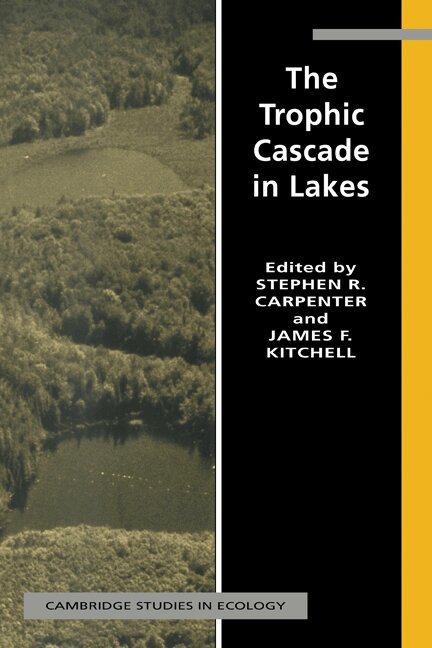
    The Trophic Cascade in Lakes

    AvStephen R. Carpenter,James F. Kitchell

    Häftad, Engelska, 1996

    Del i serien Cambridge Studies in Ecology

    651 kr

    Beställningsvara. Skickas inom 10-15 vardagar. Fri frakt över 249 kr.

    Beskrivning

    Fluctuations in fish populations in lakes can cascade through food webs to alter nutrient cycling, algal biomass and primary production. Trophic cascades may interact with nutrients and physical factors to explain most of the variance in lake ecosystem process rates. In this 1993 book, a multidisciplinary research team tests this idea by manipulating whole lakes experimentally, and coordinating this with palaeolimnological studies, simulation modelling, and small-scale enclosure experiments. Consequences of predator-prey interactions, behavioural responses of fishes, diel vertical migration of zooplankton, plankton community change, primary production, nutrient cycling and microbial processes are described. Palaeolimnological techniques enable the reconstruction of trophic interactions from past decades. Prospects for analysing the interaction of food web structure and nutrient input in lakes are explored.

    Produktinformation

    • Utgivningsdatum:1996-07-13
    • Mått:153 x 228 x 23 mm
    • Vikt:568 g
    • Format:Häftad
    • Språk:Engelska
    • Serie:Cambridge Studies in Ecology
    • Antal sidor:400
    • Förlag:Cambridge University Press
    • ISBN:9780521566841

    Utforska kategorier

    • Miljövetenskap och miljöpolitik inom Naturvetenskap och teknik
    • Biovetenskap inom Naturvetenskap och teknik

    Recensioner i media

    "I found the book to be clearly written, and appropriate for its target audience, researchers in ecology and resource management...The breadth of approaches brought to bear in the study is extremely impressive...I recommend this book as a fine case history of a pluralistic approach to an important ecological issue." Tim Wootton, Ecology

    Innehållsförteckning

    • 1. Cascading trophic interactions; 2. Experimental lakes, manipulations and measurements; 3. Statistical analysis of the ecosystem experiments; 4. The fish populations; 5. Fish behavioral and community responses to manipulation; 6. Roles of fish predation: piscivory and planktivory; 7. Dynamics of the phantom midge: implications for zooplankton; 8. Zooplankton community dynamics; 9. Effects of predators and food supply and diel vertical migration of Daphnia; 10. Zooplankton biomass and body size; 11. Phytoplankton community dynamics; 12. Metalimnetic phytoplankton; 13. Primary production and its interactions with nutrients and light transmission; 14. Heterotrophic microbial processes; 15. Annual fossil record of food-web manipulation; 16. Simulation models of the trophic cascade: predictions and evaluations; 17. Synthesis and new directions; Index.