Shane Clifton – författare
Visar alla böcker från författaren Shane Clifton. Handla med fri frakt och snabb leverans.
9 produkter
9 produkter
Inbunden, Engelska, 2009
2 049 kr
Skickas inom 10-15 vardagar
Various social, political, economic and cultural commentators are presently arguing that human history is reaching a decisive stage in its development, a stage marked by increased interconnection between peoples, the compression of space and time, a sharing of ideas at unprecedented levels, global trade and finance, and so on. The shorthand word used to encompass these phenomena is "globalization". Some embrace it, others reject it, while still others dispute its existence. But with the abundance of literature and debate that it generates, the topic cannot be ignored. From its inception in the missionary mandate of Jesus (Matthew 28), Christianity has had a global dimension to its mission. Christianity is not a spectator to globalization but one of its agents, one of the forces at work which have extended interconnection between peoples, shared ideas and promoted social, political and cultural links. The purpose of the present work is not to provide a complete response to the question of the mission of the church in a globalizing world, but to establish a framework within which answers may be sought. Grounded in the writings of Bernard Lonergan and Robert Doran, it develops a theology of history and addresses the churches response to the impact of globalization on vital, social, cultural, personal and religious values. The project brings together the perspectives of Catholicism and Pentecostalism, the former providing a depth of wisdom and tradition, the latter drawing on the insight of a newly emerging movement that has taken root in every continent with remarkable energy and enthusiasm.
Häftad, Engelska, 2011
538 kr
Skickas inom 10-15 vardagar
Various social, political, economic and cultural commentators are presently arguing that human history is reaching a decisive stage in its development, a stage marked by increased interconnection between peoples, the compression of space and time, a sharing of ideas at unprecedented levels, global trade and finance, and so on. The shorthand word used to encompass these phenomena is "globalization". Some embrace it, others reject it, while still others dispute its existence. But with the abundance of literature and debate that it generates, the topic cannot be ignored. From its inception in the missionary mandate of Jesus (Matthew 28), Christianity has had a global dimension to its mission. Christianity is not a spectator to globalization but one of its agents, one of the forces at work which have extended interconnection between peoples, shared ideas and promoted social, political and cultural links. The purpose of the present work is not to provide a complete response to the question of the mission of the church in a globalizing world, but to establish a framework within which answers may be sought.Grounded in the writings of Bernard Lonergan and Robert Doran, it develops a theology of history and addresses the churches response to the impact of globalization on vital, social, cultural, personal and religious values. The project brings together the perspectives of Catholicism and Pentecostalism, the former providing a depth of wisdom and tradition, the latter drawing on the insight of a newly emerging movement that has taken root in every continent with remarkable energy and enthusiasm.
E-bok
PDF, Engelska, 2009570 kr
Läs direkt efter köp
Various social, political, economic and cultural commentators are presently arguing that human history is reaching a decisive stage in its development, a stage marked by increased interconnection between peoples, the compression of space and time, a sharing of ideas at unprecedented levels, global trade and finance, and so on. The shorthand word used to encompass these phenomena is "globalization". Some embrace it, others reject it, while still others dispute its existence. But with the abundance of literature and debate that it generates, the topic cannot be ignored. From its inception in the missionary mandate of Jesus (Matthew 28), Christianity has had a global dimension to its mission. Christianity is not a spectator to globalization but one of its agents, one of the forces at work which have extended interconnection between peoples, shared ideas and promoted social, political and cultural links. The purpose of the present work is not to provide a complete response to the question of the mission of the church in a globalizing world, but to establish a framework within which answers may be sought. Grounded in the writings of Bernard Lonergan and Robert Doran, it develops a theology of history and addresses the churches response to the impact of globalization on vital, social, cultural, personal and religious values. The project brings together the perspectives of Catholicism and Pentecostalism, the former providing a depth of wisdom and tradition, the latter drawing on the insight of a newly emerging movement that has taken root in every continent with remarkable energy and enthusiasm.
E-bok
Engelska, 2011570 kr
Läs direkt efter köp
Various social, political, economic and cultural commentators are presently arguing that human history is reaching a decisive stage in its development, a stage marked by increased interconnection between peoples, the compression of space and time, a sharing of ideas at unprecedented levels, global trade and finance, and so on. The shorthand word used to encompass these phenomena is "globalization". Some embrace it, others reject it, while still others dispute its existence. But with the abundance of literature and debate that it generates, the topic cannot be ignored. From its inception in the missionary mandate of Jesus (Matthew 28), Christianity has had a global dimension to its mission. Christianity is not a spectator to globalization but one of its agents, one of the forces at work which have extended interconnection between peoples, shared ideas and promoted social, political and cultural links. The purpose of the present work is not to provide a complete response to the question of the mission of the church in a globalizing world, but to establish a framework within which answers may be sought. Grounded in the writings of Bernard Lonergan and Robert Doran, it develops a theology of history and addresses the churches response to the impact of globalization on vital, social, cultural, personal and religious values. The project brings together the perspectives of Catholicism and Pentecostalism, the former providing a depth of wisdom and tradition, the latter drawing on the insight of a newly emerging movement that has taken root in every continent with remarkable energy and enthusiasm.
Häftad, Engelska, 2019
483 kr
Skickas inom 10-15 vardagar
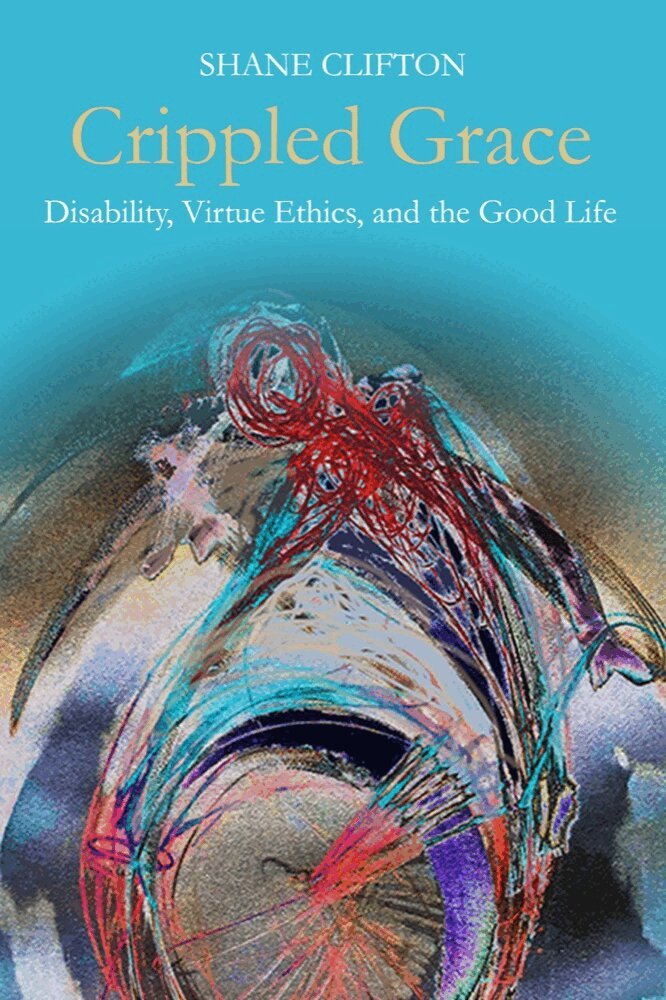
Crippled Grace combines disability studies, Christian theology, philosophy, and psychology to explore what constitutes happiness and how it is achieved. The virtue tradition construes happiness as whole-of-life flourishing earned by practiced habits of virtue. Drawing upon this particular understanding of happiness, Clifton contends that the experience of disability offers significant insight into the practice of virtue, and thereby the good life. With its origins in the author's experience of adjusting to the challenges of quadriplegia, Crippled Grace considers the diverse experiences of people with a disability as a lens through which to understand happiness and its attainment. Drawing upon the virtue tradition as much as contesting it, Clifton explores the virtues that help to negotiate dependency, resist paternalism, and maximize personal agency. Through his engagement with sources from Aristotle to modern positive psychology, Clifton is able to probe fundamental questions of pain and suffering, reflect on the value of friendship, seek creative ways of conceiving of sexual flourishing, and outline the particular virtues needed to live with unique bodies and brains in a society poorly fitted to their diverse functioning. Crippled Grace is about and for people with disabilities. Yet, Clifton also understands disability as symbolic of the human condition - human fragility, vulnerability, and embodied limits. First unmasking disability as a bodily and sociocultural construct, Clifton moves on to construct a deeper and more expansive account of flourishing that learns from those with disability, rather than excluding them. In so doing, Clifton shows that the experience of disability has something profound to say about all bodies, about the fragility and happiness of all humans, and about the deeper truths offered us by the theological virtues of faith, hope, and love.
Häftad, Engelska, 2015
281 kr
Skickas inom 5-8 vardagar
E-bok
Engelska, 2015448 kr
Läs direkt efter köp
In October 2010, Shane Clifton had a serious accident that left him a quadriplegic. Husbands Should Not Break is a memoir that describes the challenges of adjusting to life with a disability. Shane is a theologian by trade, so the memoir explores the problem of pain--where is God when we suffer--weighing the sometimes-abstract categories of theology against the harsh realities of his experience. It is a brutally honest account, which does not shy away from the author''s doubts and failures, and touches on rarely spoken-about topics, such as the impact of spinal cord injury upon sexuality. But while the narrative deals with sadness, it is a hopeful rather than depressing text, and often surprisingly funny, as it describes the comedic strangeness of struggling with a broken body. The memoir is an invitation into Shane''s mind, providing readers with the opportunity to imagine what it might be like to experience the loss that comes with spinal cord injury and, thereafter, to think about life, loss, disability, and the possibility of happiness in the midst of the hardship and fragility of life.
Inbunden, Engelska, 2015
443 kr
Skickas inom 5-8 vardagar
Del 3 - Global Pentecostal and Charismatic Studies
Pentecostal Churches in Transition
Analysing the Developing Ecclesiology of the Assemblies of God in Australia
Inbunden, Engelska, 2009
2 250 kr
Skickas inom 5-8 vardagar
The global growth of Pentecostal movements during the course of the twentieth century has been widely documented although, to date, there has been little written on their developing ecclesiology. After making the case for a concrete rather than idealised approach to ecclesiology, this book describes and analyses the transitions that have framed the ways in which Australian Pentecostals have understood church life and mission. From a loosely knit faith missions movement, to congregational free church structures, to the so-called apostolic models of mega-churches, Australian pentecostalism stands as a microcosmos of ecclesial developments that have occurred throughout the world. This book, therefore, provides a means of reflecting upon what has been gained and lost in the process of ecclesiological change.