Sharad Kumar Tripathi – författare
Visar alla böcker från författaren Sharad Kumar Tripathi. Handla med fri frakt och snabb leverans.
4 produkter
4 produkter
Inbunden, Engelska, 2026
1 673 kr
Skickas inom 5-8 vardagar
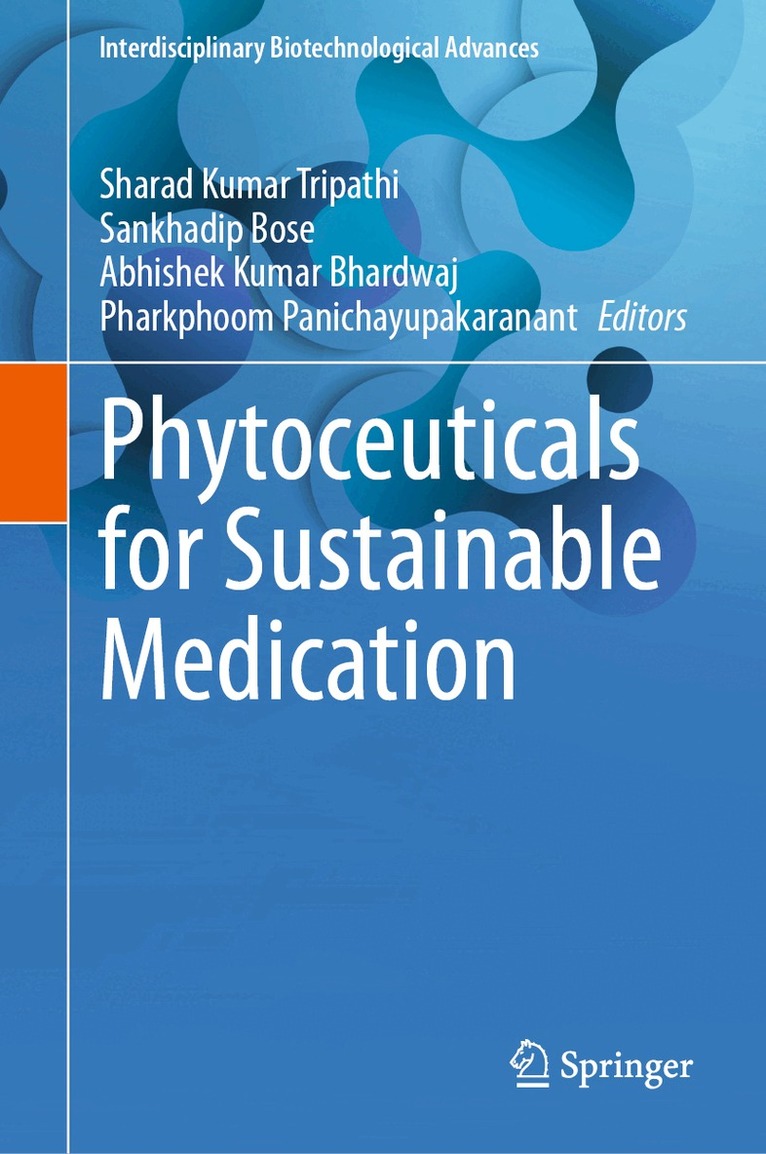
This book explores the profound impact of medicinal and aromatic plants, tracing their journey from ancient traditions to modern applications. With India boasting the richest diversity of these plants, the text delves into their historical significance and contemporary relevance in drug discovery, culinary arts, and income generation. As the world grapples with severe diseases, these plants have gained renewed attention for their therapeutic potential.The chapters cover a wide range of topics, including the introduction of newly discovered medicinal plants, their distribution, and phytochemistry. The book emphasizes eco-friendly conservation methods for rare and endangered species, and innovative techniques such as microbes-enabled seed coating for improved germination. Readers will discover the diverse applications of phytochemicals in treating non-communicable and infectious diseases, as well as their potential in dermatological and emerging disease treatments. The text also explores the role of green technology in enhancing the production of bioactive compounds through the synthesis of nanoparticles.This volume is an invaluable resource for researchers in environmental studies, microbiology, and related fields. It offers insights for policymakers in environmental and waste management, and for professionals in the food industry, agriculture, and vaccine development. It addresses the intersection of traditional knowledge and modern science, making it a must-read for scholars, practitioners, and interested laypersons alike. By providing a comprehensive overview of the sustainable use of medicinal plants, this book equips readers with the knowledge needed to advance research and practice in this vital area of study.
E-bok
Engelska, 20262 110 kr
Läs direkt efter köp
This book explores the profound impact of medicinal and aromatic plants, tracing their journey from ancient traditions to modern applications. With India boasting the richest diversity of these plants, the text delves into their historical significance and contemporary relevance in drug discovery, culinary arts, and income generation. As the world grapples with severe diseases, these plants have gained renewed attention for their therapeutic potential.The chapters cover a wide range of topics, including the introduction of newly discovered medicinal plants, their distribution, and phytochemistry. The book emphasizes eco-friendly conservation methods for rare and endangered species, and innovative techniques such as microbes-enabled seed coating for improved germination. Readers will discover the diverse applications of phytochemicals in treating non-communicable and infectious diseases, as well as their potential in dermatological and emerging disease treatments. The text also explores the role of green technology in enhancing the production of bioactive compounds through the synthesis of nanoparticles.This volume is an invaluable resource for researchers in environmental studies, microbiology, and related fields. It offers insights for policymakers in environmental and waste management, and for professionals in the food industry, agriculture, and vaccine development. It addresses the intersection of traditional knowledge and modern science, making it a must-read for scholars, practitioners, and interested laypersons alike. By providing a comprehensive overview of the sustainable use of medicinal plants, this book equips readers with the knowledge needed to advance research and practice in this vital area of study.
Inbunden, Engelska, 2026
2 629 kr
Skickas
E-bok
PDF, Engelska, 20263 639 kr
Läs direkt efter köp
Molecular Insights into Antimicrobial Resistance: Mechanisms, Evolution, and Environmental Surveillance provides a comprehensive and multidisciplinary overview of the molecular and ecological dimensions of antimicrobial resistance (AMR), one of the most urgent public health challenges of our time. This book delves into the genetic and biochemical mechanisms that underlie resistance in microbes, explores the evolutionary pressures driving its rapid emergence, and highlights the critical importance of environmental reservoirs in sustaining and disseminating resistant traits. The chapters are authored by experts from diverse disciplines, offering insights into horizontal gene transfer, resistance gene mobilization, microbial biofilms, and adaptive mutations. The book further investigates the impact of anthropogenic activities, such as overuse of antibiotics in agriculture and healthcare, on the expansion of resistance genes in natural ecosystems, including soil, water, and marine habitats. Advanced molecular tools and next-generation sequencing techniques are discussed, with a focus on their role in resistance gene detection, surveillance strategies, and global monitoring frameworks. Through this integrated approach, the book equips readers with an in-depth understanding of AMR as a biological, environmental, and societal issue. Ideal for microbiologists, molecular biologists, public health professionals, environmental scientists, and graduate students, this volume serves as both a foundational text and a springboard for future research. It emphasizes the urgent need for collaborative, interdisciplinary solutions to mitigate the AMR crisis and safeguard the efficacy of antimicrobial therapies for generations to come.