Shawn Graham – författare
Visar alla böcker från författaren Shawn Graham. Handla med fri frakt och snabb leverans.
12 produkter
12 produkter
Häftad, Engelska, 2019
182 kr
Skickas inom 3-6 vardagar
Inbunden, Engelska, 2015
1 289 kr
Skickas inom 5-8 vardagar
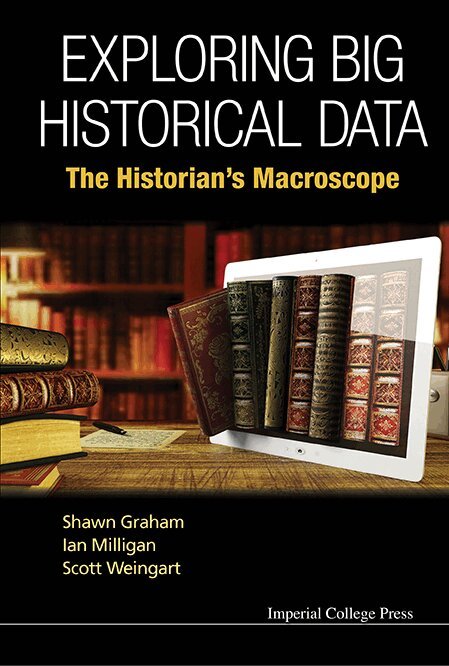
The Digital Humanities have arrived at a moment when digital Big Data is becoming more readily available, opening exciting new avenues of inquiry but also new challenges. This pioneering book describes and demonstrates the ways these data can be explored to construct cultural heritage knowledge, for research and in teaching and learning. It helps humanities scholars to grasp Big Data in order to do their work, whether that means understanding the underlying algorithms at work in search engines, or designing and using their own tools to process large amounts of information.Demonstrating what digital tools have to offer and also what 'digital' does to how we understand the past, the authors introduce the many different tools and developing approaches in Big Data for historical and humanistic scholarship, show how to use them, what to be wary of, and discuss the kinds of questions and new perspectives this new macroscopic perspective opens up. Authored 'live' online with ongoing feedback from the wider digital history community, Exploring Big Historical Data breaks new ground and sets the direction for the conversation into the future. It represents the current state-of-the-art thinking in the field and exemplifies the way that digital work can enhance public engagement in the humanities.Exploring Big Historical Data should be the go-to resource for undergraduate and graduate students confronted by a vast corpus of data, and researchers encountering these methods for the first time. It will also offer a helping hand to the interested individual seeking to make sense of genealogical data or digitized newspapers, and even the local historical society who are trying to see the value in digitizing their holdings.The companion website to Exploring Big Historical Data can be found at www.themacroscope.org/. On this site you will find code, a discussion forum, essays, and datafiles that accompany this book.
Häftad, Engelska, 2015
518 kr
Skickas inom 5-8 vardagar
The Digital Humanities have arrived at a moment when digital Big Data is becoming more readily available, opening exciting new avenues of inquiry but also new challenges. This pioneering book describes and demonstrates the ways these data can be explored to construct cultural heritage knowledge, for research and in teaching and learning. It helps humanities scholars to grasp Big Data in order to do their work, whether that means understanding the underlying algorithms at work in search engines, or designing and using their own tools to process large amounts of information.Demonstrating what digital tools have to offer and also what 'digital' does to how we understand the past, the authors introduce the many different tools and developing approaches in Big Data for historical and humanistic scholarship, show how to use them, what to be wary of, and discuss the kinds of questions and new perspectives this new macroscopic perspective opens up. Authored 'live' online with ongoing feedback from the wider digital history community, Exploring Big Historical Data breaks new ground and sets the direction for the conversation into the future. It represents the current state-of-the-art thinking in the field and exemplifies the way that digital work can enhance public engagement in the humanities.Exploring Big Historical Data should be the go-to resource for undergraduate and graduate students confronted by a vast corpus of data, and researchers encountering these methods for the first time. It will also offer a helping hand to the interested individual seeking to make sense of genealogical data or digitized newspapers, and even the local historical society who are trying to see the value in digitizing their holdings.The companion website to Exploring Big Historical Data can be found at www.themacroscope.org/. On this site you will find code, a discussion forum, essays, and datafiles that accompany this book.
Inbunden, Engelska, 2020
1 960 kr
Skickas inom 3-6 vardagar
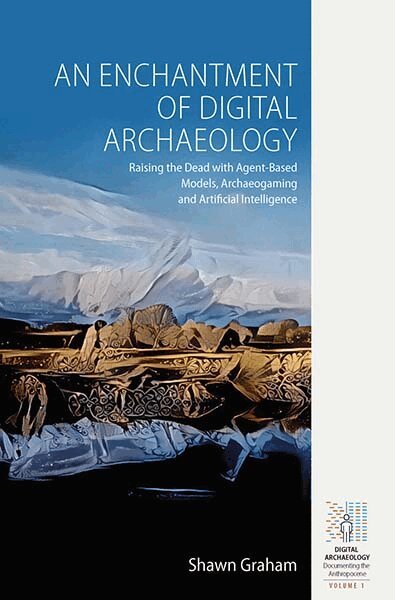
The use of computation in archaeology is a kind of magic, a way of heightening the archaeological imagination. Agent-based modelling allows archaeologists to test the ‘just-so’ stories they tell about the past. It requires a formalization of the story so that it can be represented as a simulation; researchers are then able to explore the unintended consequences or emergent outcomes of stories about the past. Agent-based models are one end of a spectrum that, at the opposite side, ends with video games. This volume explores this spectrum in the context of Roman archaeology, addressing the strengths, weaknesses, and opportunities of a formalized approach to computation and archaeogaming.
Del 1 - Digital Archaeology: Documenting the Anthropocene
Enchantment of Digital Archaeology
Raising the Dead with Agent Based Models, Archaeogaming, and Artificial Intelligence
Häftad, Engelska, 2020
338 kr
Skickas inom 3-6 vardagar
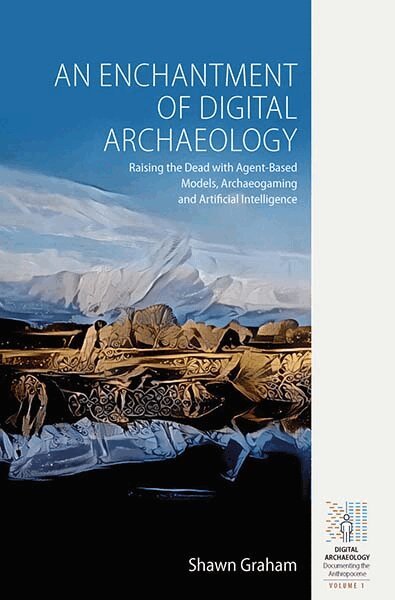
The use of computation in archaeology is a kind of magic, a way of heightening the archaeological imagination. Agent-based modelling allows archaeologists to test the ‘just-so’ stories they tell about the past. It requires a formalization of the story so that it can be represented as a simulation; researchers are then able to explore the unintended consequences or emergent outcomes of stories about the past. Agent-based models are one end of a spectrum that, at the opposite side, ends with video games. This volume explores this spectrum in the context of Roman archaeology, addressing the strengths, weaknesses, and opportunities of a formalized approach to computation and archaeogaming.
Inbunden, Engelska, 2023
1 960 kr
Skickas inom 3-6 vardagar
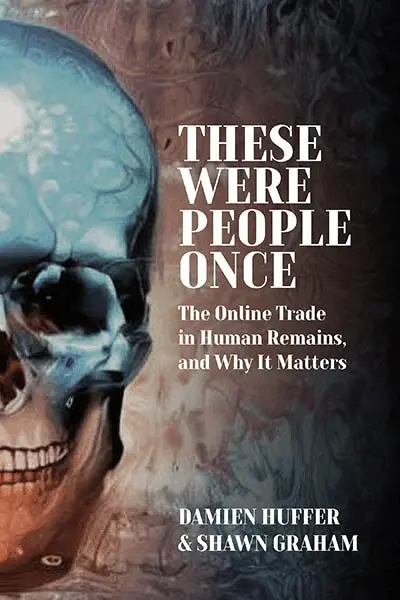
People buy and sell human remains online. Most of this trade these days is over social media. In a study of this ‘bone trade’, how it works, and why it matters, the authors review and use a variety of methods drawn from the digital humanities to analyze the sheer volume of social media posts in search of answers to questions regarding this online bone trade. The answers speak to how the 21st century understands and constructs ‘heritage’ more generally: each person their own expert, yet seeking community and validation, and like the major encyclopedic museums, built on a kind of digital neocolonialist othering of the dead.
Häftad, Engelska, 2006
691 kr
Skickas inom 5-8 vardagar
Häftad, Engelska, 2025
170 kr
Skickas inom 5-8 vardagar
Inbunden, Engelska, 2022
1 374 kr
Skickas inom 3-6 vardagar
Every day, more and more kinds of historical data become available, opening exciting new avenues of inquiry but also new challenges. This updated and expanded book describes and demonstrates the ways these data can be explored to construct cultural heritage knowledge, for research and in teaching and learning. It helps humanities scholars to grasp Big Data in order to do their work, whether that means understanding the underlying algorithms at work in search engines or designing and using their own tools to process large amounts of information.Demonstrating what digital tools have to offer and also what 'digital' does to how we understand the past, the authors introduce the many different tools and developing approaches in Big Data for historical and humanistic scholarship, show how to use them, what to be wary of, and discuss the kinds of questions and new perspectives this new macroscopic perspective opens up. Originally authored 'live' online with ongoing feedback from the wider digital history community, Exploring Big Historical Data breaks new ground and sets the direction for the conversation into the future.Exploring Big Historical Data should be the go-to resource for undergraduate and graduate students confronted by a vast corpus of data, and researchers encountering these methods for the first time. It will also offer a helping hand to the interested individual seeking to make sense of genealogical data or digitized newspapers, and even the local historical society who are trying to see the value in digitizing their holdings.
Häftad, Engelska, 2022
626 kr
Skickas
Every day, more and more kinds of historical data become available, opening exciting new avenues of inquiry but also new challenges. This updated and expanded book describes and demonstrates the ways these data can be explored to construct cultural heritage knowledge, for research and in teaching and learning. It helps humanities scholars to grasp Big Data in order to do their work, whether that means understanding the underlying algorithms at work in search engines or designing and using their own tools to process large amounts of information.Demonstrating what digital tools have to offer and also what 'digital' does to how we understand the past, the authors introduce the many different tools and developing approaches in Big Data for historical and humanistic scholarship, show how to use them, what to be wary of, and discuss the kinds of questions and new perspectives this new macroscopic perspective opens up. Originally authored 'live' online with ongoing feedback from the wider digital history community, Exploring Big Historical Data breaks new ground and sets the direction for the conversation into the future.Exploring Big Historical Data should be the go-to resource for undergraduate and graduate students confronted by a vast corpus of data, and researchers encountering these methods for the first time. It will also offer a helping hand to the interested individual seeking to make sense of genealogical data or digitized newspapers, and even the local historical society who are trying to see the value in digitizing their holdings.
Häftad, Engelska, 2024
163 kr
Skickas inom 5-8 vardagar
Inbunden, Engelska, 2024
217 kr
Skickas inom 5-8 vardagar