Sheila Jeffreys – författare
1 724 kr
Skickas inom 10-15 vardagar
652 kr
Skickas inom 10-15 vardagar
3 894 kr
Skickas inom 10-15 vardagar
2 369 kr
Skickas inom 10-15 vardagar
611 kr
Skickas inom 10-15 vardagar
2 438 kr
Skickas inom 10-15 vardagar
798 kr
Skickas inom 10-15 vardagar
2 438 kr
Skickas inom 10-15 vardagar
728 kr
Skickas inom 10-15 vardagar
700 kr
Skickas inom 10-15 vardagar
909 kr
Läs direkt efter köp
Originally published in 1984. The history of sex in the last 100 years has usually been written as a story of progress from repression to sexual liberation. This book argues that the reverse is true, demonstrating that the ‘sexual revolution’ came as a backlash to a women’s movement which challenged men’s sexual abuse and tried to reconstruct male sexuality in women’s interest. At first it looks at those groups at the turn of the twentieth century who campaigned to challenge prevailing ideas about sexual behaviour. It moves on to review the work of the most influential sexologists Ellis, Kinsey, Masters and Johnson, and then presents a critical analysis of the sex magazine Forum.
909 kr
Läs direkt efter köp
Originally published in 1984. The history of sex in the last 100 years has usually been written as a story of progress from repression to sexual liberation. This book argues that the reverse is true, demonstrating that the ‘sexual revolution’ came as a backlash to a women’s movement which challenged men’s sexual abuse and tried to reconstruct male sexuality in women’s interest. At first it looks at those groups at the turn of the twentieth century who campaigned to challenge prevailing ideas about sexual behaviour. It moves on to review the work of the most influential sexologists Ellis, Kinsey, Masters and Johnson, and then presents a critical analysis of the sex magazine Forum.
769 kr
Skickas inom 11-20 vardagar
229 kr
Skickas
740 kr
Läs direkt efter köp
The industrialization of prostitution and the sex trade has created a multibillion-dollar global market, involving millions of women, that makes a substantial contribution to national and global economies.
The Industrial Vagina examines how prostitution and other aspects of the sex industry have moved from being small-scale, clandestine, and socially despised practices to become very profitable legitimate market sectors that are being legalised and decriminalised by governments. Sheila Jeffreys demonstrates how prostitution has been globalized through an examination of:
the growth of pornography and its new global reach
the boom in adult shops, strip clubs and escort agencies
military prostitution and sexual violence in war
marriage and the mail order bride industry
the rise in sex tourism and trafficking in women.
She argues that through these practices women’s subordination has been outsourced and that states that legalise this industry are acting as pimps, enabling male buyers in countries in which women’s equality threatens male dominance, to buy access to the bodies of women from poor countries who are paid for their sexual subservience.
This major and provocative contribution is essential reading for all with an interest in feminist, gender and critical globalisation issues as well as students and scholars of international political economy.
740 kr
Läs direkt efter köp
The industrialization of prostitution and the sex trade has created a multibillion-dollar global market, involving millions of women, that makes a substantial contribution to national and global economies.
The Industrial Vagina examines how prostitution and other aspects of the sex industry have moved from being small-scale, clandestine, and socially despised practices to become very profitable legitimate market sectors that are being legalised and decriminalised by governments. Sheila Jeffreys demonstrates how prostitution has been globalized through an examination of:
the growth of pornography and its new global reach
the boom in adult shops, strip clubs and escort agencies
military prostitution and sexual violence in war
marriage and the mail order bride industry
the rise in sex tourism and trafficking in women.
She argues that through these practices women’s subordination has been outsourced and that states that legalise this industry are acting as pimps, enabling male buyers in countries in which women’s equality threatens male dominance, to buy access to the bodies of women from poor countries who are paid for their sexual subservience.
This major and provocative contribution is essential reading for all with an interest in feminist, gender and critical globalisation issues as well as students and scholars of international political economy.
797 kr
Läs direkt efter köp
797 kr
Läs direkt efter köp
858 kr
Läs direkt efter köp
In this feminist critique of the politics of religion, Sheila Jeffreys argues that the renewed rise of religion is harmful to women’s human rights. The book seeks to rekindle the criticism of religion as the founding ideology of patriarchy.
Focusing on the three monotheistic religions; Judaism, Christianity and Islam, this book examines common anti-women attitudes such as ‘male-headship’, impurity of women, the need to control women’s bodies, and their modern manifestations in multicultural Western states. It points to the incorporation of religious law into legal systems, faith schools, and campaigns led by Christian and Islamic organisations against women’s rights at the U.N., and explains how religious rights threaten to subvert women’s rights. Including highly-topical chapters on the burka and the covering of women, and polygamy, this text questions the ideology of multiculturalism which shields religion from criticism by demanding respect for culture and faith, whilst ignoring the harm that women suffer from religion.
Man’s Dominion is an incisive and polemic text that will be of interest to students of gender studies, religion, and politics.
858 kr
Läs direkt efter köp
In this feminist critique of the politics of religion, Sheila Jeffreys argues that the renewed rise of religion is harmful to women’s human rights. The book seeks to rekindle the criticism of religion as the founding ideology of patriarchy.
Focusing on the three monotheistic religions; Judaism, Christianity and Islam, this book examines common anti-women attitudes such as ‘male-headship’, impurity of women, the need to control women’s bodies, and their modern manifestations in multicultural Western states. It points to the incorporation of religious law into legal systems, faith schools, and campaigns led by Christian and Islamic organisations against women’s rights at the U.N., and explains how religious rights threaten to subvert women’s rights. Including highly-topical chapters on the burka and the covering of women, and polygamy, this text questions the ideology of multiculturalism which shields religion from criticism by demanding respect for culture and faith, whilst ignoring the harm that women suffer from religion.
Man’s Dominion is an incisive and polemic text that will be of interest to students of gender studies, religion, and politics.
2 198 kr
Skickas inom 10-15 vardagar
601 kr
Skickas inom 10-15 vardagar
686 kr
Läs direkt efter köp
The new edition of Beauty and Misogyny revisits and updates Sheila Jeffreys'' uncompromising critique of Western beauty practice and the industries and ideologies behind it. Jeffreys argues that beauty practices are not related to individual female choice or creative expression, but represent instead an important aspect of women''s oppression. As these practices have become increasingly brutal and pervasive, the need to scrutinize and dismantle them is if anything more urgent now as it was in 2005 when the first edition of the book was published.
The United Nations concept of "harmful traditional/cultural practices" provides a useful lens for the author to advance her critique. She makes the case for including Western beauty practices within this definition, examining their role in damaging women''s health, creating sexual difference and enforcing female deference.
First-wave feminists of the 1970s criticized pervasive beauty regimes such as dieting and depilation, but a later argument took hold that beauty practices were no longer oppressive now that women could "choose" them. In recent years the reality of Western beauty practices has become much more bloody and severe, requiring the breaking of skin and the rearrangement or amputation of body parts. Beauty and Misogyny seeks to make sense of why beauty practices have not only persisted but become more extreme. It examines the pervasive use of makeup, the misogyny of fashion and high-heeled shoes, and looks at the role of pornography in the creation of increasingly popular beauty practices such as breast implants, genital waxing, surgical alteration of the labia and other forms of self-mutilation. The book concludes by considering how a culture of resistance to these practices can be created.
A new and thoroughly updated edition of this essential work will appeal to all levels of students and teachers of gender studies, cultural studies and feminist psychology, and to anyone with an interest in feminism, women and beauty, and women''s health.
686 kr
Läs direkt efter köp
The new edition of Beauty and Misogyny revisits and updates Sheila Jeffreys'' uncompromising critique of Western beauty practice and the industries and ideologies behind it. Jeffreys argues that beauty practices are not related to individual female choice or creative expression, but represent instead an important aspect of women''s oppression. As these practices have become increasingly brutal and pervasive, the need to scrutinize and dismantle them is if anything more urgent now as it was in 2005 when the first edition of the book was published.
The United Nations concept of "harmful traditional/cultural practices" provides a useful lens for the author to advance her critique. She makes the case for including Western beauty practices within this definition, examining their role in damaging women''s health, creating sexual difference and enforcing female deference.
First-wave feminists of the 1970s criticized pervasive beauty regimes such as dieting and depilation, but a later argument took hold that beauty practices were no longer oppressive now that women could "choose" them. In recent years the reality of Western beauty practices has become much more bloody and severe, requiring the breaking of skin and the rearrangement or amputation of body parts. Beauty and Misogyny seeks to make sense of why beauty practices have not only persisted but become more extreme. It examines the pervasive use of makeup, the misogyny of fashion and high-heeled shoes, and looks at the role of pornography in the creation of increasingly popular beauty practices such as breast implants, genital waxing, surgical alteration of the labia and other forms of self-mutilation. The book concludes by considering how a culture of resistance to these practices can be created.
A new and thoroughly updated edition of this essential work will appeal to all levels of students and teachers of gender studies, cultural studies and feminist psychology, and to anyone with an interest in feminism, women and beauty, and women''s health.
942 kr
Läs direkt efter köp
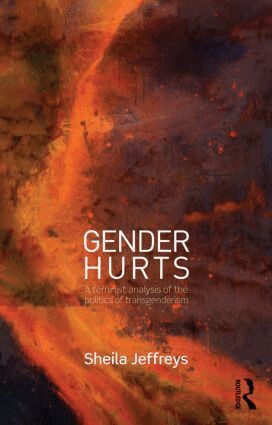
It is only recently that transgenderism has been accepted as a disorder for which treatment is available. In the 1990s, a political movement of transgender activism coalesced to campaign for transgender rights. Considerable social, political and legal changes are occurring in response and there is increasing acceptance by governments and many other organisations and actors of the legitimacy of these rights.
This provocative and controversial book explores the consequences of these changes and offers a feminist perspective on the ideology and practice of transgenderism, which the author sees as harmful. It explores the effects of transgenderism on the lesbian and gay community, the partners of people who transgender, children who are identified as transgender and the people who transgender themselves, and argues that these are negative. In doing so the book contends that the phenomenon is based upon sex stereotyping, referred to as ''gender'' – a conservative ideology that forms the foundation for women''s subordination. Gender Hurts argues for the abolition of ‘gender’, which would remove the rationale for transgenderism.
This book will be of interest to scholars and students of political science, feminism and feminist theory and gender studies.
942 kr
Läs direkt efter köp
It is only recently that transgenderism has been accepted as a disorder for which treatment is available. In the 1990s, a political movement of transgender activism coalesced to campaign for transgender rights. Considerable social, political and legal changes are occurring in response and there is increasing acceptance by governments and many other organisations and actors of the legitimacy of these rights.
This provocative and controversial book explores the consequences of these changes and offers a feminist perspective on the ideology and practice of transgenderism, which the author sees as harmful. It explores the effects of transgenderism on the lesbian and gay community, the partners of people who transgender, children who are identified as transgender and the people who transgender themselves, and argues that these are negative. In doing so the book contends that the phenomenon is based upon sex stereotyping, referred to as ''gender'' – a conservative ideology that forms the foundation for women''s subordination. Gender Hurts argues for the abolition of ‘gender’, which would remove the rationale for transgenderism.
This book will be of interest to scholars and students of political science, feminism and feminist theory and gender studies.
706 kr
Läs direkt efter köp
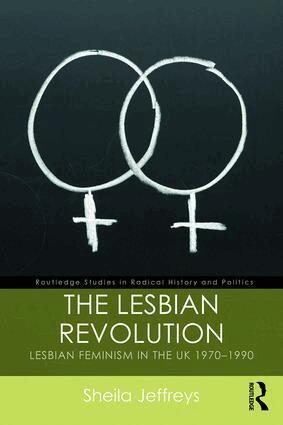
The Lesbian Revolution argues that lesbian feminists were a vital force in the Women’s Liberation Movement (WLM). They did not just play a fundamental role in the important changes wrought by second wave feminism, but created a powerful revolution in lesbian theory, culture and practice. Yet this lesbian revolution is undocumented.
The book shows that lesbian feminists were founders of feminist institutions such as resources for women survivors of men’s violence, including refuges and rape crisis centres, and that they were central to campaigns against this violence. They created a feminist squatting movement, theatre groups, bands, art and poetry and conducted campaigns for lesbian rights. They also created a profound and challenging analysis of sexuality which has disappeared from the historical record. They analysed heterosexuality as a political institution, arguing that lesbianism was a political choice for feminists and, indeed, a form of resistance in itself. Using interviews with prominent lesbian feminists from the time of the WLM, and informed by the author''s personal experience, this book aims to challenge the way the work and ideas of lesbian feminists have been eclipsed and to document the lesbian revolution.
The book will be of key interest to scholars and students of women’s history, the history of feminism, the politics of sexuality, women’s studies, gender studies, lesbian and gay studies, queer studies and cultural studies, as well as to the lay reader interested in the WLM and feminism more generally.
682 kr
Läs direkt efter köp
The Lesbian Revolution argues that lesbian feminists were a vital force in the Women’s Liberation Movement (WLM). They did not just play a fundamental role in the important changes wrought by second wave feminism, but created a powerful revolution in lesbian theory, culture and practice. Yet this lesbian revolution is undocumented.
The book shows that lesbian feminists were founders of feminist institutions such as resources for women survivors of men’s violence, including refuges and rape crisis centres, and that they were central to campaigns against this violence. They created a feminist squatting movement, theatre groups, bands, art and poetry and conducted campaigns for lesbian rights. They also created a profound and challenging analysis of sexuality which has disappeared from the historical record. They analysed heterosexuality as a political institution, arguing that lesbianism was a political choice for feminists and, indeed, a form of resistance in itself. Using interviews with prominent lesbian feminists from the time of the WLM, and informed by the author''s personal experience, this book aims to challenge the way the work and ideas of lesbian feminists have been eclipsed and to document the lesbian revolution.
The book will be of key interest to scholars and students of women’s history, the history of feminism, the politics of sexuality, women’s studies, gender studies, lesbian and gay studies, queer studies and cultural studies, as well as to the lay reader interested in the WLM and feminism more generally.
2 438 kr
Skickas inom 10-15 vardagar
629 kr
Skickas inom 10-15 vardagar