Sherry L. Willis – författare
Visar alla böcker från författaren Sherry L. Willis. Handla med fri frakt och snabb leverans.
10 produkter
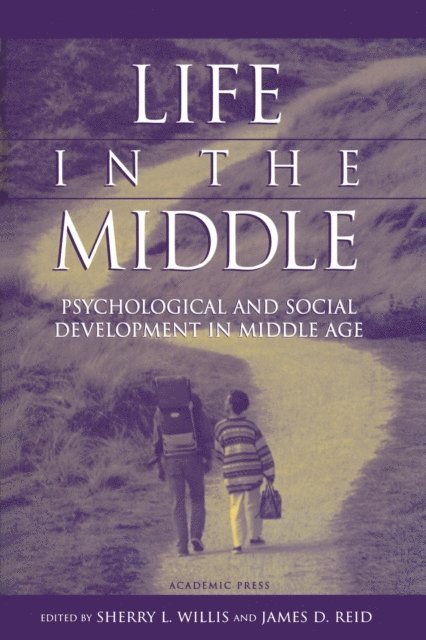
Life in the Middle
Psychological and Social Development in Middle Age
Av James B. Reid, Sherry L. Willis
E-bok, 1998
1299 kr
Lägg i varukorg
There is a growing body of scientific knowledge regarding development during the middle years which has so far been relegated to discipline-specific texts and journals (e.g., clinical psychology and endocrinology).Life in the Middle consolidates main findings across disciplines, with a life-span …
Handbook of the Psychology of Aging
Av K Warner Schaie, Sherry L. Willis
Häftad, 2010
891 kr
Lägg i varukorg
The Handbook of the Psychology of Aging, Seventh Edition, provides a basic reference source on the behavioral processes of aging for researchers, graduate students, and professionals. It also provides perspectives on the behavioral science of aging for researchers and professionals from other …
Handbook of the Psychology of Aging
Av Sherry L. Willis, K Warner Schaie
E-bok, 2010
1058 kr
Lägg i varukorg
The Handbook of the Psychology of Aging, Seventh Edition, provides a basic reference source on the behavioral processes of aging for researchers, graduate students, and professionals. It also provides perspectives on the behavioral science of aging for researchers and professionals from other …
Handbook of the Psychology of Aging
Av K Warner Schaie, Sherry L. Willis
Häftad, 2021
1229 kr
Lägg i varukorg
Handbook of the Psychology of Aging, Ninth Edition tackles both the biological and environmental influences on behavior and the reciprocal interface between changes in the brain and behavior that span the adult lifespan. This information is very important to many features of daily life, from …
The Seattle Longitudinal Study
Tracking Adult Development and Aging Over 50+ Years
Av Gizem Hülür, Denis Gerstorf m. fl.
Inbunden, 2027
1739 kr
Kommande
Adult cognitive development is one of the most important aspects in the study of human psychology, and the Seattle Longitudinal Study (SLS) is one of the world's longest running and influential studies of adult development and aging. Launched in 1956 by Warner Schaie, the SLS has followed multiple …
Middle Adulthood
A Lifespan Perspective
Av Sherry L. Willis, Mike Martin m. fl.
Inbunden, 2005
2371 kr
Lägg i varukorg
"This book is unique because of the focus on longitudinal studies and international perspectives . . . There is no other book like it . . . This book will be useful both as an advanced undergraduate or graduate course text and as a resource for scholars." - Rosemary Blieszner, Virginia Polytechnic …
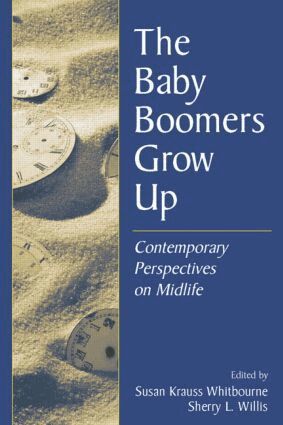
Baby Boomers Grow Up
Contemporary Perspectives on Midlife
Av Susan Krauss Whitbourne, Sherry L. Willis
Inbunden, 2006
3168 kr
Lägg i varukorg
The goal of this volume is to examine development in middle age from the perspective of baby boomers -- a unique cohort in the United States defined as those individuals born from 1946 to 1962. This is the largest cohort ever to enter middle age in Western society, and they currently represent …
Baby Boomers Grow Up
Contemporary Perspectives on Midlife
Av Susan Krauss Whitbourne, Sherry L. Willis
Häftad, 2006
851 kr
Lägg i varukorg
The goal of this volume is to examine development in middle age from the perspective of baby boomers -- a unique cohort in the United States defined as those individuals born from 1946 to 1962. This is the largest cohort ever to enter middle age in Western society, and they currently represent …
Baby Boomers Grow Up
Contemporary Perspectives on Midlife
Av Sherry L. Willis, Susan Krauss Whitbourne
E-bok, 2014
976 kr
Lägg i varukorg
The goal of this volume is to examine development in middle age from the perspective of baby boomers -- a unique cohort in the United States defined as those individuals born from 1946 to 1962. This is the largest cohort ever to enter middle age in Western society, and they currently represent …
Baby Boomers Grow Up
Contemporary Perspectives on Midlife
Av Sherry L. Willis, Susan Krauss Whitbourne
E-bok, 2014
976 kr
Lägg i varukorg
The goal of this volume is to examine development in middle age from the perspective of baby boomers -- a unique cohort in the United States defined as those individuals born from 1946 to 1962. This is the largest cohort ever to enter middle age in Western society, and they currently represent …