Shyon Baumann - Böcker
Visar alla böcker från författaren Shyon Baumann. Handla med fri frakt och snabb leverans.
9 produkter
9 produkter
1 249 kr
Skickas inom 3-6 vardagar
Today's moviegoers and critics generally consider some Hollywood products--even some blockbusters--to be legitimate works of art. But during the first half century of motion pictures very few Americans would have thought to call an American movie "art." Up through the 1950s, American movies were regarded as a form of popular, even lower-class, entertainment. By the 1960s and 1970s, however, viewers were regularly judging Hollywood films by artistic criteria previously applied only to high art forms. In Hollywood Highbrow, Shyon Baumann for the first time tells how social and cultural forces radically changed the public's perceptions of American movies just as those forces were radically changing the movies themselves. The development in the United States of an appreciation of film as an art was, Baumann shows, the product of large changes in Hollywood and American society as a whole. With the postwar rise of television, American movie audiences shrank dramatically and Hollywood responded by appealing to richer and more educated viewers.Around the same time, European ideas about the director as artist, an easing of censorship, and the development of art-house cinemas, film festivals, and the academic field of film studies encouraged the idea that some American movies--and not just European ones--deserved to be considered art.
715 kr
Skickas inom 10-15 vardagar
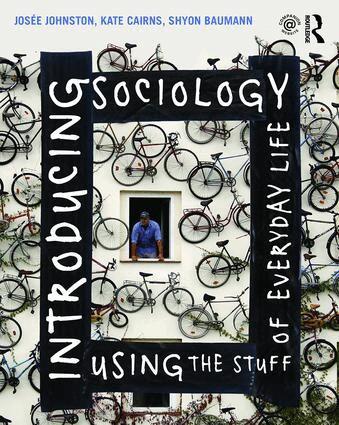
The challenges of teaching a successful introductory sociology course today demand materials very different from the norm. It is a question of making the practice of sociological thinking meaningful, rigorous, and relevant to today’s world of undergraduates.This comparatively concise, highly visual, and engaging book offers a refreshingly new way forward to reach students, using one of the most powerful tools in a sociologist’s teaching arsenal – the familiar stuff in students’ everyday lives throughout the world: the jeans they wear to class, the coffee they drink each morning, or the phones their professors tell them to put away during lectures.A focus on consumer culture, seeing the strange in the familiar, is not only interesting for students; it is also (the authors suggest) pedagogically superior to more traditional approaches. By engaging students through their stuff, this book moves beyond teaching about sociology to helping instructors teach the practice of sociological thinking. It moves beyond describing what sociology is so that students can practice what sociological thinking can do. This pedagogy also posits a relationship between teacher and learner that is bi-directional. Many students feel a sense of authority in various areas of consumer culture, and they often enjoy sharing their knowledge with fellow students and with their instructor. Opening up the sociology classroom to discussion of these topics validates students’ expertise on their own life-worlds. Teachers, in turn, gain insight from the goods, services, and cultural expectations that shape students’ lives.While innovative, the book has been carefully crafted to make it as useful and flexible as possible for instructors aiming to build core sociological foundations in a single semester. A map on pages xix–xx identifies core sociological concepts covered so that a traditional syllabus as well as individual lectures can easily be maintained. Theory, method, and active learning exercises in every chapter constantly encourage the sociological imagination as well as the “doing” of sociology.This new edition is thoroughly revised and updated, incorporating the latest research around material sociology, culture, and object-oriented studies. New teaching materials and illustrations are included. Online resources to support teaching and learning include:Videos, flashcards, quizzes, and further readingInstructor’s manual, PowerPoints, and test bank
2 098 kr
Skickas inom 10-15 vardagar
The challenges of teaching a successful introductory sociology course today demand materials very different from the norm. It is a question of making the practice of sociological thinking meaningful, rigorous, and relevant to today’s world of undergraduates.This comparatively concise, highly visual, and engaging book offers a refreshingly new way forward to reach students, using one of the most powerful tools in a sociologist’s teaching arsenal – the familiar stuff in students’ everyday lives throughout the world: the jeans they wear to class, the coffee they drink each morning, or the phones their professors tell them to put away during lectures.A focus on consumer culture, seeing the strange in the familiar, is not only interesting for students; it is also (the authors suggest) pedagogically superior to more traditional approaches. By engaging students through their stuff, this book moves beyond teaching about sociology to helping instructors teach the practice of sociological thinking. It moves beyond describing what sociology is so that students can practice what sociological thinking can do. This pedagogy also posits a relationship between teacher and learner that is bi-directional. Many students feel a sense of authority in various areas of consumer culture, and they often enjoy sharing their knowledge with fellow students and with their instructor. Opening up the sociology classroom to discussion of these topics validates students’ expertise on their own life-worlds. Teachers, in turn, gain insight from the goods, services, and cultural expectations that shape students’ lives.While innovative, the book has been carefully crafted to make it as useful and flexible as possible for instructors aiming to build core sociological foundations in a single semester. A map on pages xix–xx identifies core sociological concepts covered so that a traditional syllabus as well as individual lectures can easily be maintained. Theory, method, and active learning exercises in every chapter constantly encourage the sociological imagination as well as the “doing” of sociology.This new edition is thoroughly revised and updated, incorporating the latest research around material sociology, culture, and object-oriented studies. New teaching materials and illustrations are included. Online resources to support teaching and learning include:Videos, flashcards, quizzes, and further readingInstructor’s manual, PowerPoints, and test bank
2 290 kr
Skickas inom 10-15 vardagar
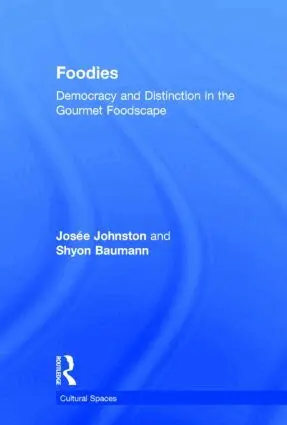
This important cultural analysis tells two stories about food. The first depicts good food as democratic. Foodies frequent ‘hole in the wall’ ethnic eateries, appreciate the pie found in working-class truck stops, and reject the snobbery of fancy French restaurants with formal table service. The second story describes how food operates as a source of status and distinction for economic and cultural elites, indirectly maintaining and reproducing social inequality. While the first storyline insists that anybody can be a foodie, the second asks foodies to look in the mirror and think about their relative social and economic privilege. By simultaneously considering both of these stories, and studying how they operate in tension, a delicious sociology of food becomes available, perfect for teaching a broad range of cultural sociology courses.
674 kr
Skickas inom 10-15 vardagar
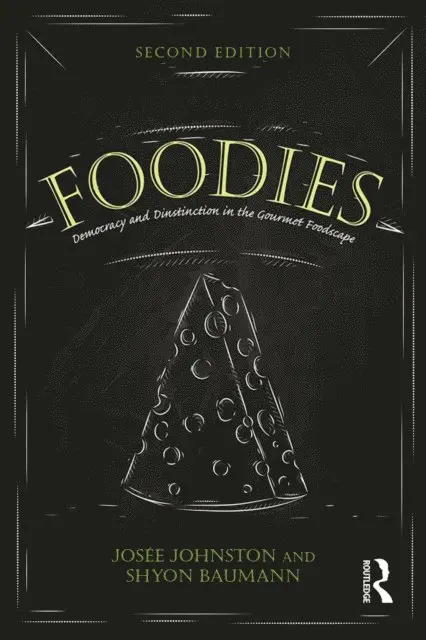
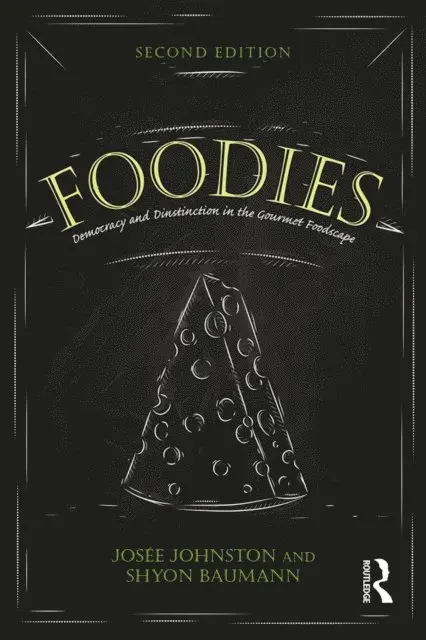
This important cultural analysis tells two stories about food. The first depicts good food as democratic. Foodies frequent ‘hole in the wall’ ethnic eateries, appreciate the pie found in working-class truck stops, and reject the snobbery of fancy French restaurants with formal table service. The second story describes how food operates as a source of status and distinction for economic and cultural elites, indirectly maintaining and reproducing social inequality. While the first storyline insists that anybody can be a foodie, the second asks foodies to look in the mirror and think about their relative social and economic privilege. By simultaneously considering both of these stories, and studying how they operate in tension, a delicious sociology of food becomes available, perfect for teaching a broad range of cultural sociology courses.
2 119 kr
Tillfälligt slut
The challenges of teaching a successful introductory sociology course today demand materials from a publisher very different from the norm. Texts that are organized the way the discipline structures itself intellectually no longer connect with the majority of student learners. This is not an issue of pandering to students or otherwise seeking the lowest common denominator. On the contrary, it is a question of again making the practice of sociological thinking meaningful, rigorous, and relevant to today’s world of undergraduates.This comparatively concise, highly visual, and affordable book offers a refreshingly new way forward to reach students, using one of the most powerful tools in a sociologist’s teaching arsenal—the familiar stuff in students’ everyday lives throughout the world: the jeans they wear to class, the coffee they drink each morning, or the phones their professors tell them to put away during lectures.A focus on consumer culture, seeing the strange in the familiar, is not only interesting for students; it is also (the authors suggest) pedagogically superior to more traditional approaches. By engaging students through their stuff, this book moves beyond teaching about sociology to helping instructors teach the practice of sociological thinking. It moves beyond describing what sociology is, so that students can practice what sociological thinking can do. This pedagogy also posits a relationship between teacher and learner that is bi-directional. Many students feel a sense of authority in various areas of consumer culture, and they often enjoy sharing their knowledge with fellow students and with their instructor. Opening up the sociology classroom to discussion of these topics validates students’ expertise on their own life-worlds. Teachers, in turn, gain insight from the goods, services, and cultural expectations that shape students’ lives.While innovative, the book has been carefully crafted to make it as useful and flexible as possible for instructors aiming to build core sociological foundations in a single semester. A map on pages ii–iii identifies core sociological concepts covered so that a traditional syllabus as well as individual lectures can easily be maintained. Theory, method, and active learning exercises in every chapter constantly encourage the sociological imagination as well as the "doing" of sociology.
922 kr
Skickas
The challenges of teaching a successful introductory sociology course today demand materials from a publisher very different from the norm. Texts that are organized the way the discipline structures itself intellectually no longer connect with the majority of student learners. This is not an issue of pandering to students or otherwise seeking the lowest common denominator. On the contrary, it is a question of again making the practice of sociological thinking meaningful, rigorous, and relevant to today’s world of undergraduates.This comparatively concise, highly visual, and affordable book offers a refreshingly new way forward to reach students, using one of the most powerful tools in a sociologist’s teaching arsenal—the familiar stuff in students’ everyday lives throughout the world: the jeans they wear to class, the coffee they drink each morning, or the phones their professors tell them to put away during lectures.A focus on consumer culture, seeing the strange in the familiar, is not only interesting for students; it is also (the authors suggest) pedagogically superior to more traditional approaches. By engaging students through their stuff, this book moves beyond teaching about sociology to helping instructors teach the practice of sociological thinking. It moves beyond describing what sociology is, so that students can practice what sociological thinking can do. This pedagogy also posits a relationship between teacher and learner that is bi-directional. Many students feel a sense of authority in various areas of consumer culture, and they often enjoy sharing their knowledge with fellow students and with their instructor. Opening up the sociology classroom to discussion of these topics validates students’ expertise on their own life-worlds. Teachers, in turn, gain insight from the goods, services, and cultural expectations that shape students’ lives.While innovative, the book has been carefully crafted to make it as useful and flexible as possible for instructors aiming to build core sociological foundations in a single semester. A map on pages ii–iii identifies core sociological concepts covered so that a traditional syllabus as well as individual lectures can easily be maintained. Theory, method, and active learning exercises in every chapter constantly encourage the sociological imagination as well as the "doing" of sociology.
1 342 kr
Skickas inom 7-10 vardagar
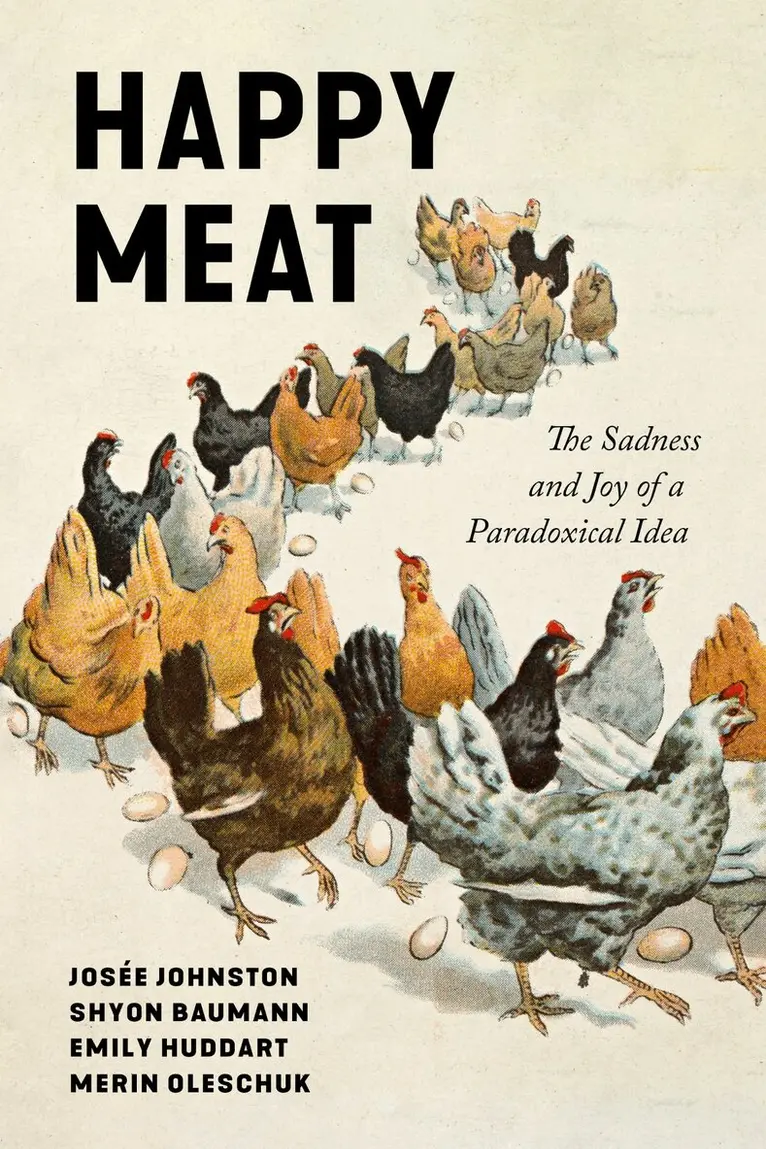
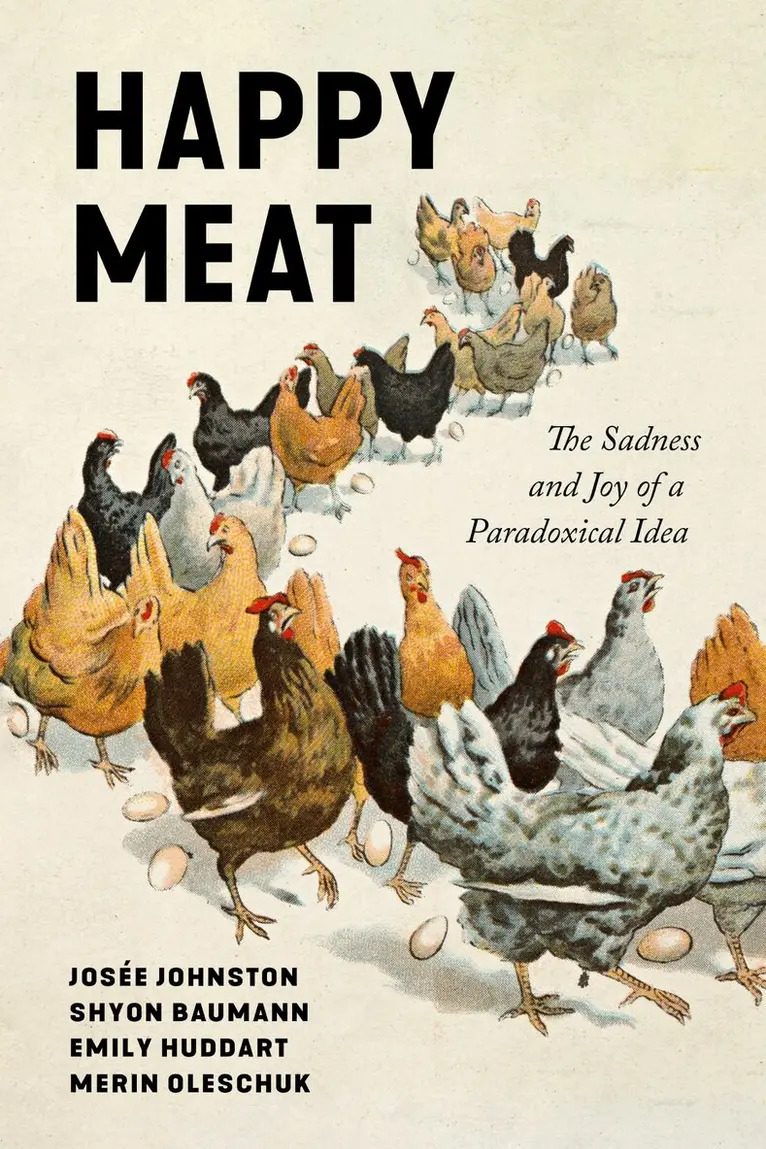
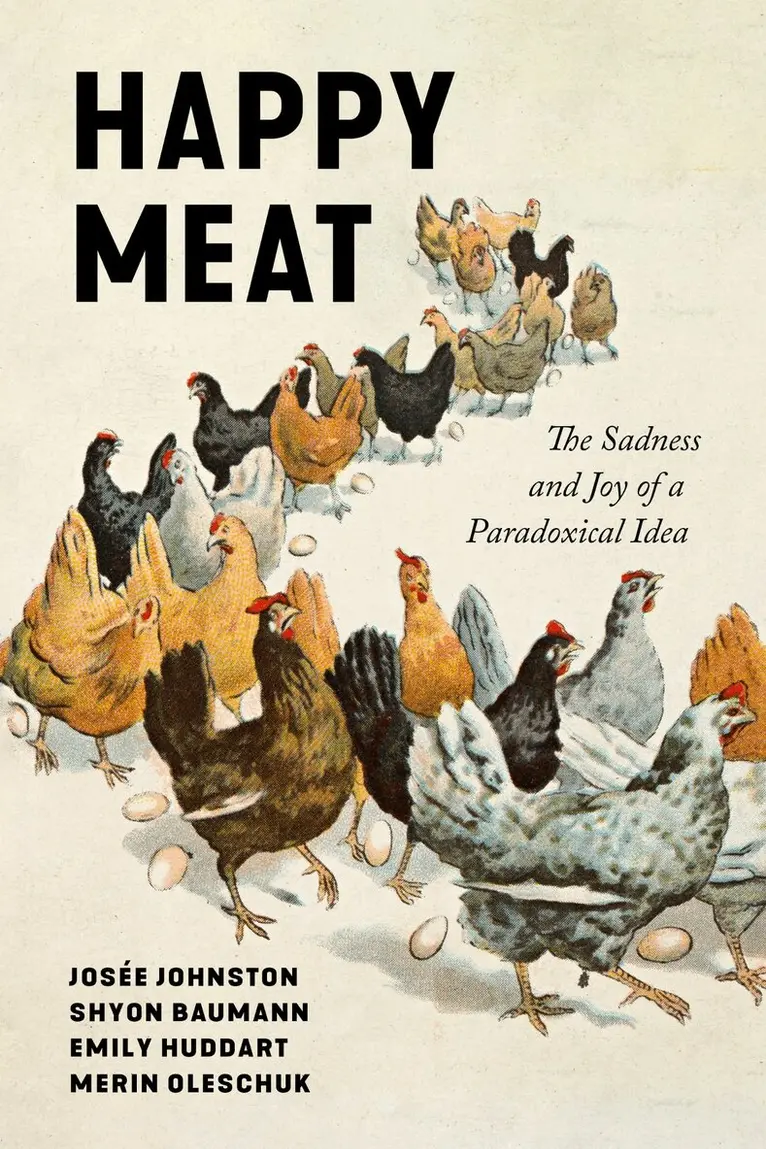
North Americans love eating meat. Despite the increased awareness of the meat industry's harms–violence against animals, health problems, and associations with environmental degradation–the rate of meat eating hasn't changed significantly in recent years. Instead, what has emerged is an uncomfortable paradox: a need to square one's values with the behaviors that contradict those values.Using a large-scale, multidimensional, and original dataset, Happy Meat explores the thoughts and emotions that underpin our moral decision-making in this meat paradox. Conscientious meat-eaters turn to the notion of "happy meat" to make sense of their behaviors by consuming meat they see as more healthy, ethical, and sustainable. Happy meat might be labeled grass fed, free-range, antibiotic free, naturally raised, or humane. The people who produce and consume it, together, make up the complex landscape of conscientious meat-eating in modern Western societies.The discourse of happy meat ultimately may not be a sufficient response to all the critiques of meat eating, rife as it is with contradictions. However, it offers a powerful case for understanding how moral boundaries and notions of the 'good eater' are constructed through negotiations of values, identity, and status.
313 kr
Skickas
North Americans love eating meat. Despite the increased awareness of the meat industry's harms–violence against animals, health problems, and associations with environmental degradation–the rate of meat eating hasn't changed significantly in recent years. Instead, what has emerged is an uncomfortable paradox: a need to square one's values with the behaviors that contradict those values.Using a large-scale, multidimensional, and original dataset, Happy Meat explores the thoughts and emotions that underpin our moral decision-making in this meat paradox. Conscientious meat-eaters turn to the notion of "happy meat" to make sense of their behaviors by consuming meat they see as more healthy, ethical, and sustainable. Happy meat might be labeled grass fed, free-range, antibiotic free, naturally raised, or humane. The people who produce and consume it, together, make up the complex landscape of conscientious meat-eating in modern Western societies.The discourse of happy meat ultimately may not be a sufficient response to all the critiques of meat eating, rife as it is with contradictions. However, it offers a powerful case for understanding how moral boundaries and notions of the 'good eater' are constructed through negotiations of values, identity, and status.