Sigurvin Lárus Jónsson – författare
Visar alla böcker från författaren Sigurvin Lárus Jónsson. Handla med fri frakt och snabb leverans.
4 produkter
4 produkter
Del 485 - Wissenschaftliche Untersuchungen zum Neuen Testament
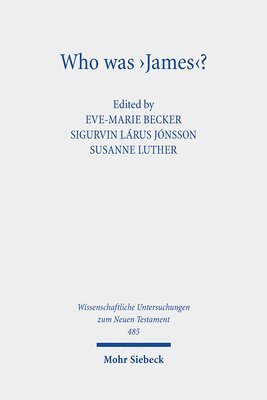
Who was 'James'?
Essays on the Letter's Authorship and Provenance
Inbunden, Engelska, 2022
2 583 kr
Skickas inom 5-8 vardagar
Dieser Band greift die aktuelle Debatte über das literarische Profil und den Autor des Jakobusbriefes auf. Die Aufsätze geben neue Einblicke in das literarische Konzept und das Autorenprofil des Jakobus und stellen den Brief in den Kontext einer entstehenden christlich geprägten Literaturkultur.
Inbunden, Engelska, 2026
1 534 kr
Skickas inom 3-6 vardagar
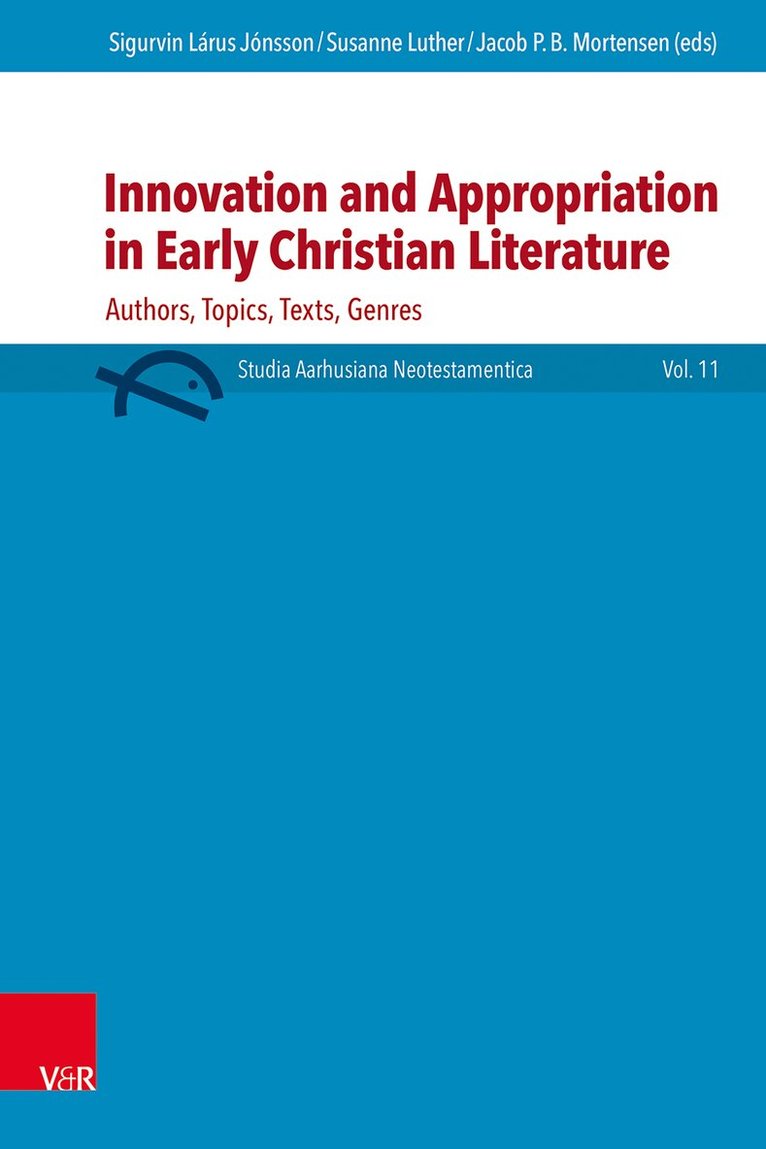
The rise of early Christianity was accompanied by a period of impressive literary production. Early Christian authors combined literary forms from Greco-Roman writings with the style and content of Hellenistic Jewish literature to create a tertium quid. Their literary works are therefore comparable to both Jewish and Greco-Roman contemporary writings, but they adopt, modify and transform literary conventions according to their needs and interests to communicate their message showing signs of literary innovation and creativity. This volume shows the innovative aspect of early Christian literature, by integrating adjacent fields of research as ancient history, classical studies, Jewish studies, patristics and religious studies. The analyses explore how and why early Christian literature unexpectedly established itself as a literary force in the early imperium.
E-bok
PDF, Engelska, 20211 372 kr
Läs direkt efter köp
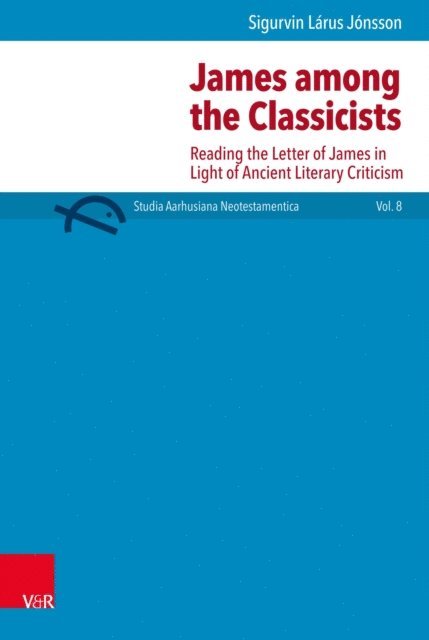
This book gives attention to the language and style of the letter of James, with a hypothesis about its rhetorical purpose in mind. It focuses on what we can learn about the author of James, by reading the text in light of a guiding research question: How does the author establish and assert authority? The letter builds literary authority for a number of purposes, one of which is to address socioeconomic disparity, a major concern for the author.The author of James presents a speech-in-character in the shape of a letter to establish his ethos (Ch. 2), employing vocabulary and style to signal his education implicitly (Ch. 3 & 4) and includes himself in the categories of sage, teacher and exegete explicitly (Ch. 5). From this standpoint, the author can address the rich as equals, rebuke them and admonish both rich and poor to receive God''s wisdom (Ch. 6).The comparison with ancient literary criticism shows that the categories at play are the same. The insight that language and ethos are inseparable categories in antiquity provides us with renewed ways to interpret the literary production of early Christianity. Both James and ''the Classicists'' present a competing epic in the context of the early imperium, the former with an Israelite piety that is superior to contemporary economic and moral categories and the latter with the supremacy of Greek culture as a foundation for Rome.The letter of James emerges as a document that builds educational ethos as a balance against the rich and powerful, a strategy that calls for a revision of both its rhetoric and socio-economic situation.
Del 491 - Wissenschaftliche Untersuchungen zum Neuen Testament
Paulus. Beiträge zu einer intellektuellen Biographie
Gesammelte Aufsätze. Band II
Inbunden, Tyska, 2022
3 140 kr
Tillfälligt slut
Die in diesem Band versammelten Aufsätze von Oda Wischmeyer, vier davon bisher unveröffentlicht, gelten der Paulusforschung. Die Aufsätze spiegeln die dynamische Entwicklung der Paulusforschung der letzten zwei Jahrzehnte und dienen gleichzeitig der Entwicklung einer eigenen Paulusinterpretation: beyond the new, the radical new and the "Paul within Judaism" perspectives on Paul . Paulus wird aus vier Blickrichtungen erschlossen: erstens als eigenständiger historischer Akteur der frühen Kaiserzeit; zweitens als Theologe, der die religiöse Tradition Israels und ihre Weltdeutung von seiner Christuserfahrung her neu interpretiert; drittens als Autor intellektuell anspruchsvoller Brieftexte; und viertens als eine der Gestalten, die das europäische Denken geprägt haben, oder anders gesagt: als eine Gestalt der europäischen Ideengeschichte, deren Wirkung aber längst eine globale geworden ist.