Silvano Tagliagambe - Böcker
Visar alla böcker från författaren Silvano Tagliagambe. Handla med fri frakt och snabb leverans.
3 produkter
3 produkter
Del 5 - Urban and Landscape Perspectives
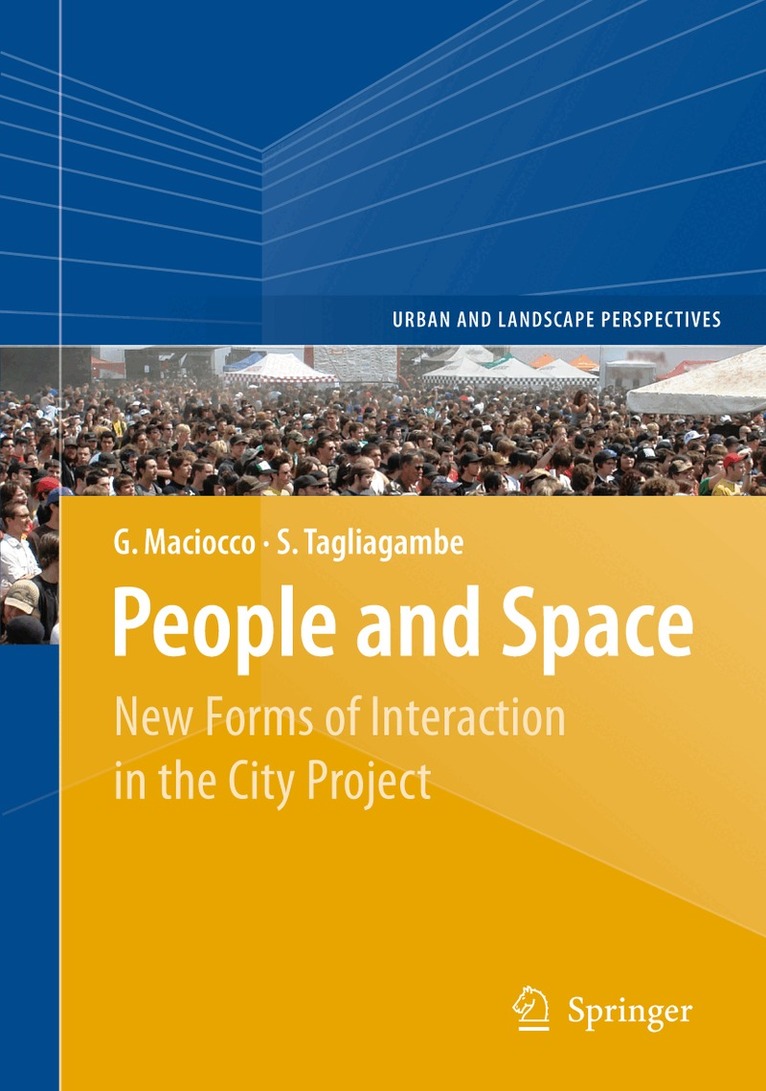
People and Space
New Forms of Interaction in the City Project
Inbunden, Engelska, 2009
1 092 kr
Skickas inom 10-15 vardagar
This book explores new forms and modalities of relations between people and space that increasingly affect the life of the city. The investigation takes as its starting point the idea that in contemporary societies the loss of our relationship with place is a symptom of a breakdown in the relationship between ethics and aesthetics. This in turn has caused a crisis not only in taste, but also in our sense of beauty, our aesthetic instinct, and our moral values. It has also led to the loss of our engagement with the landscape, which is essential for cities to function.The authors argue that new, fertile forms of interaction between people and space are now happening in what they call the ‘intermediate space’, at the border of “urban normality” and those parts of a city where citizens experiment with unconventional social practices. This new interaction engenders a collective conscience, giving a new and productive vigor to the actions of individuals and also their relations with their environment.These new relations emerge only after we abandon what is called the “therapeutic illusion of space”, which still exists today, and which binds in a deterministic manner the quality of civitas, the associative life of people in the city, to the quality of urban space. Projects for the city should, instead, have as their keystone the notion of social action as a return to a critical perspective, to a courageous acceptance of social responsibility, at the same time as seeking the generative structures of urban life in which civitas and urbs again acknowledge each other.
2 186 kr
Kommande
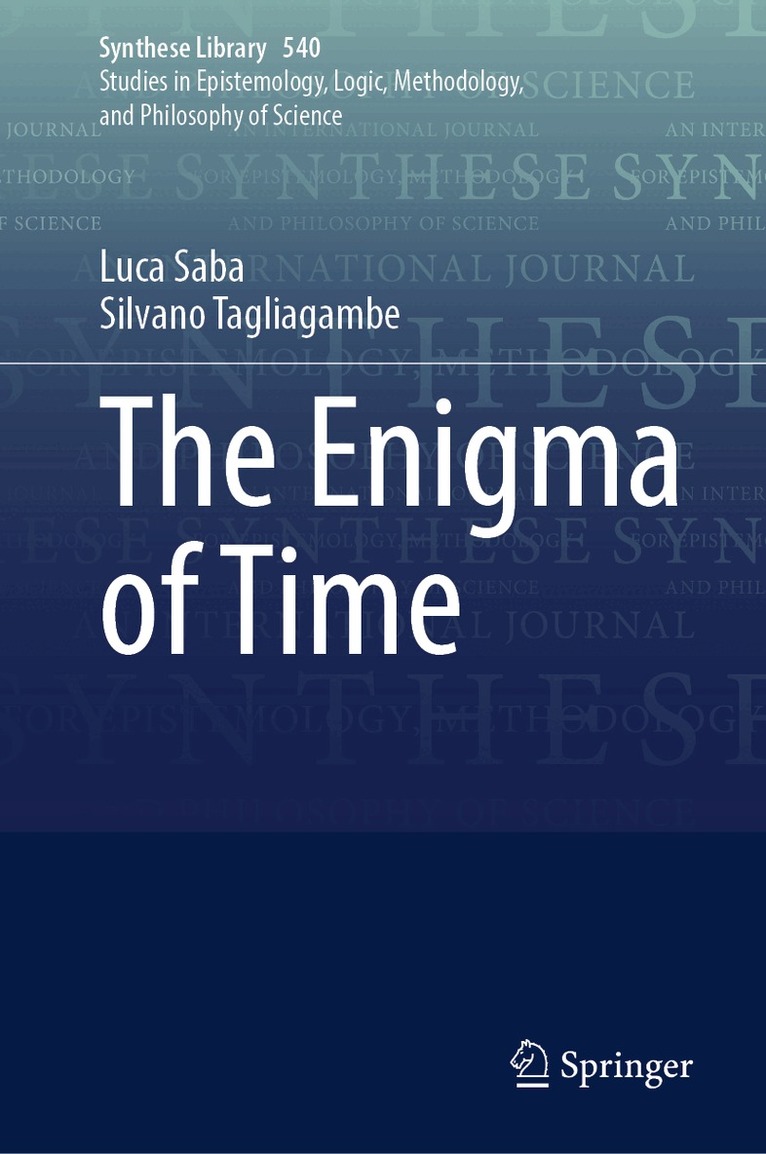
This book considers the concept of time after the shift from genetics to phylogenetics. It uses an interdisciplinary analysis based on the latest findings from neuroscience, physics, philosophy of medicine, epistemology, logic and artificial intelligence to delve into various aspects of the enigmatic character of time. The book shows how what we call 'experience' is structured by virtue of the availability of 'innate guides to learning' dating back to a deep memory, which has the long timescale of natural history and not the short timescale of individual development. Meanwhile, the idea of the 'future' is understood not as a calculated probability via statistics and artificial intelligence, but as an uncertain or open temporal dimension and an ethics of possibility. This book is of interest to scholars and specialists involved in this research, and to the general reader interested in the current cultural debate about evolution, memory, and time.
Del 5 - Urban and Landscape Perspectives
People and Space
New Forms of Interaction in the City Project
Häftad, Engelska, 2011
1 096 kr
Skickas inom 10-15 vardagar
This book explores new forms and modalities of relations between people and space that increasingly affect the life of the city. The investigation takes as its starting point the idea that in contemporary societies the loss of our relationship with place is a symptom of a breakdown in the relationship between ethics and aesthetics. This in turn has caused a crisis not only in taste, but also in our sense of beauty, our aesthetic instinct, and our moral values. It has also led to the loss of our engagement with the landscape, which is essential for cities to function.The authors argue that new, fertile forms of interaction between people and space are now happening in what they call the ‘intermediate space’, at the border of “urban normality” and those parts of a city where citizens experiment with unconventional social practices. This new interaction engenders a collective conscience, giving a new and productive vigor to the actions of individuals and also their relations with their environment.These new relations emerge only after we abandon what is called the “therapeutic illusion of space”, which still exists today, and which binds in a deterministic manner the quality of civitas, the associative life of people in the city, to the quality of urban space. Projects for the city should, instead, have as their keystone the notion of social action as a return to a critical perspective, to a courageous acceptance of social responsibility, at the same time as seeking the generative structures of urban life in which civitas and urbs again acknowledge each other.