Simon Bekker – författare
Visar alla böcker från författaren Simon Bekker. Handla med fri frakt och snabb leverans.
4 produkter
4 produkter
Häftad, Engelska, 2008
593 kr
Skickas inom 5-8 vardagar
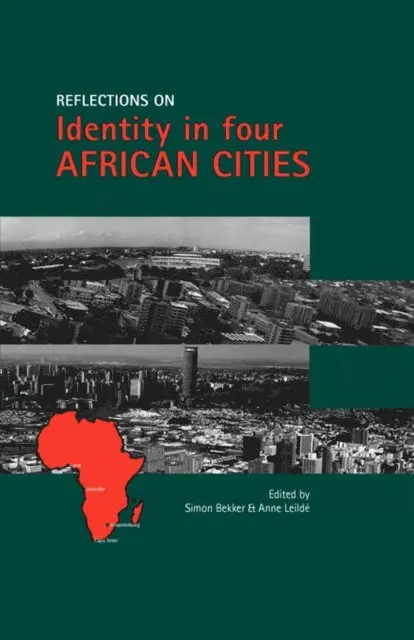
Identity has become the watchword of our times. In sub-Saharan Africa, this certainly appears to be true and for particular reasons. Africa is urbanising rapidly, cross-border migration streams are swelling and globalising influences sweep across the continent. Africa is also facing up to the challenge of nurturing emergent democracies in which citizens often feel torn between older traditional and newer national loyalties. Accordingly, collective identities are deeply coloured by recent urban as well as international experience and are squarely located within identity politics where reconciliation is required between state nation-building strategies and sub-national affiliations. They are also fundamentally shaped by the growing inequality and the poverty found on this continent. These themes are explored by an international set of scholars in two South African and two Francophone cities. The relative importance to urban residents of race, class and ethnicity but also of work, space and language are compared in these cities. This volume also includes a chapter investigating the emergence of a continental African identity.A recent report of the Office of the South African President claims that a strong national identity is emerging among its citizens, and that race and ethnicity are waning whilst a class identity is in the ascendance. The evidence and analyses within this volume serve to gauge the extent to which such claims ring true, in what everyone knows is a much more complex and shifting terrain of shared meanings than can ever be captured by such generalisations.
E-bok
PDF, Engelska, 200654 kr
Läs direkt efter köp
Identity has become the watchword of our times. In sub-Saharan Africa, this certainly appears to be true and for particular reasons. Africa is urbanising rapidly, cross-border migration streams are swelling and globalising influences sweep across the continent. Africa is also facing up to the challenge of nurturing emergent democracies in which citizens often feel torn between older traditional and newer national loyalties. Accordingly, collective identities are deeply coloured by recent urban as well as international experience and are squarely located within identity politics where reconciliation is required between state nation-building strategies and sub-national affiliations. They are also fundamentally shaped by the growing inequality and the poverty found on this continent. These themes are explored by an international set of scholars in two South African and two Francophone cities. The relative importance to urban residents of race, class and ethnicity but also of work, space and language are compared in these cities. This volume also includes a chapter investigating the emergence of a continental African identity. A recent report of the Office of the South African President claims that a strong national identity is emerging among its citizens, and that race and ethnicity are waning whilst a class identity is in the ascendance. The evidence and analyses within this volume serve to gauge the extent to which such claims ring true, in what everyone knows is a much more complex and shifting terrain of shared meanings than can ever be captured by such generalisations.
Häftad, Engelska, 2021
638 kr
Skickas inom 5-8 vardagar
E-bok
PDF, Engelska, 202155 kr
Läs direkt efter köp
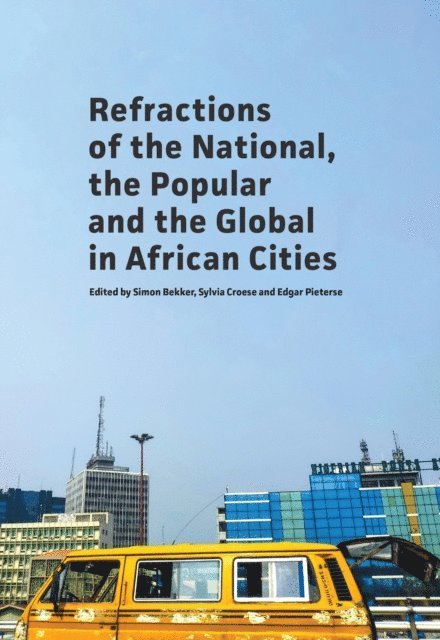
Case studies of metropolitan cities in nine African countries - from Egypt in the north to three in West and Central Africa, two in East Africa and three in Southern Africa - make up the empirical foundation of this publication. The interrelated themes addressed in these chapters - the national influence on urban development, the popular dynamics that shape urban development and the global currents on urban development - make up its framework. All authors and editors are African, as is the publisher. The only exception is G�ran Therborn whose recent book, Cities of Power, served as motivation for this volume. Accordingly, the issue common to all case studies is the often conflictual powers that are exercised by national, global and popular forces in the development of these African cities. Rather than locating the case studies in an exclusively African historical context, the focus is on the trajectories of the postcolonial city (with the important exception of Addis Ababa with a non-colonial history that has granted it a special place in African consciousness). These trajectories enable comparisons with those of postcolonial cities on other continents. This, in turn, highlights the fact that Africa - today, the least urbanised continent on an increasingly urbanised globe - is in the thick of processes of large-scale urban transformation, illustrated in diverse ways by the case studies that make up the foundation of this publication. Short Description