Simon Bornschier – författare
Visar alla böcker från författaren Simon Bornschier. Handla med fri frakt och snabb leverans.
6 produkter
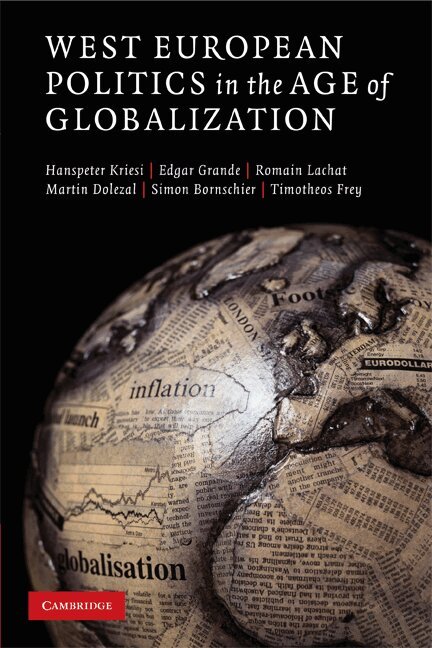
West European Politics in the Age of Globalization
Av Hanspeter Kriesi, Edgar Grande m. fl.
Häftad, 2008
569 kr
Lägg i varukorg
Over the past three decades the effects of globalization and denationalization have created a division between 'winners' and 'losers' in Western Europe. This study examines the transformation of party political systems in six countries (Austria, France, Germany, the Netherlands, Switzerland and the …
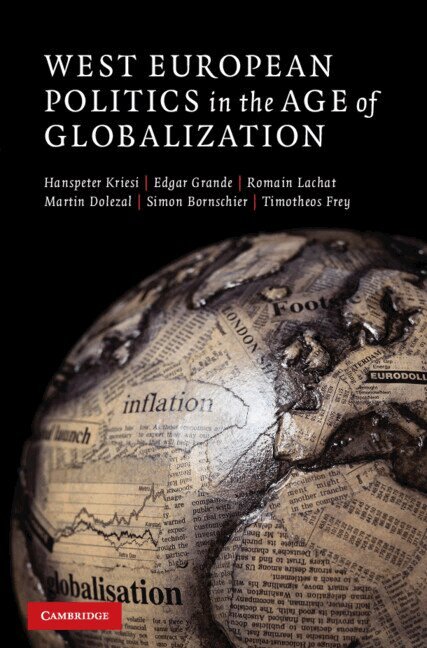
West European Politics in the Age of Globalization
Av Hanspeter Kriesi, Edgar Grande m. fl.
Inbunden, 2008
1957 kr
Lägg i varukorg
Over the past three decades the effects of globalization and denationalization have created a division between 'winners' and 'losers' in Western Europe. This study examines the transformation of party political systems in six countries (Austria, France, Germany, the Netherlands, Switzerland and the …
Cleavage Formation in the 21st Century
How Social Identities Shape Voting Behavior in Contexts of Electoral Realignment
Av Delia Zollinger, Marco Steenbergen m. fl.
E-bok, 2024
294 kr
Lägg i varukorg
Cleavage Formation in the 21st Century
How Social Identities Shape Voting Behavior in Contexts of Electoral Realignment
Av Delia Zollinger, Marco Steenbergen m. fl.
E-bok, 2024
284 kr
Lägg i varukorg
Cleavage Formation in the 21st Century
How Social Identities Shape Voting Behavior in Contexts of Electoral Realignment
Av Simon Bornschier, Lukas Haffert m. fl.
Häftad, 2024
282 kr
Lägg i varukorg
Western Europe is experiencing growing levels of political polarization between parties of the New Left and the Far Right. The authors argue that this antagonism reflects the emergence of a social cleavage between universalism and particularism. To understand cleavage formation in the midst of …
Cleavage Formation in the 21st Century
How Social Identities Shape Voting Behavior in Contexts of Electoral Realignment
Av Simon Bornschier, Lukas Haffert m. fl.
Inbunden, 2024
911 kr
Lägg i varukorg
Western Europe is experiencing growing levels of political polarization between parties of the New Left and the Far Right. The authors argue that this antagonism reflects the emergence of a social cleavage between universalism and particularism. To understand cleavage formation in the midst of …