Simon Egbert - Böcker
Visar alla böcker från författaren Simon Egbert. Handla med fri frakt och snabb leverans.
6 produkter
6 produkter
2 088 kr
Skickas inom 10-15 vardagar
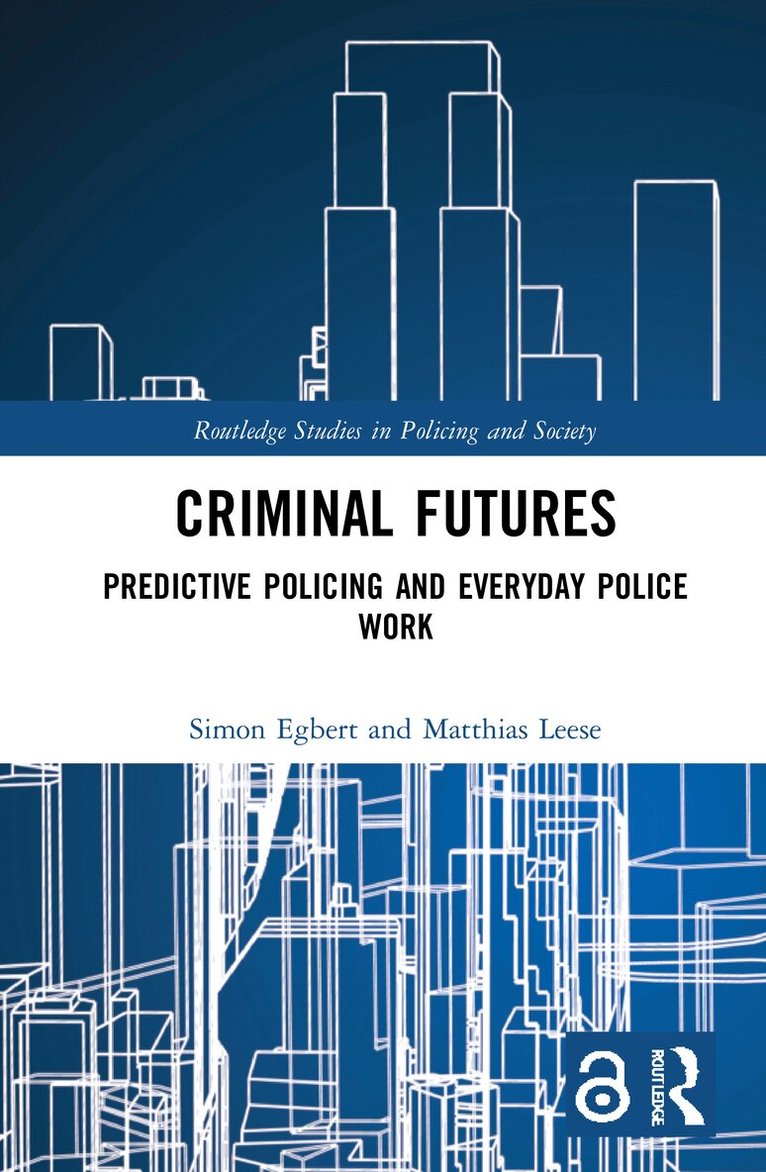
This book explores how predictive policing transforms police work. Police departments around the world have started to use data-driven applications to produce crime forecasts and intervene into the future through targeted prevention measures. Based on three years of field research in Germany and Switzerland, this book provides a theoretically sophisticated and empirically detailed account of how the police produce and act upon criminal futures as part of their everyday work practices.The authors argue that predictive policing must not be analyzed as an isolated technological artifact, but as part of a larger sociotechnical system that is embedded in organizational structures and occupational cultures. The book highlights how, for crime prediction software to come to matter and play a role in more efficient and targeted police work, several translation processes are needed to align human and nonhuman actors across different divisions of police work. Police work is a key function for the production and maintenance of public order, but it can also discriminate, exclude, and violate civil liberties and human rights. When criminal futures come into being in the form of algorithmically produced risk estimates, this can have wide-ranging consequences. Building on empirical findings, the book presents a number of practical recommendations for the prudent use of algorithmic analysis tools in police work that will speak to the protection of civil liberties and human rights as much as they will speak to the professional needs of police organizations.An accessible and compelling read, this book will appeal to students and scholars of criminology, sociology, and cultural studies as well as to police practitioners and civil liberties advocates, in addition to all those who are interested in how to implement reasonable forms of data-driven policing.
617 kr
Skickas inom 10-15 vardagar
This book explores how predictive policing transforms police work. Police departments around the world have started to use data-driven applications to produce crime forecasts and intervene into the future through targeted prevention measures. Based on three years of field research in Germany and Switzerland, this book provides a theoretically sophisticated and empirically detailed account of how the police produce and act upon criminal futures as part of their everyday work practices.The authors argue that predictive policing must not be analyzed as an isolated technological artifact, but as part of a larger sociotechnical system that is embedded in organizational structures and occupational cultures. The book highlights how, for crime prediction software to come to matter and play a role in more efficient and targeted police work, several translation processes are needed to align human and nonhuman actors across different divisions of police work. Police work is a key function for the production and maintenance of public order, but it can also discriminate, exclude, and violate civil liberties and human rights. When criminal futures come into being in the form of algorithmically produced risk estimates, this can have wide-ranging consequences. Building on empirical findings, the book presents a number of practical recommendations for the prudent use of algorithmic analysis tools in police work that will speak to the protection of civil liberties and human rights as much as they will speak to the professional needs of police organizations.An accessible and compelling read, this book will appeal to students and scholars of criminology, sociology, and cultural studies as well as to police practitioners and civil liberties advocates, in addition to all those who are interested in how to implement reasonable forms of data-driven policing.
630 kr
Skickas inom 10-15 vardagar
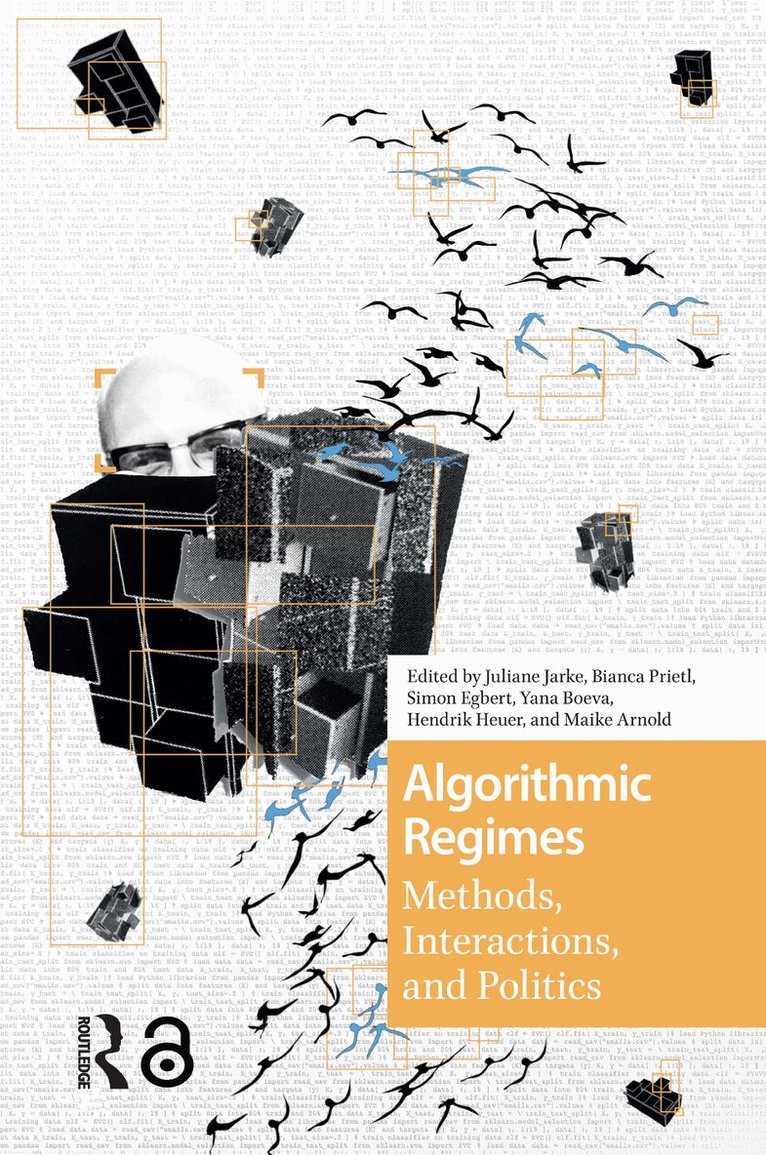
Algorithms have risen to become one, if not the central technology for producing, circulating, and evaluating knowledge in multiple societal arenas. In this book, scholars from the social sciences, humanities, and computer science argue that this shift has, and will continue to have, profound implications for how knowledge is produced and what and whose knowledge is valued and deemed valid. To attend to this fundamental change, the authors propose the concept of algorithmic regimes and demonstrate how they transform the epistemological, methodological, and political foundations of knowledge production, sensemaking, and decision-making in contemporary societies. Across sixteen chapters, the volume offers a diverse collection of contributions along three perspectives on algorithmic regimes: the methods necessary to research and design algorithmic regimes, the ways in which algorithmic regimes reconfigure sociotechnical interactions, and the politics engrained in algorithmic regimes.
516 kr
Skickas inom 10-15 vardagar
Das Buch nimmt eine qualitative Bestandsaufnahme von Drogentestanwendungen in Deutschland vor und fragt dabei nach ihren Kontexten, ihrer Durchführung und ihren Folgen.
430 kr
Skickas inom 10-15 vardagar
Mit der Frage nach der Stellung von Artefakten in Diskursen werden grundlegende Aspekte der Diskurstheorie und -analytik adressiert, die sich vor allem auf die Bestimmung der Ränder von Diskursen sowie der diskursiven Wirkmächtigkeit von Dingen beziehen.
Del 3 - Digital Studies
Algorithmic Regimes
Methods, Interactions, and Politics
Inbunden, Engelska, 2024
1 886 kr
Skickas inom 10-15 vardagar
Across sixteen chapters, the volume offers a diverse collection of contributions along three perspectives on algorithmic regimes: the methods necessary to research and design algorithmic regimes, the ways in which algorithmic regimes reconfigure sociotechnical interactions, and the politics engrained in algorithmic regimes.