Simon G. Thompson – författare
Visar alla böcker från författaren Simon G. Thompson. Handla med fri frakt och snabb leverans.
9 produkter
Mendelian Randomization
Methods for Causal Inference Using Genetic Variants
Av Stephen Burgess, Simon G. Thompson
Inbunden, 2021
3162 kr
Lägg i varukorg
Mendelian Randomization: Methods For Causal Inference Using Genetic Variants provides thorough coverage of the methods and practical elements of Mendelian randomization analysis. It brings together diverse aspects of Mendelian randomization from the fields of epidemiology, statistics, genetics, and …
Mendelian Randomization
Methods for Causal Inference Using Genetic Variants
Av Simon G. Thompson, Stephen Burgess
E-bok, 2021
1427 kr
Lägg i varukorg
Mendelian Randomization: Methods For Causal Inference Using Genetic Variants provides thorough coverage of the methods and practical elements of Mendelian randomization analysis. It brings together diverse aspects of Mendelian randomization from the fields of epidemiology, statistics, genetics, and …
Mendelian Randomization
Methods for Causal Inference Using Genetic Variants
Av Simon G. Thompson, Stephen Burgess
E-bok, 2021
1396 kr
Lägg i varukorg
Mendelian Randomization: Methods For Causal Inference Using Genetic Variants provides thorough coverage of the methods and practical elements of Mendelian randomization analysis. It brings together diverse aspects of Mendelian randomization from the fields of epidemiology, statistics, genetics, and …
Mendelian Randomization
Methods for Causal Inference Using Genetic Variants
Av Stephen Burgess, Simon G. Thompson
Häftad, 2021
1209 kr
Lägg i varukorg
Mendelian Randomization: Methods For Causal Inference Using Genetic Variants provides thorough coverage of the methods and practical elements of Mendelian randomization analysis. It brings together diverse aspects of Mendelian randomization from the fields of epidemiology, statistics, genetics, and …
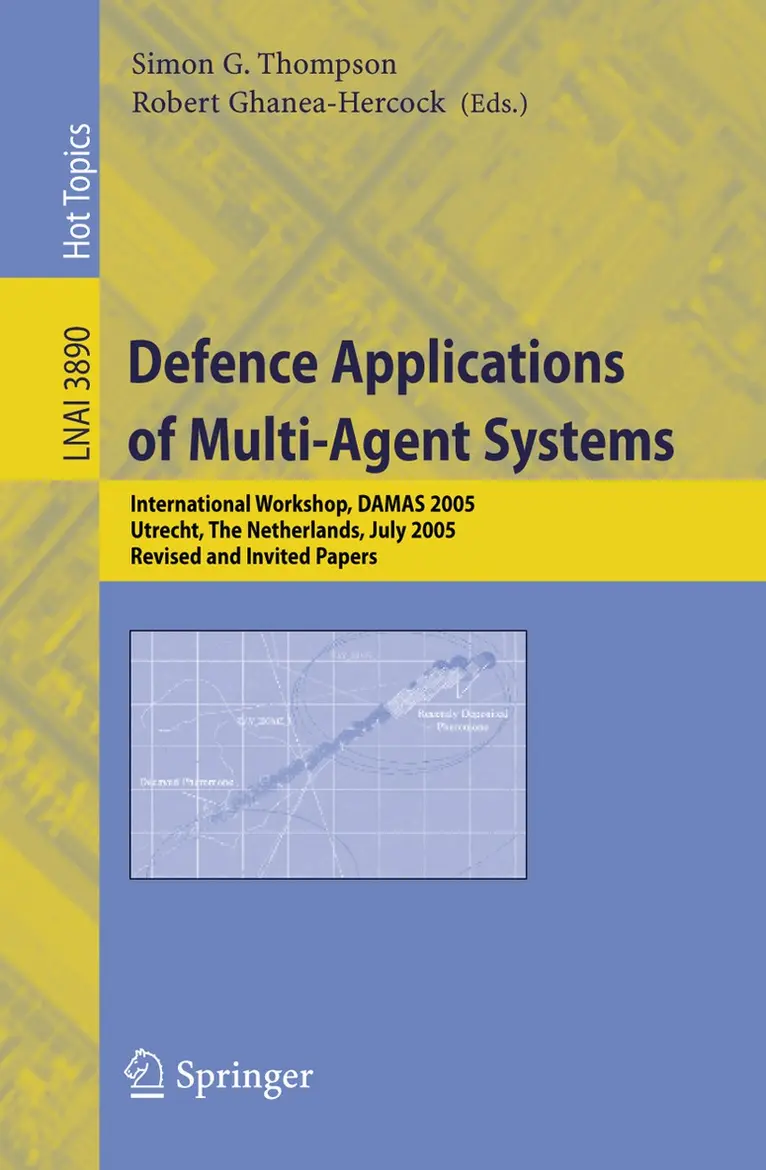
Defence Applications of Multi-Agent Systems
International Workshop, DAMAS 2005, Utrecht, The Netherlands, July 25, 2005, Revised and Invited Papers
Av Simon G. Thompson, Robert Ghanea-Hercock
Häftad, 2006
567 kr
Lägg i varukorg
Defence applications are subject to some of the world’s most demanding requirements for reliability, controllability, security, flexibility, and synchronization. The evolution of defence processes towards network enabled systems and rapid deployment scenarios, is creating an urgent demand for …
Defence Applications of Multi-Agent Systems
International Workshop, DAMAS 2005, Utrecht, The Netherlands, July 25, 2005, Revised and Invited Papers
Av Robert Ghanea-Hercock, Simon G. Thompson
E-bok, 2006
755 kr
Lägg i varukorg
Defence applications are subject to some of the world’s most demanding requirements for reliability, controllability, security, flexibility, and synchronization. The evolution of defence processes towards network enabled systems and rapid deployment scenarios, is creating an urgent demand for …
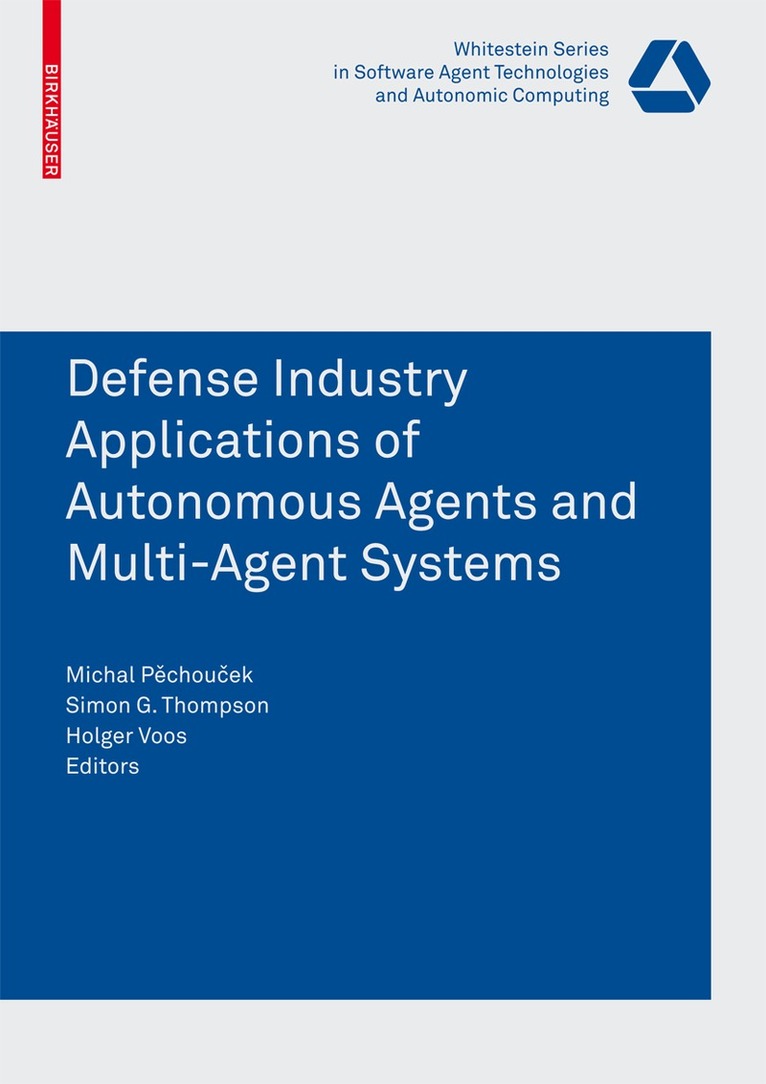
Defense Industry Applications of Autonomous Agents and Multi-Agent Systems
Av Michal Pechoucek, Simon G. Thompson m. fl.
Häftad, 2007
550 kr
Lägg i varukorg
Defense and security related applications are increasingly being tackled by researchers and practioners using technologies developed in the field of Intelligent Agent research. This book is a collection of recent refereed papers drawn from workshops and other colloquia held in various venues around …
Defense Industry Applications of Autonomous Agents and Multi-Agent Systems
Av Holger Voos, Simon G. Thompson m. fl.
E-bok, 2008
734 kr
Lägg i varukorg
Defense and security related applications are increasingly being tackled by researchers and practioners using technologies developed in the field of Intelligent Agent research. This book is a collection of recent refereed papers drawn from workshops and other colloquia held in various venues around …
Mendelian Randomization: Methods for Using Genetic Variants in Causal Estimation
Av Stephen Burgess, Simon G. Thompson
Inbunden
1158 kr
Tillfälligt slut