Simon Gottschalk - Böcker
Visar alla böcker från författaren Simon Gottschalk. Handla med fri frakt och snabb leverans.
6 produkter
6 produkter
621 kr
Skickas inom 10-15 vardagar
Living at the dawn of a digital twenty-first century, people living in Western societies spend an increasing amount of time interacting with a terminal and interacting with others at the terminal. Because the self emerges out of interaction with others (humans and non-humans), this increasingly pervasive and mandatory interaction with terminals prompts a ‘terminal self’—a nexus of social and psychological orientations that are adjusted to the terminal logic. In order to trace the terminal self’s profile, the book examines how five unique ‘default settings’ of the terminal incite particular adjustments in users that transform their perceptions of reality, their experiences of self, and their relations with others. Combining traditional interactionist theory, Goffman’s dramaturgy, and the French hypermodern approach, using examples from everyday life and popular culture, the book examines these adjustments, their manifestations, consequences, and resonance with broader trends of a hypermodern society organized by the ‘digital apparatus.’ Suggesting that these adjustments infantilize users, the author proposes strategies to confront three interrelated risks faced by the terminal self and society. These risks pertain to users’ subjectivity and need for recognition, to their declining abilities in face-to-face interactions, and to their dwindling abilities to retain control over terminal technologies.An accessibly written examination of the transformation of the self in the digital age, The Terminal Self will appeal to scholars of sociology, social psychology, and cultural studies with interests in digital cultures, new technologies, social interaction, and conceptions of identity.
823 kr
Skickas inom 10-15 vardagar
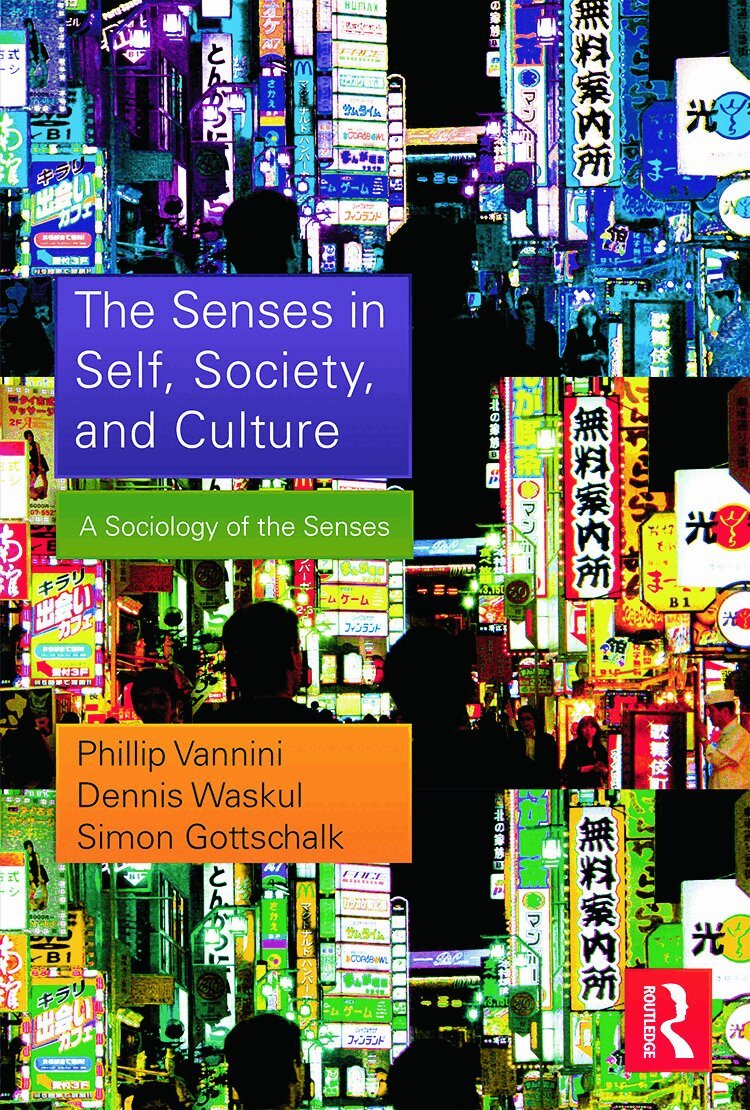
The Senses in Self, Society, and Culture is the definitive guide to the sociological and anthropological study of the senses. Vannini, Waskul, and Gottschalk provide a comprehensive map of the social and cultural significance of the senses that is woven in a thorough analytical review of classical, recent, and emerging scholarship and grounded in original empirical data that deepens the review and analysis. By bridging cultural/qualitative sociology and cultural/humanistic anthropology, The Senses in Self, Society, and Culture explicitly blurs boundaries that are particularly weak in this field due to the ethnographic scope of much research. Serving both the sociological and anthropological constituencies at once means bridging ethnographic traditions, cultural foci, and socioecological approaches to embodiment and sensuousness. The Senses in Self,Society, and Culture is intended to be a milestone in the social sciences’ somatic turn.
1 968 kr
Skickas inom 10-15 vardagar
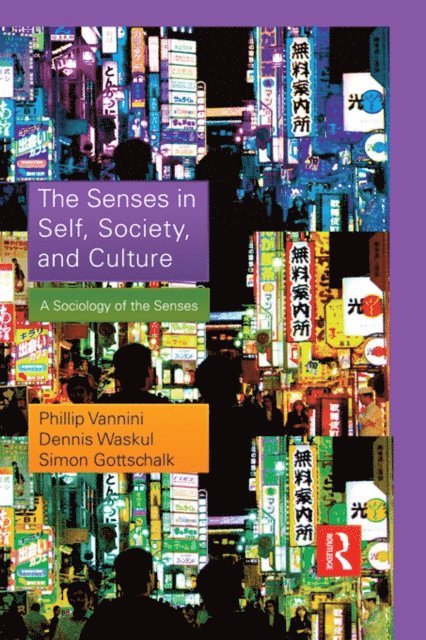
The Senses in Self, Society, and Culture is the definitive guide to the sociological and anthropological study of the senses. Vannini, Waskul, and Gottschalk provide a comprehensive map of the social and cultural significance of the senses that is woven in a thorough analytical review of classical, recent, and emerging scholarship and grounded in original empirical data that deepens the review and analysis. By bridging cultural/qualitative sociology and cultural/humanistic anthropology, The Senses in Self, Society, and Culture explicitly blurs boundaries that are particularly weak in this field due to the ethnographic scope of much research. Serving both the sociological and anthropological constituencies at once means bridging ethnographic traditions, cultural foci, and socioecological approaches to embodiment and sensuousness. The Senses in Self,Society, and Culture is intended to be a milestone in the social sciences’ somatic turn.
2 088 kr
Skickas inom 10-15 vardagar
Living at the dawn of a digital twenty-first century, people living in Western societies spend an increasing amount of time interacting with a terminal and interacting with others at the terminal. Because the self emerges out of interaction with others (humans and non-humans), this increasingly pervasive and mandatory interaction with terminals prompts a ‘terminal self’—a nexus of social and psychological orientations that are adjusted to the terminal logic. In order to trace the terminal self’s profile, the book examines how five unique ‘default settings’ of the terminal incite particular adjustments in users that transform their perceptions of reality, their experiences of self, and their relations with others. Combining traditional interactionist theory, Goffman’s dramaturgy, and the French hypermodern approach, using examples from everyday life and popular culture, the book examines these adjustments, their manifestations, consequences, and resonance with broader trends of a hypermodern society organized by the ‘digital apparatus.’ Suggesting that these adjustments infantilize users, the author proposes strategies to confront three interrelated risks faced by the terminal self and society. These risks pertain to users’ subjectivity and need for recognition, to their declining abilities in face-to-face interactions, and to their dwindling abilities to retain control over terminal technologies.An accessibly written examination of the transformation of the self in the digital age, The Terminal Self will appeal to scholars of sociology, social psychology, and cultural studies with interests in digital cultures, new technologies, social interaction, and conceptions of identity.
535 kr
Skickas inom 10-15 vardagar
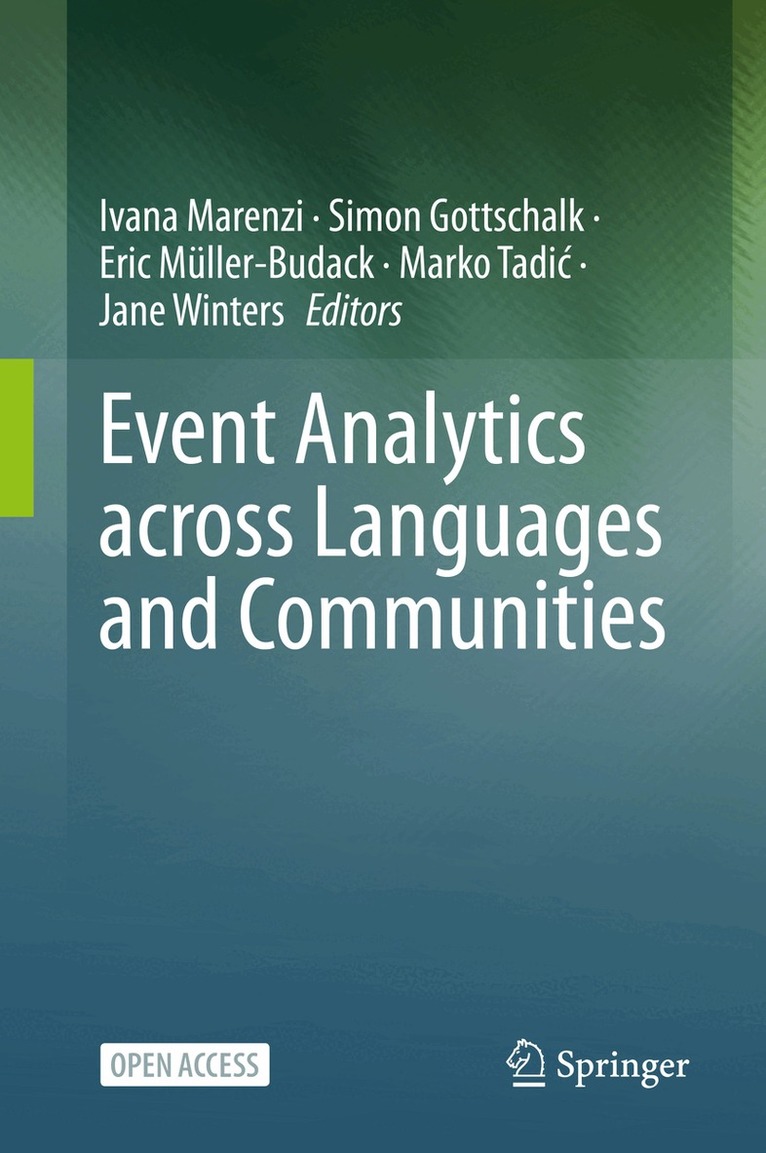
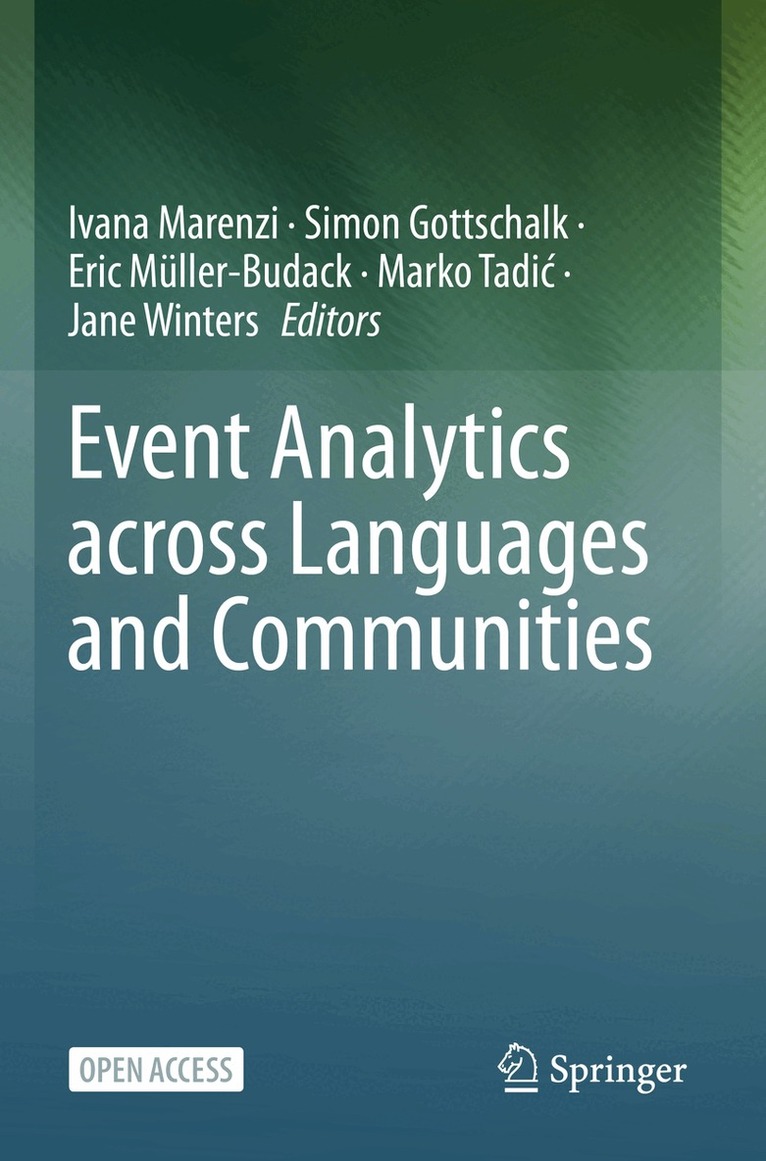
This open access book presents interdisciplinary and cross-sectoral research results fostering event analytics across languages and communities. It is based on the CLEOPATRA International Training Network, which explored how we analyze and understand the major events that influence and shape our lives and societies, and how they unfold online. This analysis was achieved through various case studies, the development of novel methodologies in fields such as data mining and natural language processing, and the creation of new event-centric datasets aggregated in the Open Event Knowledge Graph (OEKG), a multilingual event-centric knowledge graph that contains more than 1 million events in 15 languages.The book is divided into three parts, focusing on different aspects of event analytics across languages and communities: Part I Event-centric Multilingual and Multimodal NLP Technologies presents five chapters reporting on recent developments in NLP technologies required to process multilingual information. Next, the four chapters of Part II: Event-centric Multilingual Knowledge Technologies discuss technologies integrating multilingual event-centric information in knowledge graphs and providing user access to such information. Finally, Part III: Event Analytics covers three selected aspects of multilingual event analytics, namely an analysis of event-centric news spreading barriers, claim detection in social media, and the narrativization of events as a means of presenting event data.This book is mainly written for researchers in academia and industry, who work on topics like natural language processing, large language models, multilingual information retrieval or event analytics.
442 kr
Skickas inom 10-15 vardagar
This open access book presents interdisciplinary and cross-sectoral research results fostering event analytics across languages and communities. It is based on the CLEOPATRA International Training Network, which explored how we analyze and understand the major events that influence and shape our lives and societies, and how they unfold online. This analysis was achieved through various case studies, the development of novel methodologies in fields such as data mining and natural language processing, and the creation of new event-centric datasets aggregated in the Open Event Knowledge Graph (OEKG), a multilingual event-centric knowledge graph that contains more than 1 million events in 15 languages.The book is divided into three parts, focusing on different aspects of event analytics across languages and communities: Part I Event-centric Multilingual and Multimodal NLP Technologies presents five chapters reporting on recent developments in NLP technologies required to process multilingual information. Next, the four chapters of Part II: Event-centric Multilingual Knowledge Technologies discuss technologies integrating multilingual event-centric information in knowledge graphs and providing user access to such information. Finally, Part III: Event Analytics covers three selected aspects of multilingual event analytics, namely an analysis of event-centric news spreading barriers, claim detection in social media, and the narrativization of events as a means of presenting event data.This book is mainly written for researchers in academia and industry, who work on topics like natural language processing, large language models, multilingual information retrieval or event analytics.