Simon K. Kuipers - Böcker
Visar alla böcker från författaren Simon K. Kuipers. Handla med fri frakt och snabb leverans.
5 produkter
5 produkter
2 164 kr
Skickas inom 10-15 vardagar
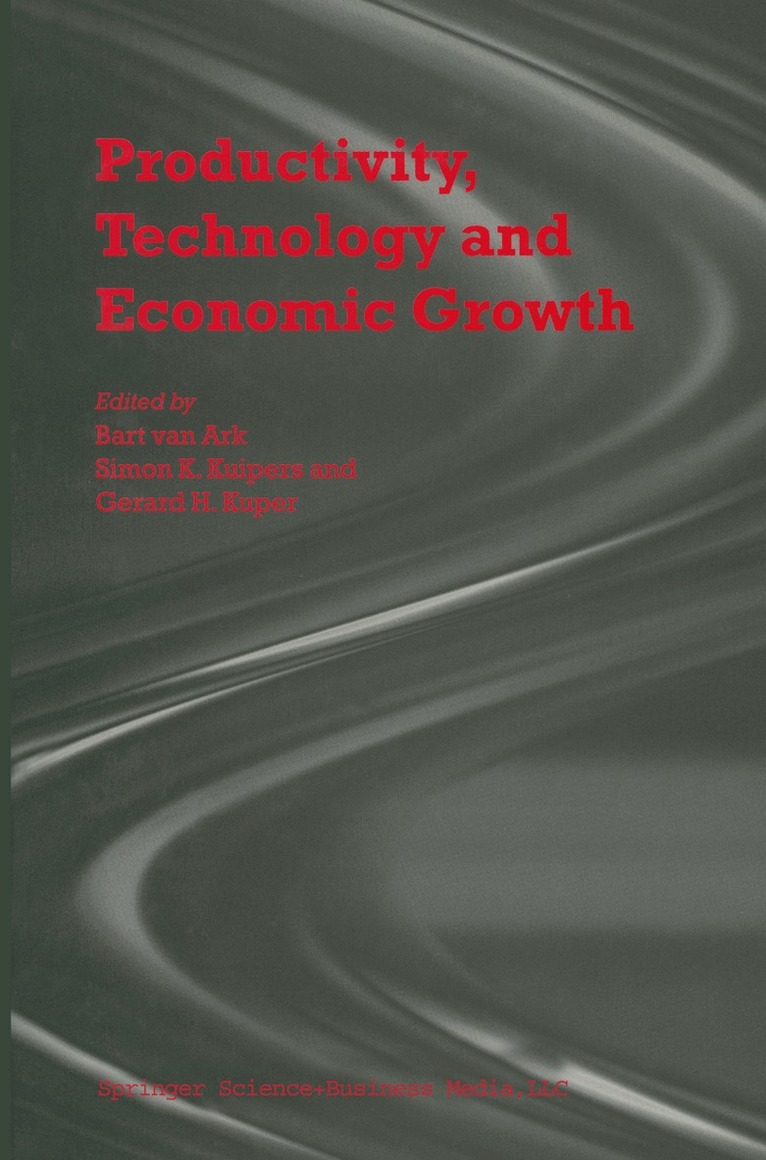
Productivity, Technology and Economic Growth presents a selection of recent research advances on long term economic growth.
2 164 kr
Skickas inom 10-15 vardagar
Productivity, Technology and Economic Growth presents a selection of recent research advances on long term economic growth.
552 kr
Skickas inom 10-15 vardagar
Almost three years passed since the Faculty of Economics of the University of Groningen celebrated its 25th Anniversary in 1973. Late, but not too late we hope, to present the lectures of most of our distinguished guests, who came from the United States and different European Countries to inform the Congress participants of their opinion and ideas on "25 Years of Economic Theory: Retrospect and Prospect. " The problems we met in publishing the lectures, in accordance with the agreement we made with our guests, are not unusual, as everyone knows who has been an editor of such a volume before. The promise to give a lecture and to write it down afterwards as well is much more difficult to maintain than only to give a speech. Everybody knows there is nothing so terrifying as to be reminded of your promise to write down your lecture, especially if only a type-written text, put down from a tape, is at your disposal. You are sure of your remembrance: "That very day I heard applause, there were friendly words and perhaps a state of not ending enthusiasm. And now I receive this type-written text of my speech with a request, full of innocence, of these friendly committee members, "will you be so kind as to prepare your text for publication ']" But this one, is this my text? Unbelievable.
2 164 kr
Skickas inom 10-15 vardagar
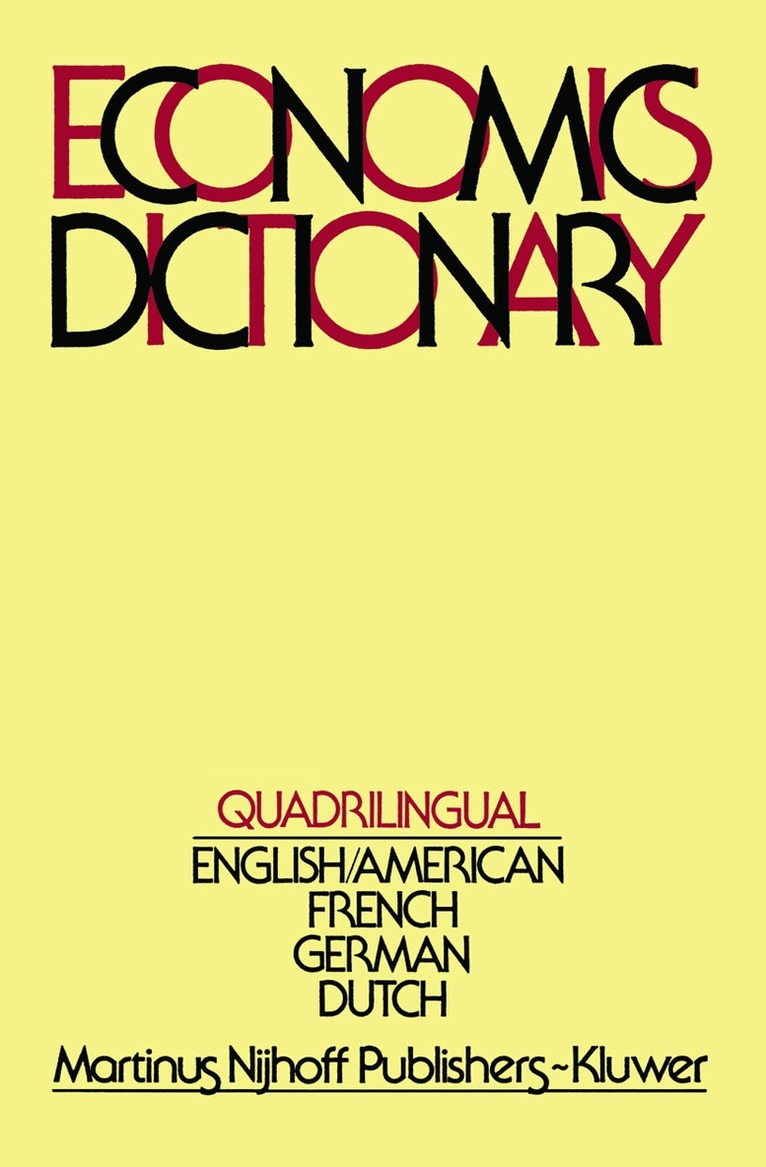
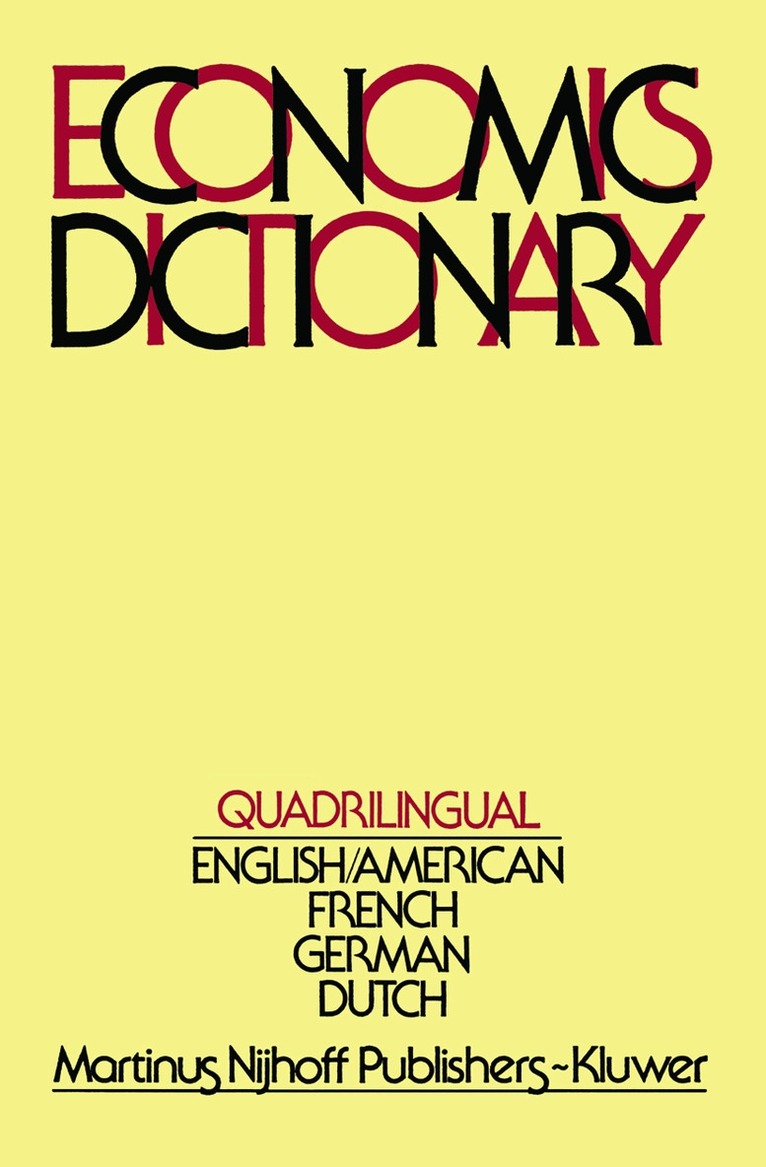
This quadrilingual economics dictionary is the result of many years of work. Professor Frits J. de J ong gathered material for this book since the very beginning of his professional career in the final years of the forties. Unfortunately, the author himself was not able to see the final result of his labours in book form. A mere few weeks after the completion of the manuscript, in November 1976, Professor De Jong passed away. As Hartog and Hennipman wrote in their memorials, Frits de Jong always devoted much attention to the development of concepts and terminology. Throughout his career, he exhibited great determination and perseverance in trying to achieve a clear and consistent terminology, and its subsequent use, in the science of economics. !' 2 That his efforts were mainly aimed at his native language was due to the fact that a language such as Dutch, which is only practiced in a small geographic area, faces the danger of a large-scale introduction of foreign words, specifically English/American, German and French words in this case. He always strongly resisted such a debasement of the Dutch language and sought instead to construct appropriate Dutch words for the existing English, German and French ones. An early example can be found in an article published in De Economist of 1950, entitled "De economische terminologie in het Nederlands" (The Terminology of Economics in Dutch).
2 164 kr
Skickas inom 10-15 vardagar
This quadrilingual economics dictionary is the result of many years of work. Professor Frits J. de J ong gathered material for this book since the very beginning of his professional career in the final years of the forties. Unfortunately, the author himself was not able to see the final result of his labours in book form. A mere few weeks after the completion of the manuscript, in November 1976, Professor De Jong passed away. As Hartog and Hennipman wrote in their memorials, Frits de Jong always devoted much attention to the development of concepts and terminology. Throughout his career, he exhibited great determination and perseverance in trying to achieve a clear and consistent terminology, and its subsequent use, in the science of economics. !' 2 That his efforts were mainly aimed at his native language was due to the fact that a language such as Dutch, which is only practiced in a small geographic area, faces the danger of a large-scale introduction of foreign words, specifically English/American, German and French words in this case. He always strongly resisted such a debasement of the Dutch language and sought instead to construct appropriate Dutch words for the existing English, German and French ones. An early example can be found in an article published in De Economist of 1950, entitled "De economische terminologie in het Nederlands" (The Terminology of Economics in Dutch).