Simon Keay – författare
Visar alla böcker från författaren Simon Keay. Handla med fri frakt och snabb leverans.
9 produkter
9 produkter
Inbunden, Engelska, 1997
2 254 kr
Skickas inom 10-15 vardagar
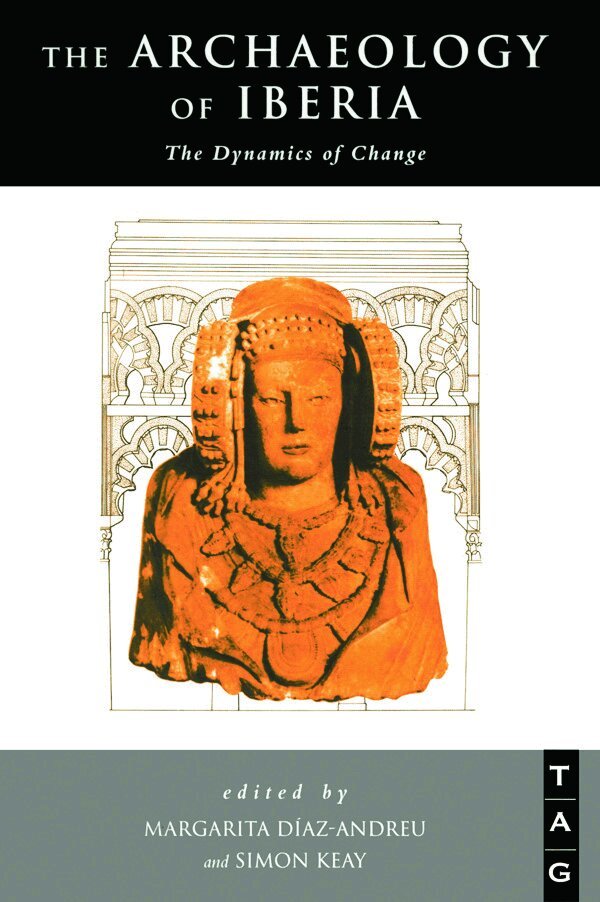
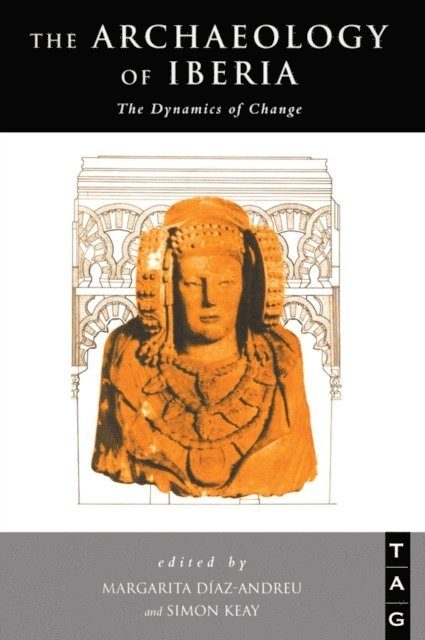
For many archaeologists, Iberia is the last great unknown region in Europe. Although it occupies a crucial position between South-Western Europe and North Africa, academic attention has traditionally been focused on areas like Greece or Italy. However Iberia has an equally rich cultural heritage and archaeological tradition. This ground-breaking volume presents a sample of the ways in which archaeologists have applied theoretical frameworks to the interpretation of archaeological evidence, offering new insights into the archaeology of both Iberia and Europe from prehistoric time through to the tenth century.The contributors to this book are leading archaeologists drawn from both countries. They offer innovative and challenging models for the Paleolithic, Neolithic, Copper Age, Bronze Age, Iron Age, Roman, Early Medieval and Islamic periods. A diverse range of subjects are covered including urban transformation, the Iron Age peoples of Spain, observations on historiography and the origins of the Arab domains of Al-Andalus. It is essential reading for advanced undergraduates and those researching the archaeology of the Iberian Peninsula.
Häftad, Engelska, 2012
806 kr
Skickas inom 10-15 vardagar
For many archaeologists, Iberia is the last great unknown region in Europe. Although it occupies a crucial position between South-Western Europe and North Africa, academic attention has traditionally been focused on areas like Greece or Italy. However Iberia has an equally rich cultural heritage and archaeological tradition. This ground-breaking volume presents a sample of the ways in which archaeologists have applied theoretical frameworks to the interpretation of archaeological evidence, offering new insights into the archaeology of both Iberia and Europe from prehistoric time through to the tenth century.The contributors to this book are leading archaeologists drawn from both countries. They offer innovative and challenging models for the Paleolithic, Neolithic, Copper Age, Bronze Age, Iron Age, Roman, Early Medieval and Islamic periods. A diverse range of subjects are covered including urban transformation, the Iron Age peoples of Spain, observations on historiography and the origins of the Arab domains of Al-Andalus. It is essential reading for advanced undergraduates and those researching the archaeology of the Iberian Peninsula.
Inbunden, Engelska, 2020
1 774 kr
Skickas inom 7-10 vardagar
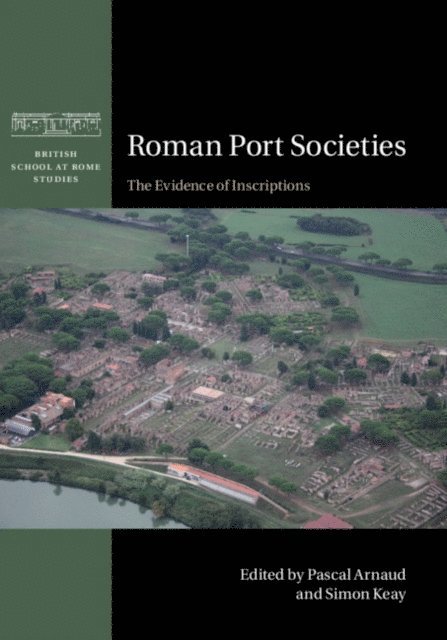
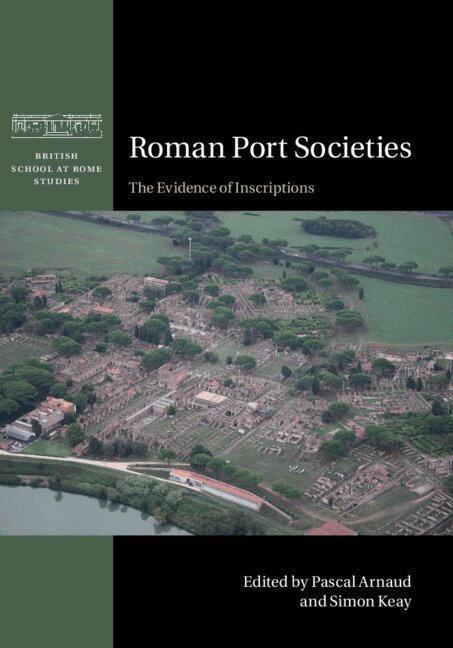
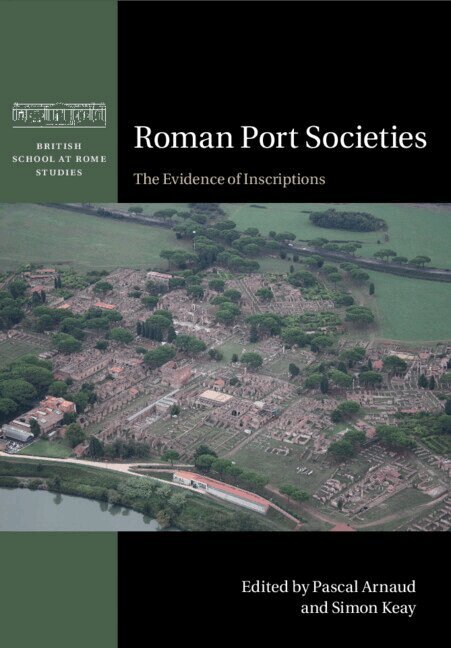
In this book, an international team of experts draws upon a rich range of Latin and Greek texts to explore the roles played by individuals at ports in activities and institutions that were central to the maritime commerce of the Roman Mediterranean. In particular, they focus upon some of the interpretative issues that arise in dealing with this kind of epigraphic evidence, the archaeological contexts of the texts, social institutions and social groups in ports, legal issues relating to harbours, case studies relating to specific ports, and mercantile connections and shippers. While much attention is inevitably focused upon the richer epigraphic collections of Ostia and Ephesos, the papers draw upon inscriptions from a very wide range of ports across the Mediterranean. The volume will be invaluable for all scholars and students of Roman history.
Häftad, Engelska, 2022
448 kr
Skickas inom 7-10 vardagar
In this book, an international team of experts draws upon a rich range of Latin and Greek texts to explore the roles played by individuals at ports in activities and institutions that were central to the maritime commerce of the Roman Mediterranean. In particular, they focus upon some of the interpretative issues that arise in dealing with this kind of epigraphic evidence, the archaeological contexts of the texts, social institutions and social groups in ports, legal issues relating to harbours, case studies relating to specific ports, and mercantile connections and shippers. While much attention is inevitably focused upon the richer epigraphic collections of Ostia and Ephesos, the papers draw upon inscriptions from a very wide range of ports across the Mediterranean. The volume will be invaluable for all scholars and students of Roman history.
E-bok
Engelska, 2020538 kr
Läs direkt efter köp
In this book, an international team of experts draws upon a rich range of Latin and Greek texts to explore the roles played by individuals at ports in activities and institutions that were central to the maritime commerce of the Roman Mediterranean. In particular, they focus upon some of the interpretative issues that arise in dealing with this kind of epigraphic evidence, the archaeological contexts of the texts, social institutions and social groups in ports, legal issues relating to harbours, case studies relating to specific ports, and mercantile connections and shippers. While much attention is inevitably focused upon the richer epigraphic collections of Ostia and Ephesos, the papers draw upon inscriptions from a very wide range of ports across the Mediterranean. The volume will be invaluable for all scholars and students of Roman history.
E-bok
PDF, Engelska, 2020519 kr
Läs direkt efter köp
In this book, an international team of experts draws upon a rich range of Latin and Greek texts to explore the roles played by individuals at ports in activities and institutions that were central to the maritime commerce of the Roman Mediterranean. In particular, they focus upon some of the interpretative issues that arise in dealing with this kind of epigraphic evidence, the archaeological contexts of the texts, social institutions and social groups in ports, legal issues relating to harbours, case studies relating to specific ports, and mercantile connections and shippers. While much attention is inevitably focused upon the richer epigraphic collections of Ostia and Ephesos, the papers draw upon inscriptions from a very wide range of ports across the Mediterranean. The volume will be invaluable for all scholars and students of Roman history.
E-bok
Engelska, 2013952 kr
Läs direkt efter köp
For many archaeologists, Iberia is the last great unknown region in Europe. Although it occupies a crucial position between South-Western Europe and North Africa, academic attention has traditionally been focused on areas like Greece or Italy. However Iberia has an equally rich cultural heritage and archaeological tradition. This ground-breaking volume presents a sample of the ways in which archaeologists have applied theoretical frameworks to the interpretation of archaeological evidence, offering new insights into the archaeology of both Iberia and Europe from prehistoric time through to the tenth century.The contributors to this book are leading archaeologists drawn from both countries. They offer innovative and challenging models for the Paleolithic, Neolithic, Copper Age, Bronze Age, Iron Age, Roman, Early Medieval and Islamic periods. A diverse range of subjects are covered including urban transformation, the Iron Age peoples of Spain, observations on historiography and the origins of the Arab domains of Al-Andalus. It is essential reading for advanced undergraduates and those researching the archaeology of the Iberian Peninsula.
E-bok
PDF, Engelska, 2013952 kr
Läs direkt efter köp
For many archaeologists, Iberia is the last great unknown region in Europe. Although it occupies a crucial position between South-Western Europe and North Africa, academic attention has traditionally been focused on areas like Greece or Italy. However Iberia has an equally rich cultural heritage and archaeological tradition. This ground-breaking volume presents a sample of the ways in which archaeologists have applied theoretical frameworks to the interpretation of archaeological evidence, offering new insights into the archaeology of both Iberia and Europe from prehistoric time through to the tenth century.The contributors to this book are leading archaeologists drawn from both countries. They offer innovative and challenging models for the Paleolithic, Neolithic, Copper Age, Bronze Age, Iron Age, Roman, Early Medieval and Islamic periods. A diverse range of subjects are covered including urban transformation, the Iron Age peoples of Spain, observations on historiography and the origins of the Arab domains of Al-Andalus. It is essential reading for advanced undergraduates and those researching the archaeology of the Iberian Peninsula.
E-bok
Engelska, 2021122 kr
Läs direkt efter köp
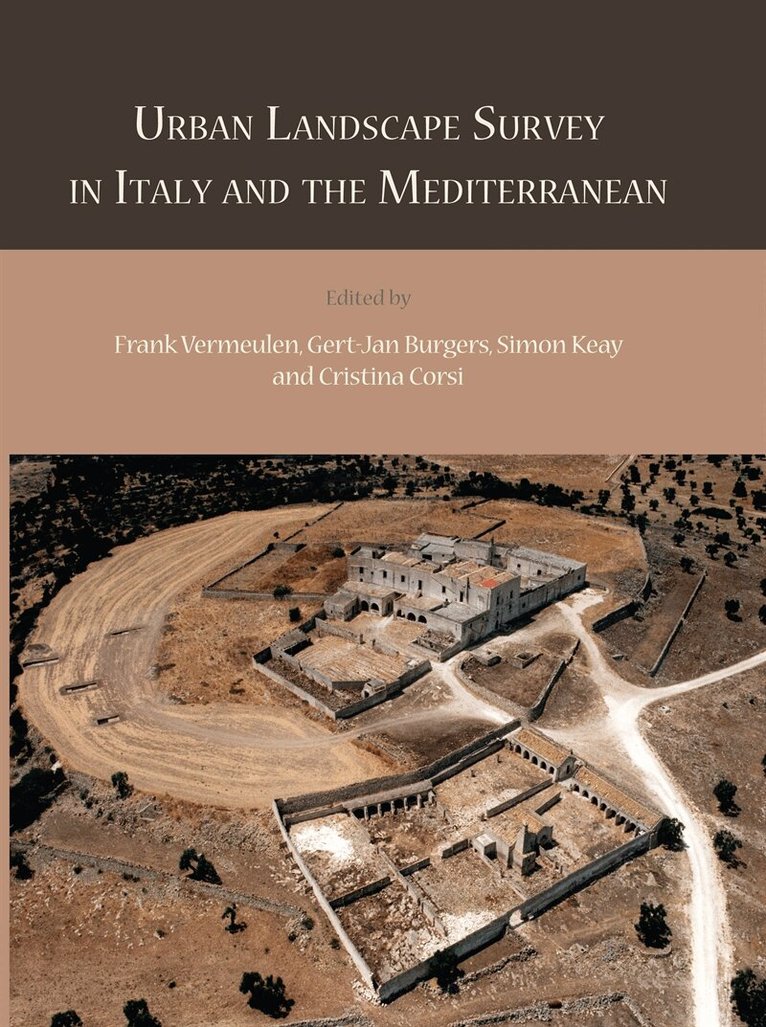
Field survey has been making a major contribution to our understanding of the rural landscapes of the Mediterranean for nearly forty years. During that time the techniques used to map ancient settlement patterns have grown in sophistication from being a process of simply identifying sites in the landscape, to one which provided nuanced understandings of their layouts, chronologies and contexts. This has led to a revolution in how archaeologists approach urban sites, with survey techniques being used increasingly often to generate a plan of a town site prior to excavation as a way of ensuring that the excavation can be used to address site-specific questions in a way that had not been possible before. Most recently, research has begun to reveal the advantages of integrating a range of different non-destructive techniques on urban sites. In combination with exciting new computer-based means of data visualization, all of this work means that it is now possible to virtually reconstruct a buried town within a relatively short space of time, as opposed to the old and destructive excavation-centered approach that could take generations. Unsurprisingly these advances are starting to make a very important understanding to urbanism in general and the Roman Empire in particular. Urban Landscape Survey in Italy and the Mediterranean builds upon all these new developments and is one of the first publications to focus exclusively upon the contribution of survey techniques to our understanding of ancient towns. It addresses methodology led enquiry into the nature of urban settlements primarily in Italy, but also in Greece, Turkey, Croatia, Portugal and Spain. The twenty-two papers from leading specialists in the field focus on two underlying themes. The first deals with the characterization of urban sites and draws upon a wide range of case studies. These range from key protohistoric centres in central and south Italy, to towns that epitomise the contradictions of cultural change under Rome, such as Paestum, Aquinum and Sagalassos, to Roman centres such as Teano, Suasa and Ammaia. The second theme is inter-urban relationships, looking in particular at wider urbanized landscapes in Italy. The fascinating selection of recent and on-going projects presented here significantly moves the limits of our current knowledge about ancient towns.