Sophie Chevalier – författare
Visar alla böcker från författaren Sophie Chevalier. Handla med fri frakt och snabb leverans.
3 produkter
3 produkter
E-bok
PDF, Engelska, 2019373 kr
Läs direkt efter köp
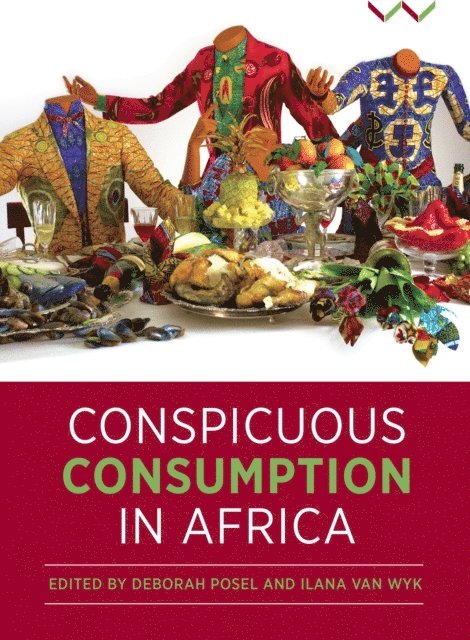
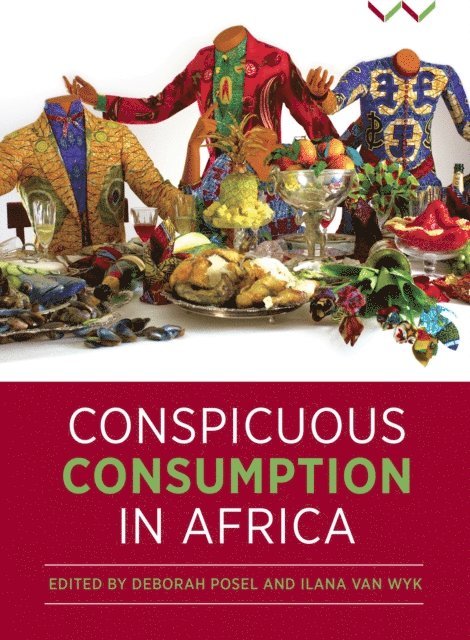
From early department stores in Cape Town to gendered histories of sartorial success in urban Togo, contestations over expense accounts at an apartheid state enterprise, elite wealth and political corruption in Angola and Zambia, the role of popular religion in the political intransigence of Jacob Zuma, funerals of big men in Cameroon, youth cultures of consumption in Niger and South Africa, queer consumption in Cape Town, middle-class food consumption in Durban and the consumption of luxury handcrafted beads, this collection of essays explores the ways in which conspicuous consumption is foregrounded in various African contexts and historical moments. In 1899, Thorstein Veblen coined the phrase ‘conspicuous consumption’ to describe status-seeking in the obscenely unequal world of late-nineteenth century America. Many of the aspects he described in The Theory of the Leisure Class are still evident in our world today. While Veblen’s crude denunciation of material extravagance finds echoes in media exposés about the lifestyles of the rich worldwide, it is particularly recognisable in reporting on Africa. Here, images of conspicuous consumption have long circulated in local and global media as indictments of political corruption and signs of moral depravity. The essays in Conspicuous Consumption in Africa put Veblen’s concept under robust critical scrutiny, drawing on theorists like Mbembe, Guyer and Bayart by way of critique or addition. They delve into the pleasures, stresses and challenges of consuming in its religious, generational, gendered and racialised aspects, revealing conspicuous consumption as a layered set of practices, textures and relations. The authors resist the trap of easy moralisation, pointing to more complex ethical and political registers of analysis and judgement. This volume shows how central and revealing conspicuous consumption can be to fathoming the history of Africa’s projects of modernity, and their global lineages and legacies. In its grounded, up-close case studies, it is likely to feed into current public debates on the nature and future of African societies – South African society in particular.
E-bok
Engelska, 2019373 kr
Läs direkt efter köp
From early department stores in Cape Town to gendered histories of sartorial success in urban Togo, contestations over expense accounts at an apartheid state enterprise, elite wealth and political corruption in Angola and Zambia, the role of popular religion in the political intransigence of Jacob Zuma, funerals of big men in Cameroon, youth cultures of consumption in Niger and South Africa, queer consumption in Cape Town, middle-class food consumption in Durban and the consumption of luxury handcrafted beads, this collection of essays explores the ways in which conspicuous consumption is foregrounded in various African contexts and historical moments. In 1899, Thorstein Veblen coined the phrase ‘conspicuous consumption’ to describe status-seeking in the obscenely unequal world of late-nineteenth century America. Many of the aspects he described in The Theory of the Leisure Class are still evident in our world today. While Veblen’s crude denunciation of material extravagance finds echoes in media exposés about the lifestyles of the rich worldwide, it is particularly recognisable in reporting on Africa. Here, images of conspicuous consumption have long circulated in local and global media as indictments of political corruption and signs of moral depravity. The essays in Conspicuous Consumption in Africa put Veblen’s concept under robust critical scrutiny, drawing on theorists like Mbembe, Guyer and Bayart by way of critique or addition. They delve into the pleasures, stresses and challenges of consuming in its religious, generational, gendered and racialised aspects, revealing conspicuous consumption as a layered set of practices, textures and relations. The authors resist the trap of easy moralisation, pointing to more complex ethical and political registers of analysis and judgement. This volume shows how central and revealing conspicuous consumption can be to fathoming the history of Africa’s projects of modernity, and their global lineages and legacies. In its grounded, up-close case studies, it is likely to feed into current public debates on the nature and future of African societies – South African society in particular.
Del 1 - Rai Country Series
Anthropology at the Crossroads
The View from France
Inbunden, Engelska, 2015
778 kr
Skickas inom 5-8 vardagar
The influence of French intellectual thought on anthropology worldwide has been immense. This set of outstanding essays examines the influence of Levi-Strauss, internal debates concerning anthropology's place within French culture, the way that anthropologists in France approach the dilemmas of practising in a globalized world, and the shifting relationship between anthropology and museums. They also contain a highly stimulating discussion of how anthropology 'at home' has a particular trajectory in France. Together, they allow us to appreciate better why France has been such a stimulating laboratory for anthropological thought and why it is likely to remain so in the future. Indeed, leading figures have emerged there not only because of the brilliance of French academic culture, but also because of a specific readiness to combine an interest in public life and philosophy with anthropology. A splendid volume: extremely informative and very clearly written. The editor and the authors are to be congratulated on the way they have worked up the material into a coherent account of the contemporary French anthropological scene.It provides a model for subsequent works in the series, and a model too in general for how to make a collection of essays into a good book. Tim Jenkins, Reader in Anthropology and Religion, University of Cambridge This compelling book provides rich insight into the traditions and institutions of French anthropology, and a unique perspective on the new theoretical approaches that are shaping the discipline's renewal after Levi-Strauss. Marc Abeles, Director of Research, CNRS; Director of Studies, EHESS"