Sophie Loidolt – författare
Visar alla böcker från författaren Sophie Loidolt. Handla med fri frakt och snabb leverans.
11 produkter
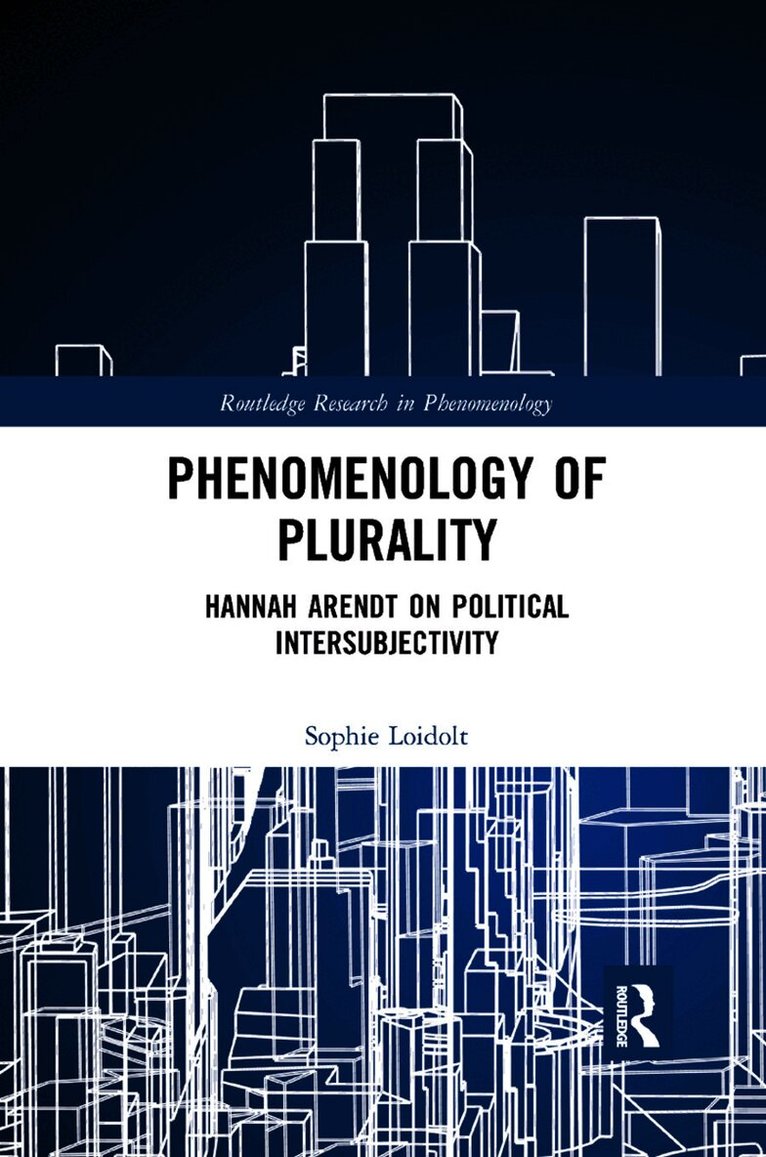
Phenomenology of Plurality
Hannah Arendt on Political Intersubjectivity
Häftad, 2019
706 kr
Lägg i varukorg
Winner of the 2018 Edward Goodwin Ballard Book Prize awarded by the Center for Advanced Research in PhenomenologyThis book develops a unique phenomenology of plurality by introducing Hannah Arendt’s work into current debates taking place in the phenomenological tradition. Loidolt offers a …
Routledge Handbook of Political Phenomenology
Av Steffen Herrmann, Gerhard Thonhauser m. fl.
Inbunden, 2024
3795 kr
Lägg i varukorg
Phenomenology has primarily been concerned with conceptual questions about knowledge and ontology. However, in recent years, the rise of interest and research in applied phenomenology has seen the study of political phenomenology move to a central place in the study of phenomenology generally.The …
Routledge Handbook of Political Phenomenology
Av Steffen Herrmann, Gerhard Thonhauser m. fl.
Häftad, 2026
794 kr
Lägg i varukorg
Phenomenology has primarily been concerned with conceptual questions about knowledge and ontology. However, in recent years, the rise of interest and research in applied phenomenology has seen the study of political phenomenology move to a central place in the study of phenomenology generally.The …
Routledge Handbook of Political Phenomenology
Av Nils Baratella, Tobias Matzner m. fl.
E-bok, 2024
849 kr
Lägg i varukorg
Phenomenology has primarily been concerned with conceptual questions about knowledge and ontology. However, in recent years, the rise of interest and research in applied phenomenology has seen the study of political phenomenology move to a central place in the study of phenomenology generally. The …
Routledge Handbook of Political Phenomenology
Av Nils Baratella, Tobias Matzner m. fl.
E-bok, 2024
849 kr
Lägg i varukorg
Phenomenology has primarily been concerned with conceptual questions about knowledge and ontology. However, in recent years, the rise of interest and research in applied phenomenology has seen the study of political phenomenology move to a central place in the study of phenomenology generally. The …
Phenomenology of Plurality
Hannah Arendt on Political Intersubjectivity
Inbunden, 2017
2519 kr
Lägg i varukorg
Winner of the 2018 Edward Goodwin Ballard Book Prize awarded by the Center for Advanced Research in PhenomenologyThis book develops a unique phenomenology of plurality by introducing Hannah Arendt’s work into current debates taking place in the phenomenological tradition. Loidolt offers a …
Phenomenology of Plurality
Hannah Arendt on Political Intersubjectivity
E-bok, 2017
831 kr
Lägg i varukorg
Winner of the 2018 Edward Goodwin Ballard Book Prize awarded by the Center for Advanced Research in Phenomenology This book develops a unique phenomenology of plurality by introducing Hannah Arendt’s work into current debates taking place in the phenomenological tradition. Loidolt offers a …
Phenomenology of Plurality
Hannah Arendt on Political Intersubjectivity
E-bok, 2017
805 kr
Lägg i varukorg
Winner of the 2018 Edward Goodwin Ballard Book Prize awarded by the Center for Advanced Research in Phenomenology This book develops a unique phenomenology of plurality by introducing Hannah Arendt’s work into current debates taking place in the phenomenological tradition. Loidolt offers a …
Anspruch und Rechtfertigung
Eine Theorie des rechtlichen Denkens im Anschluss an die Phänomenologie Edmund Husserls
Inbunden, 2008
1638 kr
Lägg i varukorg
Anspruch und Rechtfertigung entwickelt eine phänomenologische Theorie des ‘rechtlichen Denkens’. Dabei handelt es sich um eine erste systematische Untersuchung derjenigen Bewusstseinsstrukturen, die ein Begründen, Ausweisen und Rechtfertigen überhaupt erst ermöglichen.Die grundlegende Frage ist, …
Anspruch und Rechtfertigung
Eine Theorie des rechtlichen Denkens im Anschluss an die Phänomenologie Edmund Husserls
E-bok, 2008
1643 kr
Lägg i varukorg
Anspruch und Rechtfertigung entwickelt eine phänomenologische Theorie des ‘rechtlichen Denkens’. Dabei handelt es sich um eine erste systematische Untersuchung derjenigen Bewusstseinsstrukturen, die ein Begründen, Ausweisen und Rechtfertigen überhaupt erst ermöglichen. Die grundlegende Frage ist, …
Einführung in die Rechtsphänomenologie
Eine historisch-systematische Darstellung
Häftad, 2011
731 kr
Tillfälligt slut
"Interdisziplinarität" ist eine frühe Qualität des phänomenologischen Denkens: Adolf Reinachs "Die apriorischen Grundlagen des bürgerlichen Rechts" (1913) geben den Startschuss für eine reichhaltige, differenzierte und heterogene Theoriebildung an der Schnittstelle von Phänomenologie, …