Sorin Gog - Böcker
Visar alla böcker från författaren Sorin Gog. Handla med fri frakt och snabb leverans.
3 produkter
3 produkter
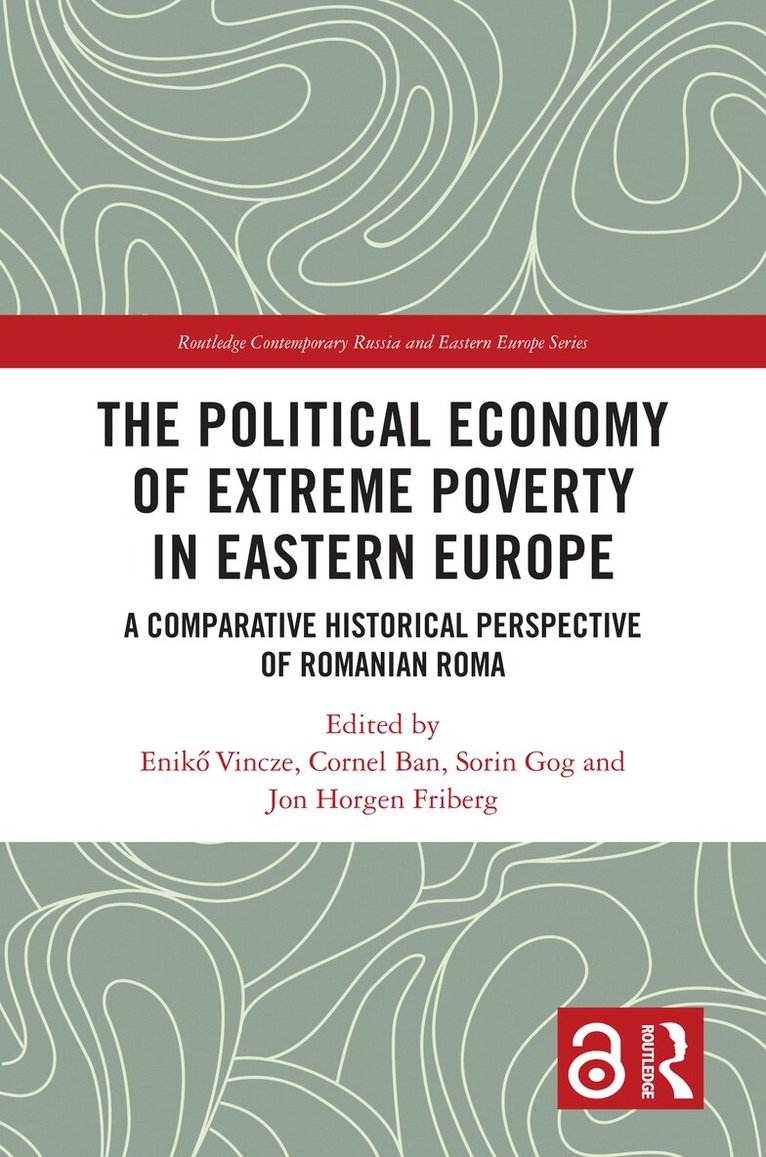
Political Economy of Extreme Poverty in Eastern Europe
A Comparative Historical Perspective of Romanian Roma
Inbunden, Engelska, 2024
1 957 kr
Skickas inom 10-15 vardagar
This book examines the creation of extreme poverty in Eastern Europe, focusing on Romanian Roma, through a comparative historical perspective on its roots and the socio-economic and political mechanisms that have shaped it in labor, housing, and migration.This interdisciplinary book explores the (re)production of extreme poverty among the Roma across different political economy regimes. Chapters engage in comparative historical analysis across several disciplines and integrate perspectives steeped at the national level of analysis with those dwelling intensively on a single context. Focusing on the processes of manufacturing poverty among Roma in Romania, the chapters cover empirical information about the historical transformations of the economic situation of the Roma in Romania from the 19th century to the present, about global, national, and local processes of industrialization, deindustrialization, and reindustrialization impacting poverty among the Roma in the past seven decades, and about Roma people’s current labor positions, housing conditions, and migration practices in distinct geographies from Romania to Norway.The book situates Roma poverty research in a Central and Eastern European context by highlighting its connections with analytical approaches to poverty and institutional policy visions about poverty eradication. It will be of interest to researchers studying Central and Eastern Europe, political economy of socialism, political economy of capitalist transformations, poverty studies, welfare and housing regimes studies, and labor and migration studies.The Open Access version of this book, available at http://www.taylorfrancis.com, has been made available under a Creative Commons Attribution-Non Commercial-No Derivatives (CC-BY-NC-ND) 4.0 license.
Political Economy of Extreme Poverty in Eastern Europe
A Comparative Historical Perspective of Romanian Roma
Häftad, Engelska, 2026
695 kr
Kommande
This book examines the creation of extreme poverty in Eastern Europe, focusing on Romanian Roma, through a comparative historical perspective on its roots and the socio-economic and political mechanisms that have shaped it in labor, housing, and migration.This interdisciplinary book explores the (re)production of extreme poverty among the Roma across different political economy regimes. Chapters engage in comparative historical analysis across several disciplines and integrate perspectives steeped at the national level of analysis with those dwelling intensively on a single context. Focusing on the processes of manufacturing poverty among Roma in Romania, the chapters cover empirical information about the historical transformations of the economic situation of the Roma in Romania from the 19th century to the present, about global, national, and local processes of industrialization, deindustrialization, and reindustrialization impacting poverty among the Roma in the past seven decades, and about Roma people’s current labor positions, housing conditions, and migration practices in distinct geographies from Romania to Norway.The book situates Roma poverty research in a Central and Eastern European context by highlighting its connections with analytical approaches to poverty and institutional policy visions about poverty eradication. It will be of interest to researchers studying Central and Eastern Europe, political economy of socialism, political economy of capitalist transformations, poverty studies, welfare and housing regimes studies, and labor and migration studies.The Open Access version of this book, available at http://www.taylorfrancis.com, has been made available under a Creative Commons Attribution-Non Commercial-No Derivatives (CC-BY-NC-ND) 4.0 license.
1 693 kr
Skickas inom 7-10 vardagar
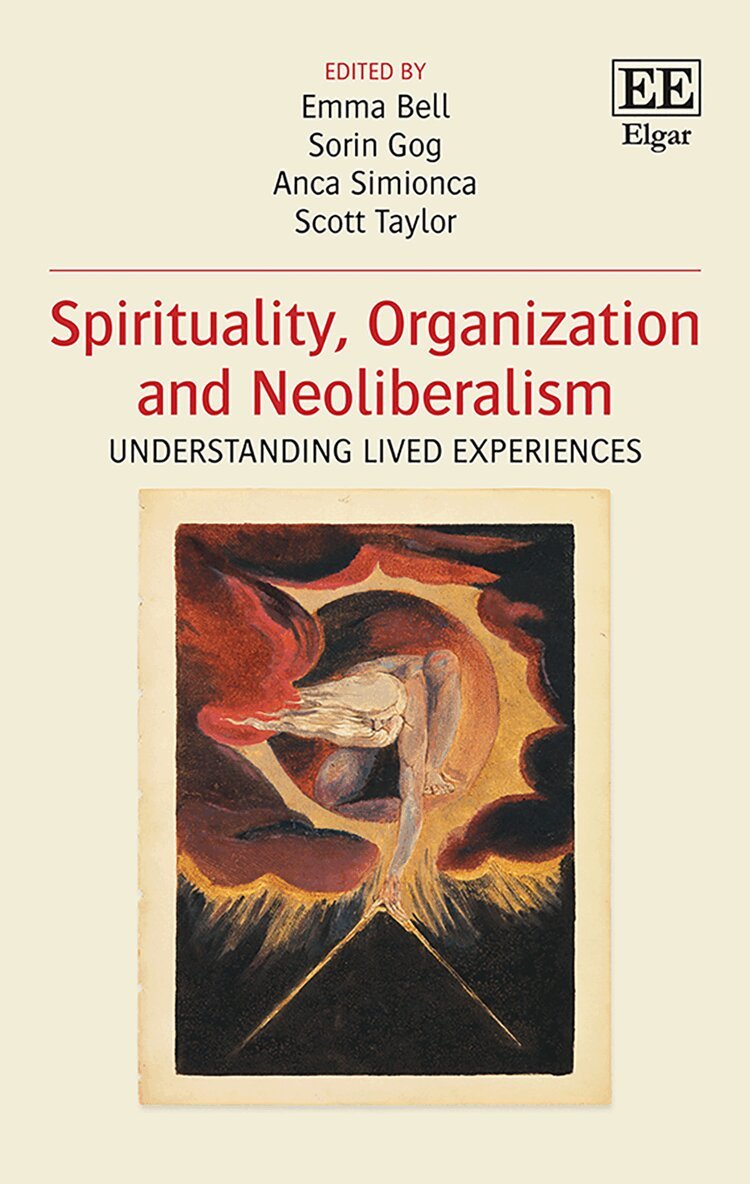
This book brings together analyses from across the social sciences to develop an interdisciplinary approach to understanding spiritualities and neoliberalism. It traces the lived experience of social actors as they engage with new and alternative spiritualities in neoliberal contexts.An international group of authors in anthropology, sociology, religious studies, political science, critical management studies explore the contemporary flourishing of subjectivities centred on a variety of spiritual practices and imaginaries. The book analyses the social and organisational mechanisms that underlie the generation of 'enterprising' and 'competitive' subjectivities engaged in transforming inner selves and social environments in accordance with prevailing neoliberal economic rationalities. Contributions draw on a wide range of empirical settings around the world to discuss the role of subjectivities in organizations. The purpose of the book is to provide specific insights into how neoliberalism is resisted, contested or reproduced through a transformative ethic of spiritual self-realization.Researchers, academics and Masters level students in a range of social science disciplines, including anthropology, sociology, human geography, and organization studies will find this book relevant reading.Contributors include: I. Abraham, E. Bell, L. Cortois, S. Gog, A.-R. Kaupinnen, J.D. LoRusso, D. Miller, K. Navazhylava, A. Peticca-Harris, G. Shanahan, A. Simionca, S. Taylor, K. Valaskivi, T. Vine, A. Yankellevich