Stanislaw Rosloniec - Böcker
Visar alla böcker från författaren Stanislaw Rosloniec. Handla med fri frakt och snabb leverans.
6 produkter
6 produkter
1 564 kr
Skickas inom 5-8 vardagar
1 381 kr
Skickas inom 10-15 vardagar
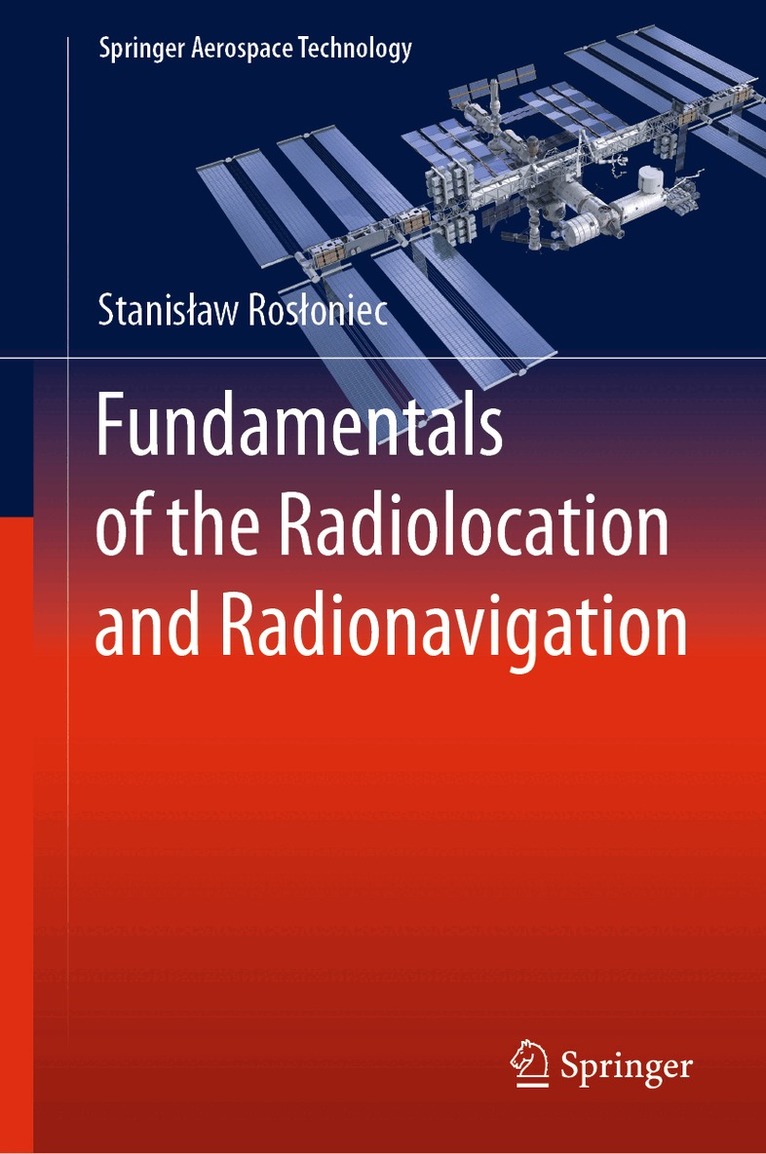
The book presents principles of operation of radar and radionavigation systems. The group of radar systems includes: primary and secondary radiolocations, bistatic and multistatic systems. The stadiometric systems GPS, GLONASS, GALILEO, BeiDou, IRNSS and QZSS are discussed together with differential systems augmentating of them.
634 kr
Skickas inom 5-8 vardagar
959 kr
Skickas inom 10-15 vardagar
The book presents principles of operation of radar and radionavigation systems. The group of radar systems includes: primary and secondary radiolocations, bistatic and multistatic systems. The stadiometric systems GPS, GLONASS, GALILEO, BeiDou, IRNSS and QZSS are discussed together with differential systems augmentating of them.
1 578 kr
Skickas inom 10-15 vardagar
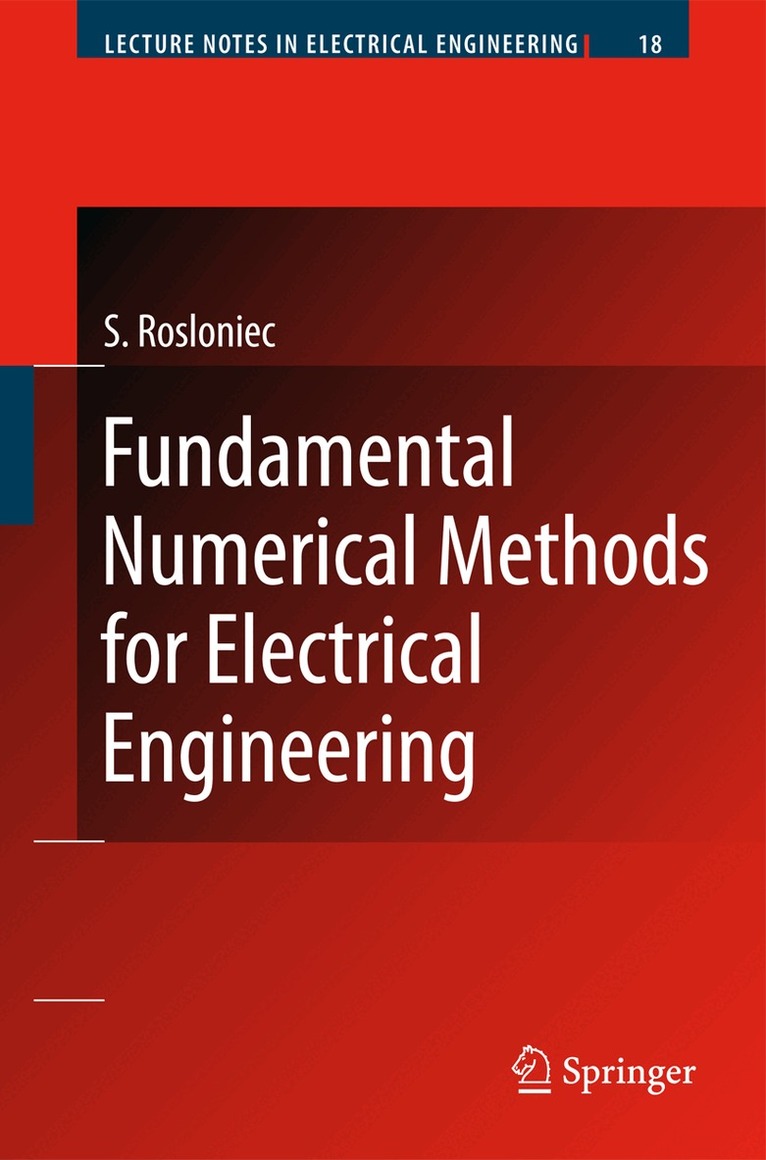
Stormy development of electronic computation techniques (computer systems and software), observed during the last decades, has made possible automation of data processing in many important human activity areas, such as science, technology, economics and labor organization. In a broadly understood technology area, this developmentledtoseparationofspecializedformsofusingcomputersforthedesign and manufacturing processes, that is: – computer-aided design (CAD) – computer-aided manufacture (CAM) In order to show the role of computer in the rst of the two applications m- tioned above, let us consider basic stages of the design process for a standard piece of electronic system, or equipment: – formulation of requirements concerning user properties (characteristics, para- ters) of the designed equipment, – elaboration of the initial, possibly general electric structure, – determination of mathematical model of the system on the basis of the adopted electric structure, – determination of basic responses (frequency- or time-domain) of the system, on the base of previously established mathematical model, – repeated modi cation of the adopted diagram (changing its structure or element values) in case, when it does not satisfy the adopted requirements, – preparation of design and technological documentation, – manufacturing of model (prototype) series, according to the prepared docum- tation, – testing the prototype under the aspect of its electric properties, mechanical du- bility and sensitivity to environment conditions, – modi cation of prototype documentation, if necessary, and handing over the documentation to series production. The most important stages of the process under discussion are illustrated in Fig. I. 1. xi xii Introduction Fig. I.
Del 18 - Lecture Notes in Electrical Engineering
Fundamental Numerical Methods for Electrical Engineering
Häftad, Engelska, 2010
1 578 kr
Skickas inom 10-15 vardagar
Stormy development of electronic computation techniques (computer systems and software), observed during the last decades, has made possible automation of data processing in many important human activity areas, such as science, technology, economics and labor organization. In a broadly understood technology area, this developmentledtoseparationofspecializedformsofusingcomputersforthedesign and manufacturing processes, that is: – computer-aided design (CAD) – computer-aided manufacture (CAM) In order to show the role of computer in the rst of the two applications m- tioned above, let us consider basic stages of the design process for a standard piece of electronic system, or equipment: – formulation of requirements concerning user properties (characteristics, para- ters) of the designed equipment, – elaboration of the initial, possibly general electric structure, – determination of mathematical model of the system on the basis of the adopted electric structure, – determination of basic responses (frequency- or time-domain) of the system, on the base of previously established mathematical model, – repeated modi cation of the adopted diagram (changing its structure or element values) in case, when it does not satisfy the adopted requirements, – preparation of design and technological documentation, – manufacturing of model (prototype) series, according to the prepared docum- tation, – testing the prototype under the aspect of its electric properties, mechanical du- bility and sensitivity to environment conditions, – modi cation of prototype documentation, if necessary, and handing over the documentation to series production. The most important stages of the process under discussion are illustrated in Fig. I. 1. xi xii Introduction Fig. I.