Stanley Boorman – författare
Visar alla böcker från författaren Stanley Boorman. Handla med fri frakt och snabb leverans.
8 produkter
Ottaviano Petrucci
Catalogue Raisonne
Inbunden, 2005
4669 kr
Lägg i varukorg
The innovative work in design, typography, and content of music printer and publisher Ottaviano Petrucci (1446 - 1539) became the standard by which all following printers measured themselves. This book is a bibliographic study of the output of the Petrucci presses. It includes a detailed study of …
Ottaviano Petrucci
A Catalogue Raisonne
E-bok, 2005
3833 kr
Lägg i varukorg
The innovative work in design, typography, and content of music printer and publisher Ottaviano Petrucci (1446-1539) became the standard by which all following printers measured themselves. He created the defining moment when Italy took the lead in book printing in the Renaissance. This book is a …
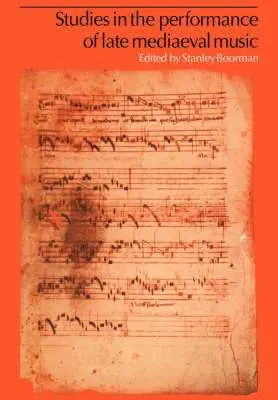
Studies in the Performance of Late Medieval Music
Häftad, 2008
705 kr
Lägg i varukorg
This volume presents a series of important essays by American and European scholars on some of the problems involved in attempting to perform music of the late Middle ages. The essays are based on papers read at a conference held at the New York University Center for Early Music in 1981 and they …
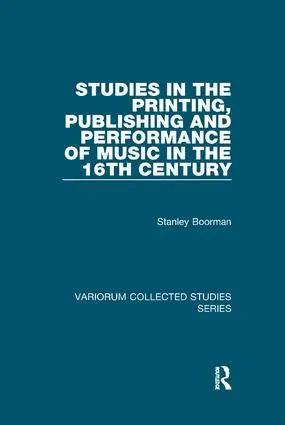
Studies in the Printing, Publishing and Performance of Music in the 16th Century
Inbunden, 2005
2591 kr
Lägg i varukorg
The emergence of music printing and publishing in the early 16th century radically changed how music was circulated, and how the musical source (printed or manuscript) was perceived, and used in performance. This series of close studies of the structure and content of 16th-century and early …
Studies in the Printing, Publishing and Performance of Music in the 16th Century
E-bok, 2023
890 kr
Lägg i varukorg
The emergence of music printing and publishing in the early 16th century radically changed how music was circulated, and how the musical source (printed or manuscript) was perceived, and used in performance. This series of close studies of the structure and content of 16th-century and early …
Studies in the Printing, Publishing and Performance of Music in the 16th Century
E-bok, 2023
910 kr
Lägg i varukorg
The emergence of music printing and publishing in the early 16th century radically changed how music was circulated, and how the musical source (printed or manuscript) was perceived, and used in performance. This series of close studies of the structure and content of 16th-century and early …
Studies in the Printing, Publishing and Performance of Music in the 16th Century
Häftad, 2019
762 kr
Tillfälligt slut
The emergence of music printing and publishing in the early 16th century radically changed how music was circulated, and how the musical source (printed or manuscript) was perceived, and used in performance. This series of close studies of the structure and content of 16th-century and early …
Library of Essays on Renaissance Music: 6-Volume Set
2013
34411 kr
Tillfälligt slut
The field of Renaissance music has been central to the interests of musicologists for at least a century. In recent decades a wealth of important writing has not only explored traditional issues but also vastly expanded the range of topics and approaches under consideration, so that our …