Stefan Hanß - Böcker
Visar alla böcker från författaren Stefan Hanß. Handla med fri frakt och snabb leverans.
7 produkter
7 produkter
2 074 kr
Skickas inom 10-15 vardagar
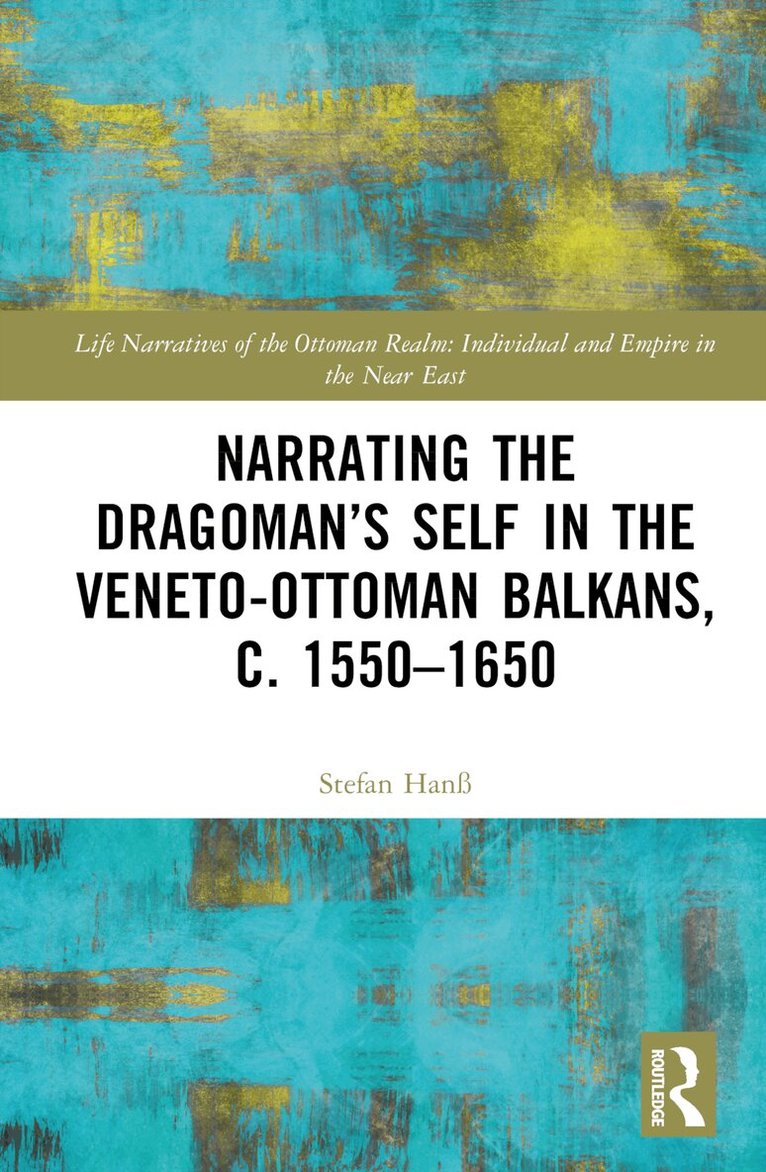
This microhistory of the Salvagos—an Istanbul family of Venetian interpreters and spies travelling the sixteenth- and seventeenth-century Mediterranean—is a remarkable feat of the historian’s craft of storytelling. With his father having been killed by secret order of Venice and his nephew to be publicly assassinated by Ottoman authorities, Genesino Salvago and his brothers started writing self-narratives. When crossing the borders of words and worlds, the Salvagos’ self-narratives helped navigate at times beneficial, other times unsettling entanglements of empire, family, and translation.The discovery of an autobiographical text with rich information on Southeastern Europe, edited here for the first time, is the starting point of this extraordinary microbiography of a family’s intense struggle for manoeuvring a changing world disrupted by competition, betrayal, and colonialism. This volume recovers the Venetian life stories of Ottoman subjects and the crucial role of translation in negotiating a shared but fragile Mediterranean. Stefan Hanß examines an interpreter’s translational practices of the self and recovers the wider Mediterranean significance of the early modern Balkan contact zone. Offering a novel conversation between translation studies, Mediterranean studies, and the history of life-writing, this volume argues that dragomans’ practices of translation, border-crossing, and mobility were key to their experiences and performances of the self.This book is an indispensable reading for the history of the early modern Mediterranean, self-narratives, Venice, the Ottoman Empire, and Southeastern Europe, as well as the history of translation. Hanß presents a truly fascinating narrative, a microhistory full of insights and rich perspectives.
612 kr
Skickas inom 10-15 vardagar
This microhistory of the Salvagos—an Istanbul family of Venetian interpreters and spies travelling the sixteenth- and seventeenth-century Mediterranean—is a remarkable feat of the historian’s craft of storytelling. With his father having been killed by secret order of Venice and his nephew to be publicly assassinated by Ottoman authorities, Genesino Salvago and his brothers started writing self-narratives. When crossing the borders of words and worlds, the Salvagos’ self-narratives helped navigate at times beneficial, other times unsettling entanglements of empire, family, and translation.The discovery of an autobiographical text with rich information on Southeastern Europe, edited here for the first time, is the starting point of this extraordinary microbiography of a family’s intense struggle for manoeuvring a changing world disrupted by competition, betrayal, and colonialism. This volume recovers the Venetian life stories of Ottoman subjects and the crucial role of translation in negotiating a shared but fragile Mediterranean. Stefan Hanß examines an interpreter’s translational practices of the self and recovers the wider Mediterranean significance of the early modern Balkan contact zone. Offering a novel conversation between translation studies, Mediterranean studies, and the history of life-writing, this volume argues that dragomans’ practices of translation, border-crossing, and mobility were key to their experiences and performances of the self.This book is an indispensable reading for the history of the early modern Mediterranean, self-narratives, Venice, the Ottoman Empire, and Southeastern Europe, as well as the history of translation. Hanß presents a truly fascinating narrative, a microhistory full of insights and rich perspectives.
649 kr
Skickas inom 10-15 vardagar
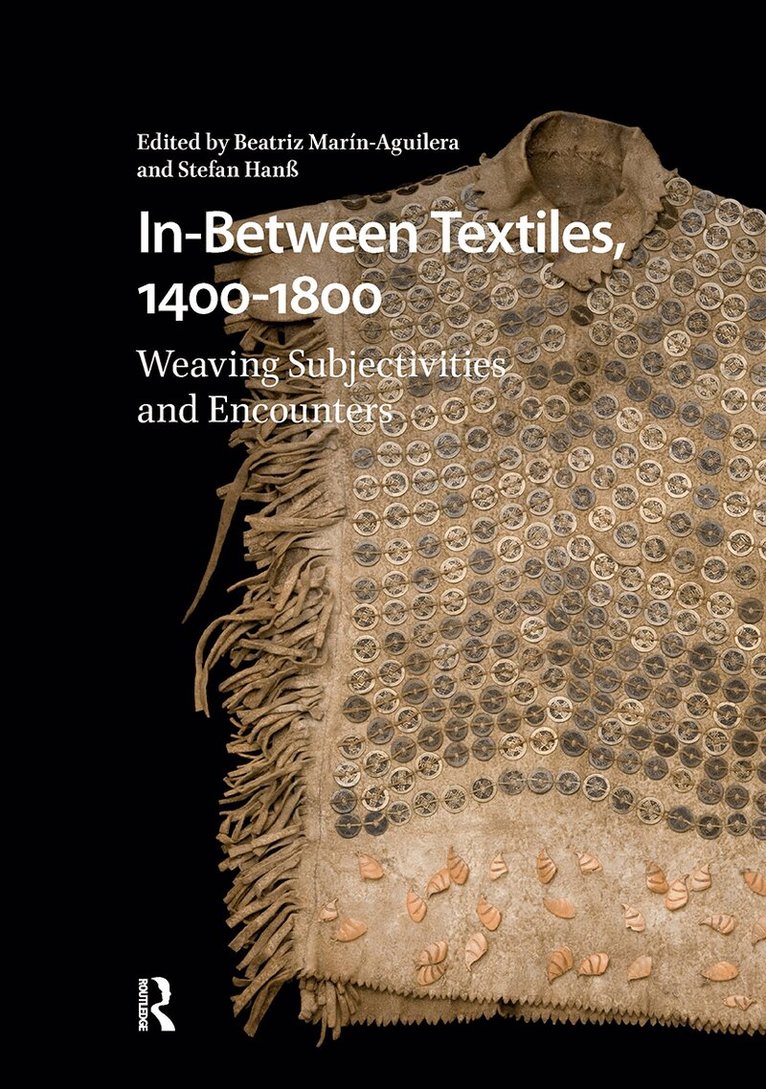
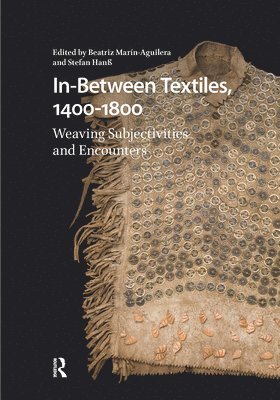
In-Between Textiles is a decentred study of how textiles shaped, disrupted, and transformed subjectivities in the age of the first globalisation. The volume presents a radically cross-disciplinary approach that brings together world-leading anthropologists, archaeologists, art historians, conservators, curators, historians, scientists, and weavers to reflect on the power of textiles to reshape increasingly contested identities on a global scale between 1400 and 1800. Contributors posit the concept of “in-between textiles,” building upon Homi Bhabha’s notion of in-betweenness as the actual material ground of the negotiation of cultural practices and meanings; a site identified as the battleground over strategies of selfhood and the production of identity signs troubled by colonialism and consumerism across the world. In-Between Textiles establishes cutting-edge conversations between textile studies, critical cultural theory, and material culture studies to examine how textiles created and challenged experiences of subjectivity, relatedness, and dis/location that transformed social fabrics around the globe.
Bulletin of the John Rylands Library 101/2
Imaging Heritage Science Initiatives at the John Rylands Research Institute and Library
Häftad, Engelska, 2025
563 kr
Skickas inom 5-8 vardagar
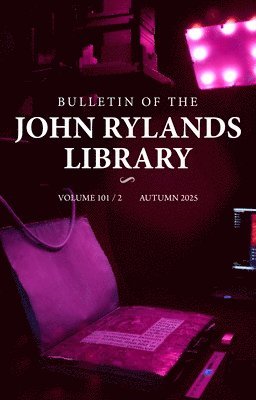
The John Rylands Library houses one of the finest collections of rare books, manuscripts and archives in the world. The collections span five millennia, have a global reach and cover a wide range of subjects, including art and archaeology; economic, social, political, religious and military history; literature, drama and music; science and medicine; theology and philosophy; travel and exploration. For over a century, the Bulletin of the John Rylands Library has published research that complements the Library’s special collections.An electronic edition of this issue is freely available under a Creative Commons (CC BY-NC-ND) licence.
994 kr
Skickas
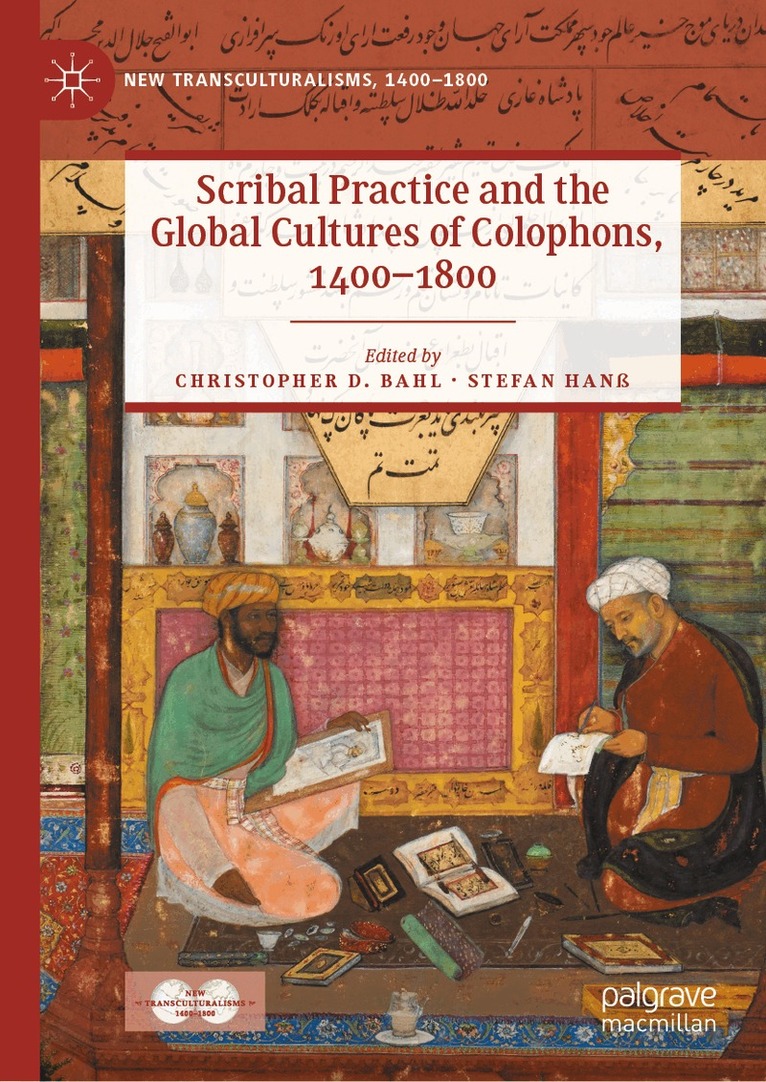
“This is a tour de force of sophisticated global erudition.” —Filippo de Vivo, University of Oxford, UK“In its wide global range and rich variety of studies, this expertly edited volume provides an unprecedented view into the scribal practices of diverse cultural traditions in the early modern period.” —Johanna Drucker, University of California, Los Angeles, USA“This volume finally gives the colophon the place it deserves. We see scribes and printers at work in Thailand, the Deccan, Delhi, Damascus, Antwerp, and Timbuktu.” —Konrad Hirschler, University of Hamburg, Germany“In this cross-disciplinary endeavor, ten authors tell lively and exciting stories of historical scribal practices.” —Verena Klemm, University of Leipzig, GermanyThis book is the first to chart the global diversity of colophons between 1400 and 1800. The volume presents a new approach to scribal cultures that expands traditional definitions. Moving from the paradigm of codicological information towards a thorough interpretation of the wider social worlds of colophons in Africa, Asia, Europe, and North America, this volume uncovers the fascinating cultural history of early modern scribes. Chapters examine how those engaging in the composition and distribution of colophons shaped scribal identities, group cultures and bookish communities in a world in which manuscripts mattered. Authors build on approaches from anthropology, cultural studies, codicology, history, and philology to offer a new conceptual framework that studies colophons as scribal practices embedded in their changing social and cultural worlds. As a new contribution to the history of the book, this volume’s global approach pushes the boundaries of what constitutes a colophon.
1 423 kr
Skickas inom 10-15 vardagar
“This is a tour de force of sophisticated global erudition.” —Filippo de Vivo, University of Oxford, UK“In its wide global range and rich variety of studies, this expertly edited volume provides an unprecedented view into the scribal practices of diverse cultural traditions in the early modern period.” —Johanna Drucker, University of California, Los Angeles, USA“This volume finally gives the colophon the place it deserves. We see scribes and printers at work in Thailand, the Deccan, Delhi, Damascus, Antwerp, and Timbuktu.” —Konrad Hirschler, University of Hamburg, Germany“In this cross-disciplinary endeavor, ten authors tell lively and exciting stories of historical scribal practices.” —Verena Klemm, University of Leipzig, GermanyThis book is the first to chart the global diversity of colophons between 1400 and 1800. The volume presents a new approach to scribal cultures that expands traditional definitions. Moving from the paradigm of codicological information towards a thorough interpretation of the wider social worlds of colophons in Africa, Asia, Europe, and North America, this volume uncovers the fascinating cultural history of early modern scribes. Chapters examine how those engaging in the composition and distribution of colophons shaped scribal identities, group cultures and bookish communities in a world in which manuscripts mattered. Authors build on approaches from anthropology, cultural studies, codicology, history, and philology to offer a new conceptual framework that studies colophons as scribal practices embedded in their changing social and cultural worlds. As a new contribution to the history of the book, this volume’s global approach pushes the boundaries of what constitutes a colophon.
Del 44 - Visual and Material Culture, 1300-1700
In-Between Textiles, 1400-1800
Weaving Subjectivities and Encounters
Inbunden, Engelska, 2023
2 012 kr
Skickas inom 10-15 vardagar
In-Between Textiles is a decentred study of how textiles shaped, disrupted, and transformed subjectivities in the age of the first globalisation. The volume presents a radically cross-disciplinary approach that brings together world-leading anthropologists, archaeologists, art historians, conservators, curators, historians, scientists, and weavers to reflect on the power of textiles to reshape increasingly contested identities on a global scale between 1400 and 1800. Contributors posit the concept of “in-between textiles,” building upon Homi Bhabha’s notion of in-betweenness as the actual material ground of the negotiation of cultural practices and meanings; a site identified as the battleground over strategies of selfhood and the production of identity signs troubled by colonialism and consumerism across the world. In-Between Textiles establishes cutting-edge conversations between textile studies, critical cultural theory, and material culture studies to examine how textiles created and challenged experiences of subjectivity, relatedness, and dis/location that transformed social fabrics around the globe.