Stefan Wrobel - Böcker
Visar alla böcker från författaren Stefan Wrobel. Handla med fri frakt och snabb leverans.
10 produkter
10 produkter
1 624 kr
Skickas inom 10-15 vardagar
A fundamental assumption of work in artificial intelligence and machine learning is that knowledge is expressed in a computer with the help of knowledge representations. Since the proper choice of such representations is a difficult task that fundamentally affects the capabilities of a system, the problem of automatic representation change is an important topic in current research. This book focuses on representation change as a concept formation task, regarding concepts as the elementary representational vocabulary from which further statements are constructed. Taking an interdisciplinary approach, from psychological foundations to computer implementations, the book draws on existing psychological results about the nature of human concepts and concept formation to determine the scope of concept formation phenomena, and to identify potential components of computational concept formation models.The central idea of this work is that computational concept formation can usefully be understood as a process that is triggered in a demand-driven fashion by the representational needs of the learning system, and identify the knowledge revision activities of a system as a particular context for such a process. The book presents a detailed analysis of the revision problem for first-order causal theories, and develops a set of postulates that any such operation should satisfy. It shows how a minimum theory revision operator can be realized by using exception sets, and that this operator is indeed maximally general. The book then shows that concept formation can be triggered from within the knowledge revision process whenever the existing representation does not permit the plausible reformulation of an exception set, demonstrating the usefulness of the approach both theoretically and empirically within the learning knowledge acquisition system MOBAL. In using a first-order representation, this book is part of the rapidly developing field of Inductive Logic Programming (ILP).By integrating the computational issues with psychological and fundamental discussions of concept formation phenomena, the book should be of interest to readers both theoretically and psychologically inclined.
1 624 kr
Skickas inom 10-15 vardagar
A fundamental assumption of work in artificial intelligence and machine learning is that knowledge is expressed in a computer with the help of knowledge representations. Since the proper choice of such representations is a difficult task that fundamentally affects the capabilities of a system, the problem of automatic representation change is an important topic in current research. Concept Formation and Knowledge Revision focuses on representation change as a concept formation task, regarding concepts as the elementary representational vocabulary from which further statements are constructed. Taking an interdisciplinary approach from psychological foundations to computer implementations, the book draws on existing psychological results about the nature of human concepts and concept formation to determine the scope of concept formation phenomena, and to identify potential components of computational concept formation models.The central idea of this work is that computational concept formation can usefully be understood as a process that is triggered in a demand-driven fashion by the representational needs of the learning system, and identify the knowledge revision activities of a system as a particular context for such a process. The book presents a detailed analysis of the revision problem for first-order clausal theories, and develops a set of postulates that any such operation should satisfy. It shows how a minimum theory revision operator can be realized by using exception sets, and that this operator is indeed maximally general. The book then shows that concept formation can be triggered from within the knowledge revision process whenever the existing representation does not permit the plausible reformulation of an exception set, demonstrating the usefulness of the approach both theoretically and empirically within the learning knowledge acquisition system MOBAL. In using a first-order representation, this book is part of the rapidly developing field of Inductive Logic Programming (ILP).By integrating the computational issues with psychological and fundamental discussions of concept formation phenomena, the book will be of interest to readers both theoretically and psychologically inclined. From the foreword by Katharina Morik: ' The ideal to combine the three sources of artificial intelligence research has almost never been reached. Such a combined and integrated research requires the researcher to master different ways of thinking, different work styles, different sets of literature, and different research procedures. It requires capabilities in software engineering for the application part, in theoretical computer science for the theory part, and in psychology for the cognitive part. The most important capability for artificial intelligence is to keep the integrative view and to create a true original work that goes beyond the collection of pieces from different fields. This book achieves such an integrative view of concept formation and knowledge revision by presenting the way from psychological investigations that indicate that concepts are theories and point at the important role of a demand for learning. to an implemented system which supports users in their tasks when working with a knowledge base and its theoretical foundation.'
987 kr
Skickas inom 10-15 vardagar
The second part of the book describes visual analytics methods and workflows,organised by various data types including multidimensional data, data with spatial and temporal components, data describing binary relationships, texts, images and video.
715 kr
Skickas inom 10-15 vardagar
The second part of the book describes visual analytics methods and workflows,organised by various data types including multidimensional data, data with spatial and temporal components, data describing binary relationships, texts, images and video.
551 kr
Skickas inom 10-15 vardagar
This open access book provides a comprehensive view on data ecosystems and platform economics from methodical and technological foundations up to reports from practical implementations and applications in various industries.To this end, the book is structured in four parts: Part I “Foundations and Contexts” provides a general overview about building, running, and governing data spaces and an introduction to the IDS and GAIA-X projects. Part II “Data Space Technologies” subsequently details various implementation aspects of IDS and GAIA-X, including eg data usage control, the usage of blockchain technologies, or semantic data integration and interoperability. Next, Part III describes various “Use Cases and Data Ecosystems” from various application areas such as agriculture, healthcare, industry, energy, and mobility. Part IV eventually offers an overview of several “Solutions and Applications”, eg including products and experiences from companies like Google, SAP, Huawei, T-Systems, Innopay and many more.Overall, the book provides professionals in industry with an encompassing overview of the technological and economic aspects of data spaces, based on the International Data Spaces and Gaia-X initiatives. It presents implementations and business cases and gives an outlook to future developments. In doing so, it aims at proliferating the vision of a social data market economy based on data spaces which embrace trust and data sovereignty.
442 kr
Skickas inom 10-15 vardagar
This open access book provides a comprehensive view on data ecosystems and platform economics from methodical and technological foundations up to reports from practical implementations and applications in various industries.To this end, the book is structured in four parts: Part I “Foundations and Contexts” provides a general overview about building, running, and governing data spaces and an introduction to the IDS and GAIA-X projects. Part II “Data Space Technologies” subsequently details various implementation aspects of IDS and GAIA-X, including eg data usage control, the usage of blockchain technologies, or semantic data integration and interoperability. Next, Part III describes various “Use Cases and Data Ecosystems” from various application areas such as agriculture, healthcare, industry, energy, and mobility. Part IV eventually offers an overview of several “Solutions and Applications”, eg including products and experiences from companies like Google, SAP, Huawei, T-Systems, Innopay and many more.Overall, the book provides professionals in industry with an encompassing overview of the technological and economic aspects of data spaces, based on the International Data Spaces and Gaia-X initiatives. It presents implementations and business cases and gives an outlook to future developments. In doing so, it aims at proliferating the vision of a social data market economy based on data spaces which embrace trust and data sovereignty.
Machine Learning: ECML-95
8th European Conference on Machine Learning, Heraclion, Crete, Greece, April 25 - 27, 1995. Proceedings
Häftad, Engelska, 1995
551 kr
Skickas inom 10-15 vardagar
This volume constitutes the proceedings of the Eighth European Conference on Machine Learning ECML-95, held in Heraclion, Crete in April 1995.Besides four invited papers the volume presents revised versions of 14 long papers and 26 short papers selected from a total of 104 submissions. The papers address all current aspects in the area of machine learning; also logic programming, planning, reasoning, and algorithmic issues are touched upon.
1 064 kr
Skickas inom 10-15 vardagar
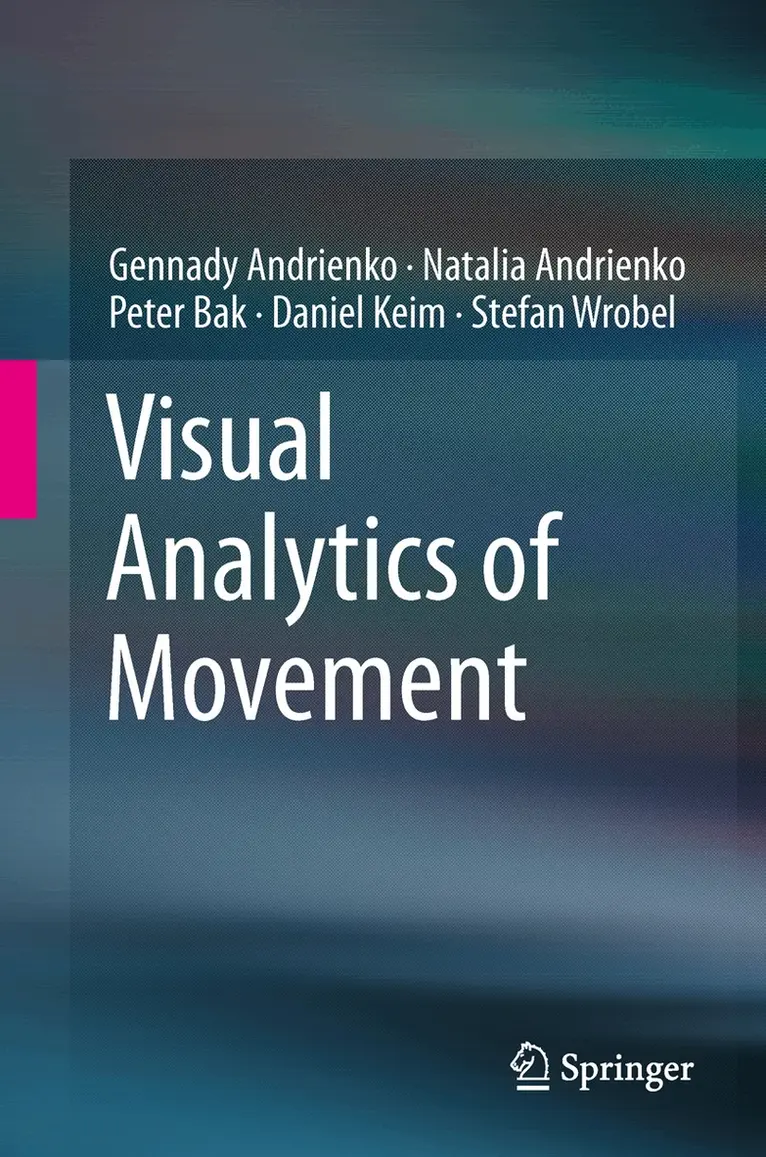
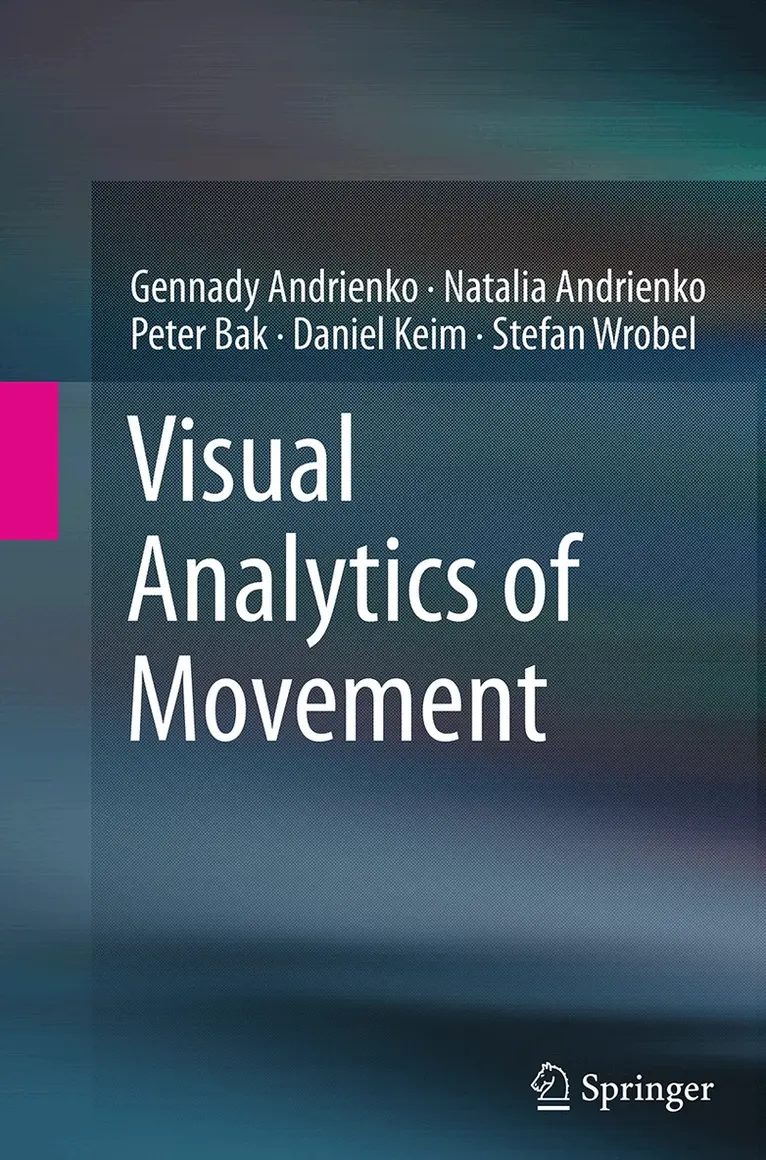
This book introduces a general conceptual framework for the analysis of movement data from various sources. It illustrates all algorithms and methods with the help of sample applications from various domains.
195 kr
Skickas inom 3-6 vardagar
1 064 kr
Skickas inom 10-15 vardagar
Many important planning decisions in society and business depend on proper knowledge and a correct understanding of movement, be it in transportation, logistics, biology, or the life sciences. Today the widespread use of mobile phones and technologies like GPS and RFID provides an immense amount of data on location and movement. What is needed are new methods of visualization and algorithmic data analysis that are tightly integrated and complement each other to allow end-users and analysts to extract useful knowledge from these extremely large data volumes.This is exactly the topic of this book. As the authors show, modern visual analytics techniques are ready to tackle the enormous challenges brought about by movement data, and the technology and software needed to exploit them are available today.The authors start by illustrating the different kinds of data available to describe movement, from individual trajectories of single objects to multiple trajectories of many objects, and then proceed to detail a conceptual framework, which provides the basis for a fundamental understanding of movement data. With this basis, they move on to more practical and technical aspects, focusing on how to transform movement data to make it more useful, and on the infrastructure necessary for performing visual analytics in practice. In so doing they demonstrate that visual analytics of movement data can yield exciting insights into the behavior of moving persons and objects, but can also lead to an understanding of the events that transpire when things move. Throughout the book, they use sample applications from various domains and illustrate the examples with graphical depictions of both the interactive displays and the analysis results. In summary, readers will benefit from this detailed description of the state of the art in visual analytics in various ways. Researchers will appreciate the scientific precision involved, software technologists will find essential information on algorithms and systems, and practitioners will profit from readily accessible examples with detailed illustrations for practical purposes.