Stefano Recchia - Böcker
Visar alla böcker från författaren Stefano Recchia. Handla med fri frakt och snabb leverans.
7 produkter
7 produkter
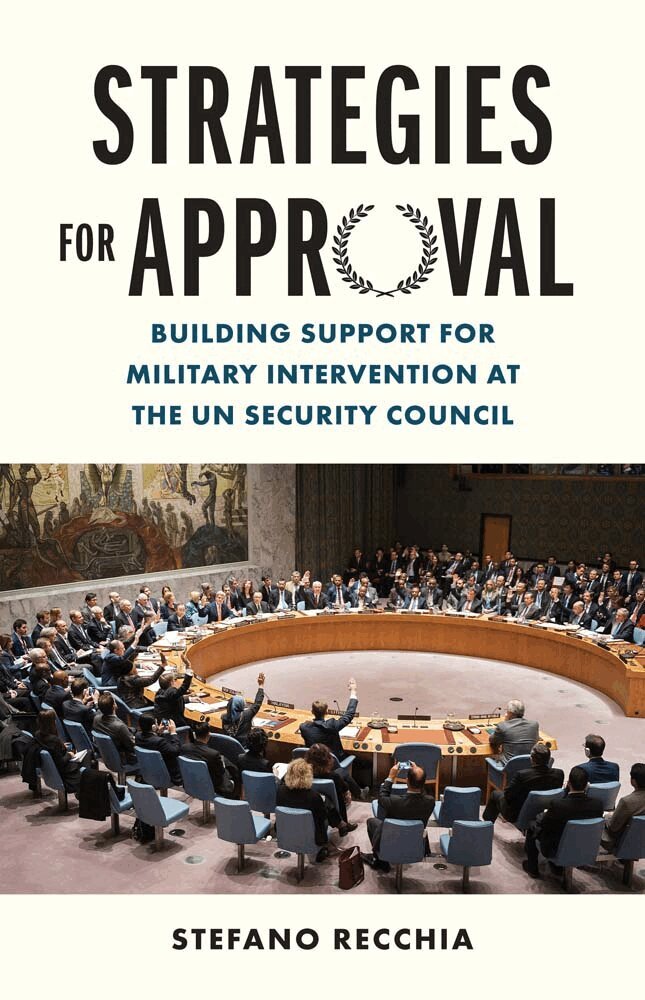
Strategies for Approval
Building Support for Military Intervention at the UN Security Council
Inbunden, Engelska, 2025
571 kr
Skickas inom 7-10 vardagar
A thoughtful analysis of how major powers can obtain UN Security Council approval for military intervention Powerful states often seek UN Security Council approval for their military interventions to enhance legitimacy, but how can they secure this approval when veto-wielding permanent members have grave misgivings? In this groundbreaking study of UNSC diplomacy, Stefano Recchia tackles this question by drawing on hundreds of declassified documents and interviews that he conducted with top diplomats from multiple countries.Recchia demonstrates that since the early 1990s, powerful states facing significant opposition at the UNSC have not been able to rely solely on economic and political leverage to obtain a resolution of approval. Instead, they have had to combine exertions of leverage with credible signals that they would act with restraint and in line with core international norms. This often required that they agree to incorporate costly limitations on the use of force, such as time limits and multilateral oversight, into the requested resolution. Recchia argues that for better or worse accepting such constraints will be critical in the future if powerful countries, including the United States, are to secure UN approval in an increasingly competitive international environment.
2 160 kr
Skickas inom 10-15 vardagar
This book explores France’s African intervention policy and related legitimation strategies through the United Nations, the European Union, and various ad hoc multilateral frameworks. France’s enduring ability to project military power on the African continent and influence political events there has been central to its self-perception as a major power. However, since the end of the cold war, France’s paternalistic interference has been increasingly questioned, not least by African audiences. This has produced a gradual and somewhat reluctant turn to multilateralism on the part of French leaders. Drawing on in-depth case studies of recent French intervention policy, this edited volume critically assesses France’s efforts to reassure critics by securing multilateral endorsements; share burdens and liabilities through collective implementation; and re-affirm its status as a major power by spearheading complex missions.The chapters in this book were originally published as a special issue of the Journal of Strategic Studies.
638 kr
Skickas inom 10-15 vardagar
This book explores France’s African intervention policy and related legitimation strategies through the United Nations, the European Union, and various ad hoc multilateral frameworks. France’s enduring ability to project military power on the African continent and influence political events there has been central to its self-perception as a major power. However, since the end of the cold war, France’s paternalistic interference has been increasingly questioned, not least by African audiences. This has produced a gradual and somewhat reluctant turn to multilateralism on the part of French leaders. Drawing on in-depth case studies of recent French intervention policy, this edited volume critically assesses France’s efforts to reassure critics by securing multilateral endorsements; share burdens and liabilities through collective implementation; and re-affirm its status as a major power by spearheading complex missions.The chapters in this book were originally published as a special issue of the Journal of Strategic Studies.
Cosmopolitanism of Nations
Giuseppe Mazzini's Writings on Democracy, Nation Building, and International Relations
Inbunden, Engelska, 2009
378 kr
Skickas inom 7-10 vardagar
This anthology gathers Giuseppe Mazzini's most important essays on democracy, nation building, and international relations, including some that have never before been translated into English. These neglected writings remind us why Mazzini was one of the most influential political thinkers of the nineteenth century--and why there is still great benefit to be derived from a careful analysis of what he had to say. Mazzini (1805-1872) is best known today as the inspirational leader of the Italian Risorgimento. But, as this book demonstrates, he also made a vital contribution to the development of modern democratic and liberal internationalist thought. In fact, Stefano Recchia and Nadia Urbinati make the case that Mazzini ought to be recognized as the founding figure of what has come to be known as liberal Wilsonianism. The writings collected here show how Mazzini developed a sophisticated theory of democratic nation building--one that illustrates why democracy cannot be successfully imposed through military intervention from the outside.He also speculated, much more explicitly than Immanuel Kant, about how popular participation and self-rule within independent nation-states might result in lasting peace among democracies. In short, Mazzini believed that universal aspirations toward human freedom, equality, and international peace could best be realized through independent nation-states with homegrown democratic institutions. He thus envisioned what one might today call a genuine cosmopolitanism of nations.
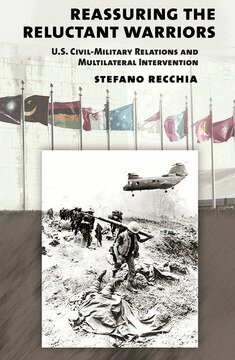
Reassuring the Reluctant Warriors
U.S. Civil-Military Relations and Multilateral Intervention
Inbunden, Engelska, 2015
576 kr
Skickas inom 7-10 vardagar
Why did American leaders work hard to secure multilateral approval from the United Nations or NATO for military interventions in Haiti, Bosnia, and Kosovo, while making only limited efforts to gain such approval for the 2003 Iraq War? In Reassuring the Reluctant Warriors, Stefano Recchia draws on declassified documents and about one hundred interviews with civilian and military leaders to illuminate little-known aspects of U.S. decision making in the run-up to those interventions. American leaders, he argues, seek UN or NATO approval to facilitate sustained military and financial burden sharing and ensure domestic support. However, the most assertive, hawkish, and influential civilian leaders in Washington tend to downplay the costs of intervention, and when confronted with hesitant international partners they often want to bypass multilateral bodies. In these circumstances, America's senior generals and admirals—as reluctant warriors who worry about Vietnam-style quagmires—can play an important restraining role, steering U.S. policy toward multilateralism.Senior military officers are well placed to debunk the civilian interventionists' optimistic assumptions regarding the costs of war, thereby undermining broader governmental support for intervention. Recchia demonstrates that when the military expresses strong concerns about the stabilization burden, even hawkish civilian leaders can be expected to work hard to secure multilateral support through the UN or NATO—if only to reassure the reluctant warriors about long-term burden sharing. By contrast, when the military stays silent, as it did in the run-up to the 2003 Iraq War, the most hawkish civilians are empowered; consequently, the United States is more likely to bypass multilateral bodies and may end up shouldering a heavy stabilization burden largely by itself. Recchia's argument that the military has the ability to contribute not only to a more prudent but also to a more multilateralist U.S. intervention policy may be counterintuitive, but the evidence is compelling.
1 192 kr
Skickas inom 7-10 vardagar
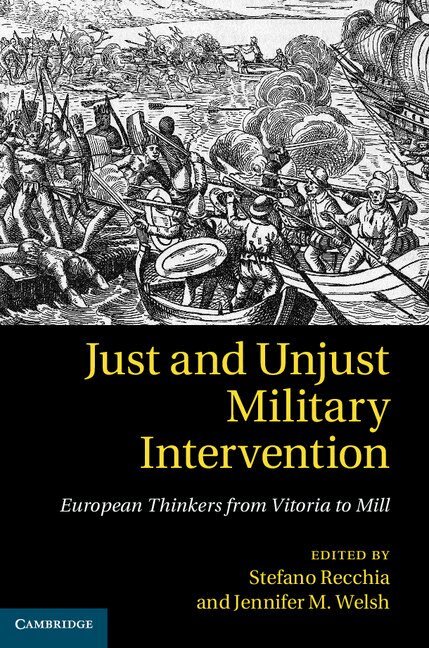
Classical arguments about the legitimate use of force have profoundly shaped the norms and institutions of contemporary international society. But what specific lessons can we learn from the classical European philosophers and jurists when thinking about humanitarian intervention, preventive self-defense or international trusteeship today? The contributors to this volume take seriously the admonition of contextualist scholars not to uproot classical thinkers' arguments from their social, political and intellectual environment. Nevertheless, this collection demonstrates that contemporary students, scholars and policymakers can still learn a great deal from the questions raised by classical European thinkers, the problems they highlighted, and even the problematic character of some of the solutions they offered. The aim of this volume is to open up current assumptions about military intervention, and to explore the possibility of reconceptualizing and reappraising contemporary approaches.
428 kr
Skickas inom 7-10 vardagar
Classical arguments about the legitimate use of force have profoundly shaped the norms and institutions of contemporary international society. But what specific lessons can we learn from the classical European philosophers and jurists when thinking about humanitarian intervention, preventive self-defense or international trusteeship today? The contributors to this volume take seriously the admonition of contextualist scholars not to uproot classical thinkers' arguments from their social, political and intellectual environment. Nevertheless, this collection demonstrates that contemporary students, scholars and policymakers can still learn a great deal from the questions raised by classical European thinkers, the problems they highlighted, and even the problematic character of some of the solutions they offered. The aim of this volume is to open up current assumptions about military intervention, and to explore the possibility of reconceptualizing and reappraising contemporary approaches.