Stephanie Kitchen - Böcker
Visar alla böcker från författaren Stephanie Kitchen. Handla med fri frakt och snabb leverans.
6 produkter
6 produkter
Del 41 - The International African Library
War and the Crisis of Youth in Sierra Leone
Inbunden, Engelska, 2011
1 282 kr
Skickas inom 7-10 vardagar
The armed conflict in Sierra Leone and the extreme violence of the main rebel faction - the Revolutionary United Front (RUF) - have challenged scholars and members of the international community to come up with explanations. Up to this point, though, conclusions about the nature of the war are mainly drawn from accounts of civilian victims and commentators who had access to only one side of the war. The present study addresses this currently incomplete understanding of the conflict by focusing on the direct experiences and interpretations of protagonists, paying special attention to the hitherto neglected, and often underage, cadres of the RUF. The data presented challenges the widely canvassed notion of the Sierra Leone conflict as a war motivated by 'greed, not grievance'. Rather, it points to a rural crisis expressed in terms of unresolved tensions between landowners and marginalized rural youth, further reinforced and triggered by a collapsing patrimonial state.
1 209 kr
Skickas inom 10-15 vardagar
The development of Africa’s oil has greatly accelerated in recent years, with some countries looking at the prospect of almost unimaginable flows of money into their national budgets. But the story of African oil has usually been associated with conflict, corruption and disaster, with older producers such as Nigeria having little to show for the many billions of dollars they’ve earned. In this eye-opening book, former BBC correspondent Celeste Hicks questions the inevitability of the so-called resource curse, revealing what the discovery of oil means for ordinary Africans, and how China’s involvement could mean a profound change in Africa’s relationship with the West.A much-needed account of an issue that will likely transform the fortunes of a number of African countries – for better or for worse.
187 kr
Skickas
Taxation has been seen as the domain of charisma-free accountants, lawyers and number crunchers – an unlikely place to encounter big societal questions about democracy, equity or good governance. Yet it is exactly these issues that pervade conversations about taxation among policymakers, tax collectors, civil society activists, journalists and foreign aid donors in Africa today. Tax has become viewed as central to African development.Written by leading international experts, Taxing Africa offers a cutting-edge analysis on all aspects of the continent’s tax regime, displaying the crucial role such arrangements have on attempts to create social justice and push economic advancement. From tax evasion by multinational corporations and African elites to how ordinary people navigate complex webs of ‘informal’ local taxation, the book examines the potential for reform, and how space might be created for enabling locally-led strategies.The eBook editions of this book are available open access under a CC BY-NC 3.0 licence on bloomsburycollections.com.
247 kr
Skickas inom 10-15 vardagar
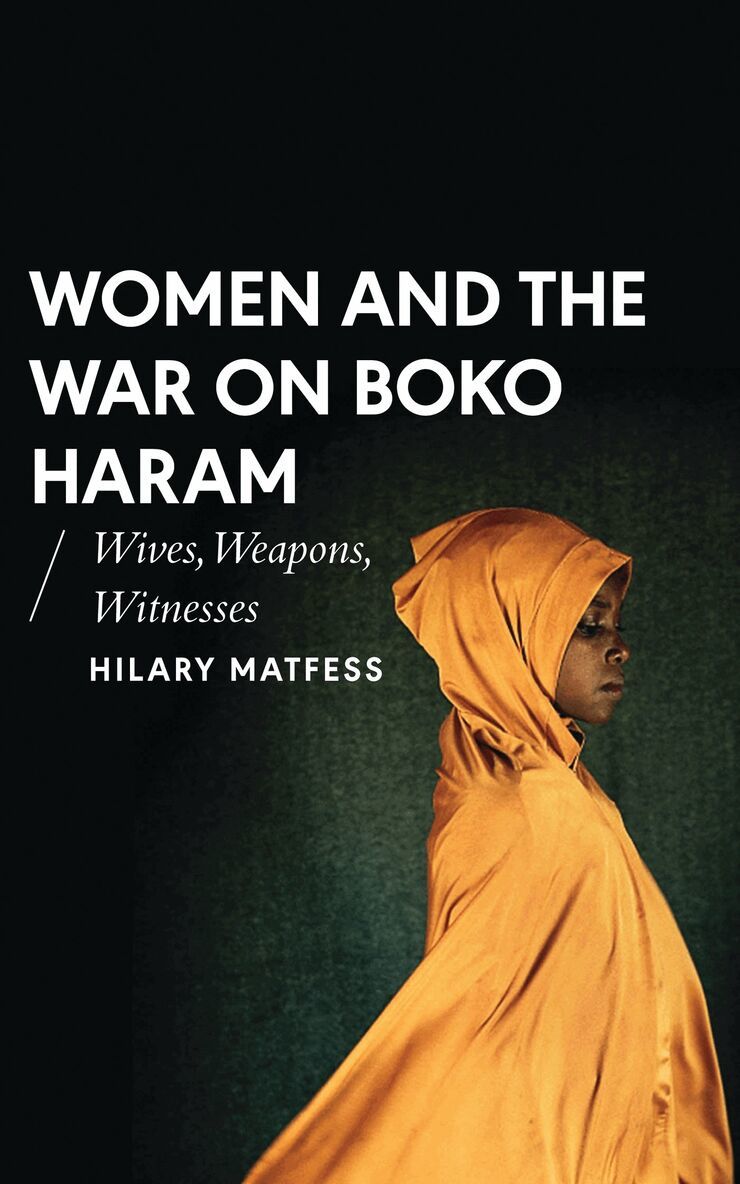
For over a decade, Boko Haram has waged a campaign of terror across northeastern Nigeria. In 2014, the kidnapping of 276 girls in Chibok shocked the world, giving rise to the #BringBackOurGirls movement. Yet Boko Haram’s campaign of violence against women and girls goes far beyond the Chibok abductions. From its inception, the group has systematically exploited women to advance its aims. Perhaps more disturbing still, some Nigerian women have chosen to become active supporters of the group, even sacrificing their lives as suicide bombers. These events cannot be understood without first acknowledging the long-running marginalisation of women in Nigerian society.Having conducted extensive fieldwork throughout the region, Hilary Matfess provides a vivid and thought-provoking account of Boko Haram’s impact on the lives of Nigerian women, as well as the wider social and political context that fuels the group’s violence.
1 209 kr
Skickas inom 10-15 vardagar
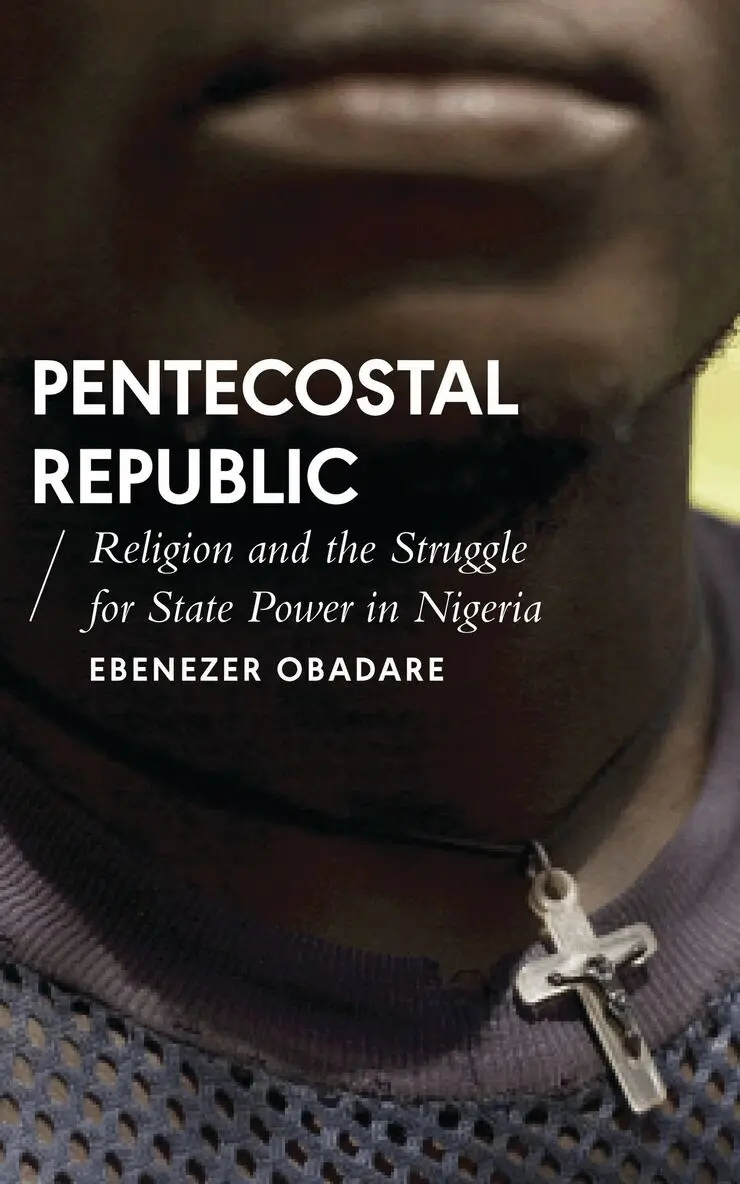
Throughout its history, Nigeria has been plagued by religious divisions. Tensions have only intensified since the restoration of democracy in 1999, with the divide between Christian south and Muslim north playing a central role in the country’s electoral politics, as well as manifesting itself in the religious warfare waged by Boko Haram.Through the lens of Christian–Muslim struggles for supremacy, Ebenezer Obadare charts the turbulent course of democracy in the Nigerian Fourth Republic, exploring the key role religion has played in ordering society. He argues the rise of Pentecostalism is a force focused on appropriating state power, transforming the dynamics of the country and acting to demobilize civil society, further providing a trigger for Muslim revivalism.Covering events of recent decades to the election of Buhari, Pentecostal Republic shows that religio-political contestations have become integral to Nigeria’s democratic process, and are fundamental to understanding its future.
203 kr
Skickas inom 7-10 vardagar
Amidst the turmoil of the Middle East, few have noticed the extent to which Israel has slowly but surely been building alliances on the African continent. Facing a growing international backlash, Israel has had to look beyond its traditional Western allies for support, and many African governments in turn have been happy to receive Israeli political support, security assistance, investments and technology. But what do these relationships mean for Africa, and for wider geopolitics?With an examination of Africa’s authoritarian development politics, the rise of Born-Again Christianity and of Israel’s thriving high-tech and arms industries, from the Israeli-Palestinian conflict to the migration of Africans to Israel and back again, Gidron provides a comprehensive analysis of the various forces and actors shaping Israel’s controversial relationships with countries on the continent. In particular, the book demonstrates that Israel’s interest in Africa forms part of a wider diplomatic effort, aimed at blocking Palestine’s pursuit of international recognition. Though the scale of Israeli-African engagements has been little appreciated until now, the book reveals how contemporary African and Middle Eastern politics and societies interact and impact each other in profound ways.