Stephen A. Marglin - Böcker
Visar alla böcker från författaren Stephen A. Marglin. Handla med fri frakt och snabb leverans.
11 produkter
11 produkter
1 810 kr
Skickas inom 5-8 vardagar
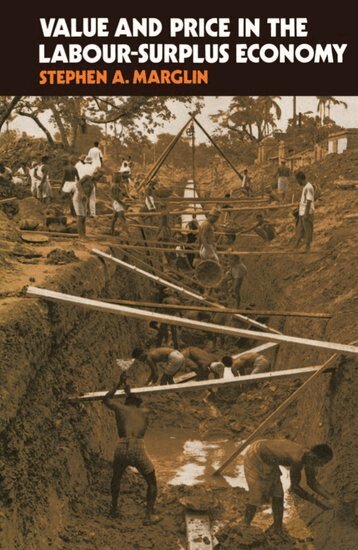
Value and Price in the Labour-Surplus Economy
2 062 kr
Skickas inom 5-8 vardagar
This book addresses the role of knowledge in economic development and in resistance to development. It questions the conventional view that development is the application of superior knowledge to the problems of poor countries, and that resistance to development comes out of ignorance and superstition. It argues instead that the basis of resistance is the fear that the material benefits of Western technologies can be enjoyed only at the price of giving up indigenous ways of knowing and valuing the world, an idea fostered as much by present-day elites, who have internalized colonial elites who ruled before them. A prerequisite to decoupling Western technologies from these political entailments is to understand the conflict between different ways of knowing and valuing the world.This book differs from previous critiques of development because it addresses neither the strategy nor the tactics of development, but the very conception itself. Its focus is on knowledge and power in the development process. The book argues that `modern' knowledge wins out in the conflict with `traditional' knowledge not because of its superior cognitive power, but because of its prestige, associated both with the economic and political ascendancy of the West over the past 500 years and with the cultural history of the West itself.
1 218 kr
Skickas inom 5-8 vardagar
For some twenty years after the Second World War, Keynesian economic policies in countries of the capitalist West were successful in generating rapid growth with high employment. This `golden age of capitalism' did not survive the economic traumas of the 1970s; nor has the more recent emphasis on monetarist policies and supply-side performance succeeded in regenerating comparable growth rates. Blending historical analysis with economic theory, this book seeks to understand the making and unmaking of this `golden age', questions the basis of much present policy-making, and suggests alternative directions for policy.
2 890 kr
Skickas inom 5-8 vardagar
Development failures, environmental degradation and social fragmentation can no longer be regarded as side effects of `externalities'. They are the toxic consequences of pretensions that the modern Western view of knowledge is a universal neutral view, applicable to all people at all times. The very word `development' and its cognates `underdevelopment' and `developing' confidently mark the `first' world's as the future of the `third'. This book argues that the linear evolutionary paradigm of development that comes out of modern Western view of knowledge is a contemporary form of colonialism.The authors - covering topics as diverse as the theory of knowledge underlying the work of John Maynard Keynes, what the renowned British geneticist J.B.S. Haldane was looking for when he migrated to India, the knowledge of Mexican and Indian peasants - propose a pluralistic vision and decolonization of knowledge: the replacement of one-way transfers of knowledge and technology by dialogue and mutual learning.
276 kr
Skickas inom 7-10 vardagar
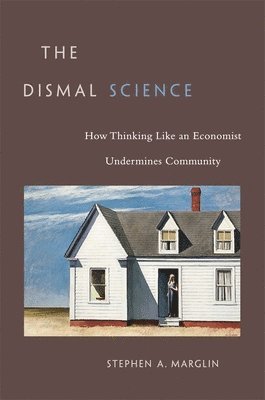
Economists celebrate the market as a device for regulating human interaction without acknowledging that their enthusiasm depends on a set of half-truths: that individuals are autonomous, self-interested, and rational calculators with unlimited wants and that the only community that matters is the nation-state. However, as Stephen A. Marglin argues, market relationships erode community. In the past, for example, when a farm family experienced a setback—say the barn burned down—neighbors pitched in. Now a farmer whose barn burns down turns, not to his neighbors, but to his insurance company. Insurance may be a more efficient way to organize resources than a community barn raising, but the deep social and human ties that are constitutive of community are weakened by the shift from reciprocity to market relations.Marglin dissects the ways in which the foundational assumptions of economics justify a world in which individuals are isolated from one another and social connections are impoverished as people define themselves in terms of how much they can afford to consume. Over the last four centuries, this economic ideology has become the dominant ideology in much of the world. Marglin presents an account of how this happened and an argument for righting the imbalance in our lives that this ideology has fostered.
235 kr
Skickas inom 7-10 vardagar
What determines the rate of growth, the distribution of income, and the structure of relative prices under capitalism? What, in short, makes capitalist economies tick? This watershed treatise analyzes the answers to these questions provided by three major theoretical traditions: neoclassical, neo-Marxian, and neo-Keynesian. Until now, the mutual criticism exchanged by partisans of the different traditions has focused disproportionately on the logical shortcomings of rival theories, or on such questions as whether or not input–output relationships can be described by a continuous-substitution production function.In this book, these are at best secondary issues. The real distinguishing features of the theories, for Stephen Marglin, are their characterization of labor markets and capital accumulation. For clarity, Marglin first sets out the essential features of each theory in the context of a common production model with a single good and a fixed-coefficient technology. He then formalizes the different theories as alternative ways of closing the model. In subsequent chapters he examines the effects of relaxing key simplifying assumptions, in particular the characterization of technology and the homogeneity of output and capital. And although his primary emphasis is theoretical, he does not ignore the problem of empirically testing the theories. Finally, he synthesizes the insights of the neo-Marxian and neo-Keynesian models into a single model that transcends the shortcomings of each taken separately.Marglin anticipates that partisans of the different traditions will agree on one point: each will allow that the book reveals the shortcomings of the other theories but will insist that it fails utterly to reflect the power and majesty of one’s own particular brand of truth. Growth, Distribution, and Prices will be controversial, but it will not be ignored.
821 kr
Skickas inom 7-10 vardagar
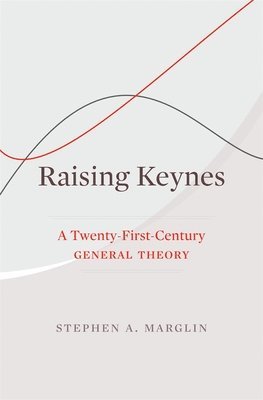
Back to the future: a heterodox economist rewrites Keynes’s General Theory of Employment, Interest, and Money to serve as the basis for a macroeconomics for the twenty-first century.John Maynard Keynes’s General Theory of Employment, Interest, and Money was the most influential economic idea of the twentieth century. But, argues Stephen Marglin, its radical implications were obscured by Keynes’s lack of the mathematical tools necessary to argue convincingly that the problem was the market itself, as distinct from myriad sources of friction around its margins.Marglin fills in the theoretical gaps, revealing the deeper meaning of the General Theory. Drawing on eight decades of discussion and debate since the General Theory was published, as well as on his own research, Marglin substantiates Keynes’s intuition that there is no mechanism within a capitalist economy that ensures full employment. Even if deregulating the economy could make it more like the textbook ideal of perfect competition, this would not address the problem that Keynes identified: the potential inadequacy of aggregate demand.Ordinary citizens have paid a steep price for the distortion of Keynes’s message. Fiscal policy has been relegated to emergencies like the Great Recession. Monetary policy has focused unduly on inflation. In both cases the underlying rationale is the false premise that in the long run at least the economy is self-regulating so that fiscal policy is unnecessary and inflation beyond a modest 2 percent serves no useful purpose.Fleshing out Keynes’s intuition that the problem is not the warts on the body of capitalism but capitalism itself, Raising Keynes provides the foundation for a twenty-first-century macroeconomics that can both respond to crises and guide long-run policy.
468 kr
Skickas inom 3-6 vardagar
311 kr
Skickas inom 3-6 vardagar
Public Investment Criteria (Routledge Revivals)
Benefit-Cost Analysis for Planned Economic Growth
Inbunden, Engelska, 2014
1 115 kr
Skickas inom 10-15 vardagar
This book, first published in 1967, explores some of the problems formulating investment criteria for the public sector of a mixed-enterprise, underdeveloped economy. The typical essay on public investment criteria explicitly or implicitly postulates a single goal for economic analysis – maximization of weighted average of national income over time – and relegates all other objectives of public policy to a limbo of "political" and "social" objectives not amenable to systematic, rational treatment. In contrast Professor Marglin assumes a multiplicity of objectives and explores ways and means of expressing contributions to different objectives in common terms. The book also investigates the relationship of specific investment criteria to the objectives of public policy. Benefits and costs are defined separately for each objective, as are so-called "secondary" benefits. This book is suited for students of economics.
Public Investment Criteria (Routledge Revivals)
Benefit-Cost Analysis for Planned Economic Growth
Häftad, Engelska, 2016
568 kr
Skickas inom 10-15 vardagar
This book, first published in 1967, explores some of the problems formulating investment criteria for the public sector of a mixed-enterprise, underdeveloped economy. The typical essay on public investment criteria explicitly or implicitly postulates a single goal for economic analysis – maximization of weighted average of national income over time – and relegates all other objectives of public policy to a limbo of "political" and "social" objectives not amenable to systematic, rational treatment. In contrast Professor Marglin assumes a multiplicity of objectives and explores ways and means of expressing contributions to different objectives in common terms. The book also investigates the relationship of specific investment criteria to the objectives of public policy. Benefits and costs are defined separately for each objective, as are so-called "secondary" benefits. This book is suited for students of economics.