Stephen B. Brush – författare
Visar alla böcker från författaren Stephen B. Brush. Handla med fri frakt och snabb leverans.
6 produkter
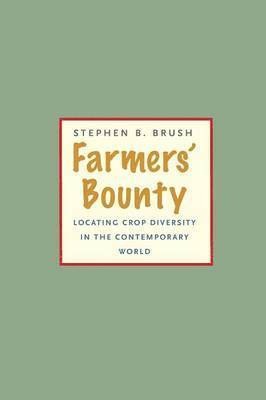
Farmers' Bounty
Locating Crop Diversity in the Contemporary World
Häftad, 2014
565 kr
Lägg i varukorg
Biological diversity is as crucial in agriculture as it is in nature, and it is equally important to the economic health of both industrial and nonindustrial societies. This book offers a sweeping assessment of crop diversity and the potential for its preservation. Stephen B. Brush develops a …
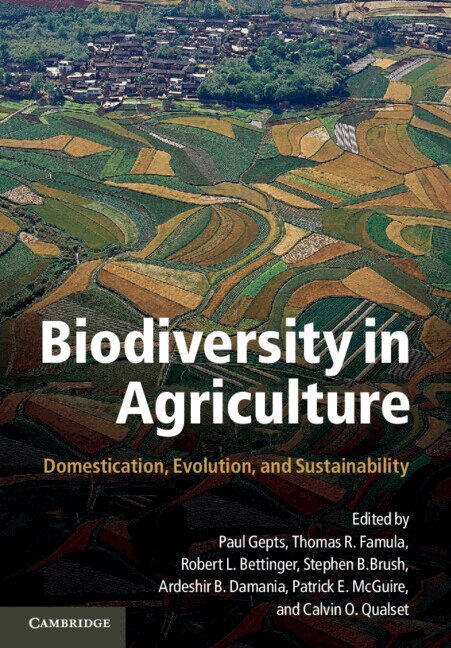
Biodiversity in Agriculture
Domestication, Evolution, and Sustainability
Av Paul Gepts, Thomas R. Famula m. fl.
Häftad, 2012
1279 kr
Lägg i varukorg
The introduction of plant and animal agriculture represents one of the most important milestones in human evolution. It contributed to the development of cities, alphabets, new technologies, and ultimately to civilizations, but it has also presented a threat to both human health and the …
Mountain, Field, and Family
The Economy and Human Ecology of an Andean Valley
Inbunden, 1977
1077 kr
Lägg i varukorg
This book is a volume in the Penn Press Anniversary Collection. To mark its 125th anniversary in 2015, the University of Pennsylvania Press rereleased more than 1,100 titles from Penn Press's distinguished backlist from 1899-1999 that had fallen out of print. Spanning an entire century, the …
Mountain, Field, and Family
The Economy and Human Ecology of an Andean Valley
E-bok, 2016
1308 kr
Lägg i varukorg
This book is a volume in the Penn Press Anniversary Collection. To mark its 125th anniversary in 2015, the University of Pennsylvania Press rereleased more than 1,100 titles from Penn Press''s distinguished backlist from 1899-1999 that had fallen out of print. Spanning an entire century, the …
Mountain, Field, and Family: The Economy and Human Ecology of an Andean Valley
Inbunden
933 kr
Lägg i varukorg
Mountain, Field, and Family: The Economy and Human Ecology of an Andean Valley
Häftad
464 kr
Lägg i varukorg