Stephen B. Dunnett - Böcker
Visar alla böcker från författaren Stephen B. Dunnett. Handla med fri frakt och snabb leverans.
10 produkter
10 produkter
1 921 kr
Skickas inom 7-10 vardagar
Now available in paperback.Many neurological conditions are caused by damage to neurons and glial cells. For most of these diseases there are at present no effective treatments to minimise the extent of neuronal and glial loss, and no effective way of replacing what has been lost. This picture is rapidly changing. Developments in basic neuroscience have produced various potential therapies that can protect neurons and glia followiing traumatic, anoxic, infectious and immunological damage. The old doctrine that axons cannot be made to regenerate, and dead neurons cannot be replaced is no longer tenable, and a wide variety of reconstructive techniques for the nervous system are under development. These and other basic science discoveries will progress into clinical practice, and lead to a revolution in neurology and neurosurgery. This book describes the various conditions that lead to damage to the nervous system, and the ways in which they may be ameliorated. It covers the burgeoning science of reconstruction of the nervous system, through neuronal, glial and stem cell transplantation, axon regeneration, remyelination, plasticity and pharmacological interventions. The clinical conditions to which these treatments will be applied and their assessment are described.This is the first book to cover this enormous and expanding field of neuroscience and neurology. It will be useful to students and scientists working in the field of nervous system damage and reconstruction, and also to clinicians who wish to look forward to the developments which will shape the future of their practice.
1 625 kr
Skickas inom 10-15 vardagar
Leading experimental neurobiologists and neurosurgeons provide all the technical and practical information required to perform neural transplantation in experimental and neurological research, including a detailed consideration of the issues involved in designing and customizing such methods for specific research purposes. The authors outline the different sources of donor tissues and other materials for implantation, review the different techniques for tissue implantation into the brains of experimental animals of different species, and detail the major factors for promoting graft survival, integration, and function. All the techniques are presented in a proven format, along with alternative methods for special experimental needs. Neural Transplantation Methods constitutes the single most comprehensive sourcebook of practical information on the effective use of transplantation techniques in experimental neurobiology. Its powerful and flexible techniques will significantly aid all those now working to develop today's powerful new treatments of brain and spinal cord diseases and injuries.
1 597 kr
Skickas inom 10-15 vardagar
Originally published in 1999, this book begins with a synopsis of experimental work underlying degeneration and recovery in the nervous system, which is then discussed in the context of strategies to repair the central nervous system (CNS) and peripheral nervous system (PNS). The major part of the book is given over to the approach involving the use of transplanted tissues to replace and restore disrupted neural networks. This experimental work has formed the basis for the emerging clinical trials employing neural grafts for diseases such as Parkinson's and Huntington's, which are discussed in detail. The book then goes on to discuss newer cellular strategies involving the manipulation of neural cells both in culture and genetically, an approach that may ultimately be employed in the clinical situation.Neural Repair, Transplantation and Rehabilitation is unique in bridging the gap from experimental studies to clinical trials, whilst also providing the non-specialist with a background in rehabilitation strategies as well as basic neuroscience. It is recommended for all those involved in the management of patients with degenerative and traumatic injuries to the nervous system. Today it can be read in its historical context.
1 205 kr
Skickas inom 10-15 vardagar
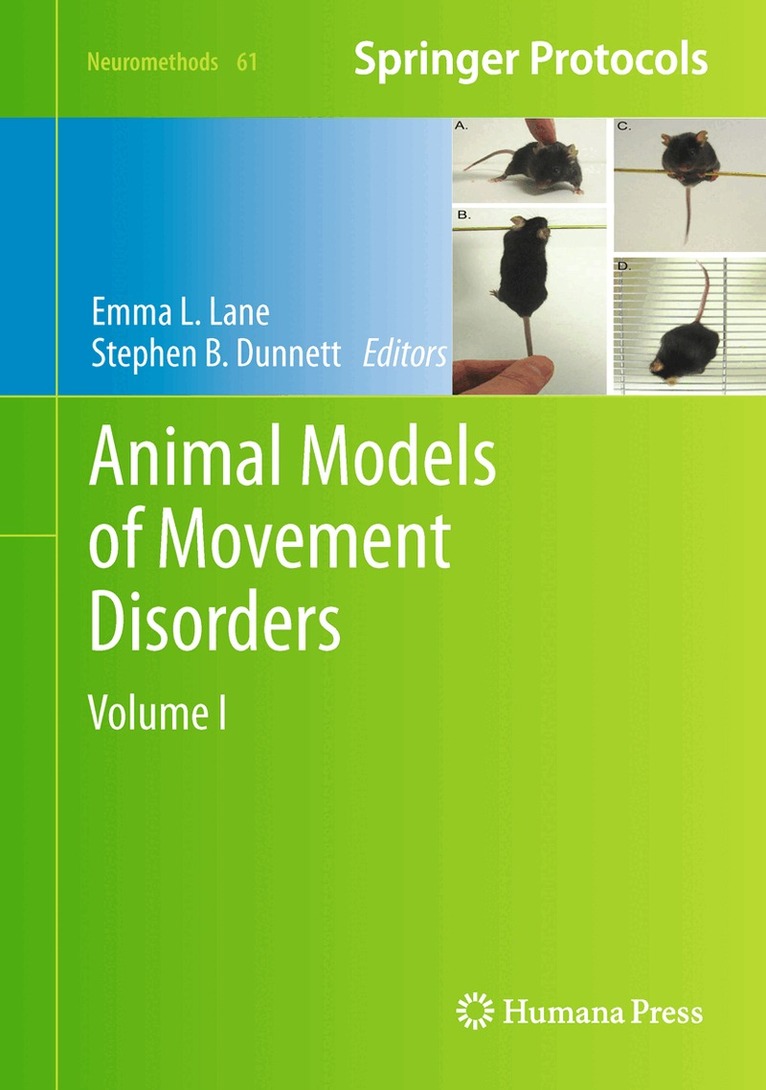
Movement is the way that animals interact with their environment and is under the organization and complex control of the brain and spinal cord. Multiple central nervous systems, including cortex, basal ganglia, cerebellum, and brainstem, interact to provide precise motor control and integration. Damage or disease within these systems cause profound motor disturbances in man, which can be effectively modeled in animals to develop a better understanding and treatment of the human condition. Animal Models of Movement Disorders introduces a variety of methods and techniques used to model and assess motor function in experimental animals from lower orders, such as drosophila and c. elegans, through vertebrate species including fish, to mammals, such as rodents and non-human primates. The most advanced contemporary models in each system are presented at multiple levels of analysis from molecular and genetic modeling, lesions, anatomy, neurochemistry, to imaging and behavior. Volume I contains general methods of movement disorder assessment as well as an extensive section on dopamine systems. Comprehensive and meticulous, Animal Models of Movement Disorders serves as a valuable reference for those studying motor disorders by covering methodologies in detail and providing the information necessary to consider both the appropriate models and assessment tools that can most informatively answer the key experimental issues in the field.
1 610 kr
Skickas inom 5-8 vardagar
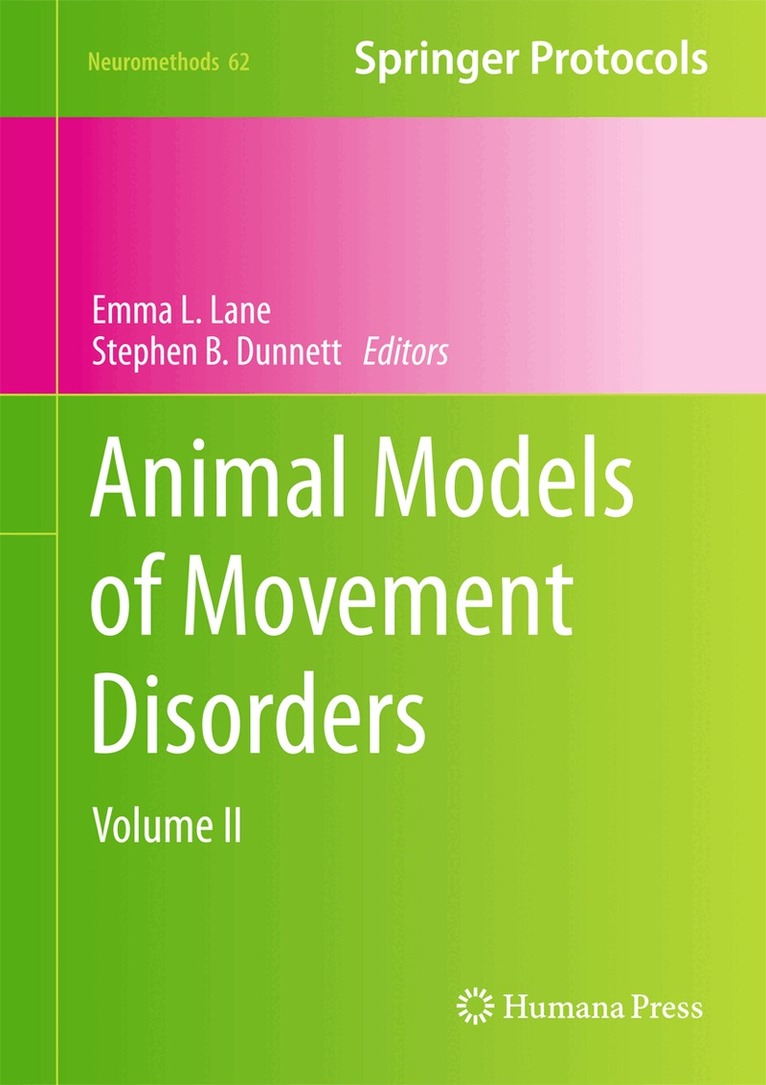
Movement is the way that animals interact with their environment and is under the organization and complex control of the brain and spinal cord. Multiple central nervous systems, including cortex, basal ganglia, cerebellum, and brainstem, interact to provide precise motor control and integration. Damage or disease within these systems cause profound motor disturbances in man, which can be effectively modeled in animals to develop a better understanding and treatment of the human condition. Animal Models of Movement Disorders introduces a variety of methods and techniques used to model and assess motor function in experimental animals from lower orders, such as drosophila and c. elegans, through vertebrate species including fish, to mammals, such as rodents and non-human primates. The most advanced contemporary models in each system are presented at multiple levels of analysis from molecular and genetic modeling, lesions, anatomy, neurochemistry, to imaging and behavior. Volume II of this detailed collection contains sections on the basal ganglia, neo- and allo-cortical systems, cerebellar and brain stem systems, as well as spinal cord systems. Comprehensive and meticulous, Animal Models of Movement Disorders serves as a valuable reference for those studying motor disorders by covering methodologies in detail and providing the information necessary to consider both the appropriate models and assessment tools that can most informatively answer the key experimental issues in the field.
3 243 kr
Skickas inom 10-15 vardagar
This detailed book provides a laboratory manual and guidebook for the selection, implementation, and interpretation of a wide range of techniques in contemporary use in leading laboratories engaged in Huntington’s disease (HD) research worldwide.
2 369 kr
Skickas inom 10-15 vardagar
This detailed book provides a laboratory manual and guidebook for the selection, implementation, and interpretation of a wide range of techniques in contemporary use in leading laboratories engaged in Huntington’s disease (HD) research worldwide.
1 578 kr
Skickas inom 10-15 vardagar
Leading experimental neurobiologists and neurosurgeons provide all the technical and practical information required to perform neural transplantation in experimental and neurological research, including a detailed consideration of the issues involved in designing and customizing such methods for specific research purposes. The authors outline the different sources of donor tissues and other materials for implantation, review the different techniques for tissue implantation into the brains of experimental animals of different species, and detail the major factors for promoting graft survival, integration, and function. All the techniques are presented in a proven format, along with alternative methods for special experimental needs. Neural Transplantation Methods constitutes the single most comprehensive sourcebook of practical information on the effective use of transplantation techniques in experimental neurobiology. Its powerful and flexible techniques will significantly aid all those now working to develop today's powerful new treatments of brain and spinal cord diseases and injuries.
1 625 kr
Skickas inom 10-15 vardagar
Movement is the way that animals interact with their environment and is under the organization and complex control of the brain and spinal cord. Multiple central nervous systems, including cortex, basal ganglia, cerebellum, and brainstem, interact to provide precise motor control and integration. Damage or disease within these systems cause profound motor disturbances in man, which can be effectively modeled in animals to develop a better understanding and treatment of the human condition. Animal Models of Movement Disorders introduces a variety of methods and techniques used to model and assess motor function in experimental animals from lower orders, such as drosophila and c. elegans, through vertebrate species including fish, to mammals, such as rodents and non-human primates. The most advanced contemporary models in each system are presented at multiple levels of analysis from molecular and genetic modeling, lesions, anatomy, neurochemistry, to imaging and behavior. Volume I contains general methods of movement disorder assessment as well as an extensive section on dopamine systems. Comprehensive and meticulous, Animal Models of Movement Disorders serves as a valuable reference for those studying motor disorders by covering methodologies in detail and providing the information necessary to consider both the appropriate models and assessment tools that can most informatively answer the key experimental issues in the field.
1 625 kr
Skickas inom 10-15 vardagar
Movement is the way that animals interact with their environment and is under the organization and complex control of the brain and spinal cord. Multiple central nervous systems, including cortex, basal ganglia, cerebellum, and brainstem, interact to provide precise motor control and integration. Damage or disease within these systems cause profound motor disturbances in man, which can be effectively modeled in animals to develop a better understanding and treatment of the human condition. Animal Models of Movement Disorders introduces a variety of methods and techniques used to model and assess motor function in experimental animals from lower orders, such as drosophila and c. elegans, through vertebrate species including fish, to mammals, such as rodents and non-human primates. The most advanced contemporary models in each system are presented at multiple levels of analysis from molecular and genetic modeling, lesions, anatomy, neurochemistry, to imaging and behavior. Volume II of this detailed collection contains sections on the basal ganglia, neo- and allo-cortical systems, cerebellar and brain stem systems, as well as spinal cord systems. Comprehensive and meticulous, Animal Models of Movement Disorders serves as a valuable reference for those studying motor disorders by covering methodologies in detail and providing the information necessary to consider both the appropriate models and assessment tools that can most informatively answer the key experimental issues in the field.