Stephen C Hirtle – författare
Visar alla böcker från författaren Stephen C Hirtle. Handla med fri frakt och snabb leverans.
3 produkter
3 produkter
Häftad, Engelska, 2019
595 kr
Skickas inom 10-15 vardagar
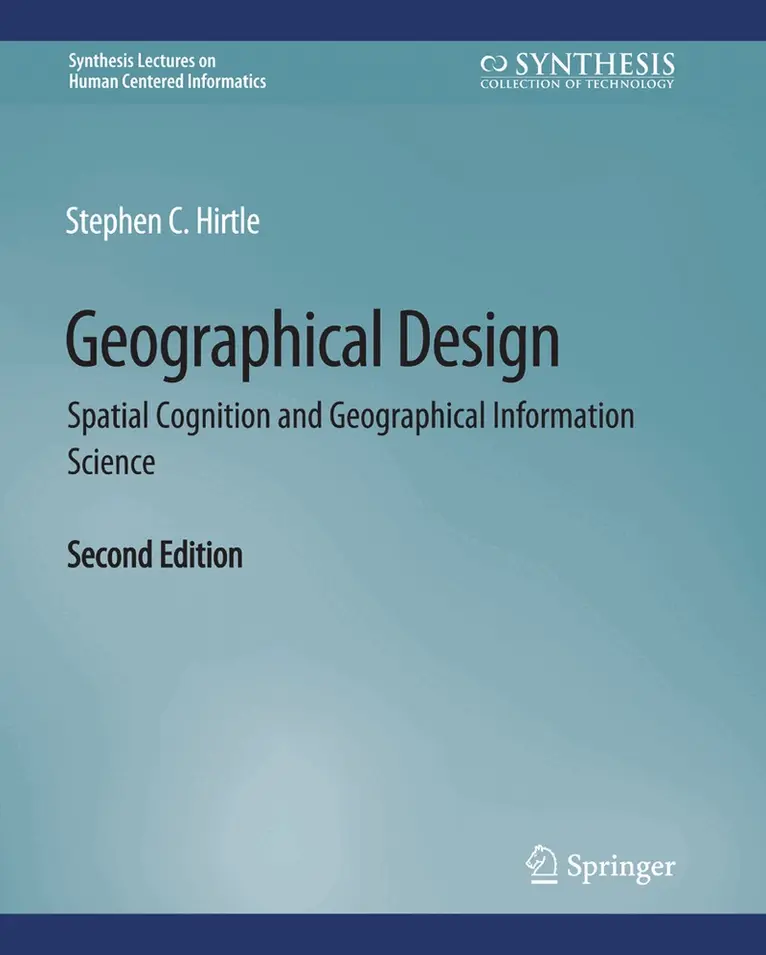
With spatial technologies ranging from mapping software to the use of location-based services, spatial knowledge is often acquired and communicated through geographic information technologies. This book describes the interplay between spatial cognition research and use of spatial interfaces. It begins by reviewing what is known about how humans process spatial concepts and then moves on to discuss how interfaces can be improved to take advantage of those capabilities by disambiguating cognitive aspects, conceptual aspects, computational aspects, and communications aspects. Special attention is given to a variety of innovative geographical platforms that provide users with an intuitive understanding and support the further acquisition of spatial knowledge. Alternatives to shortest-path algorithms to explore more scenic routes, as well as individual user differences that can emerge from previous experiences with virtual spaces, are also discussed. The book concludes with a discussion ofthe number of outstanding issues, including the changing nature of maps as the primary spatial interface, concerns about privacy for spatial information, and looks at the future of user-centered spatial information systems.
E-bok
PDF, Engelska, 2022734 kr
Läs direkt efter köp
With spatial technologies ranging from mapping software to the use of location-based services, spatial knowledge is often acquired and communicated through geographic information technologies. This book describes the interplay between spatial cognition research and use of spatial interfaces. It begins by reviewing what is known about how humans process spatial concepts and then moves on to discuss how interfaces can be improved to take advantage of those capabilities by disambiguating cognitive aspects, conceptual aspects, computational aspects, and communications aspects. Special attention is given to a variety of innovative geographical platforms that provide users with an intuitive understanding and support the further acquisition of spatial knowledge. Alternatives to shortest-path algorithms to explore more scenic routes, as well as individual user differences that can emerge from previous experiences with virtual spaces, are also discussed. The book concludes with a discussion ofthe number of outstanding issues, including the changing nature of maps as the primary spatial interface, concerns about privacy for spatial information, and looks at the future of user-centered spatial information systems.
Häftad, Engelska, 1997
1 084 kr
Skickas inom 10-15 vardagar
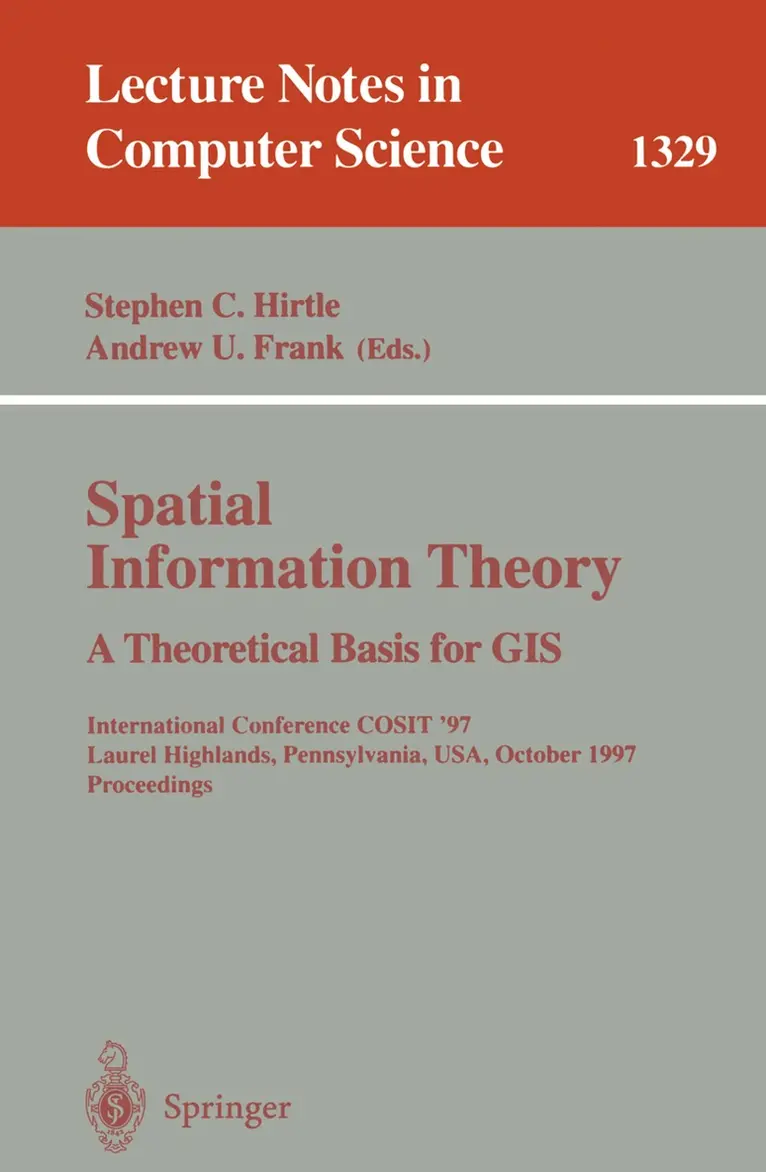
This book constitutes the refereed proceedings of the 1997 International Conference on Spatial Information Theory, COSIT'97, held in Laurel Highlands, Pennsylvania, USA, in October 1997. The 31 revised full papers presented were carefully selected from a total of 66 submissions. Also included are seven posters. The volume is divided into sections on representations of change, structuring of space, boundaries and gradations, topological models of space, formal models of space, cognitive aspects of spatial acquisition, novel use of spatial information, wayfinding and map interpretation, representations of spatial concepts, new approaches to spatial information.