Stephen G. Oliver - Böcker
Visar alla böcker från författaren Stephen G. Oliver. Handla med fri frakt och snabb leverans.
8 produkter
8 produkter
2 101 kr
Skickas inom 10-15 vardagar
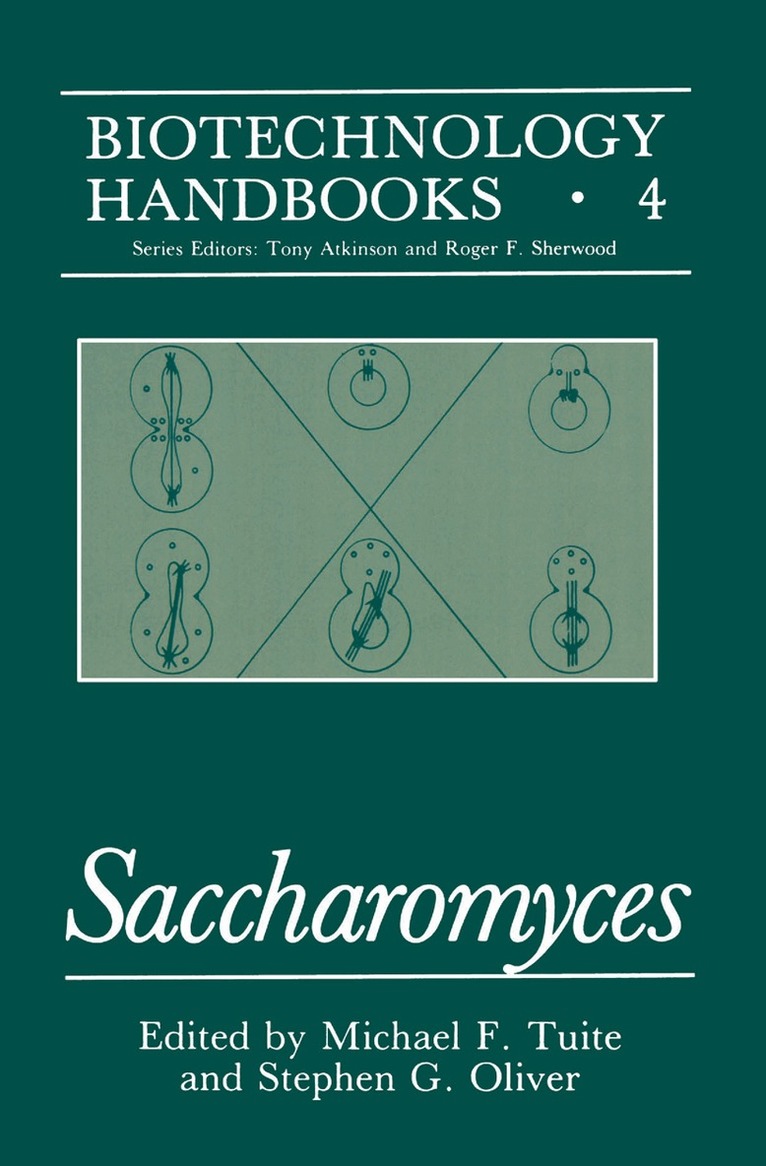
In this volume we aim to present an easy-to-read account of the genus Saccharomyces that we hope will be of value to all students and researchers wishing to exploit this important genus, be it for academic or commer cial purposes. Individual chapters have been commissioned to cover specific aspects of the biology of Saccharomyces species: growth, genetics, and metabolism, with the emphasis on methodology. Basic principles are discussed without an over-detailed, step-by-step breakdown of specific techniques, and lengthy discussions of standard molecular, biological, and biochemical techniques (e. g. , polyacrylamide gel electrophoresis, protein purification, DNA sequencing) have been avoided. We hope the volume will provide a quick reference to the current status of a wide range of Saccharomyces-specific methodologies without focusing ex clusively on recent developments in molecular techniques which can be found in the ever increasing numbers of "cloning manuals. " By necessity, much of what is described in this volume concentrates on one particular species of Saccharomyces, namely Saccharomyces cerevisiae. This is not just a reflection of the authors' interests, but indicates the extent to which this simple eukaryote has been studied by biologists from all walks of life, for all sorts of reasons. If this volume can provide a broader knowledge base to the experienced yeast researcher, or ease the path of someone just starting work with Saccharomyces, then we will have achieved our aim.
2 164 kr
Skickas inom 10-15 vardagar
In this volume we aim to present an easy-to-read account of the genus Saccharomyces that we hope will be of value to all students and researchers wishing to exploit this important genus, be it for academic or commer cial purposes. Individual chapters have been commissioned to cover specific aspects of the biology of Saccharomyces species: growth, genetics, and metabolism, with the emphasis on methodology. Basic principles are discussed without an over-detailed, step-by-step breakdown of specific techniques, and lengthy discussions of standard molecular, biological, and biochemical techniques (e. g. , polyacrylamide gel electrophoresis, protein purification, DNA sequencing) have been avoided. We hope the volume will provide a quick reference to the current status of a wide range of Saccharomyces-specific methodologies without focusing ex clusively on recent developments in molecular techniques which can be found in the ever increasing numbers of "cloning manuals. " By necessity, much of what is described in this volume concentrates on one particular species of Saccharomyces, namely Saccharomyces cerevisiae. This is not just a reflection of the authors' interests, but indicates the extent to which this simple eukaryote has been studied by biologists from all walks of life, for all sorts of reasons. If this volume can provide a broader knowledge base to the experienced yeast researcher, or ease the path of someone just starting work with Saccharomyces, then we will have achieved our aim.
2 311 kr
Skickas inom 10-15 vardagar
Alzheimer’s disease (AD) and many other neurodegenerative disorders are multifactorial in nature, involving a combination of genomic, epigenomic, network dynamic and environmental factors. A proper investigation requires new integrative Systems Biology approaches, at both the experimental and computational level. The interplay of disease mechanisms and homeostatic networks will underlie the time of onset and rate of progression of the disease.This book addresses such an integrated approach to AD. It aims to present Systems Biology, including both experimental and computational approaches, as a new strategy for the study of AD and other multifactorial diseases, with the hope that the results will translate into more effective diagnosis and treatment, as well as improved public health policies.Written for the highly successful Methods in Molecular Biology series, practical and cutting-edge, Systems Biology of Alzheimer’s Disease is intended for post-graduate students, post-doctoral researchers and experts in different fields with an interest in comprehensive Systems Biology strategies applicable to AD and other complex multifactorial diseases (including other neurodegenerative diseases and cancers). This book aims to complement other excellent volumes and monographs on AD that cover fundamental, physiological or medical aspects of the disease.
1 630 kr
Skickas inom 10-15 vardagar
Alzheimer’s disease (AD) and many other neurodegenerative disorders are multifactorial in nature, involving a combination of genomic, epigenomic, network dynamic and environmental factors. A proper investigation requires new integrative Systems Biology approaches, at both the experimental and computational level. The interplay of disease mechanisms and homeostatic networks will underlie the time of onset and rate of progression of the disease.This book addresses such an integrated approach to AD. It aims to present Systems Biology, including both experimental and computational approaches, as a new strategy for the study of AD and other multifactorial diseases, with the hope that the results will translate into more effective diagnosis and treatment, as well as improved public health policies.Written for the highly successful Methods in Molecular Biology series, practical and cutting-edge, Systems Biology of Alzheimer’s Disease is intended for post-graduate students, post-doctoral researchers and experts in different fields with an interest in comprehensive Systems Biology strategies applicable to AD and other complex multifactorial diseases (including other neurodegenerative diseases and cancers). This book aims to complement other excellent volumes and monographs on AD that cover fundamental, physiological or medical aspects of the disease.
1 170 kr
Skickas inom 10-15 vardagar
Systems Biology aims at deciphering the genotype-phenotype relationships at the levels of genes, transcripts (RNAs), peptides, proteins, metabolites, and environmental factors participating in complex cellular networks in order to reveal the mechanisms and principles governing the behavior of complex biological systems. Yeast Systems Biology: Methods and Protocols presents an up-to-date view of the optimal characteristics of the yeast Saccharomyces cerevisiae as a model eukaryote, perspective on the latest experimental and computational techniques for systems biology studies, most of which were first designed for and validated in yeast, and selected examples of yeast systems biology studies and their applications in biotechnology and medicine. These experiments under controlled conditions can uncover the complexity and interplay of biological networks with their dynamics, basic principles of internal organization, and balanced orchestrated functions between organelles in direct interaction with the environment as well as the characterization of short and long-term effects of perturbations and dysregulation of networks that may illuminate the origin of complex human diseases. Written for the highly successful Methods in Molecular Biology™ series, this volume contains the kind of detailed description and implementation advice that is crucial for getting optimal results. Practical and cutting-edge, Yeast Systems Biology: Methods and Protocols serves researchers interested in comprehensive systems biology strategies in well-defined model systems with specific objectives as well as a better knowledge of the latest post-genomic strategies at all ‘omic levels and computational approaches towards analysis, integration, and modeling of biological systems, from single-celled organisms to higher eukaryotes.
2 311 kr
Skickas inom 10-15 vardagar
This second edition volume expands on the previous edition with a look at the latest advances in techniques to study yeast and its core set of interactions, modules, architectures, and network dynamics that are common in all eukaryotes. The chapters in this book are organized into Four Parts: Part One provides readers with an update on the development of novel experimental and computational approaches to yeast systems biology; Part Two explores high-throughput methods used to study yeast epigenome, transcriptome, proteome, and metabolome; Part Three talks about computational systems biology, and focuses on data management, dynamic modeling, constraint-based models of metabolic networks, and multi-level ‘omics data; while Part Four looks at experimental platforms that utilize yeast to model systemic human diseases such as Alzheimer’s and Parkinson’s diseases. Written in the highly successful Methods in Molecular Biology series format, chapters include introductions to their respective topics; lists of the necessary materials and reagents; step-by-step, readily reproducible laboratory protocols; and tips on troubleshooting and avoiding known pitfalls.Cutting-edge and comprehensive, Yeast System Biology: Methods and Protocols, Second Edition is a valuable tool for graduate students, post-doctoral researchers, and experts who are interested in learning about the latest developments in the study of yeast.
1 630 kr
Skickas inom 10-15 vardagar
This second edition volume expands on the previous edition with a look at the latest advances in techniques to study yeast and its core set of interactions, modules, architectures, and network dynamics that are common in all eukaryotes.
1 578 kr
Skickas inom 10-15 vardagar
Systems Biology aims at deciphering the genotype-phenotype relationships at the levels of genes, transcripts (RNAs), peptides, proteins, metabolites, and environmental factors participating in complex cellular networks in order to reveal the mechanisms and principles governing the behavior of complex biological systems. Yeast Systems Biology: Methods and Protocols presents an up-to-date view of the optimal characteristics of the yeast Saccharomyces cerevisiae as a model eukaryote, perspective on the latest experimental and computational techniques for systems biology studies, most of which were first designed for and validated in yeast, and selected examples of yeast systems biology studies and their applications in biotechnology and medicine. These experiments under controlled conditions can uncover the complexity and interplay of biological networks with their dynamics, basic principles of internal organization, and balanced orchestrated functions between organelles in direct interaction with the environment as well as the characterization of short and long-term effects of perturbations and dysregulation of networks that may illuminate the origin of complex human diseases. Written for the highly successful Methods in Molecular Biology™ series, this volume contains the kind of detailed description and implementation advice that is crucial for getting optimal results. Practical and cutting-edge, Yeast Systems Biology: Methods and Protocols serves researchers interested in comprehensive systems biology strategies in well-defined model systems with specific objectives as well as a better knowledge of the latest post-genomic strategies at all ‘omic levels and computational approaches towards analysis, integration, and modeling of biological systems, from single-celled organisms to higher eukaryotes.