Stephen H. Watson - Böcker
Visar alla böcker från författaren Stephen H. Watson. Handla med fri frakt och snabb leverans.
9 produkter
9 produkter
248 kr
Skickas inom 10-15 vardagar
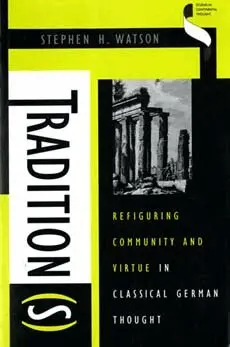
Tradition(s)Refiguring Community and Virtue in Classical German ThoughtExamining the work of Foucault, Kant, Heidegger, Hobbes, and Hegel, Stephen H. Watson tackles the questions: What is the origin of the concept of tradition? How does the notion of tradition affect our understanding of the present and the past? What exactly is tradition?Studies in Continental Thought—John Sallis, general editor1998. 336 pages, 6 1/8 x 9 1/4cloth0-253-33328-8$39.95 L / £30.50paper0-253-21152-2$18.95 s / £14.50
402 kr
Tillfälligt slut
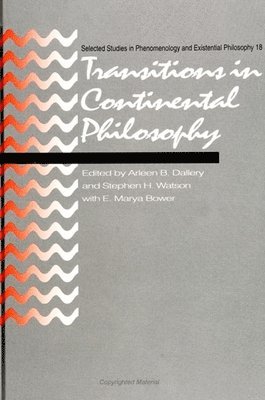
This book challenges and renews the discussions that have historically characterized the tradition of continental thought in the areas of ethics, feminism, aesthetics, and political theory. The classical origins of this tradition—phenomenology, existentialism, and hermeneutics—emerged according to models that were foundational and systematic in character. The book shows that continental philosophy is now woven between counter-discourses and concrete interventions, complicated in the relationship between theory and practice; that is, in the transition between concept and determination, idea and intuition, the ontic and the ontological, experience and judgment.
382 kr
Tillfälligt slut
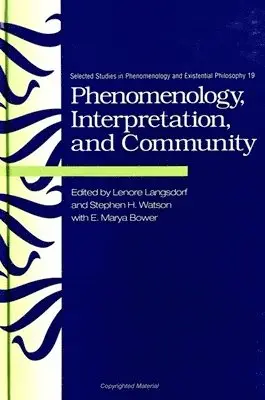
This collection examines the relationship between phenomenology, interpretation, and community, considering the issues from several viewpoints including German idealism, the discourses of the Frankfurt School, and post-structuralist thought.This book re-examines the relationship between phenomenology, interpretation, and the problem of community, a topic that has been at the center of recent debates in Continental thought. From the outset, phenomenology was intimately connected with the issues of interpretation and community, both by theoretical paradigm and substance. Indeed, Husserl sought to distinguish his own foundational investigations from others that stressed the interpretive and historical character of the rational or that contested such foundational enterprises out of a concern for the critique of ideology and the "hermeneutics of suspicion." He argued equally as stringently for the primacy of such theoretical issues over other studies, such as ethics, political theory, or aesthetics, that shaped the itinerary of philosophical inquiry. In a similar manner, the essays encountered here continue the debates that accompany the complex phenomenologies of post-Kantian Continental thought concerning the rational status of the self and its ambiguous relationship with the community-and thus, in turn, the ambiguous relationship between the "rational community," civil society, and the contested dynamics of its conceptualization and adjudication. Because it considers these issues from several viewpoints, including the legacy of German idealism and the discourses emerging from the Frankfurt School and contemporary post-structuralist thought, this volume serves both as an introduction to Continental philosophy on these issues as well as a guide to the status of recent debates.
402 kr
Tillfälligt slut
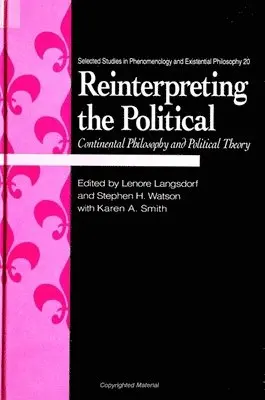
Rereads classical figures in continental thought, takes up current topics in the legacy of political theory, and analyzes and evaluates Foucault's work as a prime manifestation of the complicated modern interface between truth and power, institution and liberation.The task of reinterpretation arises from recognition, within continental philosophy, of a certain abandonment of political philosophy for historicism or a scientistic search for laws. Contemporary debate over the death of the possibility of the subject now focuses on the links among knowledge, virtue and power. As a result, the ancient problem of the institution of the form of the political becomes linked with struggles intrinsic to the task of representation and recognition. The problem now becomes one of understanding the meaning of judgment, autonomy, and consensus in the midst of the fragmentation of the hierarchies that structure the political, and have structured the thinking (from Plato to Hegel) that we identify as metaphysical. Such fragmentation doubtless is the ancient inheritance of democracy, but now without the metaphysical assurance of a transcendental authority, whether resident in nature, community, or the monarch as embodiment of the sacred. Perhaps it is in Foucault's work, more than anywhere else, that the investigation of the complicated modern interface between truth and power, and institution and liberation, occurs.In reinterpreting the political, recognition of ideological forces in the legacy of modernity in its theoretical and institutional forms cannot be escaped-particularly in recognizing the underdetermined character of the subject matter. This collection represents rich examples of such reinterpretations. It begins with rereading the classical figures in continental thought and then takes up current topics in the legacy of political theory. The final section provides analyses and evaluations of Foucault's work.
722 kr
Skickas inom 10-15 vardagar
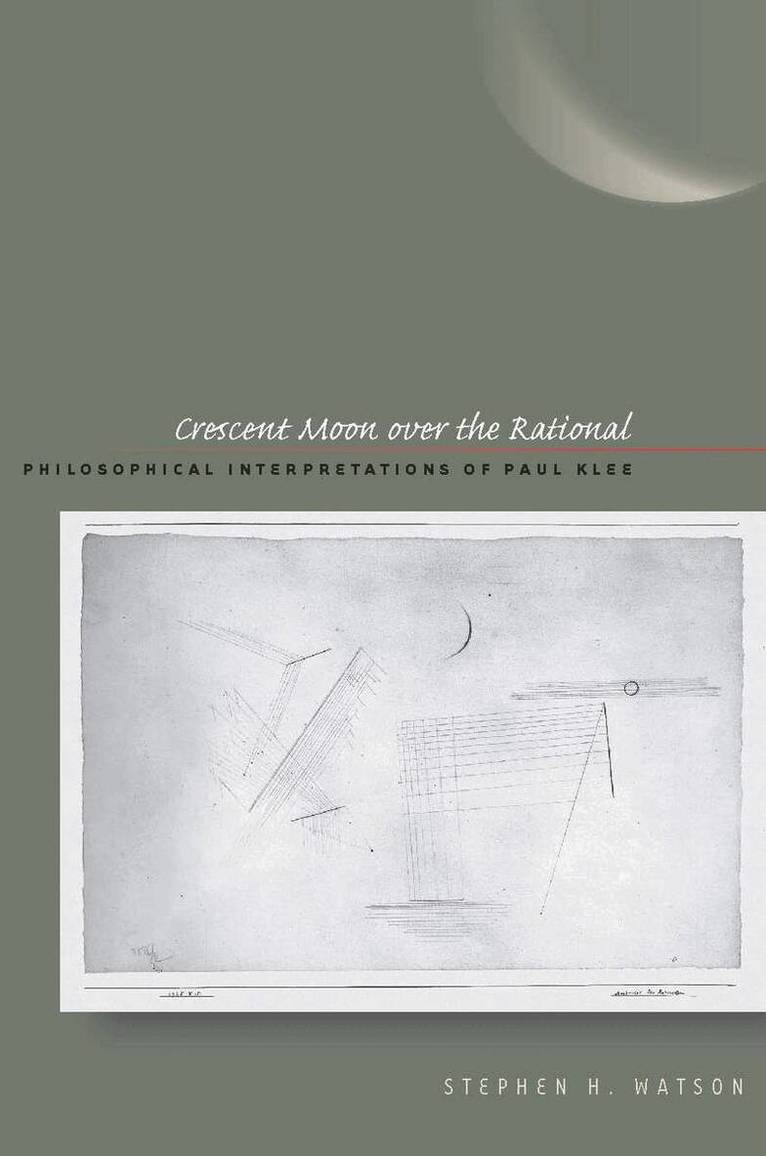
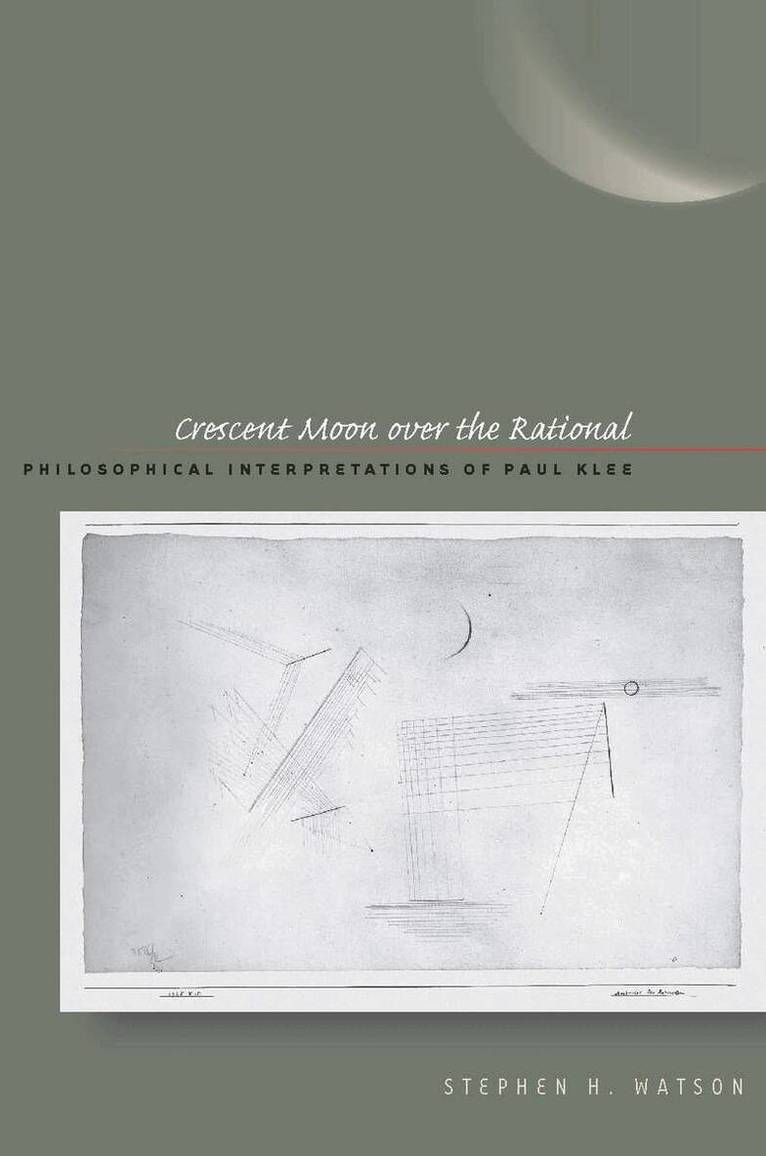
Why, and in what manner, did artist Paul Klee have such a significant impact on twentieth-century thinkers? His art and his writing inspired leading philosophers to produce key texts in twentieth-century aesthetics, texts that influenced subsequent art history and criticism. Heidegger, Adorno, Benjamin, Merleau-Ponty, Lyotard, Sartre, Foucault, Blanchot, Derrida, and Marion are among the philosophers who have engaged with Klee's art and writings. Their views are often thought to be distant from each other, but Watson puts them in conversation. His point is not to vindicate any final interpretation of Klee but to allow his interpreters' different accounts to interact, to shed light on their and on Klee's work, and, in turn, to delineate both a history and a theoretical problematic in their midst. Crescent Moon over the Rational reveals an evolving theoretical constellation of interpretations and their questions (theoretical, artistic, and political) that address and continually renew Klee's rich legacies.
528 kr
Skickas inom 10-15 vardagar
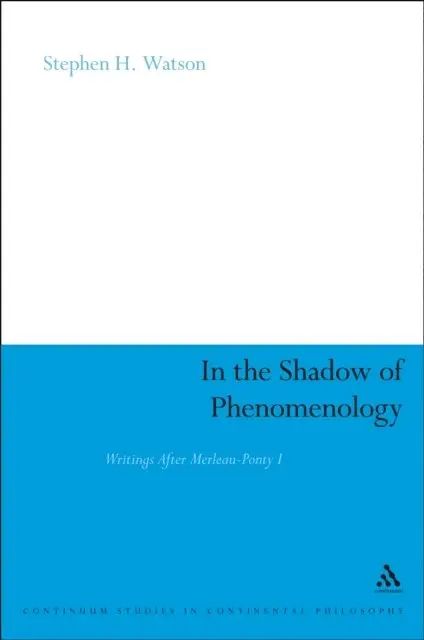
Maurice Merleau-Ponty is widely known for his emphasis on embodied perceptual experience. This emphasis initially relied heavily on the positive results of Gestalt psychology in addressing issues in philosophical psychology and philosophy of mind from a phenomenological standpoint. Eventually he transformed this account in light of his investigations in linguistics, aesthetics, and the philosophy of history and institutions. Far less work has been done in addressing his evolving conception of philosophy and how this account influenced more general philosophical issues in epistemology, accounts of rationality, or its status as theoretical discourse. Merleau-Ponty's own contributions to these issues and, in particular, the theoretical status of the phenomenological account that resulted, have provoked varying responses. On the one hand, some commentators have understood his work to be a regional application of Husserl's foundational account of phenomenology. On the other hand, some commentators have questioned whether, in the final analysis, Merleau-Ponty was a phenomenologist at all. In In the Shadow of Phenomenology, Stephen H.Watson offers an in depth analysis of these responses and the complications and development of Merleau-Ponty's position.
528 kr
Skickas inom 10-15 vardagar
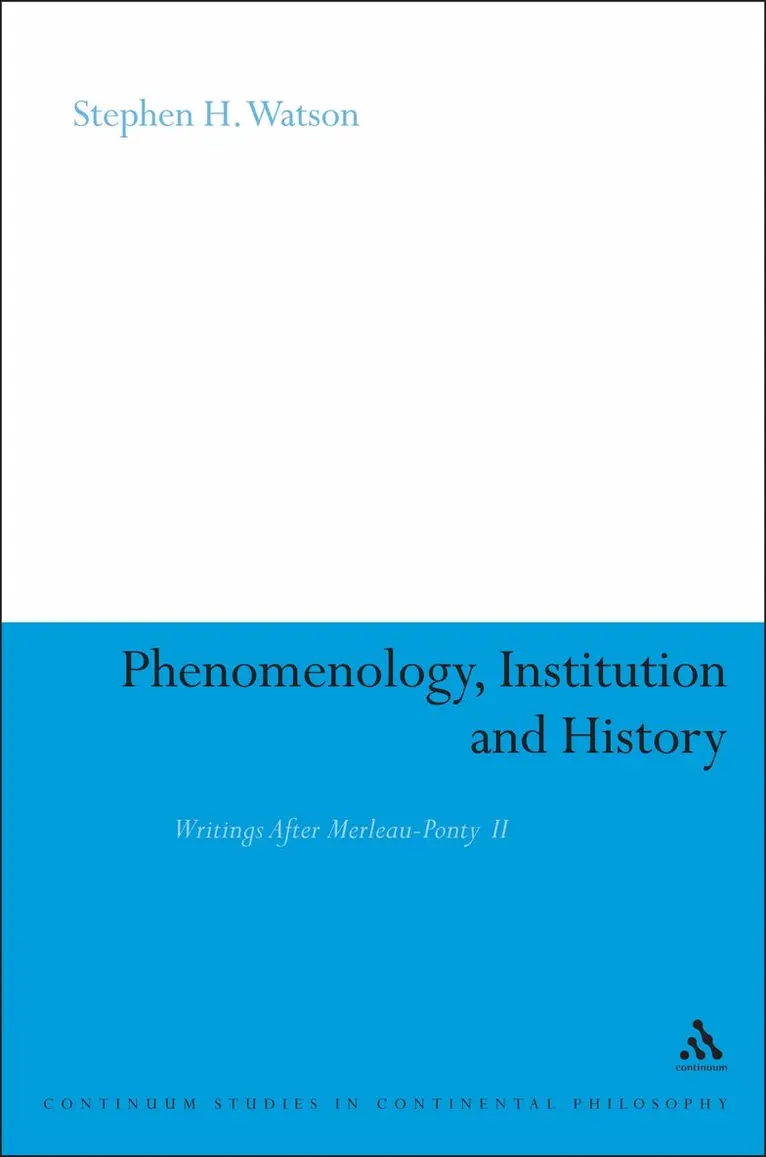
Maurice Merleau-Ponty is widely known for his emphasis on embodied perceptual experience. This emphasis initially relied heavily on the positive results of Gestalt psychology in addressing issues in philosophical psychology and philosophy of mind from a phenomenological standpoint. However, far less work has been done in addressing his evolving conception of how such an account influenced more general philosophical issues in epistemology, accounts of rationality, or its status of theoretical discourse. Developing the work he has already done in In the Shadow of Phenomenology to address this gap in the literature, Stephen H. Watson further examines the responses to Merleau-Ponty's contributions to these issues. This book emphasises the historical and intersubjective underpinnings of Merleau-Ponty's late accounts, in relation to rationality, institution and community, and examines its implications.
2 094 kr
Skickas inom 10-15 vardagar
This is a new monograph exploring the theoretical status of Merleau-Ponty's contributions to epistemology and rationality in his account of phenomenology.Maurice Merleau-Ponty is widely known for his emphasis on embodied perceptual experience. This emphasis initially relied heavily on the positive results of Gestalt psychology in addressing issues in philosophical psychology and philosophy of mind from a phenomenological standpoint. Eventually he transformed this account in light of his investigations in linguistics, aesthetics, and the philosophy of history and institutions. Far less work has been done in addressing his evolving conception of philosophy and how this account influenced more general philosophical issues in epistemology, accounts of rationality, or its status as theoretical discourse.Merleau-Ponty's own contributions to these issues and, in particular, the theoretical status of the phenomenological account that resulted, have provoked varying responses. On the one hand, some commentators have understood his work to be a regional application of Husserl's foundational account of phenomenology.On the other hand, some commentators have questioned whether, in the final analysis, Merleau-Ponty was a phenomenologist at all.In "In the Shadow of Phenomenology", Stephen H. Watson offers an in depth analysis of these responses and the complications and development of Merleau-Ponty's position.
2 094 kr
Skickas inom 10-15 vardagar
This is a new monograph examining Merleau-Ponty's phenomenology and its implications for historical rationality and the community. Maurice Merleau-Ponty is widely known for his emphasis on embodied perceptual experience. This emphasis initially relied heavily on the positive results of Gestalt psychology in addressing issues in philosophical psychology and philosophy of mind from a phenomenological standpoint. However, far less work has been done in addressing his evolving conception of how such an account influenced more general philosophical issues in epistemology, accounts of rationality, or its status of theoretical discourse. Developing the work he has already done in "In the Shadow of Phenomenology" to address this gap in the literature, Stephen H. Watson further examines the responses to Merleau-Ponty's contributions to these issues. This book emphasises the historical and intersubjective underpinnings of Merleau-Ponty's late accounts, in relation to rationality, institution and community, and examines its implications.