Stephen J. Harris – författare
1 458 kr
Läs direkt efter köp
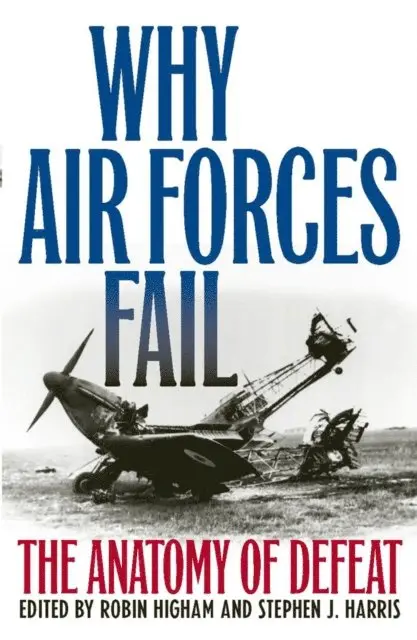
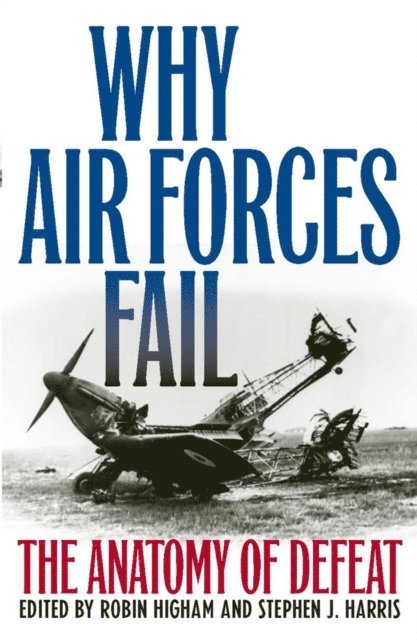
According to Robin Higham and Stephen J. Harris, "Flight has been part of the human dream for aeons, and its military application has likely been the dark side of that dream for almost as long." In the twentieth century, this dream and its dark side unfolded as the air forces of the world went to war, bringing destruction and reassessment with each failure. Why Air Forces Fail examines the complex, often deep-seated, reasons for the catastrophic failures of the air forces of various nations. Higham and Harris divide the air forces into three categories of defeat: forces that never had a chance to win, such as Poland and France; forces that started out victorious but were ultimately defeated, such as Germany and Japan; and finally, those that were defeated in their early efforts yet rose to victory, such as the air forces of Britain and the United States.
The contributing authors examine the complex causes of defeats of the Russian, Polish, French, British, Italian, German, Argentine, and American air services. In all cases, the failures stemmed from deep, usually prewar factors that were shaped by the political, economic, military, and social circumstances in the countries. Defeat also stemmed from the anticipation of future wars, early wartime actions, and the precarious relationship between the doctrine of the military leadership and its execution in the field.
Anthony Christopher Cain''s chapter on France''s air force, l''Armée de l''Air, attributes France''s loss to Germany in June 1940 to a lack of preparation and investment in the air force. One major problem was the failure to centralize planning or coordinate a strategy between land and air forces, which was compounded by aborted alliances between France and countries in eastern Europe, especially Poland and Czechoslovakia. In addition, the lack of incentives for design innovation in air technologies led to clashes between airplane manufacturers, laborers, and the government, a struggle that resulted in France''s airplanes'' being outnumbered by Germany''s more than three to one by 1940.
Complemented by reading lists and suggestions for further research, Why Air Forces Fail provides groundbreaking studies of the causes of air force defeats.
595 kr
Skickas inom 3-6 vardagar
468 kr
Läs direkt efter köp
208 kr
Läs direkt efter köp
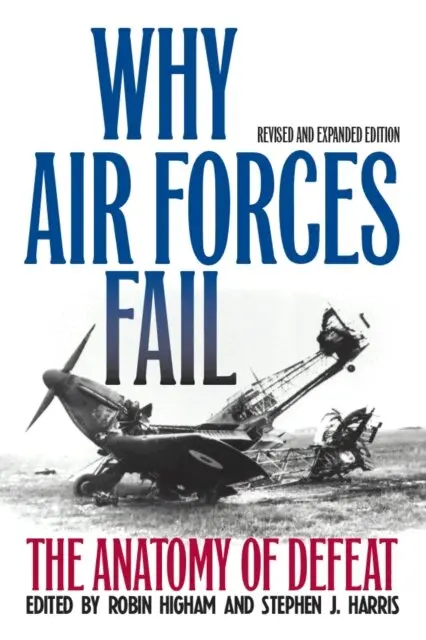
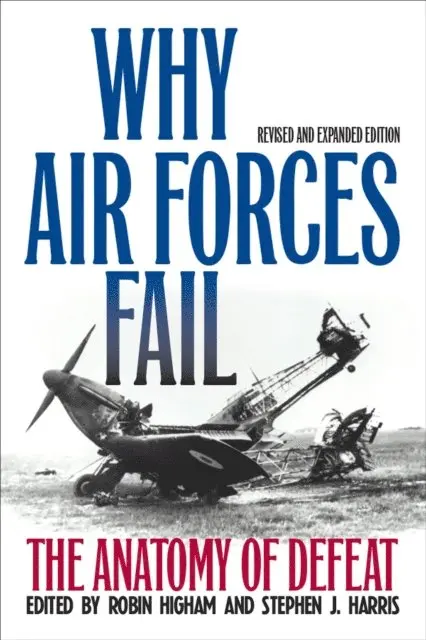
Includes two new chapters! “One of the more interesting and better books on military aviation to appear in the last few years.”—Journal of Military History Since the publication of the first edition of Why Air Forces Fail, the debate over airpower’s role in military operations has only intensified. Here, eminent historians Robin Higham and Stephen J. Harris assemble a team of experts to add essential new details to their cautionary tale for current practitioners of aerial warfare. Together, the contributors examine the complex, often deep-seated, reasons for the catastrophic failures of the Russian, Polish, French, British, Italian, German, Argentine, and American air services. Complemented by reading lists and suggestions for further research, this seminal study with two new chapters provides an essential and detailed analysis of defeat. “Contains many interesting insights and interpretations . . . an excellent introduction to the study of military failure in general and air forces in particular.”—Journal of America’s Military Past “I recommend this book to those who are interested in air forces and air power, whether amateur or professional, past, present and future.”—Richard Cobbold, Bryanston: The Yearbook “Provides an excellent analysis of the root causes of failure; this engaging study goes far beyond the aerial battlefield to examine the circumstances leading to defeat.”—Dennis Drew, Colonel, USAF (Ret.)
468 kr
Läs direkt efter köp
According to Robin Higham and Stephen J. Harris, "Flight has been part of the human dream for aeons, and its military application has likely been the dark side of that dream for almost as long." In the twentieth century, this dream and its dark side unfolded as the air forces of the world went to war, bringing destruction and reassessment with each failure. Why Air Forces Fail examines the complex, often deep-seated, reasons for the catastrophic failures of the air forces of various nations. Higham and Harris divide the air forces into three categories of defeat: forces that never had a chance to win, such as Poland and France; forces that started out victorious but were ultimately defeated, such as Germany and Japan; and finally, those that were defeated in their early efforts yet rose to victory, such as the air forces of Britain and the United States.
The contributing authors examine the complex causes of defeats of the Russian, Polish, French, British, Italian, German, Argentine, and American air services. In all cases, the failures stemmed from deep, usually prewar factors that were shaped by the political, economic, military, and social circumstances in the countries. Defeat also stemmed from the anticipation of future wars, early wartime actions, and the precarious relationship between the doctrine of the military leadership and its execution in the field.
Anthony Christopher Cain''s chapter on France''s air force, l''Armée de l''Air, attributes France''s loss to Germany in June 1940 to a lack of preparation and investment in the air force. One major problem was the failure to centralize planning or coordinate a strategy between land and air forces, which was compounded by aborted alliances between France and countries in eastern Europe, especially Poland and Czechoslovakia. In addition, the lack of incentives for design innovation in air technologies led to clashes between airplane manufacturers, laborers, and the government, a struggle that resulted in France''s airplanes'' being outnumbered by Germany''s more than three to one by 1940.
Complemented by reading lists and suggestions for further research, Why Air Forces Fail provides groundbreaking studies of the causes of air force defeats.
568 kr
Skickas inom 10-15 vardagar
476 kr
Läs direkt efter köp
Bede and Aethelthryth asks why Christians in Britain around the year 700 enjoyed Latin poetry. What did they see in it? What did they get from it? This book attempts to reconstruct the horizon of expectation of a highly learned, Latin-speaking nun as she encounters a fifty-line poem by the Venerable Bede, the Hymn to Aethelthryth.
The reconstruction is hypothetical and derived from grammatical manuals, learned commentaries from the early medieval period (especially Servius’s commentary on Virgil), and a wide variety of aesthetic observations by classical and medieval readers. The first four chapters describe basic expectations of a reader of Christian Latin poetry. The fifth chapter places the Hymn in its context within Bede’s Ecclesiastical History. A few pages after Bede records his hymn, Caedmon will recite his own hymn under the watchful eye of Whitby’s Abbess Hild, who was a friend of Aethelthryth.
Both hymns are attempts to reform the lyric traditions of pagan Rome and pagan Anglo-Saxon England in the light of Christian teaching. The last three chapters contain a line-by-line commentary on Bede’s alphabetic, epanaleptic elegy.
476 kr
Läs direkt efter köp
Bede and Aethelthryth asks why Christians in Britain around the year 700 enjoyed Latin poetry. What did they see in it? What did they get from it? This book attempts to reconstruct the horizon of expectation of a highly learned, Latin-speaking nun as she encounters a fifty-line poem by the Venerable Bede, the Hymn to Aethelthryth.
The reconstruction is hypothetical and derived from grammatical manuals, learned commentaries from the early medieval period (especially Servius’s commentary on Virgil), and a wide variety of aesthetic observations by classical and medieval readers. The first four chapters describe basic expectations of a reader of Christian Latin poetry. The fifth chapter places the Hymn in its context within Bede’s Ecclesiastical History. A few pages after Bede records his hymn, Caedmon will recite his own hymn under the watchful eye of Whitby’s Abbess Hild, who was a friend of Aethelthryth.
Both hymns are attempts to reform the lyric traditions of pagan Rome and pagan Anglo-Saxon England in the light of Christian teaching. The last three chapters contain a line-by-line commentary on Bede’s alphabetic, epanaleptic elegy.