This book is the first biography of 20th-century pianist Rudolf Serkin, providing a narrative of Serkin''s life with emphasis on his European roots and the impact of his move to America. Based on his personal papers and correspondence, as well as extensive interviews with friends, family, and colleagues, the authors focus on three key aspects of Serkin''s work, particularly as it unfolded in America: his art and career as a pianist, his activities as a pedagogue, including his long association with the Curtis Institute in Philadelphia, and his key role in institutionalizing a redefinition of musical values in America through his work as artistic director of the Marlboro Music School and Festival in Vermont. A candid and colorful blend of narrative and interviews, it offers a probing look into the life and character of this very private man and powerful musical personality.
Like Heifitz and Horowitz, Rudolf Serkin was a virtuosic solo performer who made European classical music an important part of American middle class culture in the mid-20th century. This book, the first biography of this influential pianist, chronicles Serkin's life and career and assesses his impact on classical music in America.Beginning with Serkin's upbringing and early adulthood in Europe, the book reveals the story of a religious Czech Jew's assimilation into Austro-German society and particularly into the profoundly German household of Adolf Busch. When Serkin immigrated to the United States, he imported with him a particularly German perspective on classical music performance. Best known for his recordings of Beethoven sonatas, Serkin also performed Brahms, Mozart, Bach, and other composers' works. Later in his career, he became an active teacher, embarking on a long association with the Curtis Institute in Philadelphia. As artistic director of the Marlboro Music School and Festival in Vermont, Serkin played a key role in institutionalizing a redefinition of musical values in America.Extensive interviews with Serkin's friends and students are an important fixture of the book. The book concludes with a discography by Paul Farber that documents an essential part of Serkin's achievement.
This book is the first biography of 20th-century pianist Rudolf Serkin, providing a narrative of Serkin''s life with emphasis on his European roots and the impact of his move to America. Based on his personal papers and correspondence, as well as extensive interviews with friends, family, and colleagues, the authors focus on three key aspects of Serkin''s work, particularly as it unfolded in America: his art and career as a pianist, his activities as a pedagogue, including his long association with the Curtis Institute in Philadelphia, and his key role in institutionalizing a redefinition of musical values in America through his work as artistic director of the Marlboro Music School and Festival in Vermont. A candid and colorful blend of narrative and interviews, it offers a probing look into the life and character of this very private man and powerful musical personality.
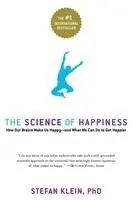
Clinical psychologists have been dealing with miserable feelings since their discipline was established. In the last 30 years, neuroscientists have made major headway in the understanding of the sources of anger, depression, and fear. Today, whole industries profit from this knowledge -- producing pills for every sort of pathological mood disturbance. But until recently, few neuroscientists focused on the subject of happiness. Now, in The Science of Happiness, leading German science journalist Stefan Klein ranges widely across the latest frontiers of neuroscience and neuropsychology to explain how happiness is fostered in our brains and what biological purpose it serves (and, importantly, how we can control our negative feelings and emotions). In addition, he explains the neurophysiology of our passions (the elementary rules of which are hardwired into our brains), the power of consciousness, and how we can use it. In a final section, Klein explores the conditions required to foster the "pursuit of happiness." A remarkable synthesis of a growing body of research that has not heretofore been brought together in one accessible book, The Science of Happiness will ultimately help each of us understand our own quest for happiness -- and our fostering of it, as well.