Stephen Rigby – författare
Visar alla böcker från författaren Stephen Rigby. Handla med fri frakt och snabb leverans.
3 produkter
3 produkter
713 kr
Skickas inom 7-10 vardagar
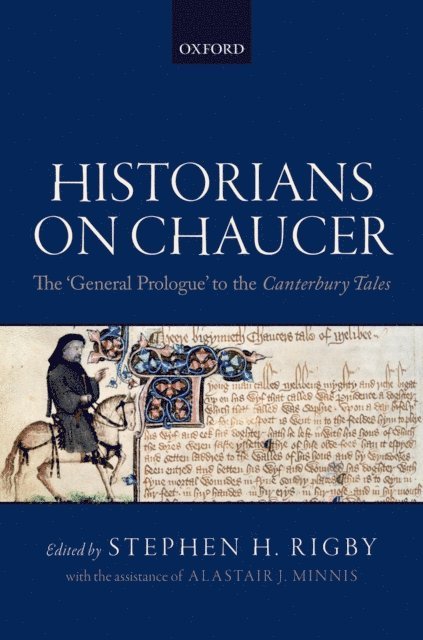
As literary scholars have long insisted, an interdisciplinary approach is vital if modern readers are to make sense of works of medieval literature. In particular, rather than reading the works of medieval authors as addressing us across the centuries about some timeless or ahistorical 'human condition', critics from a wide range of theoretical approaches have in recent years shown how the work of poets such as Chaucer constituted engagements with the power relations and social inequalities of their time. Yet, perhaps surprisingly, medieval historians have played little part in this 'historical turn' in the study of medieval literature. The aim of this volume is to allow historians who are experts in the fields of economic, social, political, religious, and intellectual history the chance to interpret one of the most famous works of Middle English literature, Geoffrey Chaucer's 'General Prologue' to the Canterbury Tales, in its contemporary context. Rather than resorting to traditional historical attempts to see Chaucer's descriptions of the Canterbury pilgrims as immediate reflections of historical reality or as portraits of real life people whom Chaucer knew, the contributors to this volume have sought to show what interpretive frameworks were available to Chaucer in order to make sense of reality and how he adapted his literary and ideological inheritance so as to engage with the controversies and conflicts of his own day. Beginning with a survey of recent debates about the social meaning of Chaucer's work, the volume then discusses each of the Canterbury pilgrims in turn. Historians on Chaucer should be of interest to all scholars and students of medieval culture whether they are specialists in literature or history.
2 965 kr
Skickas inom 3-6 vardagar
As literary scholars have long insisted, an interdisciplinary approach is vital if modern readers are to make sense of works of medieval literature. In particular, rather than reading the works of medieval authors as addressing us across the centuries about some timeless or ahistorical 'human condition', critics from a wide range of theoretical approaches have in recent years shown how the work of poets such as Chaucer constituted engagements with the power relations and social inequalities of their time. Yet, perhaps surprisingly, medieval historians have played little part in this 'historical turn' in the study of medieval literature. The aim of this volume is to allow historians who are experts in the fields of economic, social, political, religious, and intellectual history the chance to interpret one of the most famous works of Middle English literature, Geoffrey Chaucer's 'General Prologue' to the Canterbury Tales, in its contemporary context. Rather than resorting to traditional historical attempts to see Chaucer's descriptions of the Canterbury pilgrims as immediate reflections of historical reality or as portraits of real-life people whom Chaucer knew, the contributors to this volume have sought to show what interpretive frameworks were available to Chaucer in order to make sense of reality and how he adapted his literary and ideological inheritance so as to engage with the controversies and conflicts of his own day. Beginning with a survey of recent debates about the social meaning of Chaucer's work, the volume then discusses each of the Canterbury pilgrims in turn. Historians on Chaucer should be of interest to all scholars and students of medieval culture whether they are specialists in literature or history,
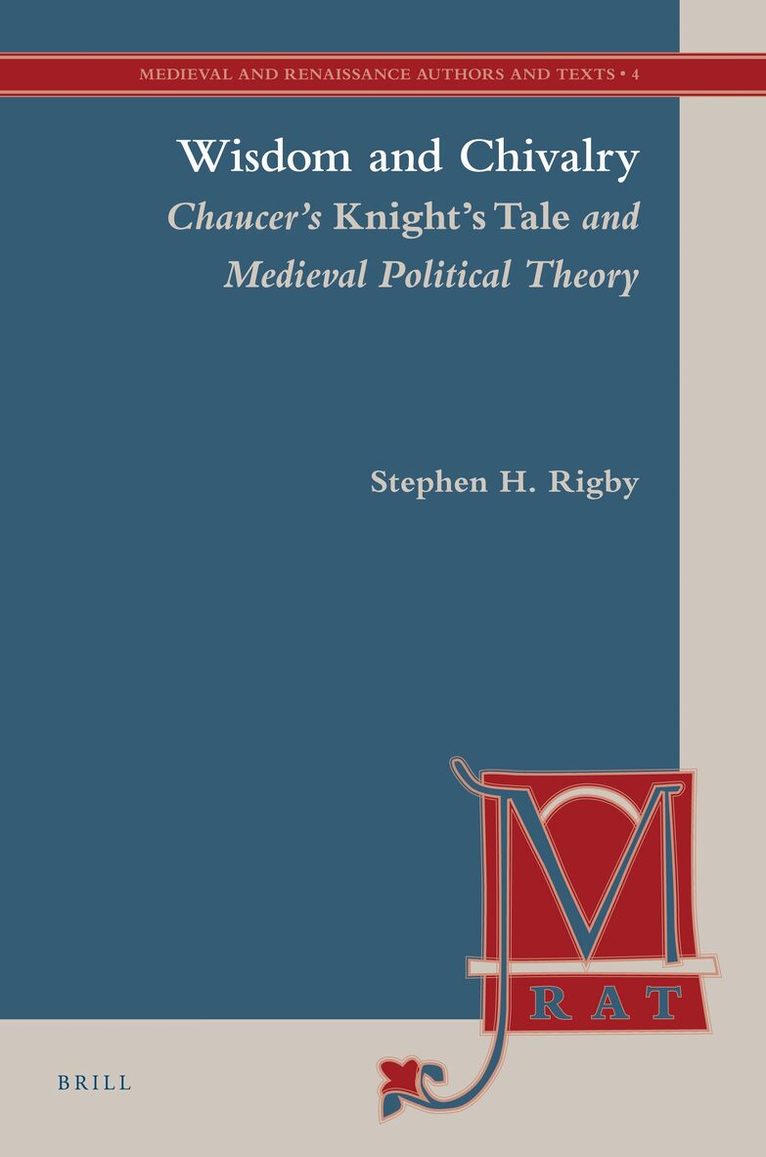
Del 4 - Medieval and Renaissance Authors and Texts
Wisdom and Chivalry
Chaucer's Knight's Tale and Medieval Political Theory
Inbunden, Engelska, 2009
3 220 kr
Skickas inom 3-6 vardagar
The Knight's Tale is one of the most controversial of all the Canterbury Tales. Does Chaucer portray Theseus, the duke of Athens whose actions dominate the tale, as an ideal ruler, one who is noble, wise and chivalrous, or does the duke's behaviour reveal him to be immoral, self-seeking and tyrannical? This book (now in a corrected second printing) assesses the duke's conduct and thought in terms of the ideals set out in medieval mirrors for princes, particularly in Giles of Rome's De Regimine Principum. It argues that, when judged by the standards of these works, Theseus can be seen as a model prince in terms of his self-government ('ethics'), his rule of his household ('economics'), his governance of his realm ('politics) and his cosmography and philosophy.