Stephen S. Morse – författare
Visar alla böcker från författaren . Handla med fri frakt och snabb leverans.
5 produkter
5 produkter
E-bok
PDF, Engelska, 1996715 kr
Läs direkt efter köp
New epidemics such as AIDS and "mad cow" disease have dramatized the need to explore the factors underlying rapid viral evolution and emerging viruses. This comprehensive volume is the first to describe this multifaceted new field. It places viral evolution and emergence in a historical context, describes the interaction of viruses with hosts, and details the advances in molecular biology and epidemiology that have provided the tools necessary to track developing viral epidemics and to detect new viruses far more successfully than could be done in the recent past. This unique book also lucidly details case histories and offers practical suggestions for the prevention of future epidemics. The contributors are leading authorities in their disciplines, and were selected both for their expert knowledge and for their ability to define and elucidate the fundamental issues. The book is highly accessible and has been written for a wide audience that includes virologists, public health authorities, medical anthropologists, evolutionary biologists, geneticists, infectious disease specialists, and social scientists interested in medical and health issues.
Inbunden, Engelska, 2024
1 677 kr
Skickas inom 7-10 vardagar
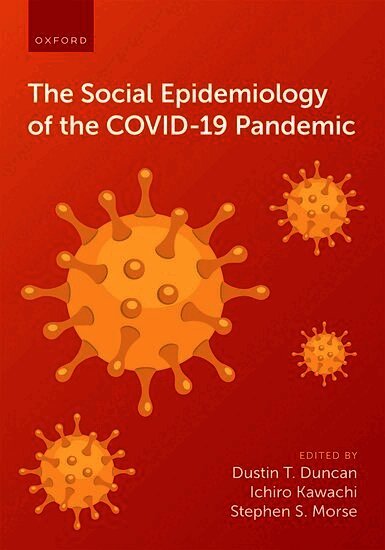
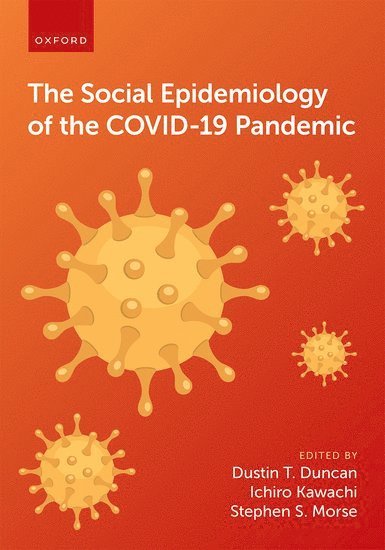
The COVID-19 pandemic has worsened health disparities worldwide. Across all nations, the burden of COVID-19 has fallen most heavily on the socially disadvantaged. In the United States, the COVID-19 mortality rate for Black Americans is over twice that of their White American counterparts, and people in prisons have more than double the COVID-19 mortality rate of the general U.S. population. Other social dimensions such as income, gender, sexuality, and immigration status have also played a significant role in COVID-19 infection, hospitalization, and mortality. The Social Epidemiology of the COVID-19 Pandemic provides an interdisciplinary analysis of the pandemic's effect across populations and its disproportionate impact on vulnerable groups in society, including racial/ethnic minority, immigrant, and incarcerated populations. Written by leading international scholars, this essential volume describes how the COVID-19 pandemic intersects with nearly every social determinant of health, from race and ethnicity to income inequality, and how such interactions compound existing structural disadvantages. Using examples from upper-middle and high-income countries such as the United States, contributing experts delve into the differential impacts of COVID-19 by major social determinants of health and reveal the resultant effect of pandemic-related policy on health outcomes. Together, these authors underline the urgent need for further integration of social epidemiology into public health decision-making to ensure that every population receives the care it requires. Drawing from research across epidemiology, sociology, psychology, and public policy, The Social Epidemiology of the COVID-19 Pandemic illuminates the stark disparities exacerbated by the COVID-19 pandemic and the valuable insights from social epidemiology that can inform a more equitable pandemic response.
Häftad, Engelska, 2024
740 kr
Skickas inom 5-8 vardagar
The COVID-19 pandemic has worsened health disparities worldwide. Across all nations, the burden of COVID-19 has fallen most heavily on the socially disadvantaged. In the United States, the COVID-19 mortality rate for Black Americans is over twice that of their White American counterparts, and people in prisons have more than double the COVID-19 mortality rate of the general U.S. population. Other social dimensions such as income, gender, sexuality, and immigration status have also played a significant role in COVID-19 infection, hospitalization, and mortality. The Social Epidemiology of the COVID-19 Pandemic provides an interdisciplinary analysis of the pandemic's effect across populations and its disproportionate impact on vulnerable groups in society, including racial/ethnic minority, immigrant, and incarcerated populations. Written by leading international scholars, this essential volume describes how the COVID-19 pandemic intersects with nearly every social determinant of health, from race and ethnicity to income inequality, and how such interactions compound existing structural disadvantages. Using examples from upper-middle and high-income countries such as the United States, contributing experts delve into the differential impacts of COVID-19 by major social determinants of health and reveal the resultant effect of pandemic-related policy on health outcomes. Together, these authors underline the urgent need for further integration of social epidemiology into public health decision-making to ensure that every population receives the care it requires. Drawing from research across epidemiology, sociology, psychology, and public policy, The Social Epidemiology of the COVID-19 Pandemic illuminates the stark disparities exacerbated by the COVID-19 pandemic and the valuable insights from social epidemiology that can inform a more equitable pandemic response.
E-bok
PDF, Engelska, 2024642 kr
Läs direkt efter köp
The COVID-19 pandemic has worsened health disparities worldwide. Across all nations, the burden of COVID-19 has fallen most heavily on the socially disadvantaged. In the United States, the COVID-19 mortality rate for Black Americans is over twice that of their White American counterparts, and people in prisons have more than double the COVID-19 mortality rate of the general U.S. population. Other social dimensions such as income, gender, sexuality, and immigration status have also played a significant role in COVID-19 infection, hospitalization, and mortality. The Social Epidemiology of the COVID-19 Pandemic provides an interdisciplinary analysis of the pandemic's effect across populations and its disproportionate impact on vulnerable groups in society, including racial/ethnic minority, immigrant, and incarcerated populations. Written by leading international scholars, this essential volume describes how the COVID-19 pandemic intersects with nearly every social determinant of health, from race and ethnicity to income inequality, and how such interactions compound existing structural disadvantages. Using examples from upper-middle and high-income countries such as the United States, contributing experts delve into the differential impacts of COVID-19 by major social determinants of health and reveal the resultant effect of pandemic-related policy on health outcomes. Together, these authors underline the urgent need for further integration of social epidemiology into public health decision-making to ensure that every population receives the care it requires. Drawing from research across epidemiology, sociology, psychology, and public policy, The Social Epidemiology of the COVID-19 Pandemic illuminates the stark disparities exacerbated by the COVID-19 pandemic and the valuable insights from social epidemiology that can inform a more equitable pandemic response.
E-bok
Engelska, 2024642 kr
Läs direkt efter köp
The COVID-19 pandemic has worsened health disparities worldwide. Across all nations, the burden of COVID-19 has fallen most heavily on the socially disadvantaged. In the United States, the COVID-19 mortality rate for Black Americans is over twice that of their White American counterparts, and people in prisons have more than double the COVID-19 mortality rate of the general U.S. population. Other social dimensions such as income, gender, sexuality, and immigration status have also played a significant role in COVID-19 infection, hospitalization, and mortality. The Social Epidemiology of the COVID-19 Pandemic provides an interdisciplinary analysis of the pandemic's effect across populations and its disproportionate impact on vulnerable groups in society, including racial/ethnic minority, immigrant, and incarcerated populations. Written by leading international scholars, this essential volume describes how the COVID-19 pandemic intersects with nearly every social determinant of health, from race and ethnicity to income inequality, and how such interactions compound existing structural disadvantages. Using examples from upper-middle and high-income countries such as the United States, contributing experts delve into the differential impacts of COVID-19 by major social determinants of health and reveal the resultant effect of pandemic-related policy on health outcomes. Together, these authors underline the urgent need for further integration of social epidemiology into public health decision-making to ensure that every population receives the care it requires. Drawing from research across epidemiology, sociology, psychology, and public policy, The Social Epidemiology of the COVID-19 Pandemic illuminates the stark disparities exacerbated by the COVID-19 pandemic and the valuable insights from social epidemiology that can inform a more equitable pandemic response.