Stephen Yenser – författare
Visar alla böcker från författaren Stephen Yenser. Handla med fri frakt och snabb leverans.
5 produkter
5 produkter
Häftad, Engelska, 2008
224 kr
Skickas inom 5-8 vardagar
E-bok
Engelska, 2019214 kr
Läs direkt efter köp
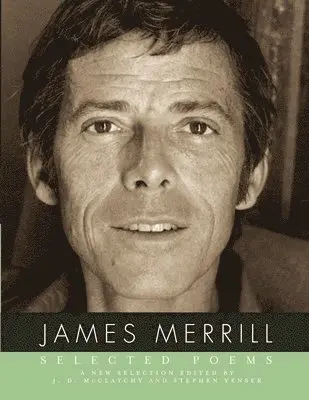
James Merrill’s audacious and dazzling epic poem, The Changing Light at Sandover, remains as startling today as when it first emerged in separate volumes over a period of several years. Individual parts won the Pulitzer Prize and the National Book Award, and the entire poem, when it was collected into one volume in 1982, won the National Book Critics Circle Award. It is now an American classic, here in a definitive new hardcover edition that includes Voices from Sandover, Merrill’s recasting of the poem for the stage. The book carries us to the scene of Merrill’s Ouija board sessions with his partner, David Jackson—the candlelit Stonington dining room with its flame-colored walls and the famous Willowware cup they used as a pointer in their occult travels. In a shimmering interplay of verse forms, Merrill set down their extended conversations with their familiar and guide, Ephraim (a first-century Greek Jew), W. H. Auden, W. B. Yeats, Plato, a brilliant peacock named Mirabell, and other old friends who had passed to the other side. JM (whom the spirits call “scribe”) and DJ (“hand”) are also introduced to the lonely eminence God B (“God Biology”), his sister Mother Nature, and a host of angels and lesser residents of the empyrean who are variously involved in the ways of this world.The laughter, the missteps, and the schoolroom frustrations of the earthly pair’s gradual enlightenment make this otherworldly journey, finally, and utterly human one. A unique exploration of the writer’s role in a postatomic, postreligious age, Sandover has been compared to the work of Yeats, Proust, Milton, and Blake. Merrill’s tale of the joys and tragedies of man’s powers, and his message about the importance of our endangered efforts to make a good life on earth, will stand as one of the most profound experiences available to readers of poetry.
Inbunden, Engelska, 1987
1 008 kr
Skickas inom 10-15 vardagar
James Merrill is now widely recognized as one of the essential poets of our time, one of those whose achievement will define postwar American literature. The Consuming Myth is a discerning account of his work that will well serve amateur and initiate alike. Stephen Yenser ranges over all of Merrill’s writing to date, from a precocious book printed when its author was fifteen to his most recent publication, a verse play. He writes about both of the poet’s novels and pays particular attention to the epic poem The Changing Light at Sandover. His close readings shed light on Merrill’s boldly and subtly original techniques, his kinship with Mallarmé, Proust, Yeats, Stevens, and others, and the network of connections among his diverse undertakings.Yenser suggests that Merrill’s special power springs in part from transactions between evidently opposing perceptions. On the one hand—as the result of some poetic version of what physicists call “pair production”—whatever Merrill looks at hard yields its contraries. All about him, and within him too, he discovers duality and division. On the other hand, he is profoundly aware of the interconnectedness of things, whether they be his life and his art (which we might think of as aspects of his work), or humanity and nature, or good and evil. It is out of quarrels with ourselves that we make poetry, Yeats observed; and it is in striving to accommodate intuitions of both difference and identity that Merrill has fashioned his distinctive manner.
E-bok
Engelska, 2021257 kr
Läs direkt efter köp
Häftad, Engelska, 2006
187 kr
Tillfälligt slut
From Sfakian Variations - Goats bawl and goats' bells clink and ice in the glass of ouzo tinkles back and that is all the music - even tzitzikes rest and listen - anyone needs to face tonight, until the fog settles in, thick and muggy, though cold and clammy on the painted railing around the balcony that overlooks this whole small world one nearly overlooked and now can't bear to leave where the taverna lights grow dimmer by the minute now and then are hard to make out as a dwelt-on memory and then and now are gone. Inspired by the miraculously mercurial potential of words, Stephen Yenser takes readers on a heady trip through a world full of promise yet compromised by human weakness. Set in sunny southern California and Greece, the poems of "Blue Guide" cast the shadow of mortality, and the tones are elegiac. This combination of the deadly serious and the exuberant is natural, Yenser notes; after all, work and orgy share the same etymological root, as do travail and travel, pledge and play.Using various poetic modes, Yenser offers, here, a quatrain written to name a painting by Dorothea Tanning; a sequence of poems for his daughter; an excursive poem at once about Los Angeles and Baghdad and his father and a petty criminal; a group of prose poems set in penumbral bars; some postcards to a dead friend; and a meditation prompted by a sojourn on a remote Aegean island. The most unexpected work is an assemblage of quotations and glosses in the tradition of the commonplace book, except that in Yenser's hands these entries are densely interrelated.