Steve Dunn - Böcker
Visar alla böcker från författaren Steve Dunn. Handla med fri frakt och snabb leverans.
11 produkter
11 produkter
247 kr
Skickas inom 3-6 vardagar
318 kr
Skickas
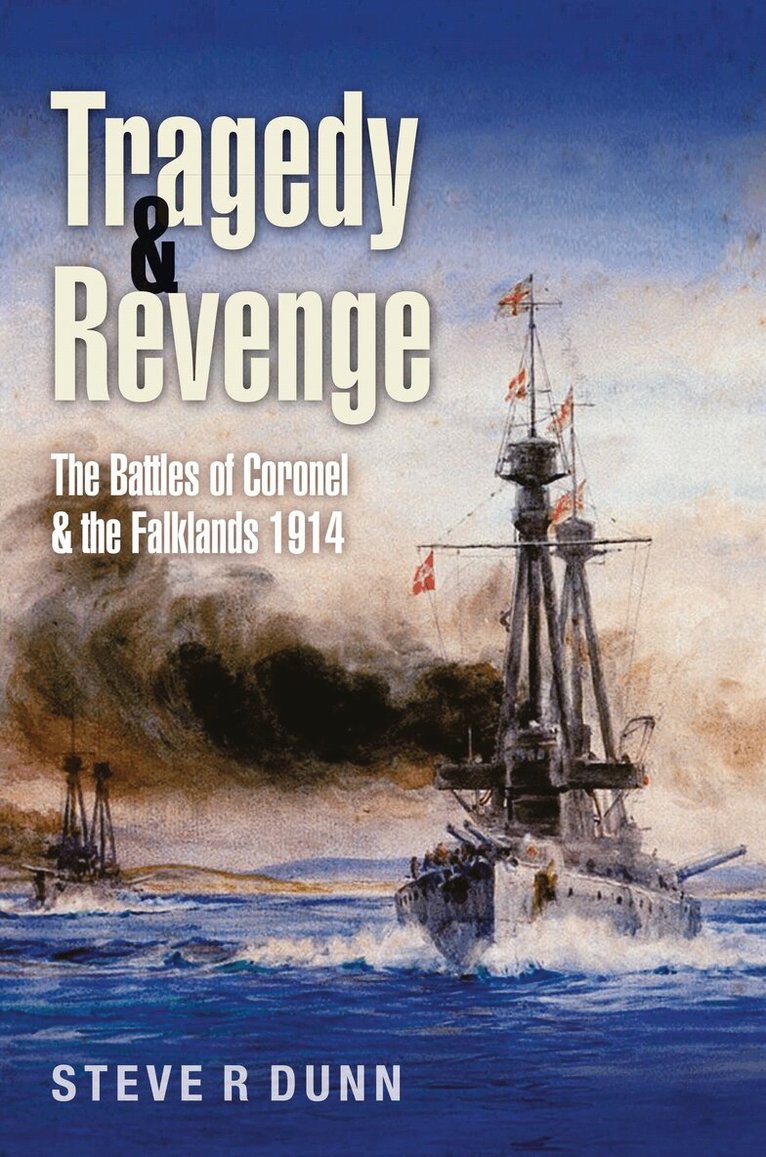
The Battle of Coronel on 1 November 1914, when Rear Admiral Sir Christopher Cradock and ships of his 4th Cruiser Squadron were out gunned and out matched by the German East Asiatic Squadron under Vice Admiral Maximilian Graf von Spee, was the worst British naval disaster for more 100 years; two ships, HMS Monmouth and Good Hope were lost with all hands, totalling more than 1,600 men, including Cradock. He went to his death in a forlorn hope, believing that if he could damage his opponent sufficiently to slow them down, superior forces could eventually be brought to bear.Admiral Sir John ‘Jacky’ Fisher, recently returned to the Admiralty as First Sea Lord immediately despatched two battlecruisers from the Grand Fleet to exact revenge under the command of Vice Admiral Doveton Sturdee, whom he detested and half expected to fail in this mission. And indeed, Sturdee’s force was surprised by von Spee’s ships while coaling at the Falkland Islands, but managed to get under way and perform the task for which Fisher had designed the battlecruisers: sweeping from the seas lesser craft by virtue of superior speed and gun power. The ships of the East Asiatic Squadron was sunk or scattered and von Spee and his two sons lost their lives.Tragedy and Revenge details both the battles and the events leading up to them, with the use of eye-witness accounts. It examines the ships which fought on both sides and points up the inferiority of the forces at Cradock’s disposal, resources which Churchill insisted were fit for the task of destroying von Spee. The hopelessness felt by many of the Royal Navy participants in Cradock’s little squadron is related, as is Cradock’s story, alone in the Atlantic and Pacific, and his crisis of conscience whilst staying with the governor of the Falkland Islands.The book also examines the leaders, Cradock, Churchill, Fisher, Sturdee and von Spee and the interplay of character between them. It demonstrates how Churchill’s interference, and the dispositions adopted by the Admiralty while Sturdee was Chief of the War Staff, led directly to the disaster at Coronel. The book evaluates the gap between the reality on the high seas and the perception held by those at the Admiralty, especially Churchill, and how this gap helped bring about a terrible tragedy.
258 kr
Kommande
The vast British fleet that enabled Allied victory in the First World War was one largely fuelled by coal. During the preceding century the burgeoning industrial revolution, and the Royal Navy that emerged out of new technologies, had become entirely dependent on the precious ‘black diamonds’. When Queen Victoria had ascended the throne in 1837 ships were powered entirely by wind; by the end of her reign the navy was driven by coal.What happened in the intervening years forms the core of this new book. It is the story of a naval revolution greater than any that had gone before. Free and inexhaustible wind was replaced by expensive coal; ships became faster, their offensive capabilities more devastating and the Royal Navy’s control of the seas of Britain’s emerging empire undisputed.Steve Dunn embraces a whole range of themes and topics to demonstrate how coal, at the very heart of this revolution, affected every aspect of the Navy. The impact of steam propulsion on ship design; the evolution of seamanship for iron ships; the establishment of coaling stations around the world; the mining and transportation of coal; that most hated of tasks, coaling ships; the challenges of working in the terrible heat of engine rooms; these are just some of the subjects elucidated in peace and during conflict. With its emphasis on the human as well as the technological aspects of the story, Coal Ship! offers fascinating insights into every aspect of the navy during the long period of Pax Britannica and during the First World WarBy the outbreak of that war, Britain’s coal resources enabled the Royal Navy to safeguard Britain’s trade. The book details how in wartime colliers became warships, and the social impact of war on the coal mines which led to repeated industrial strife and nationalisation. It examines the problems in providing fuel to the Grand Fleet at Scapa Flow, and how coal became a weapon to enforce a blockade of Germany.At the heart of this story are ‘black diamonds’, the key element in the undisputed dominance of the Royal Navy; this new book tells that wide-ranging and compelling story.
328 kr
Skickas inom 11-20 vardagar
The must – read guidebook for entrepreneurs looking to get into accelerator programs and to build and scale their startups with speedAccelerator programs have become one of the most powerful and valuable resources for entrepreneurs seeking to learn rapidly, build powerful networks, raise capital, build their startups and do this at speed and scale. In recent years, the number of accelerator programs around the world has grown at an incredible rate, propelling startups such as AirBnB, Uber, DropBox, Reddit, and others — many to billion-dollar valuations. The number of accelerators, the differences in accelerator program offerings and the unique benefits and costs of different accelerator locations makes choosing the right accelerator a challenge. Selecting the wrong accelerator, failing to be accepted in the right one, or not fully taking advantage of all the accelerator has to offer can be costly, sometimes fatal. With the stakes so high, entrepreneurs need to understand all their options, choose carefully and do the right things to maximize their chances of success.Startup Accelerators is the go to guide for any entrepreneur, providing a firsthand look into the acceptance criteria and inner workings of different accelerator programs. Written by entrepreneurs for entrepreneurs, this indispensable resource explains what different accelerator programs offer, how to get accepted, what to do during the program, how to raise money during accelerators, what to do after the program ends, and much more. Packed with real-world case studies and advice from leading experts on startup accelerator programs, this one-stop resource provides step-by-step guidance on the entire accelerator process. Reveals how accelerators help founders navigate different challenges in the startup journeyDescribes the differences in the benefits and costs of different accelerator programsExplains how to prepare accelerator applicationsDiscloses what actions to take during an accelerator to make the most of itDepicts case studies of entrepreneurs’ accelerator applications, experiences and outcomes across different acceleratorsFeatures interviews with accelerator program managers, founders who went through accelerators, and investors in companies going through or having gone through acceleratorsIncludes insightful data and reflections from entrepreneurship education researchers and academicsStartup Accelerators: A Field Guide will prove to be invaluable for startup founders considering or going through accelerators, as well as aspiring entrepreneurs, educators, and other startup accelerator stakeholders.
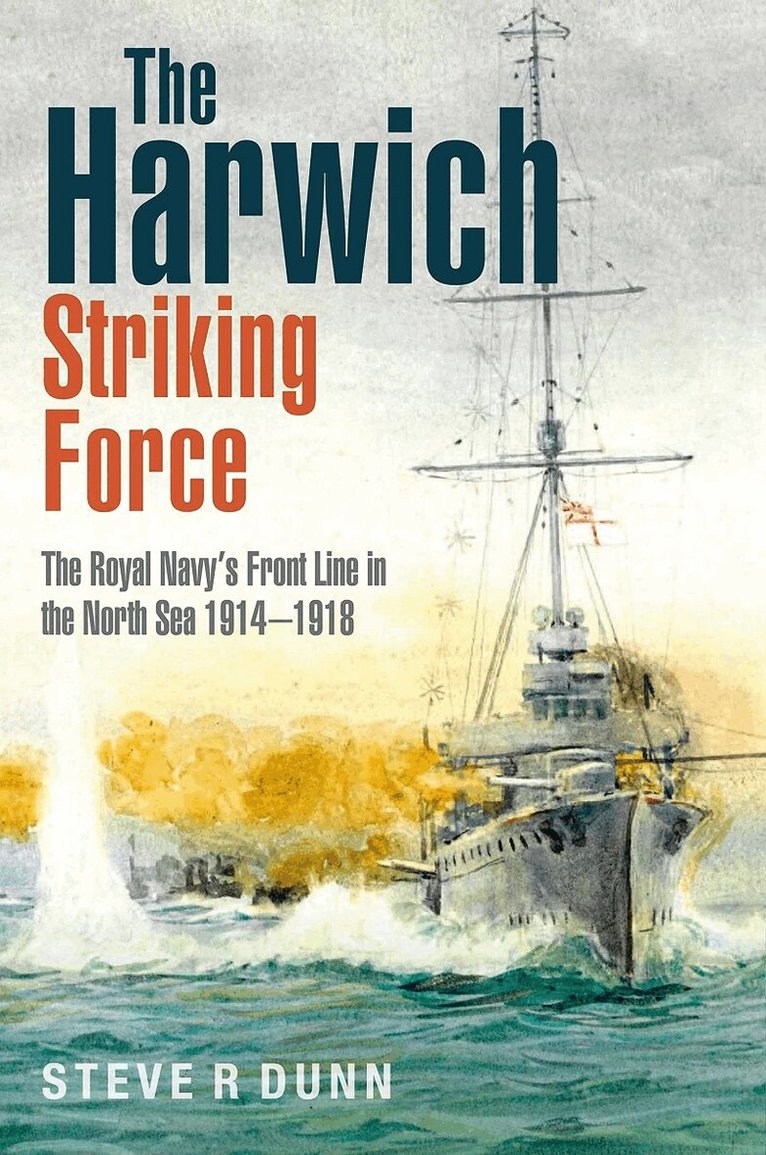
Harwich Striking Force
The Royal Navy's Front Line in the North Sea 1914–1918
Inbunden, Engelska, 2022
266 kr
Skickas
The Harwich Force has made its name and will not be forgotten during the future annals of history'; so said Rear Admiral Sir Reginald Tyrwhitt on Armistice Day 1918. But that fame has not endured. Yet for the whole duration of the First World War, the Harwich Striking Force was the front line of the Royal Navy, a force of cruisers and destroyers defending the seas for the Allies.Under a charismatic and aggressive leader, Reginald Yorke Tyrwhitt, U-boats, German cruisers, destroyers and light craft all met their ends at the hands of the Force, as did enemy seaplanes and Zeppelin airships. The Harwich ships were at sea almost daily throughout the war, haunting the German coast and the Friesian Islands, pioneering aerial attack from the sea, developing naval carrier aviation and combined air/sea operations, and hunting for enemy submarines and minelayers in the North Sea. The Harwich Force also took part in major naval battles alongside the Grand Fleet's battlecruisers, and protected merchant ships operating in the dangerous waters around Denmark, the Netherlands, Germany and Britain.The author also assesses the role played by the other Royal Navy formations at Harwich: submarines, auxiliary minesweeping and patrol vessels, the Felixstowe seaplane base and the town itself. And when the war was finally won, the Force gained further fame when the German U-boat fleet was surrendered there.Lavishly illustrated, this book is an enthralling account of the men of the Harwich Force, of their grit and brave sacrifice and the key part that they played in the final Allied victory against Germany.
Spectre of Invasion
The Royal Navy and the Defence of Britain's Coast, 1900–1918
Inbunden, Engelska, 2025
299 kr
Skickas
By 1900, the British government and public had become gripped by a new and growing fear of invasion, not from traditional enemies such as France, but from Germany. Such terror was driven by lurid books and fanned by newspapers. These anxieties sparked off a fight between those who wanted a defence based on a larger standing army, with conscription to support it, and those who believed the Royal Navy was sufficient to defend the coast and deprecated the expense and role of a standing land force.With war declared in 1914, Britain’s coastline came under attack. Major German raids created terror, and the fear of invasion drove naval and military planning and dispositions to protect Britain’s littoral. Coastal towns such as Scarborough, Great Yarmouth, Lowestoft, Southwold and even the Outer Hebrides came under attack and landings by German troops were feared daily. Running battles were fought with these attacking forces and both ships and lives ashore were lost. Spectre of Invasion examines all of the raids made and the success or failure of them, and relates these events from the point of view of naval and civilian participants. It tells the story of the Royal Navy and its role in the defence of the British coast in the First World War and examines the strategic and political developments resultant from invasion fears. And it considers how the plans laid for coastal defence fared under the test of conflict, laying bare what it was like to be part of the battles around the British coast, both as combatant and as citizen. Finally, it looks at Britain’s inability to co-ordinate naval and military effort throughout the War.This is a thought-provoking book which combines a fast-paced narrative with fascinating insights into Britain’s predicament in the years leading up to, and through, the First World War. It will appeal to anyone interested in this era of the country’s history and the fear on invasion that stalked the country in those years.
Steam Yachts at War
The Naval Deployment of British & American Yachts, 1898–1918
Inbunden, Engelska, 2024
258 kr
Skickas
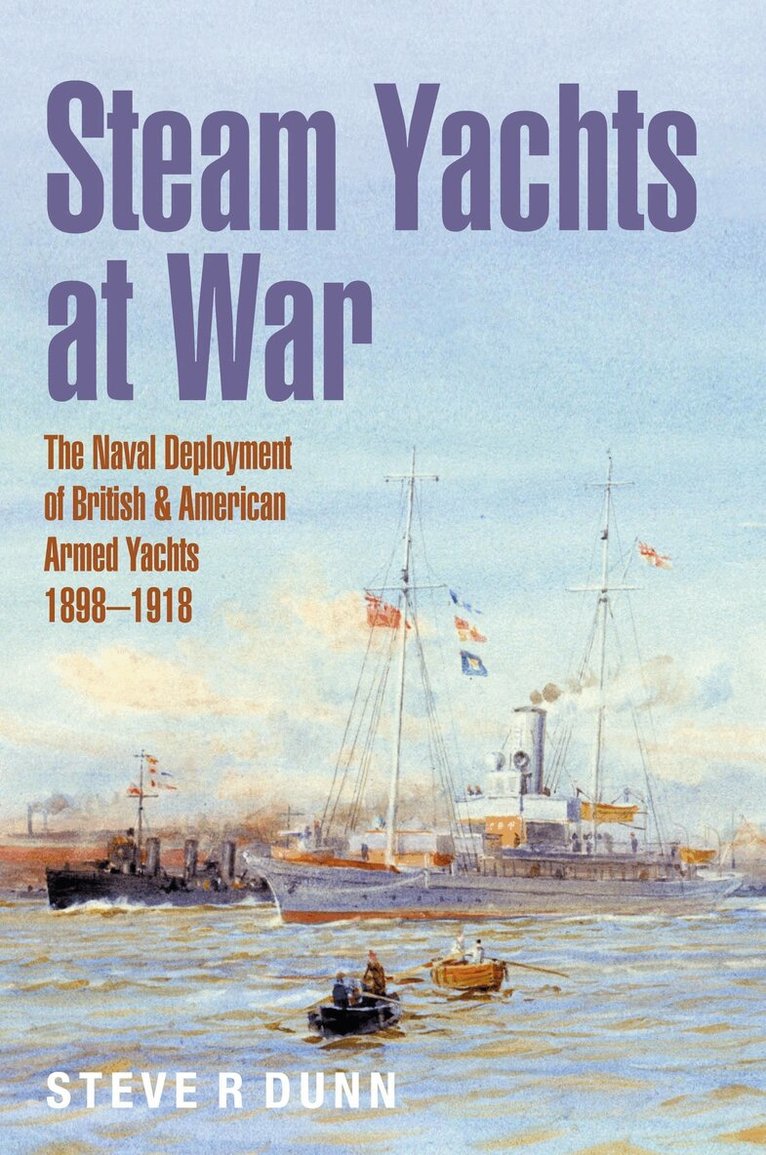
This is the story of how the luxurious steam yachts of the Victorian and Edwardian eras were transformed into weapons of war. These beautiful vessels were the ultimate status symbols of British and European royalty, American magnates, the landed aristocracy and the nouveau riche, but when wars came, in 1898 and 1914, they were quickly transformed into warships, and many of their crews became warriors rather than servants.The US Navy was the first to recognise the potential of these elegant vessels. In the Spanish-American war of 1898, the USN – short of ships to operate a blockade of Spanish-owned Cuba – purchased twenty-eight of them and turned them into patrol craft and bombardment ships. In Britain in 1914 steam yachts became a stop gap navy, filling in for neglected investment in small craft. The USN followed suit in 1917\. Their wonderful interiors were ripped out, antiquated guns and sometimes depth charges fitted, and their crews signed into the naval reserves. Around the coasts of the Britain and France, in the Mediterranean and the USA, Canada, these former luxurious playthings now attacked land positions and fought surface warships and U-boats. They interdicted blockade runners, escorted convoys, were used as depot ships, served as hospitals afloat and undertook a host of other functions. In all, some 300 yachts fought at sea.This new book, lavishly illustrated with photographs and plans of pre-war and wartime steam yachts from a world now lost to view, tells their story and the stories of the men who served in them. It examines their peacetime origins and development, describes their owners and designers, and considers their naval deployment, the conditions under which the crews lived and worked, the many and varied duties assigned to the yachts, and their successes and failures together with the losses sustained.In just a couple of generations these beautiful craft progressed from status symbols to instruments of war to complete extinction; Steam Yachts at War tells this compelling story.
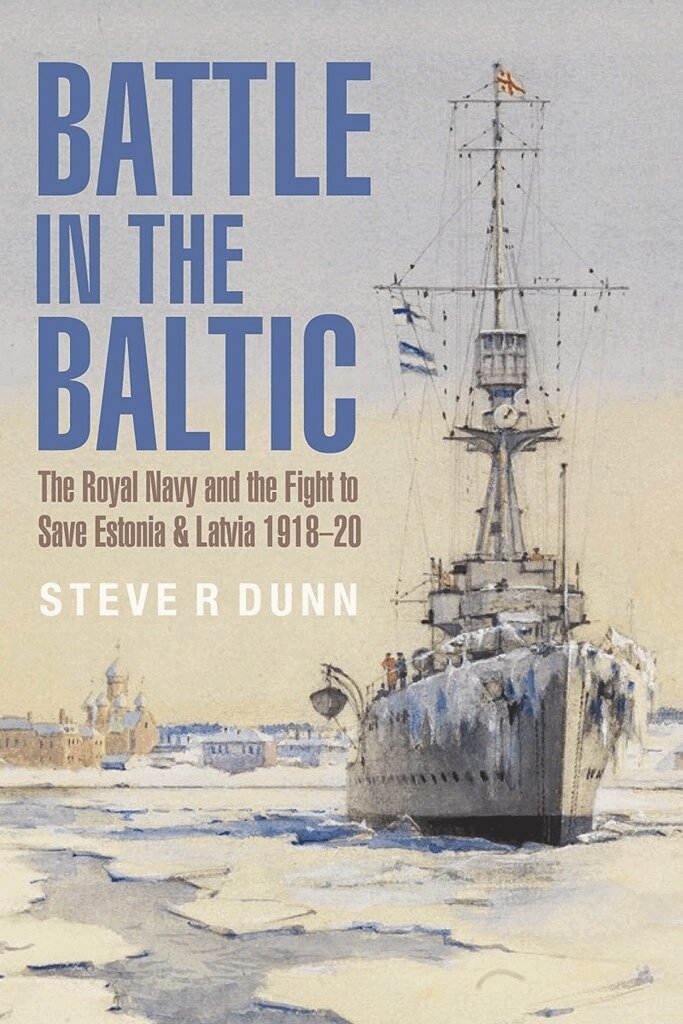
Battle in the Baltic
The Royal Navy and the Fight to Save Estonia and Latvia, 1918 1920
Häftad, Engelska, 2021
148 kr
Tillfälligt slut
Though, for most participants, the First World War ended on 11 November 1918, the Royal Navy found itself, despite four years of slaughter and war weariness, fighting a fierce and brutal battle in the Baltic Sea against Bolshevik Russia in an attempt to protect the fragile independence of the newly liberated states of Estonia and Latvia.This new book by Steve R Dunn describes the events of those two years when RN ships and men, under the command of Rear Admiral Walter Cowan, found themselves in a maelstrom of chaos and conflicting loyalties, and facing multiple opponents -the communist forces of the Red Army and Navy, led by Leon Trotsky; the gangs of freebooting German soldiers, the Freikorps, intent on keeping the Baltic states under German domination; and the White Russian forces, bent on retaking Petrograd and rebuilding the Russian Empire. During this hard-fought campaign there were successes on both sides. For example, the Royal Navy captured two destroyers that were given to the Estonians; but the submarine L-55 was sunk by Russian warships, lost with all hands. Seeking revenge in a daring sequence of attacks and using small coastal motor boats, the RN sank the cruiser Oleg and badly damaged two Russian battleships.Today few people are aware of this exhausting campaign and the sacrifices made by Royal Navy sailors (three VCs were won), but the pages of this book retell their exciting but forgotten stories and, using much first-hand testimony, bring back to life the critical naval operations that prevented the retaking of the new Baltic countries that Churchill saw as an essential shield against the encroachment of the Bolsheviks into Europe. An uneasy peace prevailed until 1939.'This is a well-written and very readable account of an important but little-known campaign that still has relevance today. ... I recommend it highly' _Australian Naval Review_
536 kr
Skickas inom 10-15 vardagar
This book covers a range of devices that use piezoelectricity to convert mechanical deformation into electrical energy and relates their output capabilities to a range of potential applications. Starting with a description of the fundamental principles and properties of piezo- and ferroelectric materials, where applications of bulk materials are well established, the book shows how nanostructures of these materials are being developed for energy harvesting applications. The authors show how a nanostructured device can be produced, and put in context some of the approaches that are being investigated for the development of nanostructured piezoelectric energy harvesting devices, also known as nanogenerators. There is growing interest in strategies for energy harvesting that use a variety of existing and well-known materials in new morphologies or architectures. A key change of morphology to enable new functionality is the nanostructuring of a material. One area of particular interest is self-powered devices based on portable energy harvesting. The charging of personal electronic equipment and other small-scale electronic devices such as sensors is a highly demanding environment that requires innovative solutions. The output of these so-called nanogenerators is explained in terms of the requirements for self-powered applications. The authors summarise the range of production methods used for nanostructured devices, which require much lower energy inputs than those used for bulk systems, making them more environmentally friendly and also compatible with a wide range of substrate materials.
Pug, ' 'Fireball, ' and Company
116 Years of Professional Baseball in Des Moines, Iowa
Häftad, Engelska, 2024
231 kr
Skickas inom 5-8 vardagar
Pug, ' 'Fireball, ' and Company
116 Years of Professional Baseball in Des Moines, Iowa
Inbunden, Engelska, 2024
260 kr
Skickas inom 5-8 vardagar